PeakMetrics / Fact Checks
War & conflict fact checks
Explore claims publishers have checked about war & conflict. Read their original ratings and follow the evidence.
Search fact checks
Search by text or image5,840 published reviews in this topic

Video que muestra a un niño sangrando por la cabeza, con la ropa rota y el cuerpo lleno de polvo en una silla de color naranja, es la guerra en Ucrania
Publisher’s rating: Falso

Video of Ugandan Special Forces paratroppers failing to land properly
Publisher’s rating: FALSE
The claim concerns footage of paratroopers struggling to land, which social-media posts attributed to Uganda’s Special Forces. The review identifies the footage instead as a parachute display during Honduras’s Independence Day celebrations. It says the event took place on 15 September 2022 at the José de la Paz Herrera National Stadium, in Tegucigalpa, and involved 40 Air Force paratroopers jumping from helicopters. The review reports that wind pushed some of the parachutists away from their intended landing course, resulting in poor landings. This provides an explanation for what viewers see in the footage while placing it at a Honduran event, rather than a Ugandan military exercise. The review also notes that CNN published a video about the incident and describes it as a Honduran Independence Day parachuting show affected by wind. To check the footage’s provenance, the review says it found a YouTube video titled “Parachute Display By Honduras’s Special Forces” that contains the same video as the viral post. It also compared the stadium’s Google Maps imagery with the visuals in the viral video and reported that they matched. The review further points to footage of the event from other angles, where the failed landings can be seen. These checks support its conclusion that the video shows the Honduran display, not Ugandan paratroopers.
Das Video aus einem Einkaufszentrum zeigt, dass die EU in der Ukraine Nazis unterstützt.
Publisher’s rating: Das Kaufhaus in Kiew wurde gehackt und hat das Hakenkreuz nicht selbst eingespielt.
The video shows a swastika briefly displayed on a staircase screen at the Gorodok shopping centre in Kyiv. The review identifies the scene as a real 2019 incident, but the footage does not establish that the centre—or the EU—supported Nazis. The review says the symbol appeared on the centre’s LED advertising screen for several minutes before security staff switched it off, and reports that the centre said its computer system had been hacked. That makes the video evidence of an unauthorised display, not evidence of EU support or of the centre choosing to show Nazi symbolism. The review traces the incident to 16 February 2019 and reports that the Kyiv prosecutor’s office later said a 17-year-old was suspected of carrying it out. According to the review’s account of the prosecutor’s statement, he allegedly used TeamViewer on his phone to access the system and upload the image. The review also notes that a TeamViewer-like mark is visible beside the swastika in the video, but presents that resemblance as supporting detail, not as proof on its own. The misleading impression comes from presenting the shocking image alongside a comment about Ukraine and EU support, while omitting how it got onto the screen. The reported investigation and the centre’s explanation instead describe a hacked display. The footage therefore cannot substantiate the claim that the EU supports Nazis in Ukraine.


Deze video toont Oekraïense crisisacteurs.
Publisher’s rating: De gedeelde beelden lijken uit context vreemd, maar tonen geen crisisacteurs. Het gaat wel degelijk om echte gewonden na een Russisch bombardement op Kiev.
The review investigates a video circulated on Twitter, Facebook and Telegram that was presented as evidence that Ukrainian civilian casualties had been staged. It focuses on the woman shown receiving treatment while taking a selfie, and on the allegation that she and others in the footage were crisis actors. The review places the footage in the aftermath of Russia’s 10 October 2022 bombardment of Kyiv and says the woman was among those injured. (S1: “Een video dat doet de ronde op Twitter, Facebook en Telegram, zou echter doen vermoeden dat beelden van burgerslachtoffers in scène zijn gezet.”; “De vrouw op de voorpagina van de Volkskrant was wel degelijk een van hen.”) To check the setting and people in the video, the review traces the footage to a YouTube video and locates it near Kyiv’s 101 Tower. It says reporting confirmed that a bomb had struck near the tower that morning. It also compares the footage with video recorded by photographer Oleksandr Khomenko, in which the older people seen being treated in the circulating clip appear injured and others are receiving help. (S1: “De beelden, die afkomstig zijn van deze Youtubevideo, tonen twee oudere mensen die verzorgd worden, terwijl de vrouw een selfie neemt.”; “Deze beelden zijn hier in Kiev opgenomen vlakbij de 101-toren die verder in het fragment te zien is.”; “De oudere mensen die verzorgd worden zijn ook te zien in deze video, die de fotograaf Oleksandr Khomenko op zijn Facebookpagina zette.”) The review also addresses the selfie as the basis for suspicion. It reports that the woman was not so seriously injured that she had to be taken to hospital immediately, and says she asked someone to take a photo before saying she would take a selfie for her sister in Russia. The review therefore treats the selfie as compatible with her being injured, rather than proof that the scene was staged. (S1: “De vrouw is gewond, maar duidelijk niet zo ernstig dat ze meteen moet afgevoerd worden naar het ziekenhuis.”; “Eerste vraagt ze aan een zekere Andrej Andrejevich om een foto van haar te nemen om dan te zeggen dat ze een selfie zal nemen, voor haar zus in Rusland.”)


In dem Video sind Ukrainer zu sehen, die die brennende Krim-Brücke besingen und feiern.
Publisher’s rating: Die Behauptung ist falsch: Bei den Menschen in dem Video handelt es sich um englische Fußballfans. In der ursprünglichen Aufnahme ist zu sehen, wie Anhänger von Wigan Athletic den Stürmer Will Grigg mit einem an den «Gala»-Song «Freed from Desire» angelehnten Text feiern. Das Video kursiert bereits seit dem Jahr 2016 und hat nichts mit dem russischen Angriffskrieg gegen die Ukraine zu tun.
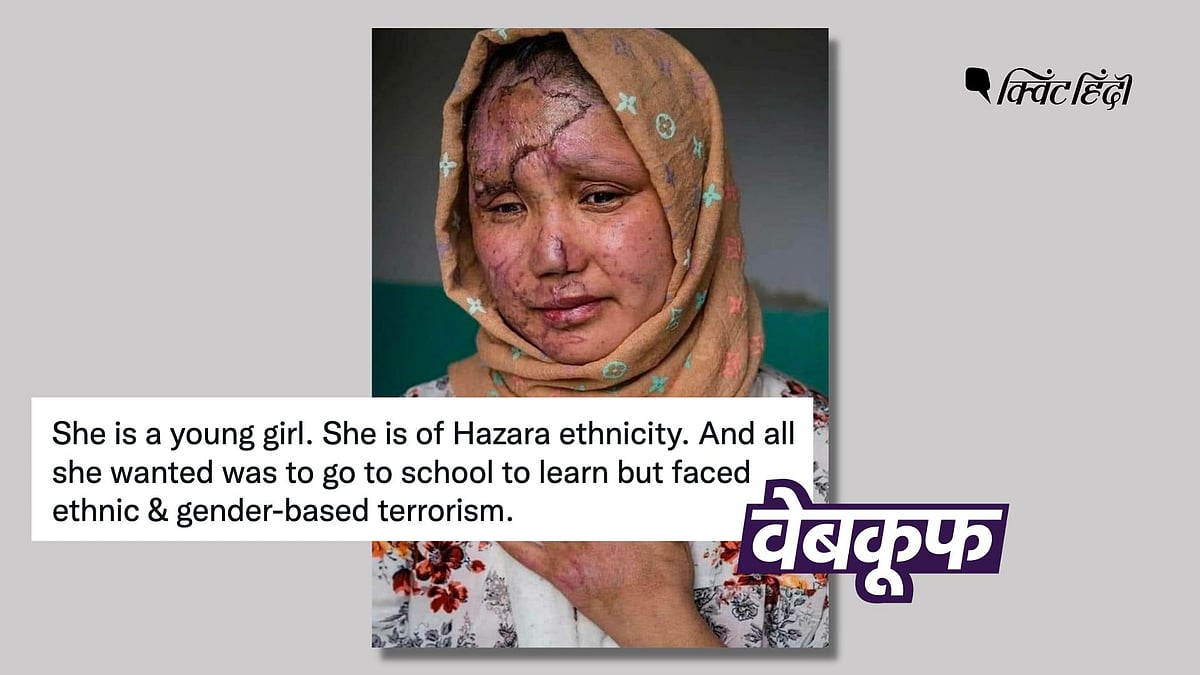
30 सितंबर को अफगानिस्तान के काबुल में एक एजुकेशन सेंटर पर आत्मघाती बम हमले की शिकार महिला की तस्वीर
Publisher’s rating: FALSE

Ukrayna Genelkurmay Başkanı’nın Nazi simgesi taşıyan bileklik taktığı iddiası
Publisher’s rating: Yanlış

BBC-reporter heeft verslaggeving van de oorlog in scène gezet.
Publisher’s rating: De bewering is vals en misleidend en de foto's missen de nodige context. De foto’s zijn screenshots uit een reportage van de BBC, gemaakt in Irpin op 6 maart 2022. Irpin werd op die dag hevig onder vuur genomen door het Russische leger. BBC-reporter Jeremy Bowen doet wel degelijk ter plaatse verslag, terwijl achter hem explosies te horen zijn. In de reportage is te zien dat de vrouw op de screenshots zich ook verschanst.

Görüntünün sözde ‘Rusya-Ukrayna çatışmalarını’ gösteren bir kurgu çekiminin kamera arkası olduğu iddiası
Publisher’s rating: Yanlış

De opperbevelhebber van het Oekraïense leger draagt een armband met Swastika.
Publisher’s rating: Zaloezjny draagt in de foto geen armband met een swastika. Door compressie van het beeld wordt een ander symbool, waarschijnlijk een salomonsknoop, vervormd, waardoor het op een swastika lijkt.
The claim concerns a photograph said to show Ukrainian army commander Valerij Zaloezjny wearing a bracelet with a swastika. The review examines that image and reports that the bracelet’s design is distorted by image compression, making one of its symbols look like a swastika. It identifies the likely source of the resemblance as a Solomon’s knot, rather than a swastika. To investigate, the review compares the disputed image with other photographs of Zaloezjny wearing the bracelet and with a photograph posted online by a Ukrainian army officer. It also describes reproducing the loss of detail: resizing a bracelet image to 100 by 40 pixels made the relevant symbol blurry enough to resemble a swastika. A photograph on a Ukrainian art gallery website shows the bracelet more clearly; the review says its symbols match those in the officer’s photograph, including the symbols on either side of the one at issue. The article notes that an online shop describes the bracelets as having Viking symbols and allows customers to select symbols. It says the disputed design is described there only as a “Scandinavian Pattern,” and that it is more likely to be a Solomon’s knot, a symbol associated in the article with Romans and Celts. The evidence therefore addresses the specific bracelet and image in the claim, while distinguishing a compression artifact from the clearer views of the design.
Das Foto zeigt eine Waffenlieferung an die Ukraine.
Publisher’s rating: Falsch
The claim concerns a photograph circulated in early October 2022 as evidence that weapons were being delivered to Ukraine on ships supposedly intended to carry grain. The review identifies the image as a real weapons delivery, but says it was neither in Ukraine nor connected to the war: it was taken in 2021 in Constanta, Romania. The review states that the image shows the arrival of components of a US HIMARS system, not a shipment to Odessa. For the provenance, the review cites Romania’s Defence Ministry, which said that the first main components of the US air-defence system HIMARS arrived in Constanta on 20 February 2021. It says the Ministry circulated the photograph alongside other images of that delivery. The timing and location therefore contradict the image’s claimed setting: the photograph predates the start of the Ukraine war and documents equipment arriving in Romania. The review distinguishes the false implication of this particular image from the broader fact that Ukraine has received military support. It notes that Ukraine did receive weapons, including HIMARS from the United States and IRIS-T air-defence systems from Germany. Those examples do not establish that the pictured delivery was bound for Ukraine; the review identifies that shipment as Romanian.

Rus televizyonundaki yorumcunun Ukrayna’da çalan sirenlerin taklidini yaptığı iddiası
Publisher’s rating: Yanlış
The claim concerns a video said to show a commentator on Russian television imitating sirens sounding in Ukraine. The review identifies the person in the video as Vladimir Zhirinovsky, the former head of Russia’s Liberal Democratic Party, and describes the sound he makes as a wolf howl: “Videoda kurt ulumasını taklit eden kişi 6 Nisan 2022’de hayatını kaybeden Rusya Liberal Demokrat Partisi eski başkanı Vladimir Zhirinovsky.” The review says Zhirinovsky was mocking the leaders of the United States, Russia and China. In the video, he says that, as the world stood on the brink of a third world war, the leaders should howl like wolves to recognize one another, then demonstrates the howl: “Zhirinovsky, dünya üçüncü dünya savaşının eşiğindeyken Amerika Birleşik Devletleri, Rusya ve Çin’in devlet başkanlarının (Joe Biden, Vladimir Putin ve Xi Jinping) sözde birbirini tanımak için bir kurt gibi ulumaları gerektiğini söyleyerek devlet başkanlarını tiye alıyor.” To investigate the video’s provenance, the review says it took a screenshot from the circulated clip and performed a reverse-image search. That led to a Russian-language report dated March 31, 2021, which provided the video’s background and described the same wolf-howling performance: “İddiada yer alan videodan ekran görüntüsü alıp tersine arattığımızda 31 Mart 2021 tarihli Rusça bir habere ulaşıyoruz. Haberde videonun arka planı açıklanıyor.” The account therefore identifies the sound as Zhirinovsky’s deliberate howl in a political joke, rather than an imitation of Ukrainian sirens.
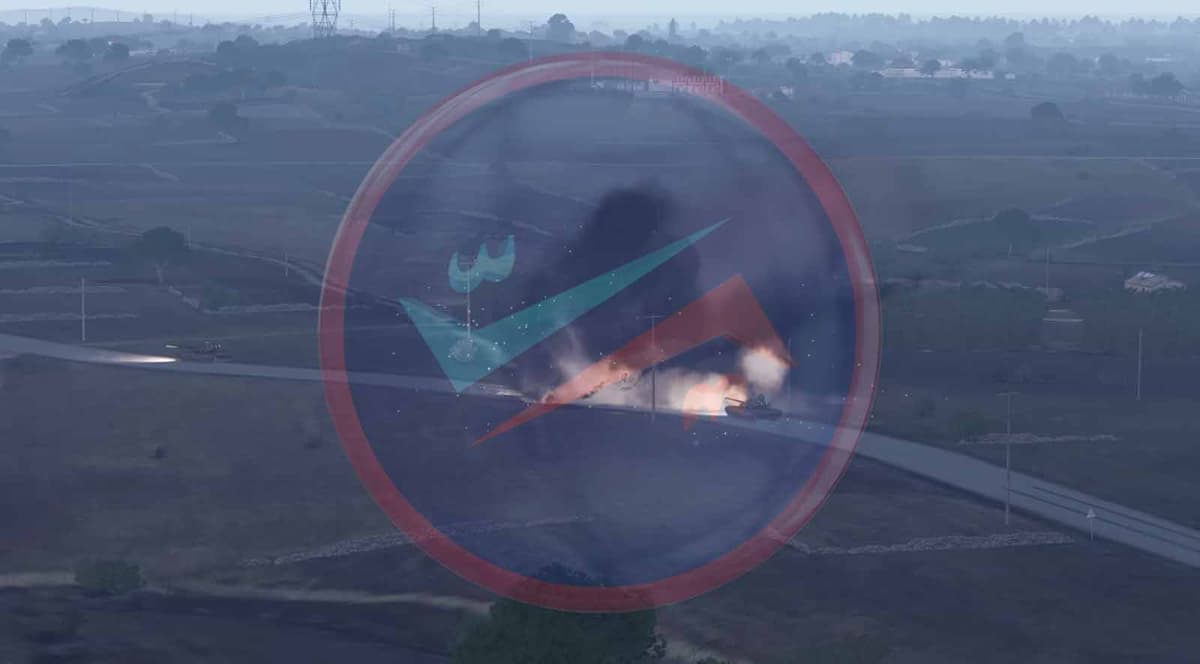
"اصطياد" القوات الأوكرانية للدبابات والعربات الروسية في أوكرانيا
Publisher’s rating: كذب

Nu Poetin de wetten heeft ondertekend die de regio's Donetsk, Loehansk, Cherson en Zaporizja tot Rusland toelaten is deze afbeelding officieel de nieuwe kaart van Oekraïne.
Publisher’s rating: De grenzen zoals op het gedeelde kaartje voorgesteld zijn niet "officieel". Ze worden internationaal niet erkend, en zelfs Rusland is er nog niet helemaal over uit tot waar zij de bezette regio's nou precies geannexeerd heeft.

Ein CIA-Bericht bestätigt: Verantwortlich für den Angriff auf Nord Stream ist die Ukraine.
Publisher’s rating: Die CIA hat einem Medienbericht zufolge im Sommer allgemein vor einem möglichen Anschlagsszenario auf die Nord-Stream-Pipelines gewarnt.
The claim concerned a social-media post asserting that a CIA report confirmed Ukraine was responsible for the attack on the Nord Stream pipelines. The review says it found no evidence for that assertion and notes that the post did not identify the CIA report it supposedly relied on. It also reports that neither a CIA report reaching that conclusion nor media coverage of such a report could be found around the time the post circulated; the CIA’s official website did not contain one either. [S1: “Im Zeitraum rund um Veröffentlichung des Postings finden sich weder ein CIA-Bericht noch Medienartikel über einen solchen.”; “Auch auf der offiziellen Webseite der CIA findet sich kein solcher Bericht.”] The review distinguishes that unsupported attribution from a separate, more limited report about an earlier warning. According to reporting by Der Spiegel cited in the fact-check, the CIA warned the German government in the summer about possible attacks on gas pipelines in the Baltic Sea. That warning concerned intercepted Russian communications about possible Ukrainian attacks on Western infrastructure, including an alleged attempt by Ukraine to rent a boat in Sweden. But the review says the CIA did not consider that scenario very credible. [S1: “Was stimmt, ist, dass die CIA dem «Spiegel» zufolge die deutsche Bundesregierung bereits im Sommer vor möglichen Anschlägen auf Gaspipelines in der Ostsee gewarnt hat.”; “Die CIA hielt dieses Szenario aber für nicht sehr glaubwürdig.”] The review therefore does not treat a warning about a possible scenario as confirmation of who carried out the Nord Stream attack. It also reports that responsibility for the investigation lay with Denmark and Sweden, whose territorial waters contained the leaks, and that the Swedish prosecutor’s office confirmed detonations had caused substantial pipeline damage. Neither point identifies the perpetrator. [S1: “Bestätigte CIA-Berichte zum verantwortlichen Akteur finden sich keine.”; “Die Hauptverantwortung der Ermittlungen liegt bei Dänemark und Schweden, in deren Hoheitsgewässern die Lecks aufgetreten sind.”]
Foto zeigt Zahnkronen, die russische Soldaten ukrainischen Folteropfern gezogen haben.
Publisher’s rating: Falsch. Die Zähne stammen aus der Praxis des örtlichen Zahnarztes.
Dieses Video zeigt angebliche Leichensäcke in der Ukraine.
Publisher’s rating: Falsch