PeakMetrics / Fact Checks
War & conflict fact checks
Explore claims publishers have checked about war & conflict. Read their original ratings and follow the evidence.
Search fact checks
Search by text or image5,840 published reviews in this topic

1963 இந்தியா-சீனா யுத்தத்தின்போது இராணுவத்தின் வேண்டுகோளை ஏற்று போர்முனையில் இந்திய ராணுவத்திற்கு உதவியாக 500க்கும் மேற்பட்ட ஆர்.எஸ்.எஸ் பயிற்சிபெற்ற தொண்டர்கள் பணியாற்றினர். உணவு, ஆயுதங்கள் எடுத்து செல்வது காயம் பட்டவர்களுக்கு சிகிச்சை அளிப்பது உள்ளிட்ட சேவை பணிகள் செய்தனர்.
Publisher’s rating: Fake
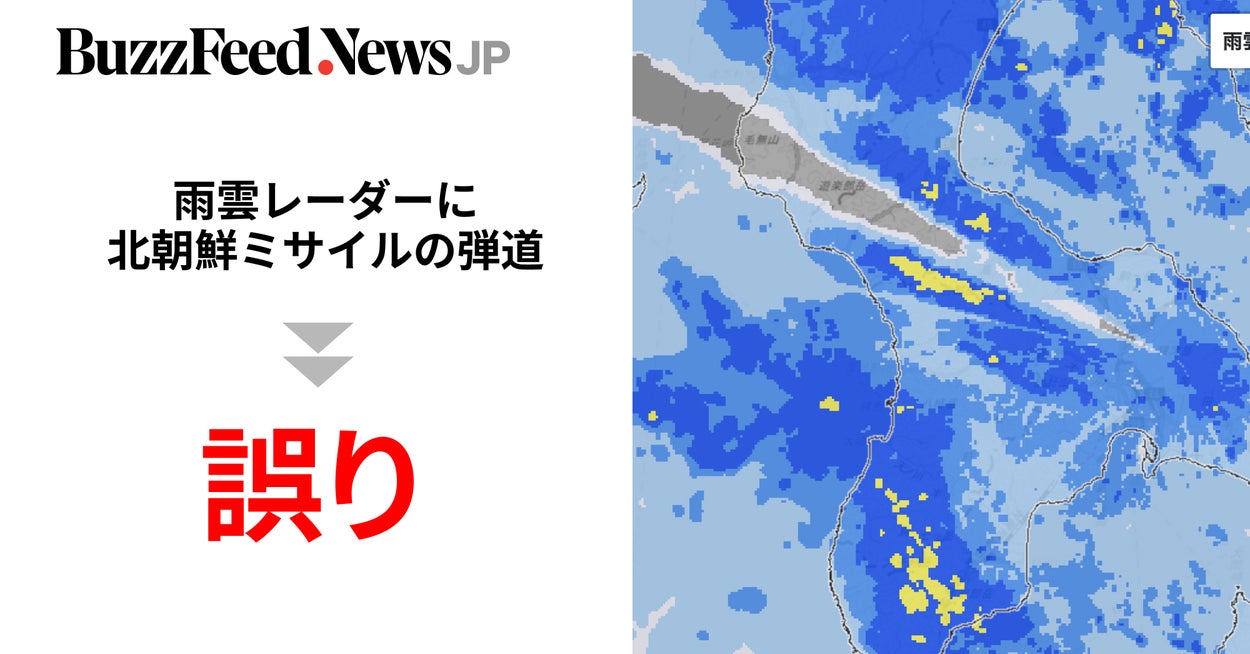
北朝鮮の弾道ミサイル発射「雨雲レーダーにミサイルの通り道が見える」
Publisher’s rating: 誤り
The claim arose after a possible North Korean ballistic missile launch on October 4, 2022, when an image of rain radar near Hokkaido circulated online. A line-like mark on the image was presented as the missile’s trajectory. The review says that interpretation was wrong: the marked area was a radar blind spot, not a signal caused by the missile. It describes speculation spreading on Twitter, including a post that received thousands of likes. (S1: “10月4日午前7時29分ごろ、北朝鮮から弾道ミサイルの可能性のミサイルがあるものが発射され、全国瞬時警報システム(Jアラート)を通じて「国民保護に関する情報」が出された。”; “一部分に線が入っているように見えることから、ミサイルの弾道なのではないかという憶測がSNS上で広がり、一時は数千いいねを集めている投稿もあった。”) The review identifies a geographic explanation for the line: the Hakodate weather radar is partly obstructed by the summit of Mount Yokotsudake, where it is installed in Nanae Town. Because the radar is lower than the summit, part of the area is not observed. The review notes that similar radar “blank zones” exist in Sendai and Kashiwa, indicating that such gaps are not, by themselves, evidence of a missile track. (S1: “これは、函館地方気象台のレーダーが、設置されている七飯町横津岳の山頂部分に一部遮られていることで起きている現象だ(NHK、2022年8月26日)。レーダーが山頂よりも低いところにあることが原因。”; “こうしたレーダーの「空白地帯」は、宮城県仙台市や千葉県柏市にも存在するという。”) A further check described in the review is that the same area was already displayed before the time the missile was believed to have been launched. That timing undercuts the interpretation that the line was produced by this launch. The review also reports that meteorological researcher Kentaro Araki warned people about misinformation. Together, the pre-launch appearance and the known terrain obstruction support the conclusion that the image did not show the missile’s path. (S1: “実際、この部分はミサイルが発射されたとみられる時間より前にも、表示され続けていることがわかる(写真上)。”; “雲の研究者で、気象庁気象研究所主任研究官の荒木健太郎さんも、「誤情報にお気をつけください」と注意喚起のツイートをしている。”)

Videodaki kişinin İran’daki protestolar sırasında öldürülen Hadis Necefi olduğu iddiası
Publisher’s rating: Yanlış

Une photo qui montre un QG des forces armées ukrainiennes à Odessa détruit par des drones (russes).
Publisher’s rating: Kiev a en effet dénoncé des attaques effectuées à l’aide de drones dans la ville portuaire d’Odessa, dans le sud de l’Ukraine. Mais la photo qui accompagne ces publications ne s’inscrit pas dans ce contexte. Elle montre un incendie intervenu dans un entrepôt de fruits et légumes à Rungis, en France.
Dieses Video beweist, dass die chinesische Armee in den Krieg in der Ukraine eingreift.
Publisher’s rating: Das chinesische Militär ist nicht in die Ukraine eingerückt. Das Video zeigt einen Konvoi im Osten Russlands: Fahrzeuge auf dem Weg zur Militärübung «Wostok», die im August mehrere Tausend Kilometer entfernt von der ukrainischen Grenze abgehalten wurde.
The video was shared as evidence that China had entered Russia’s war against Ukraine. The investigation instead traced the footage to a military convoy in Russia’s Far East, bound for the Wostok exercise. The review reports that Chinese troops did take part in that exercise, held in Primorsky Krai from August 30 to September 5, 2022, thousands of kilometres from the Ukrainian border. Participation in the exercise is not evidence that the convoy was entering Ukraine. [S1: “In einem entsprechenden Beitrag sind mehrere militärische Fahrzeuge zu sehen, die eine Straße entlangfahren. Was das Video tatsächlich zeigt.”; “Sie fand vom 30. August bis 5. September 2022 in Kraj Primorski im Osten Russlands statt. Aus dieser Region stammen auch die Nummernschilder der zivilen Autos im Video.”] The review describes several checks on the road footage. Although the video is blurry and shaky, the visible civilian-car plates were Russian, not Ukrainian or issued by the Donetsk or Luhansk people’s republics. On four of five civilian cars, the number “25” or “125” appeared in a separate field; the review identifies those codes with Primorsky Krai. It notes that the region is about 7,000 kilometres from Ukraine, making the claimed Ukrainian setting inconsistent with the visible evidence. [S1: “Die Nummernschilder sind russisch; das Polizeifahrzeug hinter dem Konvoi gehört zur russischen Militärpolizei, wie man am schwarzen Nummernschild erkennt.”; “Obwohl das Video unscharf ist, kann man bei vier der fünf zivilen Autos erkennen, dass die Zahl «25» oder «125» in einem separaten Feld rechts neben dem Nummernschild steht.”; “Es ist sehr unwahrscheinlich, dass in etwa einer Minute vier Autos aus einer Region in der Nähe des Pazifischen Ozeans in der rund 7 000 Kilometer entfernten Ukraine anzutreffen sind.”] To investigate the location and route, the review compared the road video with footage of Chinese military equipment being unloaded at Grodekovo station, published by Russian defense-ministry media outlet TV Zvezda. It describes matching vehicle features, including a Chinese tanker truck and Russian military-police vehicles, and compares buildings and roadside details with a location in Pogranichny. The review qualifies that it could not be certain the footage showed the same troops; its identification rests on the combined vehicle, plate, regional and location evidence. [S1: “Es ist zwar nicht sicher, dass es sich um dieselben Truppen handelt. Doch es gibt Elemente, die sich in den beiden Videos gleichen.”; “Auf der Satellitenansicht von Google Maps sieht das Gebäude in der Ulitsa Lenina (Leninstraße) 60 wie eine perfekte Ergänzung aus.”]

Deze doden met sterfdatum 9 maart kunnen niet het gevolg zijn van Russisch geweld, want die kregen Izyum pas op 1 april onder controle. Oekraïense functionaris Yermak gebruikt deze foto als bewijs voor een massagraf waarin mensen werden gevonden die zouden zijn "gemarteld en geëxecuteerd"
Publisher’s rating: Ook voor 1 april waren er in Izjoem hevige bombardementen en gevechten tussen het Oekraïense en Russische leger. Het is dus onjuist om te stellen dat de Russische soldaten voor 1 april nog niet aanwezig waren en dus ook geen Oekraïense burgerslachtoffers konden veroorzaken. Daarnaast gebruikte een Oekraïense overheidsfunctionaris de foto in kwestie niet als bewijs voor 'marteling en executie'.
The claim combines two assertions about the graves found after Ukrainian forces retook Izium: that people whose graves gave March 9 as their death date could not have died as a result of Russian violence because Russia took control of the city only on April 1, and that Andriy Yermak used the family-grave photo as evidence of torture and execution. The review identifies the pictured graves as those of Elena and Dmytro Stolpakovy and their six-year-old daughter Olesya, who were reported to have died on March 9. It says the photo was taken in the forest cemetery where more than 440 graves were discovered after the city was retaken. (S1: “Deze toont de graven van een stel. De 31-jarige Elena en de 34-jarige Dmytro Stolpakovy. Achter hen is het graf te zien van hun zesjarige dochter Olesya. Zij zouden op 9 maart 2022 zijn omgekomen.”) The review distinguishes Russia’s formal takeover from earlier military presence and fighting. It reports that Russian troops officially took Izium on April 1, but that fighting around the city and bombardments had already occurred during March. It also notes that a Russian defence ministry spokesperson claimed victory on March 24, and that Amnesty International reported Russian military attacks beginning on February 28 and constant rocket attacks since March 3. Thus, the April 1 date for formal control does not establish that Russian forces were absent before then or rule out a Russian attack causing deaths on March 9. (S1: “Het klopt dat Russische troepen Izjoem op 1 april officieel innamen, hoewel een woordvoerder van het Russische ministerie van Defensie al op 24 maart die overwinning claimde. Daarvoor werd er al hevig om deze stad gevochten.”) On Yermak, the review says he did share the family-grave photo, but did not describe that image as showing torture or execution. It says his accompanying message referred to Russians killing entire Ukrainian families; he shared two other cemetery photos when discussing torture and execution. The review also cautions that the family’s precise fate and cause of death could not be established, and that the alleged Russian origin of the apartment-building bombardment associated with them could not be independently verified from the information described. The evidence therefore rebuts the claim that the dates or Yermak’s use of this particular photo prove what the claim alleges, without conclusively establishing how this family died. (S1: “Yermak deelde de foto van deze graven inderdaad op Twitter en Telegram, maar benoemde daarbij geen marteling of executie.”)

Deze video toont Chinese militairen die Oekraïne binnenvallen.
Publisher’s rating: Chinese militairen zijn niet Oekraïne binnengevallen. Deze video werd opgenomen in het verre oosten van Rusland en toont een Chinees militair konvooi onderweg naar de Vostok-2022 legeroefening.
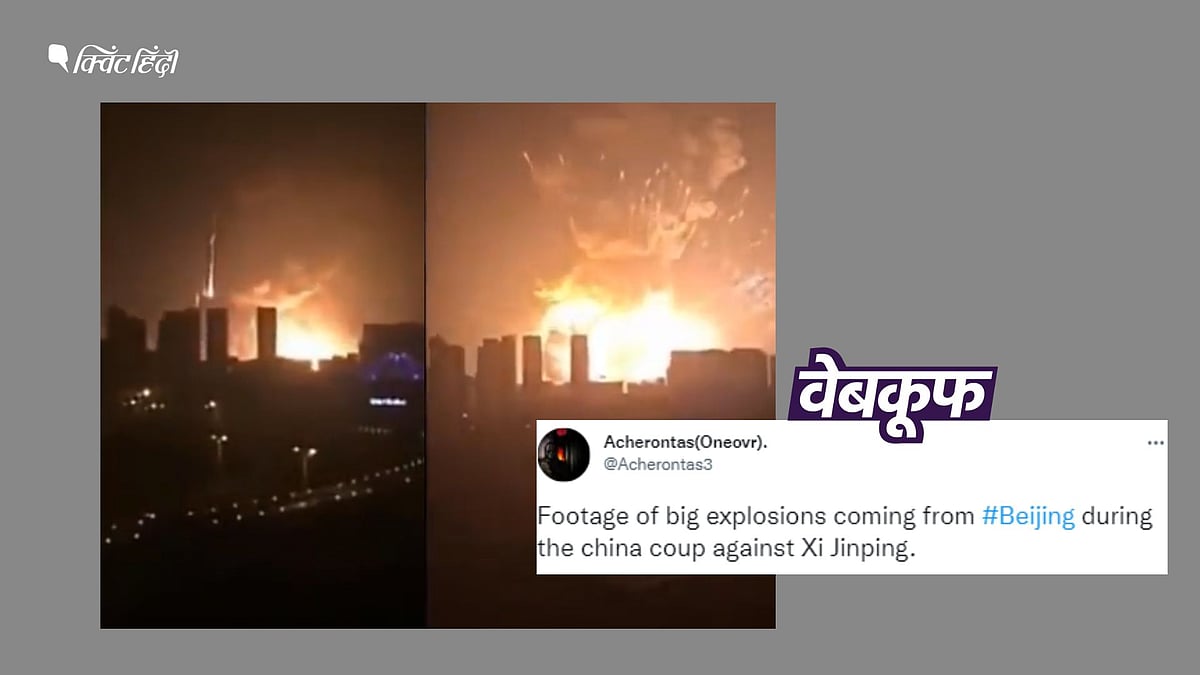
चीन में तख्तापलट के बीच हुए बम ब्लास्ट का है ये वीडियो
Publisher’s rating: FALSE
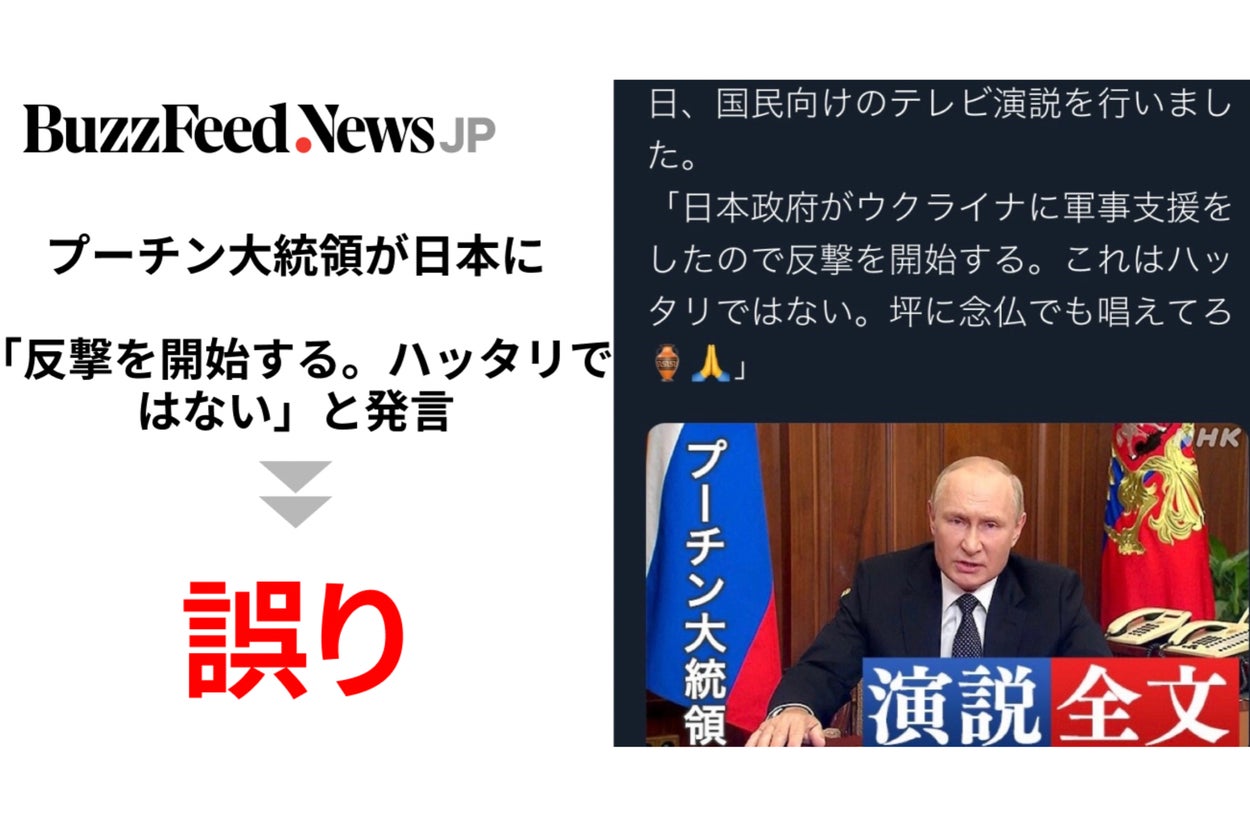
プーチン大統領がウクライナ情勢めぐり日本に「反撃を開始する」「ハッタリではない」と発言した
Publisher’s rating: 誤り
The claim concerned a viral post attributing to Russian President Vladimir Putin a threat to Japan: that Russia would “begin a counterattack” because the Japanese government had provided military aid to Ukraine, and that this was “not a bluff.” The post presented the words as part of Putin’s televised address to the Russian public on September 21, 2022, and included an image of an NHK article, which could give the impression that NHK had reported the alleged threat. The review compared the claim with NHK’s publication of the address’s full text and its account of the speech. It reports that Putin’s main subject was partial mobilization for the war in Ukraine: the measure applied to reservists, particularly people with military experience or knowledge, and was to begin on September 21. The review says the address did not mention Japan. It also distinguishes the address’s actual warning—that Russia would use available means to defend itself and its territory if threatened—from the post’s alleged threat of retaliation against Japan over aid to Ukraine. As further checks, the review says it found no report of the alleged Japan-related statement in domestic or international media, and that it could not find it online or in the G-Search article database. It concludes that the viral post’s attribution was false. The review’s account does not support treating the address’s reference to a threat against Russia as evidence that Putin announced a counterattack against Japan.
A video clip depicting a large group of people gathering in a bar and crying out after they watched a map of territory reclaim on a big screen was uploaded on Facebook. The video clip came with a claim saying they were Ukrainians cheering after their country’s counterattack had reclaimed many parts of territories from the Russian invasion.
Publisher’s rating: False

Training video of Indian army
Publisher’s rating: FALSE
The claim concerns a social-media video of uniformed women jumping over a moving line of flames, presented as Indian Army training. FACTLY says it investigated that video and concluded that it instead shows women commandos from Sindh Police in Pakistan. The review states that the footage is old and unrelated to India. FACTLY describes using reverse image searches on screenshots from the circulating video. It reports finding videos with similar visuals posted by Pakistani media channels and users in August 2019, where they were described as training footage of Pakistani commandos. The review also says the same video appeared on the Facebook page of Karachi Walay, a Pakistan-based news and media website, which reported it as training visuals of Sindh women commandos. The review adds that other news websites published the video with a similar description in 2019 and points to separate training videos and pictures of women commandos in the Special Security Unit of Sindh Police. It uses this provenance and corroborating material to distinguish the footage from Indian Army training. The evidence presented therefore addresses the specific video in the claim, rather than merely showing that women commandos train in Pakistan.

"Niña ucraniana contra soldado ruso"
Publisher’s rating: Falso
The claim attached to the viral video was that it showed a Ukrainian girl confronting a Russian soldier during the war in Ukraine. The review identifies the clip’s subjects instead as Palestinian activist Ahed Tamimi and an Israeli soldier, and places the confrontation in the West Bank in November 2012—not in the Ukraine conflict. To check the video’s provenance, the review says it found a YouTube upload from December 2012 through a Google search. That upload showed more of the episode and identified the girl as Tamimi. The review also cites an AFP photograph as confirming that the event took place in the West Bank on November 2, 2012. These details tie the circulated footage to a specific earlier event, rather than merely showing that similar footage existed elsewhere. The review adds that the same video had circulated shortly after Russia’s invasion of Ukraine began on February 24, 2022, and says fact-checking teams at Newtral, AFP Factual, and FullFact had already rejected the Ukrainian-girl and Russian-soldier identification. The supplied text does not provide those organizations’ underlying evidence, so the review’s described video provenance and AFP photograph are the evidence detailed here.

“Son los soldados de la OTAN los que están matando a nuestros civiles. La alianza de la OTAN está luchando contra Rusia”
Publisher’s rating: Falso

ලංකාවේ ජයග්රහණය සැමරීමට අවිආයුධ අතැතිව නර්තනය යෙදුනු තලෛබාන් සටන්කාමීන් ? (Video)
Publisher’s rating: Misleading
The claim concerned a video circulated as showing armed Taliban fighters in Afghanistan dancing to celebrate Sri Lanka’s Asia Cup victory. The review says the footage was shown in a Swarnavahini news broadcast on September 12 and shared on social media with that interpretation. Its investigation focused on whether the video itself showed the claimed people and occasion, rather than on whether Afghan cricket fans celebrated Sri Lanka’s win. The review describes using InVID-WeVerify to extract frames and conduct a reverse-image search. That search led to the same footage on the YouTube channel Qaiser Khan Vlog, uploaded on April 10, 2021. The review says the title and description identified a wedding dance in Bannu, Pakistan, and that the footage had circulated earlier with a Taliban-related caption. It also reports that the Fact Crescendo India team contacted the man seen dancing in blue, Wahab Pukhtoon. According to the review, Wahab said he attended his friend Rafeed Ullah Khan’s wedding on March 19, 2021, in Sarwar Kitki village, Pakistan, and was recorded dancing there. The review concludes that the footage was from that wedding, not Taliban fighters celebrating the Sri Lankan victory. It separately notes that Afghan cricket fans did celebrate Sri Lanka’s win; that contextual detail does not change the identification of the video at issue.

The Guardian haberinde “Selçuk Bayraktar’ın dünya savunmasına verdiği zarar 16 trilyon dolar” yazdığı iddiası
Publisher’s rating: Yanlış
பயிற்சியின் போது அப்பாவி குழந்தைகளை விடுதலைப் புலிகள் கொடுமைப்படுத்தும் காட்சி.
Publisher’s rating: Fake
Video zeigt Explosion von russischer Hyperschallrakete in der Ukraine.
Publisher’s rating: Falsch. Bei dem Video handelt es sich einen VFX-Clip mit digitalen Spezialeffekten.

Suudi Arabistan Savunma Bakanı karşılanırken çatapat patlatıldığı iddiası
Publisher’s rating: Yanlış