PeakMetrics / Fact Checks
War & conflict fact checks
Explore claims publishers have checked about war & conflict. Read their original ratings and follow the evidence.
Search fact checks
Search by text or image5,840 published reviews in this topic

Des acteurs ukrainiens déguisés en civils font semblant d'être blessés à Kiev.
Publisher’s rating: Si le geste de cette femme peut paraître étrange, il ne prouve pas que celle-ci soit une actrice. Diverses images montrent clairement que ce bombardement a fait des blessés.
The claim concerned a video of a woman with a bandaged face, filmed after strikes hit central Kyiv on October 10, 2022. Some social-media posts treated her taking a selfie as proof that civilian casualties were staged and that the injured were paid actors. The review identifies the footage as showing a woman whose face is being bandaged by a serviceman; it says the footage was published that day by the German-language broadcaster OstWest and later circulated with the staging allegation. The review traces the video to Associated Press: photographer Efrem Lukatsky told Libération’s CheckNews that he had filmed it, and the original video was published by AP on October 10. Lukatsky said people in the footage were injured by fragments of shattered glass. Another photographer at the scene, Oleksandr Khomenko, said the woman’s injuries were real and that she was photographing them. The review also reports that Ukrainian media identified the woman and that she appeared in an interview on Ukrainian television on October 12, with marks and bruises on her face. The selfie, therefore, does not establish that the woman was acting or that the bombing’s aftermath was staged. The review points to corroborating visual evidence: the nearby 101 Tower was partly destroyed, and other footage showed multiple injured people receiving care, including the woman, as well as blood on her bandages and on the pavement. Taken together, the reporting and images support that there were real injuries at the scene; they do not support the claim that the woman’s unusual gesture proves she was an actor.
Армия Беларуси одна из самых боеспособных на континенте
Publisher’s rating: Искажение информации. В рейтинге Global Firepower 2022 года Беларусь со своей армией находится только на 52 месте среди 142 армий мира.
Ukrainischer Soldat schauspielert, um Kriegsleid in der Ukraine dramatischer wirken zu lassen.
Publisher’s rating: Falsch. Das Video zeigt Dreharbeiten zu einem Musikclip der Sängerin Anna Khanina.
داعش در بیانیه خود گفته حمله به شاهچراغ در حمایت از معترضان به قتل مهسا امینی انجام شده است.
Publisher’s rating: شاخدار

ما با روسیه همکاری دفاعی داریم اما ارسال سلاح و پهپاد علیه اوکراین سیاست ما نیست.
Publisher’s rating: نادرست
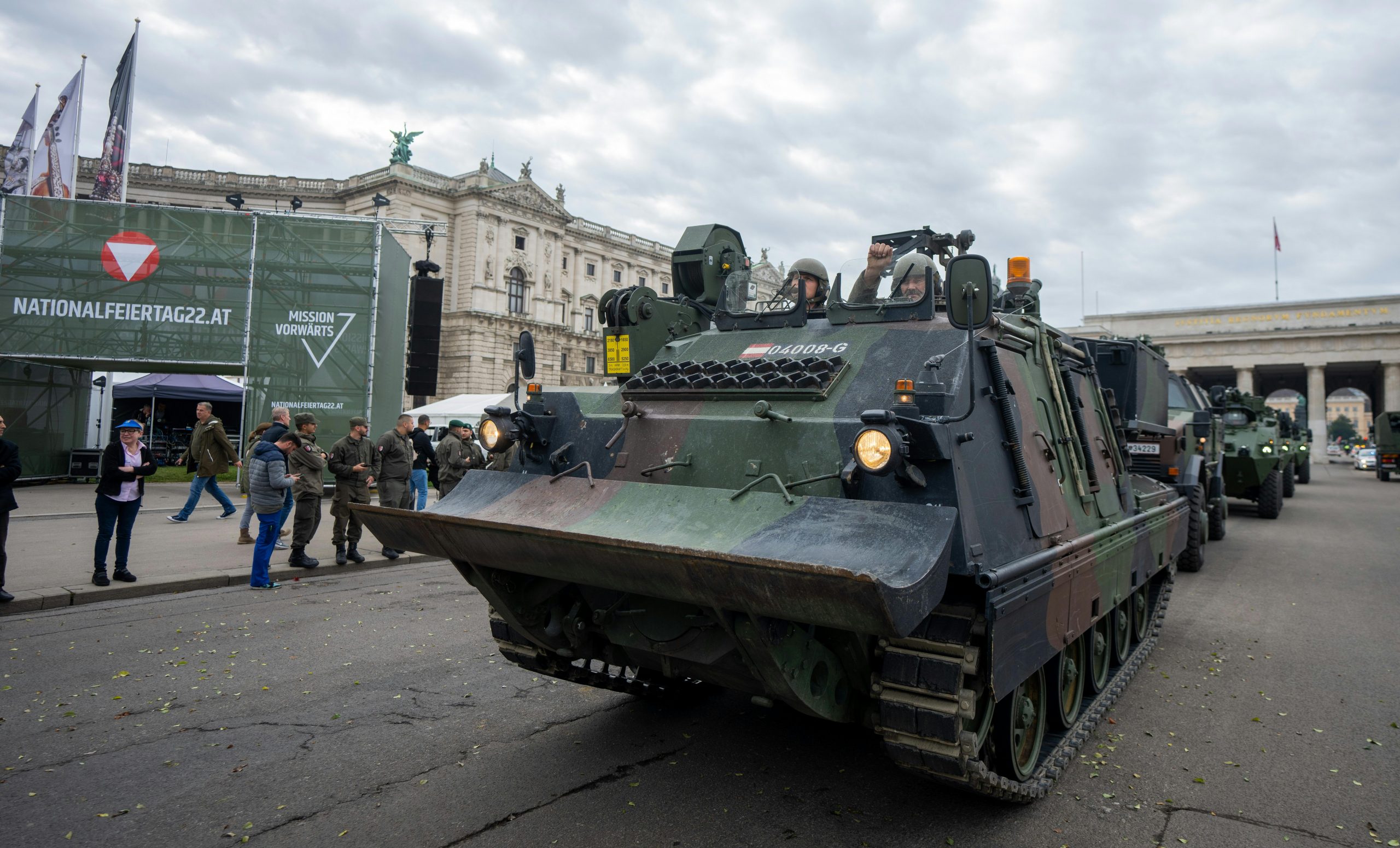
Militärfahrzeuge in Österreich stehen in Zusammenhang mit der Ukraine und verstoßen gegen Neutralität
Publisher’s rating: Die in Wien gesichteten Militärfahrzeuge wurden für die Leistungsschau des Bundesheeres zum Heldenplatz gebracht. Bei dem Konvoi auf der Westautobahn handelt es sich tatsächlich um NATO-Fahrzeuge. Mit der österreichischen Neutralität ist dieser Transport laut Verteidigungsministerium aber vereinbar.
The review examines two separate sets of military-vehicle videos that circulated in Austria: one showing a convoy in Vienna and another showing vehicles on the Westautobahn. It reports that social-media users attributed the Westautobahn convoy to NATO and that some connected the vehicles to Austria’s neutrality and the war in Ukraine. Its findings distinguish the two sightings rather than treating them as one event: the Vienna vehicles were heading to the Heldenplatz for an Austrian Armed Forces display, while the Westautobahn convoy consisted of French vehicles carrying materials to Hungary. To check the motorway video’s location, the review says it identified the A1 shortly after Linz in the direction of Vienna. It matched a sign for St. Florian Abbey and roadside masts visible in the video with Google Street View imagery. The Ministry of Defence confirmed to APA that the videos showed NATO military vehicles and that the French convoy had permission to travel through Austria under the Troop Residence Act. The ministry’s stated reasoning was that the transit did not involve Austria participating in a war, the troops were not permanently stationed in Austria, and Austria was not supplying weapons to a warring country. The review therefore does not support treating the sightings as evidence that vehicles were being transported through Austria for Ukraine or that the French convoy violated neutrality. It reports the ministry’s view that the permitted transit was compatible with neutrality, while noting that the ministry said it would not authorize transit requested by Ukraine or Russia. The review separately locates the Vienna vehicles on their way to the national-day display at the Heldenplatz.

俄軍空襲傷者要求拍攝傷勢,其前方有多名攝影師,被質疑報導事件的媒體造假及傷者扮演受傷。
Publisher’s rating: False
Dieses Foto von Vitali Klitschko ist aktuell und zeigt, wie der Krieg in der Ukraine inszeniert wird.
Publisher’s rating: Falsch
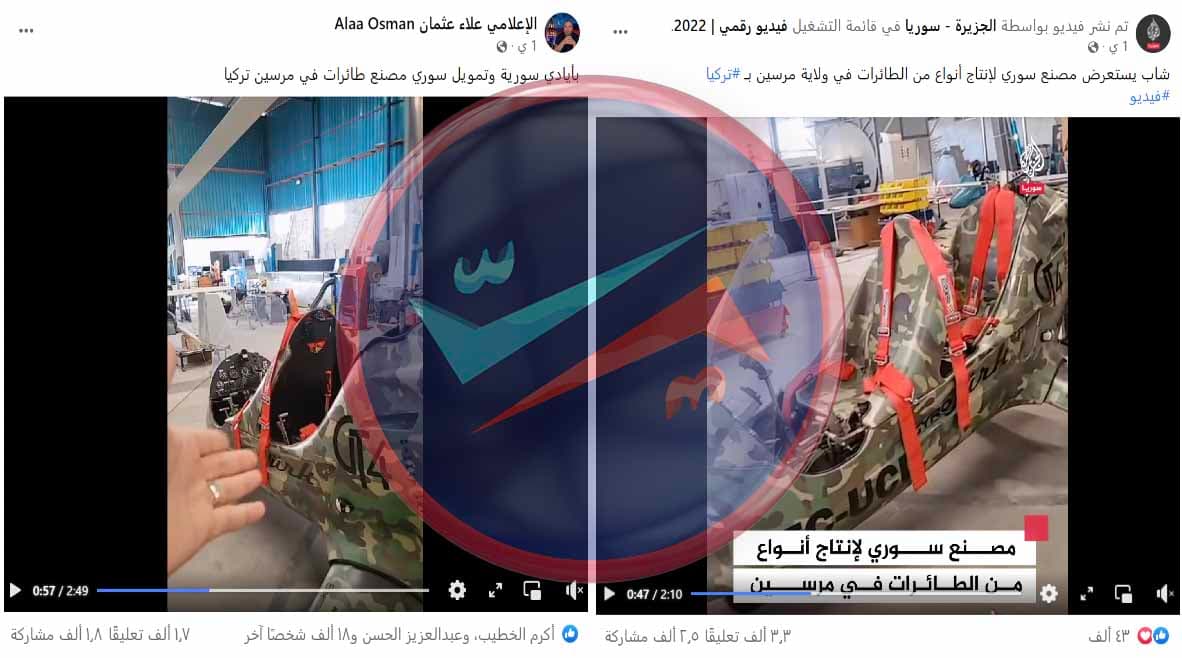

Ukrainian FGM 148 Javelin Missile Attack On Russian Tanks! (VIDEO)
Publisher’s rating: False
Ядерным оружием угрожает Запад
Publisher’s rating: Это неправда. Ядерным оружием периодически угрожают российские политики, в том числе Владимир Путин
Deutschland hat die Ukraine bisher mit rund 200 Milliarden Euro unterstützt.
Publisher’s rating: Falsch

سنتکام شکست پروژه آشوبها را به پنتاگون اعلام و به برآورد اشتباه خود از وضعیت ایران اعتراف کرد
Publisher’s rating: نادرست
ఉక్రెయిన్ సైనికులు అమెరికన్ FGM-148 జావెలిన్ క్షిపణులతో రష్యన్ మిలిటరీ ట్యాంకులను ధ్వంసం చేస్తున్న దృశ్యాలు
Publisher’s rating: FALSE

Ein Video zeigt, dass Bilder von zivilen Opfern in der Ukraine inszeniert wurden.
Publisher’s rating: Falsch
The claim concerns a video presented online as proof that civilian casualties in Ukraine were staged, with the post alleging that victims had been covered in ketchup. DPA examined the video and associated photograph, identifying the scene as aftermath of the Russian missile attack on Kyiv on 10 October 2022. The review says the footage was made in central Kyiv, near the 101 Tower, and reports that other media confirmed a bomb had fallen close to it. To check the scene against other material, DPA points to additional photographs and videos showing the same injured people. In footage from Ukrainian online broadcaster Hromadske, two older people are seen receiving medical care; another video posted by photographer Oleksandr Khomenko shows those people and other injured people being helped by responders or passers-by. DPA also notes that press photographers are visible in Khomenko’s video. The review traces the accompanying still photograph to Associated Press photographer Efrem Lukatsky. It reports that Lukatsky told the French newspaper Libération that flying glass injured the people pictured after the explosion, and says images of the 101 Tower show many broken windows. The review also addresses the post’s argument that a woman could not be injured because she took a selfie while a rescuer bandaged her: it says the footage shows an injury, while noting that the woman was not necessarily so seriously hurt that she had to be taken to hospital immediately. The additional footage, photographs, location evidence and explanation of the selfie are the evidence DPA gives for identifying the scene as real rather than staged.

De NAVO beschuldigt Rusland van een bombardement dat is uitgevoerd door de NAVO zelf in 1999.
Publisher’s rating: Rusland heeft niets te maken met de gebombardeerde trein in de foto. Maar de NAVO heeft dit ook nooit beweerd. De foto toont een passagierstrein die door een NAVO-vliegtuig werd gebombardeerd in 1999.
The image shows a passenger train struck by a NATO aircraft in 1999, near the Grdelica Gorge in Serbia—not a train bombed in the current war in Ukraine. The review says it checked the image’s provenance by finding versions online that predated the start of the war on 24 February 2022, as well as other photographs of the same train. Those images were identified as showing the 1999 NATO attack. The review distinguishes the identity of the attacker in the historical image from the later claim about who accused Russia. It reports that the accusation shown in the Facebook post came from a Twitter user, not an official NATO account or representative. The review found nothing on the user’s account suggesting an official role within NATO or the US government. The user said the tweet was sarcastic and intended to portray NATO as malicious, though the review notes that not everyone understood it that way. The review therefore concludes that the image does show a NATO bombing, but the claim that NATO itself used the image to accuse Russia is unsupported: the accusation originated with an individual Twitter user. The review also says that a Russian diplomat shared the interpretation that “the Americans” had accused Russia of carrying out their own bombing. Its account does not establish whether the individual’s accusation was sincere or sarcastic.

“Urgente!!! Israel Declara La Guerra a Rusia Y Pone a Temblar a Putin!!!.
Publisher’s rating: Falso
The claim concerns a viral Facebook post stating, “Urgente!!! Israel Declara La Guerra a Rusia Y Pone a Temblar a Putin!!!,” accompanied by a video. The review says it checked for reports of the alleged Israeli decision and found none in Spanish- or English-language international media. It also notes that a decision of this scale would likely have generated extensive news coverage and analysis, given Israel’s nuclear arsenal and alliance with the United States. The review separately examined what the video actually said. It reports that the 9-minute-25-second video never states that Israel declared war on Russia. Instead, it says Israel was siding with Ukraine and challenging Putin and Russia. The review describes the video as combining checkable information with personal opinions that could not be verified. As an example of the underlying reporting, the review cites Israeli Defense Minister Benny Gantz’s remarks to European diplomats in Jerusalem on October 19: he said Israel supported Ukraine, NATO, and the West, and would continue that support. The review’s evidence therefore distinguishes support for Ukraine from a declaration of war. Its conclusion contains an apparent wording inconsistency—it says “war on Ukraine” there, although its discussion and the viral claim concern Russia—so this summary follows the claim and the review’s account of the video rather than that inconsistent phrase.
20-Jährige werden in der Ukraine von der Uni direkt an die Front geschickt.
Publisher’s rating: Nach derzeit geltenden Regeln sind Studierende von der Wehrpflicht in der Ukraine ausgenommen - egal in welchem Land sie studieren.
The claim circulated alongside speculation that former Ukrainian ambassador Andrij Melnyk had returned to Ukraine to work for President Volodymyr Zelenskyy while leaving his family in Germany to spare his 20-year-old son military service. It further alleged that the son’s peers in Ukraine were being sent from university straight to the front. The review examined the student exemption and the claim about mobilization; it did not report that universities were dispatching students to the front. S1 describes the relevant allegation as: “Angeblich würden seine Altersgenossen in der Ukraine von der Uni direkt an die Front geschickt, heißt es weiter.” As evidence, the review cites an interview in which Melnyk’s wife, Switlana, said that students in Ukraine were exempt from mobilization. It also reports that Ukrainian legislation, as described by Ukrainian media, excluded students in specified educational categories and forms of study. The review’s account therefore does not support the claim that students were being mobilized straight from university; it says the exemption applied to students studying in Ukraine or abroad. S1 states: “In einem Interview sagte Switlana Melnyk, die Frau des ehemaligen Botschafters, über die Situation ihres Sohnes: «Zurzeit sind Studenten in der Ukraine ausgenommen von der Mobilmachung.»” It also specifies that “Studierende beruflich-technischer, beruflicher Hochschulen und Hochschulen, Praktikanten, Postgraduierte und Promovierende in Vollzeit- oder dualen Ausbildungsformen” were not subject to mobilization.