PeakMetrics / Fact Checks
Has this been
fact-checked?
Paste a claim or upload an image to find existing fact checks. See what fact-checkers found and read the evidence before you share.
Search fact checks ↓API & integrations ↗Browse by topic
Explore fact checks by subject.
Search fact checks
Search by text or imageLatest fact checks
98,327 published reviews
Claim: mk stalin not met this lady for clearing neet
Publisher’s rating: Missing Context
You can lighten your dark neck with baking soda
Publisher’s rating: Mostly False

চট্টগ্রাম সীতাকুণ্ডে আগুনে সব পুড়ে গেলেও আল্লাহর পবিত্র কুরআনের একটা পাতাও পুড়ে নি
Publisher’s rating: Misleading

‘మోడీ చేసే మంచి మీకు కనిపించకుంటే మీరసలు భారతీయుడే కాదు’ – కాంగ్రెస్ నేత ఎం.ఎస్. బిట్టా
Publisher’s rating: MISLEADING

हार्दिक पटेल यांनी भाजपमध्ये प्रवेश करताच त्यांचे हार्दिक स्वागत आणि अभिनंदन...
Publisher’s rating: FALSE

ব্রাজিল দলের অনুশীলনে হাতাহাতিতে জড়ালেন ভিনিসিয়াস জুনিয়র ও রিচার্লিসন
Publisher’s rating: False
മന്ത്രി വീണ ജോര്ജ്ജിന് കോവിഡ് സ്ഥിരീകരിച്ചു
Publisher’s rating: FALSE

मेरठ पुलिस ने “भाजपा कार्यकर्ताओं को अंदर जाना मना है” का बोर्ड लगाया है
Publisher’s rating: misleading

De uitbraak van het apenpokkenvirus was al langer gepland, toont document uit november 2021 aan.
Publisher’s rating: Deze bewering is onjuist. Het rapport is het verslag van een training die het NTI in maart 2021 tijdens de veiligheidstop in München hield. Het is geen draaiboek voor het verloop van het huidige apenpokkenvirus. Dat de datum van uitbraak in de fictieve oefening min of meer overeenkomt met de huidige uitbraak van het apenpokkenvirus berust op louter toeval. Realistische trainingen als deze worden regelmatig gehouden
The claim treats a November 2021 NTI report about a simulated mpox outbreak as evidence that the real outbreak was planned in advance. The review identifies the report as a fictional scenario developed for a training exercise, not an operational plan. NTI ran the exercise with the Munich Security Conference in early March 2021, involving international leaders and specialists to prepare for the consequences of a possible future pandemic. The apparent match in outbreak timing and virus type is not enough to establish that the exercise predicted or arranged the real event. The review notes important differences: in the fictional scenario, a terrorist attack caused the outbreak, and the simulated case and death figures were substantially higher than the figures reported for the real outbreak at the time. The exercise scenario specified 1,421 cases and four deaths by June 5, 2022; the review reported 780 confirmed cases in WHO member states outside endemic West African countries as of June 2, with no deaths linked to the new outbreak. The review also describes evidence that the real virus was spreading before the scenario’s May 15, 2022 outbreak date. It cites the WHO-Europe director’s May 31 statement that spread in Europe had been underway since mid-April, and reporting that linked likely spread to large gatherings in Belgium and Spain. Taken together, the exercise’s purpose and its differences from the real outbreak do not support the claim that the report was a blueprint for it.

إسرائيل رفضت اللعب ضد روسيا بسبب أحداث العنف في أوكرانيا واعتبرت بذلك فائزة بالمباراة
Publisher’s rating: تضليل

خطبة الجمعة في مسجد أبوظبي الكبير يلقيها على جموع المصلين الحاخام الدكتور ايلي عبادي
Publisher’s rating: تضليل

Claim: misleading shared about the launching year of morning star newspaper
Publisher’s rating: Missing Context
Fact Crescendo examined social-media posts presenting a photograph of the Tamil newspaper Morning Star, or Udaya Tharakai, as evidence that it was the world’s first Tamil daily and began on 14 January 1817. The review says it found versions of the post that gave no date as well as versions that added 14 January 1817. That distinction matters: the date was not consistently part of the image-based claim. The investigation was prompted by a reader asking whether the shared information was true. (The review describes the circulated claim as: “உலகில் முதல் தமிழ் நாளிதழ் உதய தாரகை 14.01.1817 அன்று தொடங்கப்பட்டது,” and says some versions circulated “தேதி எதுவும் இல்லாததைக்” while others “14.01.1817 என்று தேதியை குறிப்பிட்டு பகிர்வதையும் காண முடிகிறது.”) To seek further evidence, the review reports that its Sri Lanka team contacted the North Sri Lanka Journalists Association. The association provided a media statement identifying Udaya Tharakai–Morning Star as a publication from 1841. The review therefore concluded that the photograph of the 1841 newspaper was being shared as if it showed a newspaper published in 1817. The excerpt does not provide the association’s statement itself or independent details about the newspaper’s publishing history, so the evidence described here is the fact-check’s account of that statement and its comparison with the circulated posts. (“நமது இலங்கை பிரிவினரின் உதவியுடன், கூடுதல் ஆதாரத்திற்காக, இலங்கையில் உள்ள North Sri Lanka Journalists Association என்ற பத்திரிகையாளர் சங்கத்தை தொடர்புகொண்டு, விளக்கம் கேட்டோம். அவர்கள் இதுபற்றிய ஊடக செய்திக்குறிப்பு ஒன்றை வழங்கினர்.”; “அதில், உதய தாரகை – Morning Star கடந்த 1841ம் ஆண்டில் வெளியான ஒன்று எனக் குறிப்பிடப்பட்டிருந்தது.”) The review’s central finding is that the image does not substantiate the asserted 1817 launch year: the association’s statement places the depicted newspaper in 1841, and the review says the image was presented as though it documented a 1817 publication. Its account also preserves an important qualification: some circulating versions omitted a date, while others supplied the specific 1817 date. (“எனவே, 1841ல் வெளியான உதய தாரகை நாளிதழ் பற்றிய புகைப்படத்தை எடுத்து, 1817ல் வெளியானதைப் போல குறிப்பிட்டு தகவல் பரப்பியுள்ளனர் என்று சந்தேகமின்றி உறுதி செய்யப்படுகிறது.”; “ஒரு சிலர் தேதி குறிப்பிடாமல் பகிர, சிலர் அதில் 14.01.1817 என்று தேதியை குறிப்பிட்டு பகிர்வதையும் காண முடிகிறது.”)
"We have inherited the worst set of budget books."
Publisher’s rating: Wrong

La variole du singe est en fait le zona, et est un effet secondaire des vaccins contre le Covid-19.
Publisher’s rating: La variole du singe et le zona sont causés par des virus distincts. Il s'agit de deux maladies différentes. Il n’existe pas non plus de preuve tangible d’un lien entre le zona et les vaccins contre le Covid-19, et encore moins avec la variole du singe.
The review examines social-media claims that the 2022 monkeypox outbreak outside Africa was actually shingles caused by COVID-19 vaccination. It finds that the diseases are not interchangeable: monkeypox is caused by a virus in the Poxviridae family, while shingles results from reactivation of the varicella-zoster virus, a herpesvirus that can remain dormant after chickenpox. The review notes that both can cause skin eruptions, but describes different typical patterns and other symptoms. To assess the vaccine allegation, the review reports that experts it consulted had found no link between monkeypox and COVID-19 vaccines. It also says scientific publications had examined whether vaccination was linked to shingles, but that a cause-and-effect relationship had not been established. Thus, the evidence presented does not support either the claim that monkeypox is shingles or the proposed vaccine explanation for shingles. The review also investigates a side-by-side image comparison circulated on Facebook. It traces the shared image of a pustule-covered hand to stock-image sites, whose caption identified it as herpes zoster, another name for shingles. The image had appeared in a 2021 article about monkeypox on The Health Site, then was replaced on May 23, 2022. The review says this supports the possibility that the image had been used incorrectly; it does not make the two diseases the same.

අන්තරේ විසින් කොටුව දුම්රිපල සිට ආර්. ප්රේමදාස පිටිය දක්වා පාගමනක්, ජුනි 07 සංවිධානය කරයි ?
Publisher’s rating: Misleading
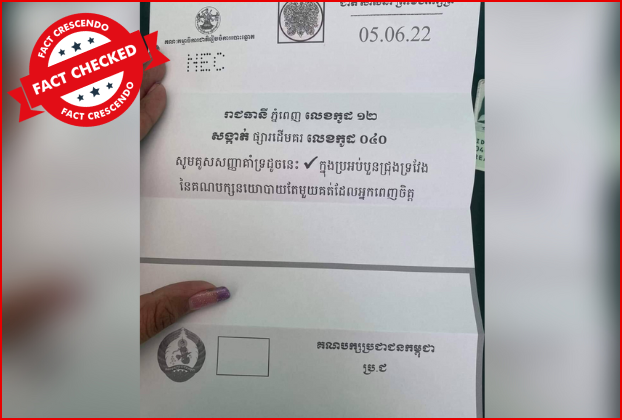
«ថោក! អ្នកគាំទ្រគណបក្សភ្លើងទៀនបោះចំត្រង់ណា បើដាក់ប្រឡោះតែមួយ»
Publisher’s rating: Misleading
The claim questioned where Candlelight Party (CLP) supporters could vote when a ballot showed only one party. Fact Crescendo Cambodia examined a social-media photo of a ballot bearing only the Cambodian People’s Party (CPP) name and logo, used with a caption asking, “Cheap! Where can CLP supporters vote for in the ballot which has only one box?” The review says the post implied that CLP had been removed from the ballot so its supporters could not vote. The image concerned the 2022 commune election in Sangkat Phsar Deum Kor, Phnom Penh. To check why CLP was absent, the review reports interviewing CLP spokesman Thach Setha and National Election Committee (NEC) spokesman Hang Puthea. Setha said CLP candidates in that commune were removed after the NEC found that two could not read and write Khmer; he also said CLP candidate lists in 10 Phnom Penh communes were removed for incompleteness. Puthea said only CPP candidates were allowed to run in Phsar Deum Kor and described the removals as following candidate eligibility or completeness problems. He reported that 86 CLP candidates nationwide were removed for failing to complete required criteria. The review’s finding turns on the difference between a one-party ballot and a party being removed from a ballot on which it was eligible to run. It says the ballot shown was correct for Phsar Deum Kor because CPP was the only party running there; it attributes CLP’s absence to the NEC’s removal of its candidates, not to the ballot omitting an eligible CLP list. Thus, the photo alone did not establish the broader implication that CLP supporters had been denied a place on a ballot where the party was running.

Erika Kokay do PT denunciou fraude nas urnas eletrônicas
Publisher’s rating: Falso
Where the data comes from
Fact checks come from Data Commons and link to the organizations that published them.
What you’ll find
Each result links to the original fact check. Open it to read the publisher’s findings, with summaries and supporting sources where available.
Report an error
To report an error, send the page URL and supporting evidence.