PeakMetrics / Fact Checks
Has this been
fact-checked?
Paste a claim or upload an image to find existing fact checks. See what fact-checkers found and read the evidence before you share.
Search fact checks ↓API & integrations ↗Browse by topic
Explore fact checks by subject.
Search fact checks
Search by text or imageLatest fact checks
98,327 published reviews
Claim: Vladimir putin not condemned india on the prophet mohammad controversy
Publisher’s rating: PARTLY FALSE
Fact Crescendo investigated social-media posts suggesting that Russian President Vladimir Putin had condemned India over a BJP spokesperson’s controversial remarks about Prophet Muhammad. The review says the posts combined news cards and that one card attributed to Putin a statement that insulting the Prophet was not freedom of expression and violated religious freedom. It reports that this card was posted on Facebook on June 6, 2022, and was shared separately as well. The review’s central distinction is between the substance of Putin’s earlier remarks and the claim that he made them in response to the Indian controversy. To check the attribution, the publisher says it searched Google and found a Russian news-agency report dated December 23, 2021. That report described Putin as saying that criticism or insult of Prophet Muhammad was not art or freedom of speech, and that it violated religious freedom and people’s sacred feelings. Fact Crescendo says news reports connected those remarks to the Charlie Hebdo cartoons in France. In the material it says it found, there was no evidence that Putin made the remarks in response to the BJP spokesperson’s comments. The review therefore does not say Putin had never criticized insults against Prophet Muhammad. Rather, it concludes that an older statement about a different episode was recirculated as if it were a contemporary response to the BJP controversy. It says this framing created a misleading impression and advises readers not to share such material without verification.


Photo of a Hindu family who converted to Islam in the United States
Publisher’s rating: FALSE
The claim concerns a photo circulated as showing four members of one Hindu family who had recently converted to Islam in the United States. FACTLY says its reverse-image search found similar images in a Facebook post from 7 November 2015, where the user described a German man named Donel Clause converting with his family in Hurghada, Egypt. The review also located the same photo in a Youm7 article dated 6 November 2015, which identified the family as German and placed the conversion at Al-Tawhid Mosque in Hurghada. (S1) The review’s account of the image’s earlier appearances and the matching location and family details contradicts the post’s US setting and identification of the family as Hindu. The article reports that Donel Clause converted with his wife and two children, and says the photo was reportedly taken after the mosque’s imam distributed a Quran to each family member. It also cautions that the family’s prior religious background could not be established. (S1)

Política Lula diz que Estuda extinguir 13° de Professores de Escolas Públicas e critica Bolsonaro por dar 30% de aumento aos Professores
Publisher’s rating: Falso

Visuals related to a recent Kalash Yatra in Ayodhya
Publisher’s rating: MISLEADING
The claim concerns a video of a procession in which women carry urns, presented on social media as visuals of a recent Kalash Yatra in Ayodhya. FACTLY reports that the same visuals had appeared online years earlier, rather than being footage of the recent event described in the posts. To investigate, the article says it used reverse image search on screenshots from the viral video. That search led to a YouTube video with similar visuals, uploaded in January 2017 to the official channel of God woman Devi Hemlata Shastri. The description accompanying that video identifies the visuals as a Kalash Yatra in Mathura. This establishes that the footage was circulating well before the claimed recent Ayodhya event. The article qualifies its location finding: it says it could not independently verify where the video was filmed. It therefore relies on the earlier YouTube upload and its description to trace the footage, and concludes that the viral video is not recent. It also notes that Kalash Yatras had been reported in places close to Ayodhya, but says those reports do not make the old viral visuals footage of those events.

72 procent van de Amerikaanse volwassenen heeft een van de vaccinaties tegen covid-19 geweigerd.
Publisher’s rating: Het merendeel van de Amerikaanse volwassenen is volgens de CDC volledig gevaccineerd én heeft een derde boosterdosis ontvangen. Het klopt dus niet dat 72 procent van de Amerikanen tenminste één van de vaccinatiedosissen zou hebben geweigerd.
The claim under review was that 72 percent of U.S. adults had said no to COVID-19 vaccination. The review traces the figure to Andrew Wakefield, who said that adults had not taken the first, second or booster dose and attributed the figure to CDC data. It notes that the claim was repeated by NineforNews and shared on Facebook, without a further source in the NineforNews account. [S1: “Concreter zegt Wakefield dat ze ofwel niet de eerste, tweede of boosterdosis hebben genomen. Dit zou volgens hem uit data van de Amerikaanse gezondheidsautoriteit CDC blijken.”; “Zijn woorden worden zonder verdere bron overgenomen.”] To check the claim, the publisher says it consulted the CDC’s vaccination-rate figures and focused on people over 18, because Wakefield’s claim concerned adults. Using the CDC update dated June 7, 2022, the review reports that 76.6 percent of adults were fully vaccinated. It also explains that the CDC counted a person as fully vaccinated after one Johnson & Johnson dose or two Moderna or Pfizer/BioNTech doses. [S1: “Wakefield spreekt specifiek over volwassenen, dus keek dpa ook naar de percentages voor de bevolking boven de 18 jaar.”; “De CDC meldt bij de laatste update van de cijfers (7 juni 2022) dat 76,6 procent van de 18-plussers volledig is gevaccineerd.”; “Dat houdt in dat zij ofwel één dosis van het Janssenvaccin hebben gehad, of twee dosissen van het Moderna- of Pfizer/BioNtechvaccin.”] The review further reports that 12.7 percent had received a first dose but not a second. Among adults who were fully vaccinated, 50.3 percent had received a booster; measured against all adults, the review calculates that as 38.6 percent. It says 89.3 percent of adults had received a vaccine and concludes that the 72-percent refusal figure could not be derived from the CDC data. The distinction matters: the claim describes people who rejected any dose, whereas the review separately reports first-dose, full-vaccination and booster rates. [S1: “Er is wel 12,7 procent van de bevolking die een eerste prik heeft gehad en niet meer voor een tweede ging.”; “Van de groep volwassenen die al volledig gevaccineerd was, heeft iets meer dan de helft (50,3 procent) ook een boosterdosis gehad.”; “Dat betekent dat 38,6 procent van de totale bevolkingsgroep de booster heeft gehad.”; “Van de 18-plussers nam 89,3 procent het vaccin en bouwde dus wat immuniteit op.”; “De 72 procent die ‘nee’ zou zeggen tegen een vaccin is niet te herleiden naar de officiële CDC-gegevens.”]

Wegen Strommangels haben die USA den Notstand ausgerufen.
Publisher’s rating: In den USA herrschen weder Strommangel noch ein akuter Notstand. Die Behauptung ist aus dem Zusammenhang gerissen.
The claim links a U.S. emergency declaration to an imminent electricity shortage, saying that outages threatened consumers and industry. The review traces that wording to a social-media post and distinguishes the post’s implication from what Biden’s June 6 declaration actually said: it concerned measures to expand solar-energy production and supply, not an announcement that the country faced a general power shortage.

England cricketer Moeen Ali tweets demanding an apology from India for insulting Prophet Muhammad
Publisher’s rating: FALSE
The claim concerned a social-media post attributing to England cricketer Moeen Ali a demand for an apology from India over remarks about Prophet Muhammad. The post also alleged that he threatened to boycott the IPL and never visit India if India did not apologise, and included a screenshot of the purported tweet. The review examined whether the tweet and statements were genuinely Moeen Ali’s. The review says the account behind the viral tweet was a fan account using Moeen’s name, not an official account: its bio described it as an “unofficial” and “commentary account” of Moeen Ali. The review also reports that it could not find any official or verified social-media accounts for him, and found no news reports of the alleged statements. On that evidence, it concludes that Moeen Ali did not make the statements attributed to him and that the screenshot did not establish that he had done so.
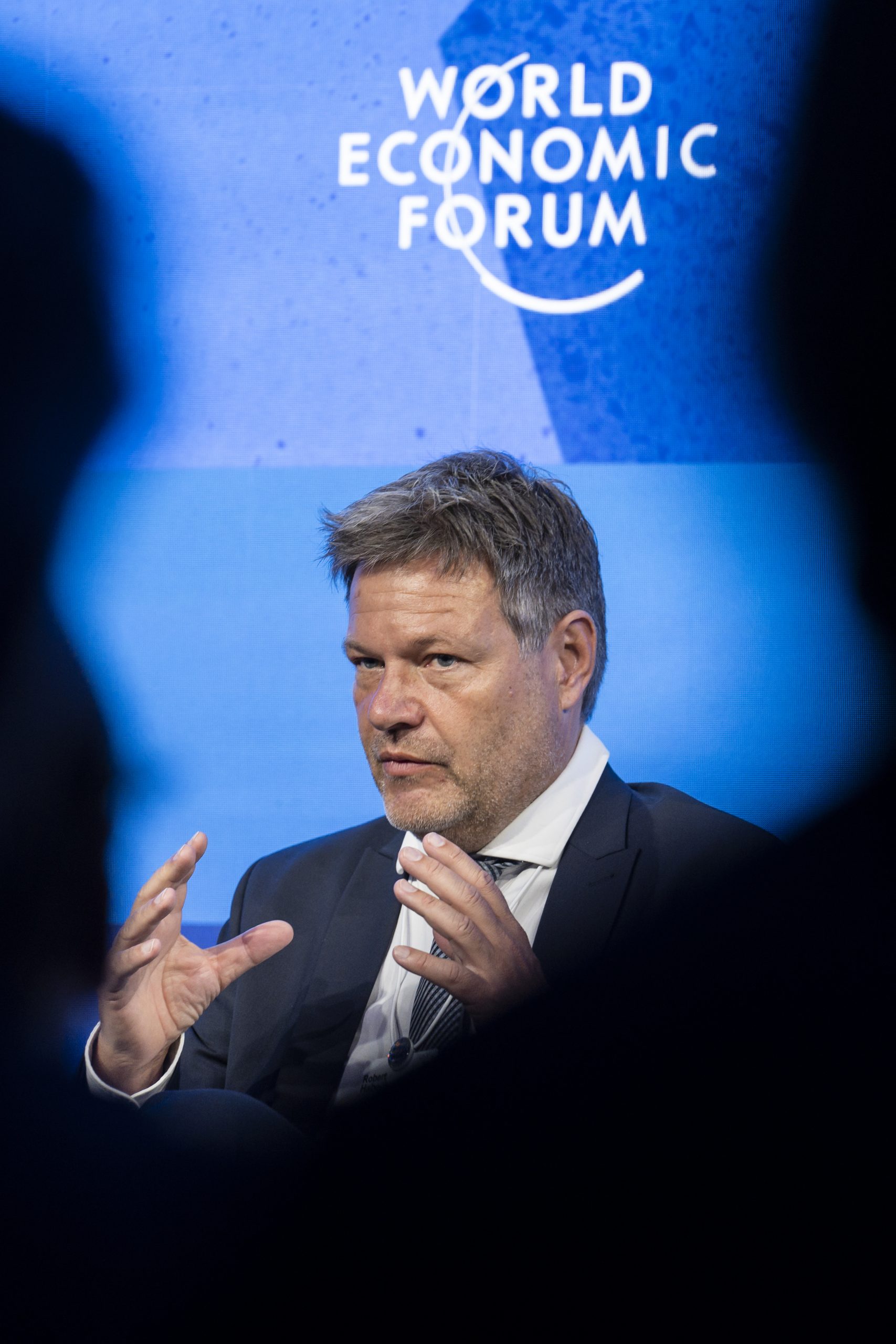
Der deutsche Wirtschaftsminister Robert Habeck hat beim Wirtschaftsforum in Davos gesagt, dass man die Sanktionen gegen Russland nicht aufheben sollte, auch wenn es Hunderttausende Hungertote fordern könne.
Publisher’s rating: Habeck werden hier falsche Zitate unterstellt. Dies beruht zum Teil auf einer ungenauen Übersetzung des Live-Dolmetschers, andererseits auf einer gewollten Verzerrung russlandfreundlicher Akteure.
The claim concerns Robert Habeck’s remarks at a World Economic Forum panel in Davos: circulated versions represented him as saying that sanctions on Russia should not be lifted even if doing so meant hundreds of thousands of people would starve. The review says a widely viewed YouTube video and a tweet spread that interpretation. It compared the circulated wording with the original WEF recording, where Habeck could be heard without the live interpreter. That comparison changes who is described as willing to accept deaths to maintain sanctions. In the circulated translation, Habeck appears to argue that “100,000 lives” might be lost but sanctions should remain. In the review’s translation of the original English, he instead describes it as unthinkable for his country and others to accept lost lives in exchange for ending sanctions, while saying that such a trade-off was conceivable for Russia. The review also reports that the German economy ministry supplied a similar translation and said Habeck was referring to Russia’s use of blocked Ukrainian grain exports as leverage for sanctions relief. The review attributes the misleading version partly to an inaccurate live interpretation and partly to distortion by pro-Russian actors. It also notes the broader food-export context: the FAO simulation it cites projected that undernourished people could increase by eight to eleven million in 2022/23 if the conflict caused a sustained decline in food exports. That forecast is not evidence that Habeck made the circulated statement; the review’s decisive evidence on his words is its comparison with the original recording and the ministry’s separate translation.
Na época que eu era estudante este número [de alunos das federais que são afrodescendentes] não chegava a 5%
Publisher’s rating: Insustentável

कलश यात्रा अयोध्या धाम में दिल छू लिया इस वीडियो ने मेरा जय जय श्री राम।”
Publisher’s rating: False

50 lakhs youth BJP members across India left the party and joined PMK.
Publisher’s rating: Fake

Video showing the footage of Sidhu Moose Wala’s murder
Publisher’s rating: FALSE
ভারত যদি মুহাম্মদ (সাঃ) এর কটুক্তির জন্য ক্ষমা না চায়, তাহলে ভারতে ম্যাচ খেলতে না যাওয়া এবং আইপিএল বয়কট করার ঘোষণা দিয়েছেন ইংলিশ অলরাউন্ডার মঈন আলী
Publisher’s rating: False

Foto toont laadstation voor elektrische wagen, aangedreven door een dieselmotor.
Publisher’s rating: De laadpaal bevindt zich in El Paso in de Amerikaanse staat Texas. Het loopt op elektriciteit, wat in Texas grotendeels door gas gegenereerd wordt. De dieselgeneratoren in de foto zijn noodgeneratoren voor een nabijgelegen gebouw.
The claim concerns a photo of an electric-car charging point with a diesel generator visible behind it. The post uses that juxtaposition to suggest the charger is powered by diesel. The original review locates the charger at a parking area at El Paso airport in Texas and distinguishes the nearby generator’s function from the charger’s power source. To investigate the image, the review describes a reverse image search that led to a Reddit thread where a user suggested the El Paso location. It says the location was confirmed, and that the Blink charging point appears on a map of charging stations. The review reports that the map specifically indicates the diesel generator is not connected to the charger. It also describes checking Google Maps, where two buildings are visible near the generator; the review identifies it as an emergency generator for a nearby building. The review says the charger runs on electricity. It adds that Texas electricity is generated mainly from gas, followed by non-hydro renewable sources such as solar and wind, while electricity from petroleum, including diesel, is nearly absent. Thus, the image shows nearby diesel equipment, but the investigation’s location and connection checks do not support the claim that it powers the charging station.
Where the data comes from
Fact checks come from Data Commons and link to the organizations that published them.
What you’ll find
Each result links to the original fact check. Open it to read the publisher’s findings, with summaries and supporting sources where available.
Report an error
To report an error, send the page URL and supporting evidence.