PeakMetrics / Fact Checks
Has this been
fact-checked?
Paste a claim or upload an image to find existing fact checks. See what fact-checkers found and read the evidence before you share.
Search fact checks ↓API & integrations ↗Browse by topic
Explore fact checks by subject.
Search fact checks
Search by text or imageLatest fact checks
98,314 published reviews
प्रधानमंत्री मोदी की इस रैली के बाद लोगों में शराब बांटी गयी।
Publisher’s rating: Partly False
Cancer can disappear by quitting sugar and consuming lemon and coconut oil
Publisher’s rating: False
“Na cidade de São Paulo se mata menos gente de homicídio e latrocínio do que, por exemplo, morre em Nova York, que é uma cidade parecida”
Publisher’s rating: Verdadeiro, mas...

బుర్ఖా ధరించి ఉన్న ముస్లిం మహిళ ఒక బాలుడిని మత్తులోకి దించి అతన్ని కిడ్నాప్ చేస్తున్న దృశ్యాలు
Publisher’s rating: FALSE
Das Zitat «Manchmal frage ich mich, ob die Welt von einigen klugen Menschen regiert wird, die uns zum Narren halten, oder von Schwachköpfen, die es ernst meinen» stammt von Mark Twain.
Publisher’s rating: Es gibt keinen Beleg dafür, dass Mark Twain diesen Satz gesagt hat. Er findet sich im 1969 erschienenen Buch «The Peter Principle» und wird dort dem Studenten Caesara Innocente zugeschrieben.
The claim concerns a saying circulated as a Mark Twain quotation: that the world may be governed either by clever people fooling everyone or by fools who mean what they say. The Deutsche Presse-Agentur review examined the attribution, noting that a widely shared quote image credited the words to Twain. The wording in the claim adds “einigen” (“some”) and otherwise differs slightly from the version quoted in the review. The review’s conclusion is that there is no evidence Twain said it; it traces the saying instead to Laurence J. Peter and Raymond Hull’s 1969 book *The Peter Principle*, where it is attributed to a student named Caesare Innocente. (The review’s rating text spells the student’s name “Caesara.”) To check the attribution, the review reports comparing the saying against quotation collections on the Mark Twain House website and in the German children’s magazine Geolino; neither included it. It also says that searches using English keywords led to the book in Google Books. There, the review found a nearly identical English sentence: “I don’t know if the world is run by smart men who are, how you Americans say, putting us on, or by imbeciles who really mean it.” That textual match provides the review’s direct evidence for an earlier source than the Twain attribution. The review further reports that quotation researcher Barry Popik also traced the saying’s first appearance to *The Peter Principle* and identified a 1990 book as the oldest source he found for the false attribution to Twain. Taken together, the review’s evidence supports the distinction between the saying’s traceable appearance in the 1969 book and its later attribution to Twain; it does not establish that Twain said it.
Des chiots de race bichon maltais à donner.
Publisher’s rating: On retrouve la même photo en ligne depuis plusieurs années. Il est donc impossible que ces chiots soient actuellement âgés de trois mois, comme le prétend la publication.
The Facebook post described in the review offered Maltese puppies “for good care,” claiming their owner had died in a road accident and that his wife wanted to give them away. The review says the puppies in the photograph are indeed Maltese, but that does not establish that the pictured animals are the puppies supposedly available now. Its investigation focused on the image’s earlier appearances and the post’s broader pattern of warning signs. Using reverse image search, the publisher found the same photograph in an Italian advertisement from November 2020 and on a German sales site in April 2021, where it was listed for 1,400 euros. It also reported that the image appeared across sites and social networks in multiple languages, and that attempted scams using the same photo had been reported in December 2021. Those earlier uses undermine the claim that the pictured puppies were currently three months old. The review also describes a recurring pattern in posts offering supposedly three-month-old purebred puppies after a tragic event. It notes that such posts often urge users to share them, may be copied and translated into multiple languages, and can come from nearly empty Facebook profiles. It warns that people responding may be asked to pay supposed transport costs or may face phishing attempts. These observations support treating this specific offer as suspicious; they do not establish that every puppy-giving post is fraudulent.

Deutschland ist das einzige Land der Welt, in dem ein "Gasnotstand" ausgerufen worden ist.
Publisher’s rating: In der EU haben bereits mehrere Länder Warnstufen aufgrund des bevorstehenden Problems bei der Gasversorgung ausgerufen, darunter auch Österreich. Tatsächlich ist Deutschland dabei aber das einzige Land, das bereits die zweite Warnstufe „Alarm” aktiviert hat.

Claim: pon radhakrishnan not asked annamalai to take action against radharavi
Publisher’s rating: FALSE
The review investigated a news card alleging that Pon. Radhakrishnan had urged Annamalai to take “strong action” against Radharavi. It reports that readers sent the card to the publisher for verification and that it was also being shared on social media. The review places the allegation amid controversy over remarks Radharavi made at a BJP public meeting, but treats the news card as a separate rumor to check. [S1]
Weltweiter Pandemie-Vertrag, der Aufgabe von Souveränität bedeutet hätte, ist gescheitert.
Publisher’s rating: Die Mitglieder der WHO planen weiterhin, in denen nächsten Jahren eine Vereinbarung zur Pandemiebewältigung zu treffen. Ein möglicher Vertrag existiert nicht mal als Entwurf. Die WHO hat generell nicht die Kompetenzen, die Verfassungen ihrer Mitglieder zu untergraben oder die Souveränität der WHO-Mitgliedsländer abzuschaffen.
The claim that a worldwide pandemic agreement had failed conflates two different matters: a proposed future pandemic agreement and amendments to existing International Health Regulations. The review reports that WHO members still planned to negotiate an agreement, while no draft existed. The WHO’s annual assembly in Geneva, held from 22 to 28 May 2022, did not have a worldwide pandemic treaty on its agenda. The review says members had decided on 1 December 2021 to pursue an agreement, with a decision on a possible agreement or treaty planned for May 2024. The claim’s account of a failed agreement also misstates what happened at the May 2022 assembly. Proposals to amend the existing International Health Regulations were on the agenda, but the proposed amendments were not adopted. Delegates instead agreed to shorten the period before future amendments take effect from 24 months to 12 months and to have a working group develop further proposals. That outcome concerned the existing regulations; it did not mean a separate pandemic agreement had been defeated. On sovereignty, the review explains that WHO recommendations under the existing regulations are not binding instructions and that member states decide their own pandemic measures. It also notes that binding WHO agreements refer to implementation within each country’s constitutional order, and cites the WHO constitution as safeguarding that principle. The evidence therefore does not support either the claim that the planned agreement had failed or the claim that it would transfer all national sovereignty or executive power to the WHO.

Símbolo da COPA no Katar ! A tecnologia às vezes assusta, mas pode ser surpreendente tb
Publisher’s rating: Falso

Recent visuals showing collapse of Narayangarh- Kathmandu Road in Nepal
Publisher’s rating: FALSE
The claim concerns a video said to show a recent collapse on the Narayangarh–Kathmandu road in Nepal. FACTLY reports that the footage instead shows a landslide-related collapse on national highway 707 in Sirmaur district, Himachal Pradesh. The road connects Shilai with Paonta Sahib, and the incident occurred in June 2021—not during the landslides reported in Nepal in June 2022. The review describes two checks: a reverse image search returned multiple 2021 news reports featuring the same visuals, and reports by multiple news agencies identified the footage as showing the collapse on highway 707 in Sirmaur. These findings connect the circulated video to the earlier Himachal Pradesh incident rather than the Nepal event named in the claim. The review notes that landslides did occur in Nepal, including around Narayangarh, in June 2022. But it distinguishes that true background from the video’s provenance: the visuals in the post were not related to those Nepal landslides.
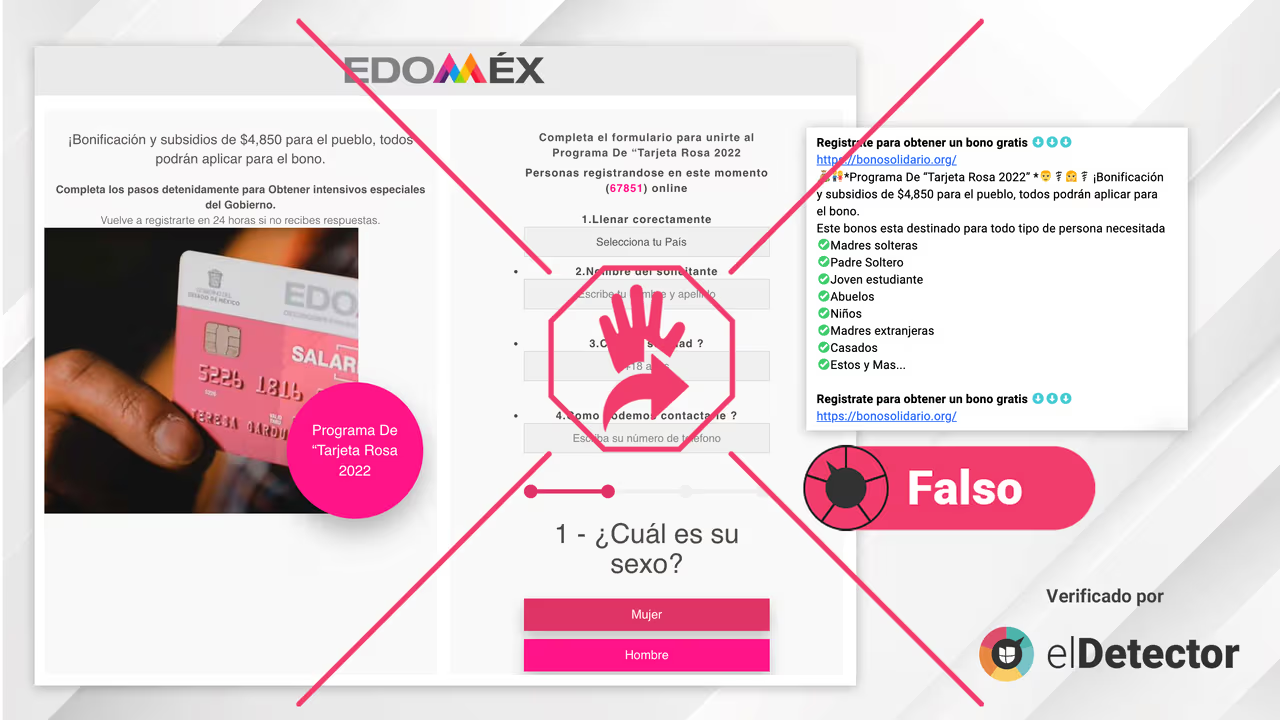
Se pueden conseguir $4,850 pesos a través del Salario Rosa al completar el formulario de la web bonosolidario.org.
Publisher’s rating: Falso
The claim concerns a specific offer: that completing a form on bonosolidario.org would provide $4,850 pesos through the Salario Rosa program in the State of Mexico. The review says the state government identified bonosolidario.org as a false site and warned that Salario Rosa “no tiene sitio web ni redes sociales.” It also says the official service for applying was sedesem.edomex.gob.mx, and that the program does not request personal information through messaging apps or web forms. The review characterizes the form-based offer as phishing. The amount and the advertised eligibility also conflict with the review’s account of the program. It reports that the chain promoted $4,850 and said people of many kinds could apply, while the government program described in the review was limited to women who met specific requirements. The review says both program modalities paid $2,400, not $4,850, and that payments could be made “en una y hasta seis ocasiones” subject to authorized budget availability. The review’s conclusion is therefore specific to the advertised website and offer: it says applicants did not need to fill out a questionnaire on bonosolidario.org to access Salario Rosa, calls the site false, and says the amount and broad eligibility advertised in the chain were incorrect. Its account directs applicants to the official state-government service instead.
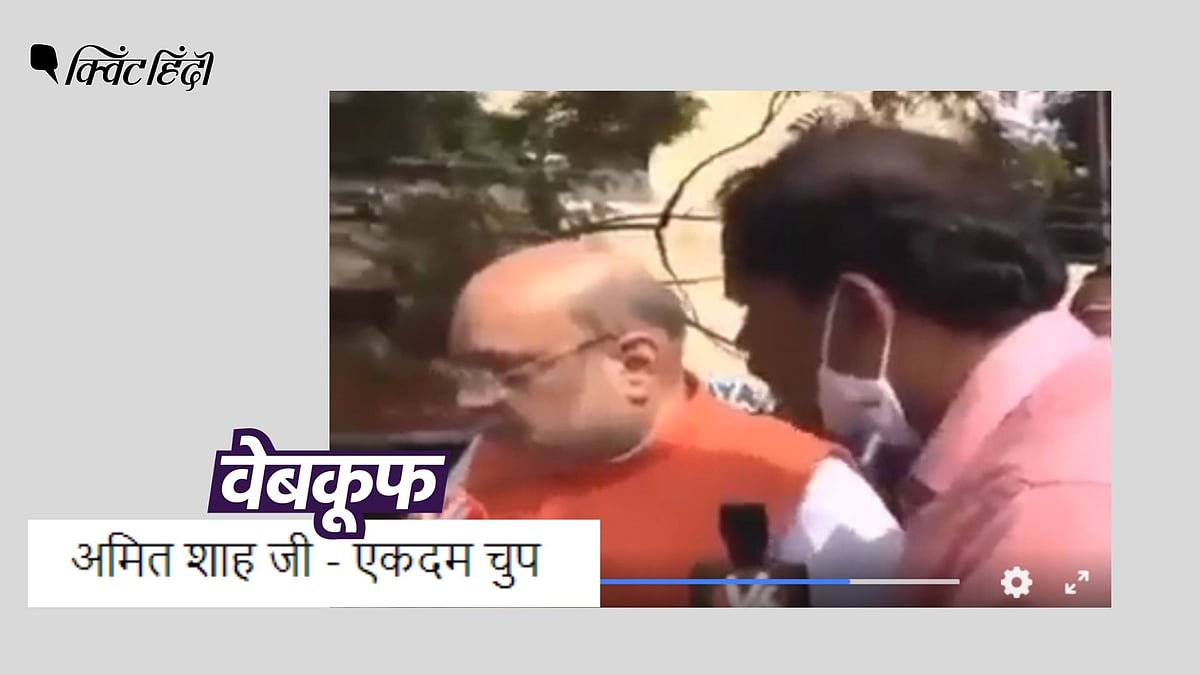
अमित शाह नहीं दे पाए रिपोर्टर के सवालों के जवाब
Publisher’s rating: FALSE
রাজস্থানের উদয়পুরে কানাইয়া লাল নামের এক ব্যক্তি নুপুর শৰ্মার সমর্থনে পোস্ট করার জন্য দুই আতংকবাদী কানাইয়া লালের গলা কেটে হত্যা করে দিয়েছে
Publisher’s rating: False

President of Ivory Coast Alassane Ouattara performed hajj with his own money, refusing the official protocol
Publisher’s rating: MISLEADING
The claim concerned a circulating photo said to show Ivory Coast President Alassane Ouattara performing Hajj using his own money and refusing Saudi official protocol. FACTLY’s review says Ouattara did perform Hajj in 2018, but with his family and other prominent Ivorian figures, and that the claim he refused protocol was not supported. It also reports that he performed Umrah in Madinah in April 2022 and was received by Saudi officials. The review therefore distinguishes the real pilgrimages from the claim attached to the circulating photo. To check the photo’s identification, the review compared it with images from Ouattara’s April 2022 Umrah visit and his August 2018 Hajj; it says the images from neither visit matched the viral photo. It also cites Saudi media platform Anti-Rumours Authority, which said the person in the circulating image was not Ouattara. That authority’s account stated that Ouattara had performed Hajj in 2018 with his private security, at the Saudi king’s invitation, and rejected the assertion that he had refused Saudi protocol. The evidence supports the conclusion that the photo was misidentified and that the claim of refusing official protocol is misleading. Although the social-media claim also says Ouattara used his own money, the review’s cited account instead says his 2018 pilgrimage was by invitation; the supplied text does not establish that he personally paid for it.

బీజేపీ సభలో బందోబస్తుకు వచ్చిన తెలంగాణ పోలీస్ సిబ్బంది మంచినీళ్ళు లేక బురద నీటిలో చేతులు కడుగుతున్న దృశ్యాలు
Publisher’s rating: MISLEADING
Where the data comes from
Fact checks come from Data Commons and link to the organizations that published them.
What you’ll find
Each result links to the original fact check. Open it to read the publisher’s findings, with summaries and supporting sources where available.
Report an error
To report an error, send the page URL and supporting evidence.