PeakMetrics / Fact Checks
Has this been
fact-checked?
Paste a claim or upload an image to find existing fact checks. See what fact-checkers found and read the evidence before you share.
Search fact checks ↓API & integrations ↗Browse by topic
Explore fact checks by subject.
Search fact checks
Search by text or imageLatest fact checks
98,307 published reviewsUm cara [Geraldo Alckmin] que foi governador de São Paulo 16 anos e vice seis anos
Publisher’s rating: Exagerado
A Facebook page published 4 images on August 23, 2022, of which 2 were showing a man passing out in front of a crowd, asserting that is what occurred in the Aeon Mall in Phnom Penh. The reason why there were so many people waiting in long lines to buy was also expressed on the same Facebook page, two perfume bottles. Social media users frequently shared this assertion along with the mixed feelings and responses are also present.
Publisher’s rating: False

గుజరాత్లోని ‘బేట్ ద్వారక’లోని రెండు ద్వీపాలను వక్ఫ్ బోర్డు తమవని క్లెయిమ్ చేసింది
Publisher’s rating: FALSE


A law to legalise same-sex marriage is set to be passed in Pakistan under the guise of a transgender act as part of efforts by non-governmental organisations (NGOs), which obtain funds from gay and lesbian communities abroad. The claim further adds that “educated khawajasira” do not support the proposed law and that they acknowledge it is part of a covert plan to legalise homosexuality in Pakistan and “ruin the Muslim society”.
Publisher’s rating: False
Wo es keine grüne Regierung gibt, gibt es auch keine Energiekrise.
Publisher’s rating: Eine Energiekrise erleiden gerade viele Länder, auch von konservativen Parteien regierte. Auf die aktuellen Benzinpreise haben politische Entscheidungen allein der deutschen Regierung nur geringe Auswirkungen.

Training video of Indian army
Publisher’s rating: FALSE
The claim concerns a social-media video of uniformed women jumping over a moving line of flames, presented as Indian Army training. FACTLY says it investigated that video and concluded that it instead shows women commandos from Sindh Police in Pakistan. The review states that the footage is old and unrelated to India. FACTLY describes using reverse image searches on screenshots from the circulating video. It reports finding videos with similar visuals posted by Pakistani media channels and users in August 2019, where they were described as training footage of Pakistani commandos. The review also says the same video appeared on the Facebook page of Karachi Walay, a Pakistan-based news and media website, which reported it as training visuals of Sindh women commandos. The review adds that other news websites published the video with a similar description in 2019 and points to separate training videos and pictures of women commandos in the Special Security Unit of Sindh Police. It uses this provenance and corroborating material to distinguish the footage from Indian Army training. The evidence presented therefore addresses the specific video in the claim, rather than merely showing that women commandos train in Pakistan.
Photo shows solar panels in Japan wrecked by super typhoon Nanmadol
Publisher’s rating: False
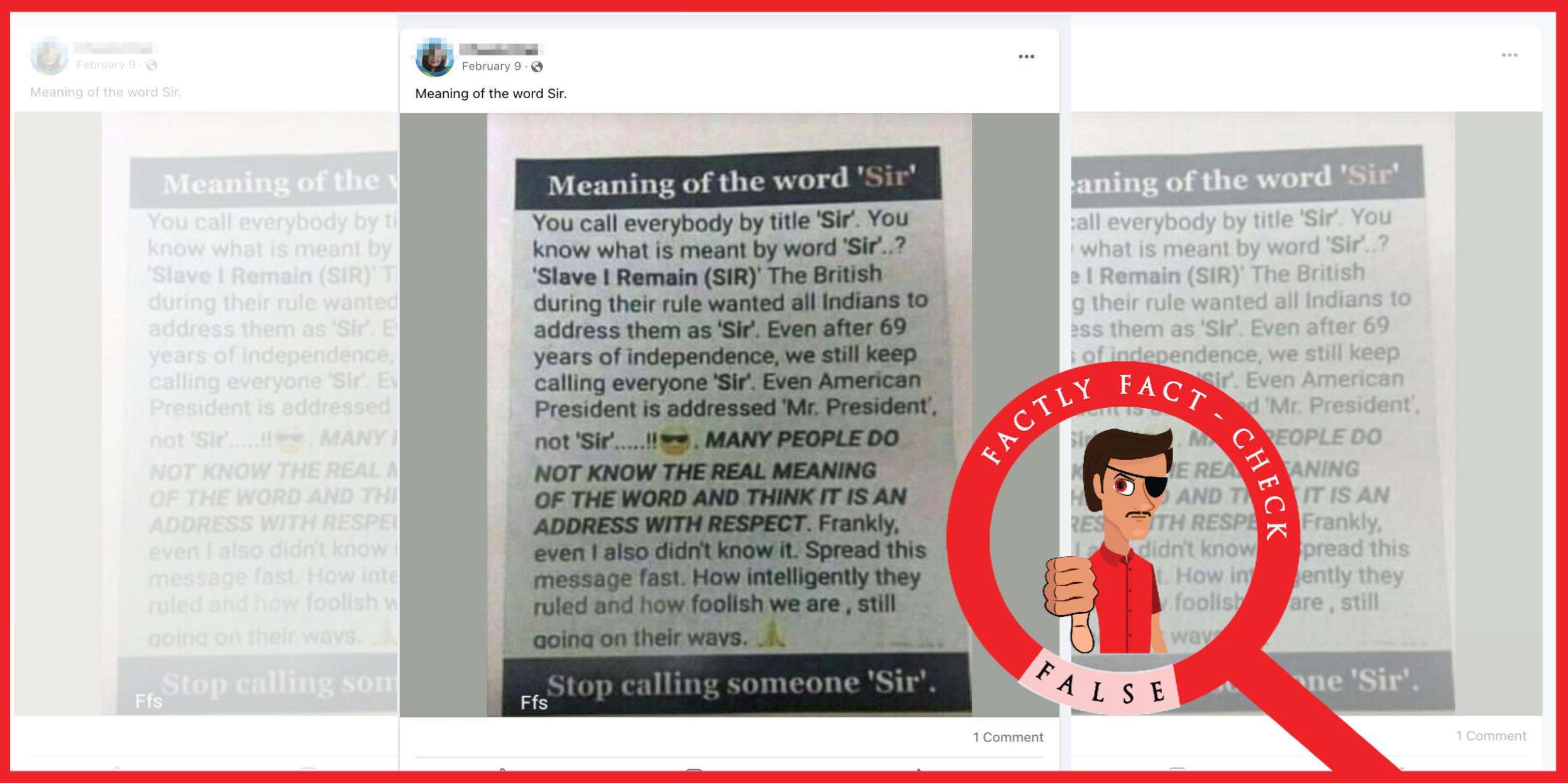
The English word SIR is an acronym for ‘Slave I remain’
Publisher’s rating: FALSE
The review addresses a social-media claim that “SIR” stands for “Slave I Remain,” supposedly because the British wanted Indians to address them that way during British rule. It treats the proposed expansion as an etymological claim and checks whether the word is an acronym, rather than investigating a particular historical document or episode of British rule. The article describes the claim as circulating on social media and gives the alleged colonial explanation as part of that claim.

In India Jodo Yatra, Cylinder is keeping a close watch on Rahul Gandhi for insulting him.
Publisher’s rating: Fake
RSS യൂണിഫോം ധരിച്ച കേരള ഗവർണർ ആരിഫ് മുഹമ്മദ് ഖാന്റെ ചിത്രം
Publisher’s rating: FALSE

Een boek van Nijntje met expliciete inhoud is gericht op kinderen.
Publisher’s rating: Het boek bestaat echt maar is voor volwassenen, niet voor kinderen. Het gaat om een Portugese parodie en heeft niets te maken met de echte Nijntje of haar auteur Dick Bruna.

Where the data comes from
Fact checks come from Data Commons and link to the organizations that published them.
What you’ll find
Each result links to the original fact check. Open it to read the publisher’s findings, with summaries and supporting sources where available.
Report an error
To report an error, send the page URL and supporting evidence.