PeakMetrics / Fact Checks
Has this been
fact-checked?
Paste a claim or upload an image to find existing fact checks. See what fact-checkers found and read the evidence before you share.
Search fact checks ↓API & integrations ↗Browse by topic
Explore fact checks by subject.
Search fact checks
Search by text or imageLatest fact checks
98,240 published reviews
“Tercer detenido por asesinato de Carabinera fue indultado por Piñera en 2020”
Publisher’s rating: Incompleto
تصویر زانو زدن و دستبوسی ولادیمیر پوتین در برابر شیجینپینگ، رئیس جمهوری چین.
Publisher’s rating: نادرست
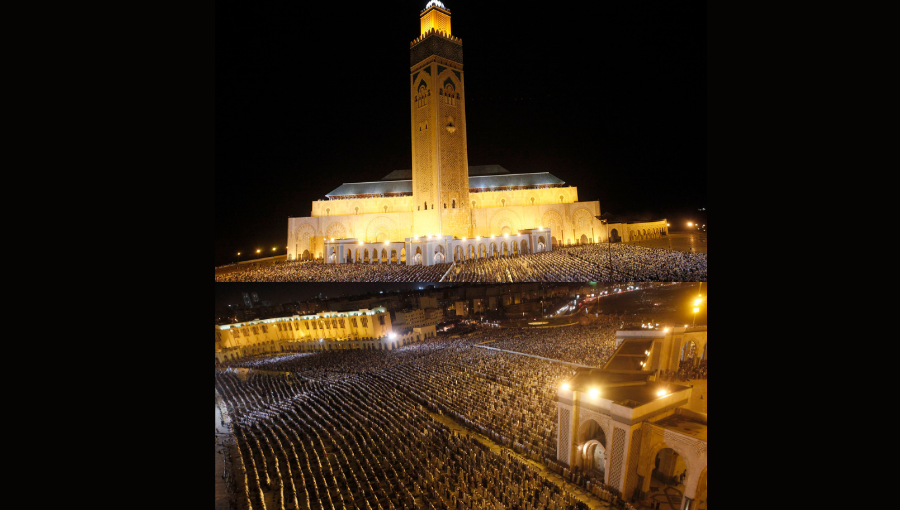
Fas’taki teravih fotoğraflarının güncel olduğu iddiası
Publisher’s rating: Yanlış
The claim concerns photos of crowded prayers at Morocco’s Hassan II Mosque that circulated as if they showed current Tarawih prayers. The investigation says it examined those photos and found that they were in Reuters’ photo archive, where both were dated to 5 August 2013, during Laylat al-Qadr in Casablanca. To check the images, the publisher reports using reverse image search. It also says that searching with the date led to contemporary news reports containing the same photos. This evidence ties the circulating images to the 2013 event, rather than to current prayers. The article adds that the photos had circulated the previous year with the same claim and had been examined by AFP.

Video of an Ayyappan Devotee singing a Muslim prayer during Bhajan at a temple in Kerala.
Publisher’s rating: MISLEADING
The post says a video shows an Ayyappan devotee singing the Muslim prayer “La ilaha illallah” during a temple bhajan in Kerala. It further alleges that the incident resulted from appointing Muslim and Christian priests in Hindu temples. The review’s central finding is that the event was not at a Kerala temple: it identifies the footage as a Padi Puja held in Eluru, Andhra Pradesh, in 2017. “The post alleges that this incident occurred due to the appointment of Muslim and Christian people as priests in Hindu temples.” “The video is not from a temple in Kerala but rather from a Padi Puja event held in Eluru City, Andhra Pradesh in 2017.” (S1) To trace the footage, the review says it searched online and found a complete version on YouTube, posted in 2019 under the title “La ilaha illallah ayyappa swamula songs.” In that version, devotees sing Ayyappan bhajans incorporating Islamic prayer phrases; the lead singer speaks Telugu and refers to Vavar Swami. The review also notes that the orchestra banner visible in the video is written in Telugu. These details link the clip to an Ayyappan devotional performance, rather than establishing the claimed Kerala temple setting. “Through a thorough internet search using appropriate keywords, we were able to locate the complete version of the viral video on YouTube.” “The lead singer converses in Telugu and alludes to Vavar Swami during the song.” (S1) The review traced other videos of the same event, uploaded in 2017, to the Ayyappa Swami Padi Puja at Chalasani Gardens, a function hall in Eluru. It says the venue comparison supports that identification and reports that singer N Balaji confirmed it to India Today in 2021. The review also provides context for the Islamic phrases: it describes Vavar as a Muslim saint and Ayyappa devotee, and says Ayyappan songs have included references to Vavar and Islamic phrases. The footage therefore does not substantiate the post’s location or its explanation for why the singing occurred. “These videos reveal that the event in question is the Ayyappa Swami Padi Puja, which took place at Chalasani Gardens, a function hall situated in the city of Eluru, Andhra Pradesh.” “The Singer in the viral video, N Balaji, also confirmed the same to India Today in 2021.” “Over the years, there have been several instances of Ayyappan devotees including references to Vavar Swami and Islamic phrases in their songs.” (S1)

“$650 mil al mes (en pensión de gracia) de por vida”
Publisher’s rating: Falso

フィリピンの裁判所がビル・ゲイツに国際逮捕状を発行した
Publisher’s rating: 誤り
The review found no evidence that a Philippine court requested or issued an arrest warrant for Bill Gates. It also reports that the named Heinous Crimes Court does not exist in the Philippines.


मनीष कश्यप के समर्थन में बिहार बंद डर gye तेजस्वी यादव सदन में कहा नहीं बनना है मुख्यमंत्री ।
Publisher’s rating: Altered


पाकिस्तान में आए भूकंप का है ये वीडियो
Publisher’s rating: FALSE

El Tribunal de Estrasburgo ha dicho que Franco puede volver al Valle de los Caídos
Publisher’s rating: Falso

Görsel Elon Musk ve Mary Barra'nın Birlikteliğini mi Gösteriyor?
Publisher’s rating: Yanlış

মঙ্গল গ্রহে গিয়ে পৃথিবীতে আর ফিরে আসবে না যে মেয়েটি, তিনি হলেন এলিজা কার্সন নাসার কনিষ্ঠতম সদস্য
Publisher’s rating: মিথ্যা



2017年に聖書のコオロギについての記述が書き換えられた
Publisher’s rating: 誤り
The review says the 2017 revision of the Japanese New Interconfessional Bible did not make the claimed change: the earlier edition already listed crickets in Leviticus 11:22. The revision changed the spelling from hiragana to katakana and adjusted the sentence ending, according to the publisher of that Bible.
Where the data comes from
Fact checks come from Data Commons and link to the organizations that published them.
What you’ll find
Each result links to the original fact check. Open it to read the publisher’s findings, with summaries and supporting sources where available.
Report an error
To report an error, send the page URL and supporting evidence.