PeakMetrics / Fact Checks
Has this been
fact-checked?
Paste a claim or upload an image to find existing fact checks. See what fact-checkers found and read the evidence before you share.
Search fact checks ↓API & integrations ↗Browse by topic
Explore fact checks by subject.
Search fact checks
Search by text or imageLatest fact checks
98,240 published reviews

All UPI transactions more than ₹2000 to be charged 1.1%, starting from April 1
Publisher’s rating: MISLEADING
The claim concerned a blanket 1.1% charge on UPI payments above ₹2,000 from April 1. The review distinguishes ordinary bank-account UPI payments from merchant payments made using a prepaid payment instrument (PPI), such as a wallet. It reports that the NPCI circular issued on 24 March 2023 proposed an interchange fee for merchant transactions initiated through PPI on UPI, effective 1 April—not a charge on every UPI payment. The review says the fees apply to merchants and institutions, not the general public. [S1: “NPCI, on 24 March 2023, issued a circular proposing an interchange fee applicable to merchant transactions initiated through PPI on UPI, with effect from 01 April 2023.”; “NPCI circular only talks about charging only those transactions initiated through PPI. And moreover, these charges are only applicable to merchants, not the public.”] The review explains how the ₹2,000 threshold could have contributed to the misunderstanding: it says the circular also required PPI issuers to pay the remitter bank 15 basis points when loading a wallet with more than ₹2,000. Its example is a ₹3,000 wallet load, for which the issuer would pay ₹4.50 to the bank. That is a wallet-loading charge between institutions, not a 1.1% charge imposed on a consumer for an ordinary UPI transaction. [S1: “the PPI issuer shall pay 15 bps as wallet loading charges to the remitter bank (account holders bank) for loading transaction value greater than Rs. 2000 on the wallet.”; “Paytm shall have to pay 0.15% i.e., Rs. 4.5 to Access Bank.”] For its clarification, the review reports that NPCI addressed the rumours in a tweet on 29 March 2023, stating that users would not be charged on UPI transactions; it also says PIB clarified the claim. The excerpt does not reproduce the circular or the tweet in full, so the account of those materials is limited to what the review reports. Its conclusion is that the new interchange arrangement concerned PPI merchant transactions, not a universal consumer fee for UPI payments. [S1: “NPCI on 29 March 2023, through a tweet clarified that users will not be charged on UPI transactions.”; “The tweet categorically mentions that interchange charges are only applicable for PPI merchant transactions.”]

Een document bewijst dat grafeenoxide wordt gebruikt in de productie van het Pfizervaccin.
Publisher’s rating: Er zit geen grafeenoxide in het Pfizervaccin of in een van de andere goedgekeurde coronavaccins. Het document waarnaar wordt verwezen toont die aanwezigheid ook niet aan. Het gaat om een onderzoek waarin wetenschappers meer informatie verzamelden over het spike-eiwit dat essentieel is in de werking van het vaccin. Bij dat onderzoek werd in één van de proeven grafeenoxide gebruikt. Het zit niet in het productieproces van het vaccin of in de substantie zelf.

ఒక సమాంతర రేఖపై ఉన్న ఐదు గ్రహాలను చూపుతున్న దృశ్యాలు
Publisher’s rating: MISLEADING

సావర్కర్పై ఇదివరకు చేసిన ట్వీట్లను రాహుల్ గాంధీ తొలగించారు
Publisher’s rating: FALSE

Yeşil Sol Parti’nin seçim şarkısında ‘Türk askerini havaya uçurduk’ ifadesinin geçtiği iddiası
Publisher’s rating: Yanlış


Der CO2-Gehalt in der Luft hat sich in den vergangenen 100 Jahren nicht verändert.
Publisher’s rating: Das ist falsch. Der Kohlenstoffdioxidanteil in der Atmosphäre war 1920 niedriger und ist heute höher als in dem Bild angegeben. Er ist also deutlich gestiegen und erreichte zuletzt einen neuen Höchststand.
The claim concerns a social-media screenshot asserting that the amount of CO₂ in the air had not changed over the preceding 100 years. The dpa review traces the claim to a supposed 1920 encyclopedia figure of 0.038 percent and checks that figure against historical reference works and scientific reconstructions, rather than treating the screenshot’s assertion as established. The review says the screenshot’s source could not be identified: “Welchem Nachschlagewerk diese Prozentangabe entstammt, ist nicht nachvollziehbar.” For comparison, dpa examined the editions of Brockhaus’ and Meyers’ encyclopedias current around 1920. It reports that both put atmospheric carbon dioxide at about 0.03 percent, equivalent to 300 parts per million, and notes this is 0.008 percentage points below the screenshot’s stated figure. The review also compares the historical estimate with ice-core analyses, explaining that trapped air bubbles preserve evidence of past atmospheric conditions. Its cited reconstruction places concentrations between 295 and 303 ppm from 1900 to 1920: “Eine interaktive Darstellung der daraus rekonstruierten CO2-Konzentration zeigt, dass die Werte zwischen 1900 und 1920 zwischen 295 ppm und 303 ppm lagen.” The review then contrasts those historical measurements with a NOAA figure of around 420 ppm, reporting that the present-day concentration is substantially higher than the levels around 1920. It adds that the IPCC’s synthesis report describes today’s atmospheric CO₂ concentration as the highest in at least two million years and attributes the increase to human activity. Together, the historical reference works, ice-core reconstruction, and modern measurement address the screenshot’s central comparison: the evidence presented does not support the claim that atmospheric CO₂ remained unchanged.

‘Mahameru’ Blooming In The Himalayas Once In 400 Years.!!(Image)
Publisher’s rating: Misleading
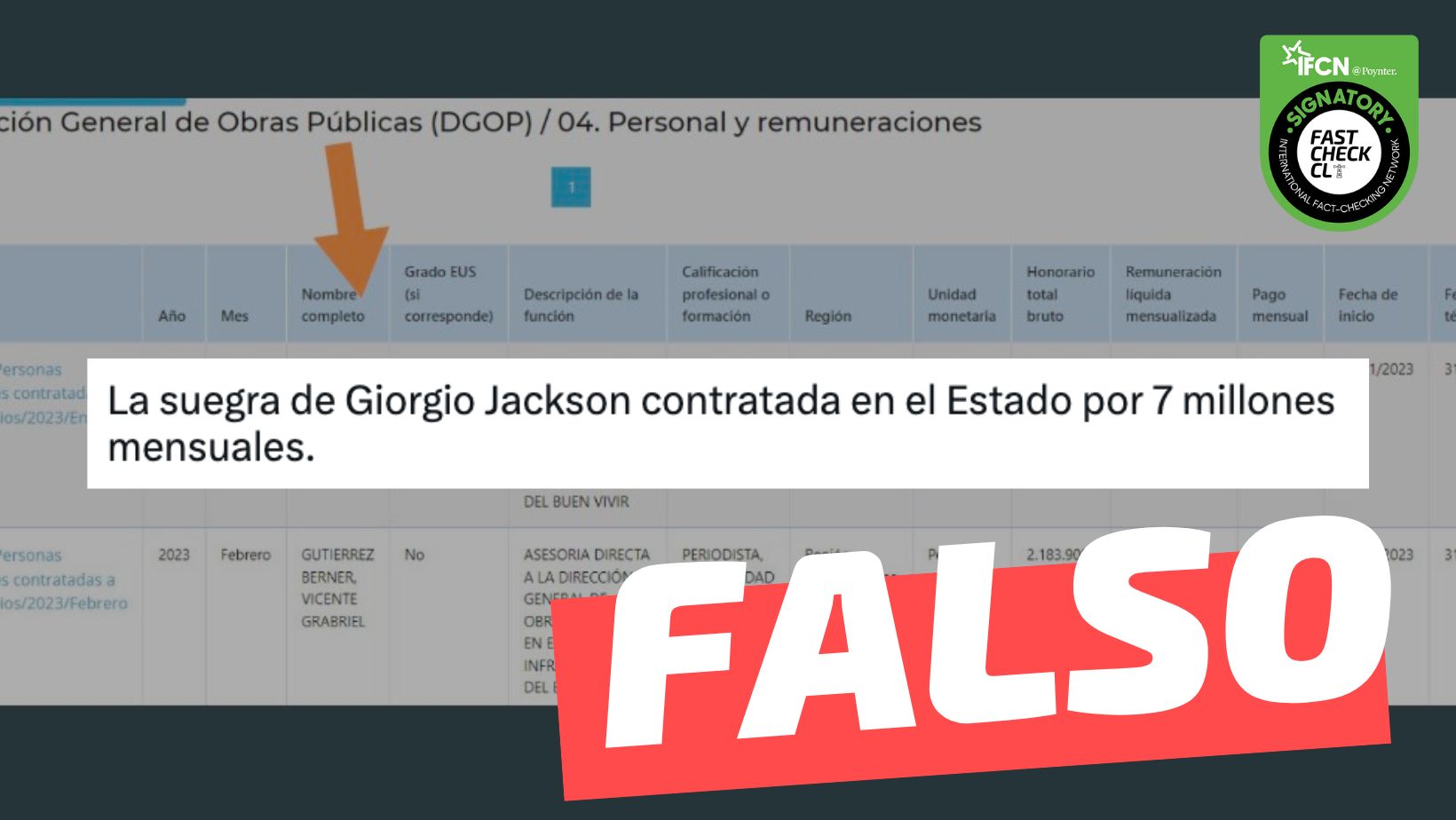
“La suegra de Giorgio Jackson, Heidi Berner, contratada en el Estado por $7 millones mensuales”
Publisher’s rating: Falso
Bongbong Marcos appointed Rodante Marcoleta as Agriculture secretary
Publisher’s rating: False

Un rapport confidentiel de Pfizer établit la présence d'oxyde de graphène dans les vaccins Covid.
Publisher’s rating: Non, le rapport auquel se réfèrent les publications ne fournit aucune preuve que l'oxyde de graphène entre dans la composition du vaccin anti-Covid de Pfizer. Ce document porte sur la protéine Spike du virus SARS-COV-2, responsable de la maladie Covid-19. Lors du processus de recherche, cette protéine a été soumise à une technique d'imagerie spécifique, lors de laquelle de l'oxyde de graphène a été utilisé comme matériau de support. Mais rien ne prouve que cette substance se trouve dans le vaccin.
The claim concerns a specific interpretation of a Pfizer report: that it establishes graphene oxide as an ingredient in Pfizer’s Covid-19 vaccine. The review says the report is about the SARS-CoV-2 Spike protein, and that the disputed mention of graphene oxide occurs in a description of research methods—not in a list of vaccine ingredients. It therefore treats the report as evidence about an experiment involving the protein, rather than evidence that graphene oxide was in the vaccine. (S1: “Comme son titre l'indique, le rapport de Pfizer porte sur la glycoprotéine de pointe du SARS-COV-2, également appelée protéine Spike.”; “Mais ce passage, incriminé par certains internautes, ne fait aucune mention des composants du vaccin.”) The review describes four research processes conducted between April and August 2020. It reports that graphene oxide was used in one process, which used cryo-electron microscopy to image the protein. In the review’s account, the material served as a support to help visualize the protein; the resulting observations of its three-dimensional structure did not establish that the material was a vaccine component. The review also notes that the relevant passage names no vaccine ingredients. (S1: “Dans le point 3, il décrit les « matériaux et méthodes » de quatre processus de recherche, menés entre les mois d'avril et d'août 2020. Pour l'un d'eux, de l'oxyde de graphène a bien été utilisé, tel qu'indiqué à la page 7 du document.”; “Les résultats de cet essai, lors duquel de l'oxyde de graphène a été utilisé comme matériau de support afin de mieux visualiser la protéine, sont détaillés à la page 11. Ils permettent d'observer la protéine en trois dimensions.”) The key distinction is between a substance used as a support during a laboratory imaging procedure and a substance listed as part of a vaccine. The review reports the former in the cited passage, but says the report does not make the latter claim. Its conclusion is limited to what this report shows: it says the document does not establish that graphene oxide is in the vaccine. (S1: “Nulle part, il n'est question des « ingrédients » du vaccin, comme le prétendent certains internautes. On ne peut déduire de ce rapport que le vaccin de Pfizer contient de l'oxyde de graphène.”)
Chinese ships were chased off by a Japanese submarine in the South China Sea
Publisher’s rating: No Basis

REFERENDO DO JUIZ SÉRGIO MORO Destinatário: Senado federal Juiz Sergio Moro manda Carta publica para o Povo Brasileiro Para fazer "a revolução", não precisamos pegar em armas ou acabar com a vida de ninguém. A nossa "arma", são as redes sociais, acredite no poder que nós temos. Basta cada um fazer a sua parte e ampliar.
Publisher’s rating: Falso


Where the data comes from
Fact checks come from Data Commons and link to the organizations that published them.
What you’ll find
Each result links to the original fact check. Open it to read the publisher’s findings, with summaries and supporting sources where available.
Report an error
To report an error, send the page URL and supporting evidence.