PeakMetrics / Fact Checks
Has this been
fact-checked?
Paste a claim or upload an image to find existing fact checks. See what fact-checkers found and read the evidence before you share.
Search fact checks ↓API & integrations ↗Browse by topic
Explore fact checks by subject.
Search fact checks
Search by text or imageLatest fact checks
98,233 published reviewsThis video shows Chandrayaan-3 on its way to the moon
Publisher’s rating: FALSE

“LULA LIBEROU SAQUE ANTECIPADO DE R$ 1.320,00 DO PIS ANO-BASE 2022 para SEGUNDA-FEIRA, 10/07”.
Publisher’s rating: Falso
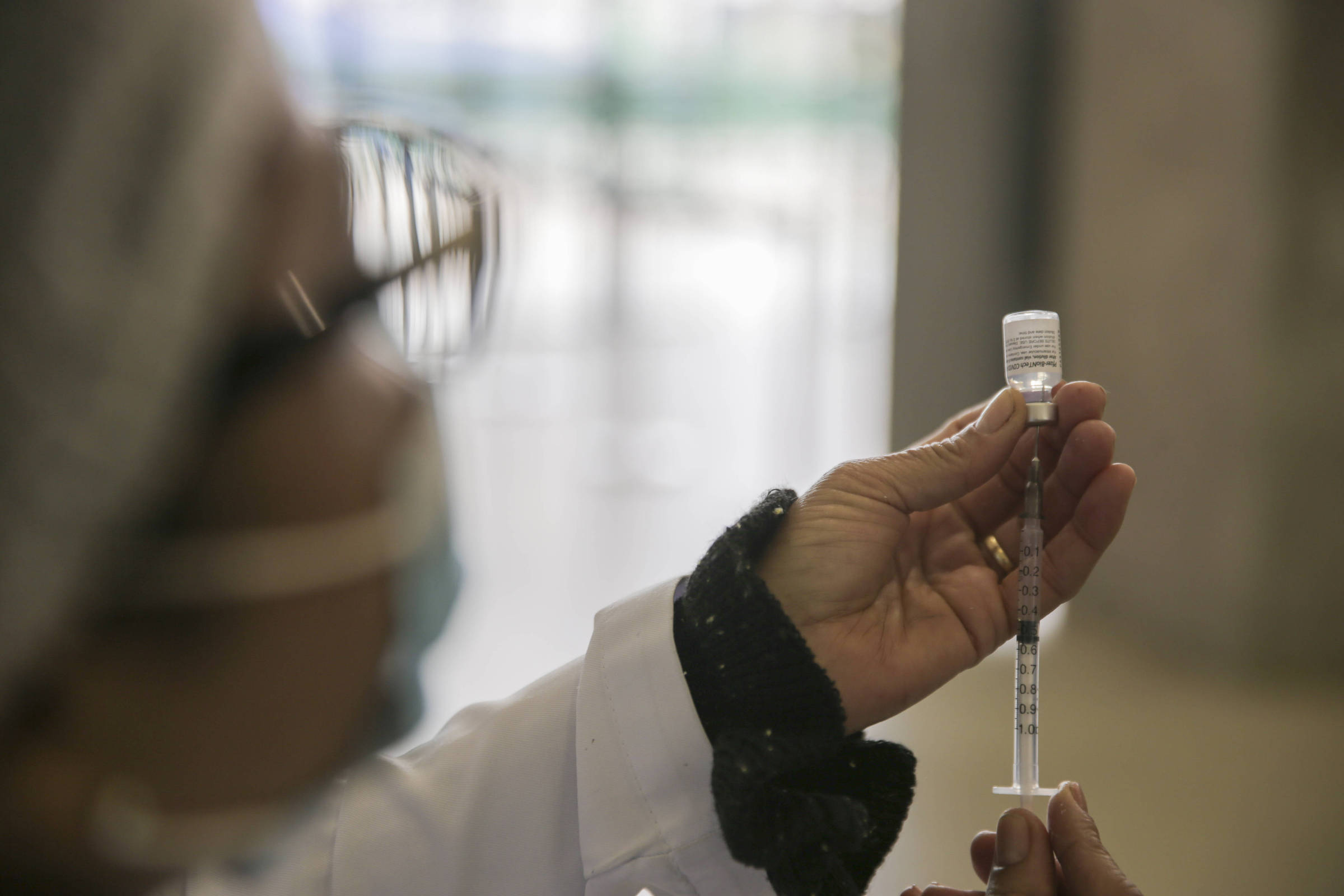
Texto publicado em um site e compartilhado nas redes sociais afirma que a Organização Mundial da Saúde “admite que mães totalmente vacinadas estão dando à luz bebês com graves defeitos cardíacos”. De acordo com o conteúdo, a UK Health Security Agency abordou o assunto e sua possível relação com a vacina contra a Covid-19.
Publisher’s rating: Falso
The claim combines a real report of severe myocarditis in newborns with an unsupported assertion that the WHO connected the cases to vaccination of their mothers. The investigation says the WHO had been notified of an increase in severe myocarditis cases among newborns, but the Pan American Health Organization (PAHO), the WHO’s regional office, said the cases were associated with enterovirus infection in Wales between June 2022 and April 2023—not with vaccines or pregnant women. The WHO document cited by the viral post made no mention of vaccines. The fact-check also examined the post’s link to an English-language article about an unusual increase in severe myocarditis among newborns and babies in the United Kingdom. It found that the underlying information about the reported increase could be checked against a WHO page, but that this did not support the post’s vaccine claim. The investigation further reports that the post did not initially identify which vaccines it meant, and only later discussed Covid-19 vaccines. To check the claim, the team searched Google using terms for the WHO, vaccines, babies and myocardium, and searched UK government publications. It found no WHO studies or research linking vaccines to effects in babies; the UK materials it found concerned monitoring myocarditis and pericarditis after Covid-19 vaccination. The publication’s author did not provide substantiation: the site that posted the claim sent links that, according to the investigation, did not prove it and did not answer whether it had the cited WHO document.

Het sterftecijfer bij de niet-gevaccineerde Amish gemeenschap ligt 90 keer lager dan bij de gemiddelde bevolking in de VS.
Publisher’s rating: Er is geen bewijs om deze bewering te staven. Accurate cijfers verkrijgen is moeilijk, maar het lijkt er op dat de amish, net als andere Amerikanen, COVID-19 kregen en oversterfte kenden tijdens de coronapandemie.
The claim is that the Amish had a death rate 90 times lower than the U.S. population during the COVID-19 pandemic, supposedly because of low vaccination. The review traces the figure to an article on Slay News, which attributed it to a study by the Vaccine Safety Research Foundation. The fact-check reports that the cited study could not be found on the foundation’s website, and that there was no solid basis for the figure. Mark Louden, a University of Wisconsin professor and Amish expert, likewise told dpa there was “no factual basis” for the claim. The review explains why precise comparisons are difficult: official infection, vaccination and death statistics do not identify people’s religion, leaving indirect or anecdotal evidence. It describes a 2021 study that examined Amish mortality and found a pattern following the broader U.S. mortality trend, including three waves of excess deaths during 2020. That study concerned overall excess mortality, not deaths specifically attributed to COVID-19. A follow-up study examined vaccination and mortality; the review says U.S. excess mortality declined after vaccines were introduced in 2021, but Amish excess mortality did not. The review also notes that low vaccination was not the same as no vaccination: in Holmes County, Ohio, where Amish population density was highest, the fully vaccinated share was 18.65% at the end of 2022. Louden said Amish people were generally healthier than the wider population, but attributed that to lifestyle and genetics—not resistance to vaccination. The evidence presented therefore does not support the 90-times-lower figure or the implication that low vaccination produced lower excess mortality.

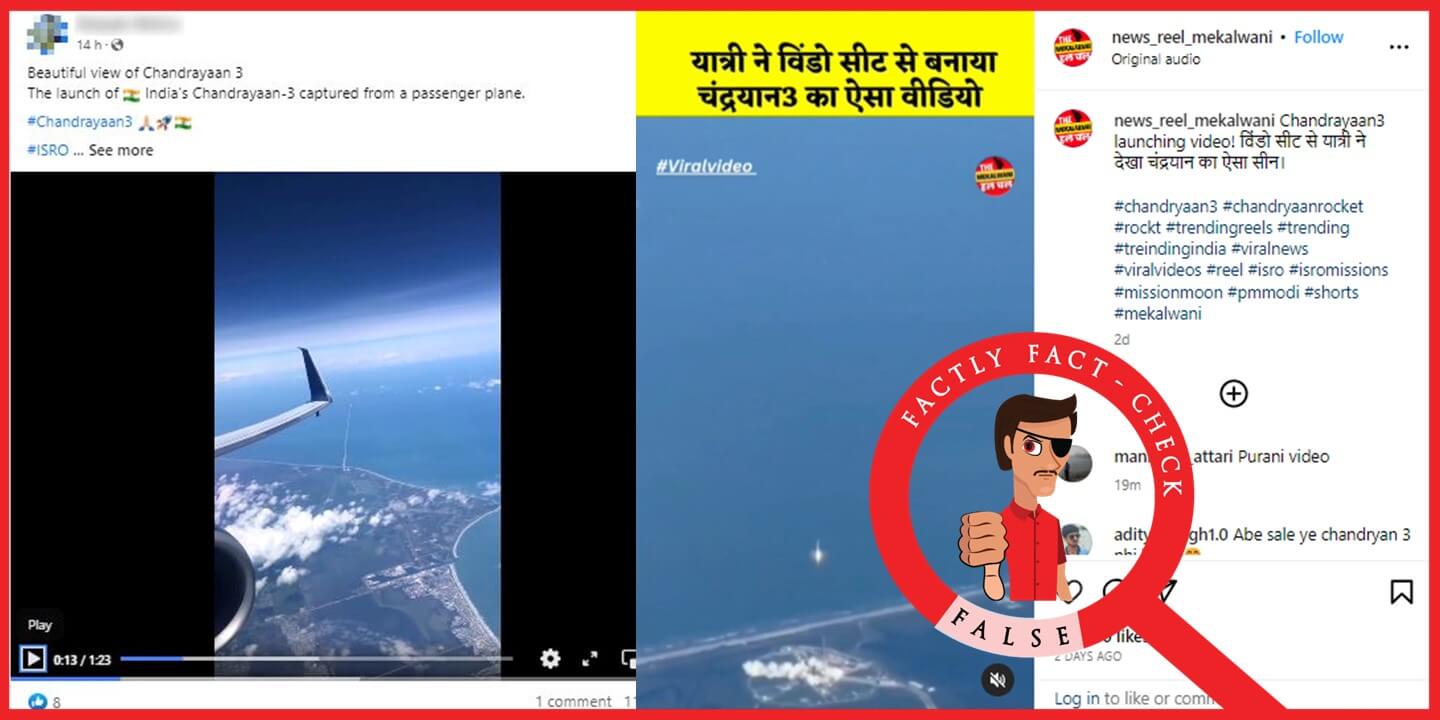
Visuals showcasing the launch of Chandrayaan-3, captured by a passenger traveling onboard a flight
Publisher’s rating: FALSE
The review distinguishes the viral clips from genuine footage of Chandrayaan-3’s 14 July 2023 launch. It reports that a passenger named Ponraj filmed the launch during an IndiGo flight from Chennai to Dhaka, and that IndiGo released those visuals. But the review says the different visuals circulating in the viral posts were old and unrelated to Chandrayaan-3. Thus, the fact that launch footage was captured from a flight does not establish that the viral clips show this launch. [S1: “Notably, IndiGo Airlines released visuals of the Chandrayaan launch, captured by one of their passengers named Mr. Ponraj during a Chennai to Dhaka flight.”; “However, the visuals disseminated through other viral posts on social media are old and are not related to the recent Chandrayaan-3 launch.”] For one viral video, the review describes reverse-image searches that found the same visuals in December 2022 news reports. Those reports attributed the footage to a flight attendant who said the plane flew by Cape Canaveral and recorded a SpaceX Falcon 9 launch. The review notes that it could not independently confirm the specific launch, but says the footage’s availability before Chandrayaan-3 launched shows it could not depict that later event. [S1: “A reverse image search conducted on the screenshots from this viral video led us to a couple of news reports published in December 2022, which featured the same visuals”; “the fact that these visuals are available on the internet much before the Chandrayaan-3 launch suggests that they are not associated with the recent Chandrayaan-3 launch.”] The second video was traced to an Atlas V launch from Cape Canaveral on 18 May 2021. The review cites reports identifying the footage as photographer Andy Lin’s video, filmed while traveling on a Delta flight from New York to Cancun. It also describes a satellite view of Cape Canaveral as further support for the location, while acknowledging that it could not independently verify which launch the viral footage showed. These clips’ earlier provenance and timing, rather than the existence of separate genuine Chandrayaan-3 passenger footage, are the basis for the review’s conclusion. [S1: “The visuals in question, which are old, portray the launch of an Atlas V rocket from Cape Canaveral on 18 May 2021, carrying a satellite.”; “10 Tampa Bay, which describes itself as an affiliate of CBS reported that the video was shot by photographer Andy Lin and showed the launch of rocket Atlas V, while traveling The Delta flight was traveling from New York to Cancun.”; “Although we were unable to independently verify which rocket launch the viral visuals depict, the fact that these visuals are widely available on the internet much before the Chandrayaan-3 launch strongly indicates that they are unrelated to the recent launch.”]

Zelensky geeft toe dat hij cocaïne gebruikt en hij raadt het iedereen aan.
Publisher’s rating: Nee, het filmpje is misleidend bewerkt. Zelensky zegt in het interview juist dat hij geen drugs gebruikt. Wel zegt hij verslaafd te zijn aan koffie. Verder raadt hij mensen aan om te sporten. Die uitspraken zijn zo naast elkaar geplakt, dat het lijkt alsof hij iets anders zegt.
A photo depicting a portrait photo of a former opposition activist, Peypey Ly, attached with RIP, was posted a few days ago with a caption stating she’s dead due to a traffic accident. The claim has been widely shared on social media platforms and reacted to by Khmer-speaking Facebook users. However, we found the claim to be false.
Publisher’s rating: False

Die Fotos wurden beim Oktoberfest, beim St. Patrick's Day und beim Eritrea-Kulturfest aufgenommen.
Publisher’s rating: Die Betitelung des dritten Bildes der Fotomontage ist falsch, es wurde bei einem Studentenprotest in Südafrika aufgenommen. Die anderen Fotos stammen tatsächlich vom Oktoberfest und einer Feier am St. Patrick’s Day.
The claim concerns the captions on three images in a social-media montage: that they show Oktoberfest, St. Patrick’s Day, and an Eritrea cultural festival. The review says the first two captions fit the images, but the third does not: the photograph of a man preparing to throw a stone was taken at a student protest in South Africa, not at an Eritrea cultural festival. The review identifies the event as a protest at Wits University in Johannesburg during the Fees Must Fall campaign in 2016. (S1: “Stammen die drei Fotos wie angegeben vom Oktoberfest, vom St. Patrick's Day und von einem Eritrea-Kulturfest?”; “Das Bild stammt von einem Studentenprotest an der Wits University in Johannesburg, Südafrika.”) To check the image’s origin, the review reports an internet search and cites the photo description in the Ground Up archive. It says that description places the photograph in South Africa’s 2016 Fees Must Fall campaign. For the other two images, it identifies a St. Patrick’s Day stock photo described by Alamy as having been taken in Dublin in 2012, and an Oktoberfest image of a woman on a beer bench, attributed to Imago and dated 2022. Thus the montage combines images from the events named in its first two captions with a protest photograph incorrectly captioned as an Eritrea festival. (S1: “Doch eine Internetrecherche zeigt, dass das nicht die Herkunft des Bildes ist.”; “Laut der Bildbeschreibung auf der Seite des Fotoarchivs «Ground Up» ist das Foto im Jahr 2016 bei der «Fees Must Fall» (auf Deutsch «Kosten müssen fallen») Kampagne in Südafrika entstanden.”; “Das Bild vom St. Patrick’s Day ist ein Stock-Foto von Alamy, das laut Bildbeschreibung 2012 in Dublin entstand. Das Foto der Dame auf einer Bierbank beim Oktoberfest 2022 stammt von der Bildagentur Imago.”)
مردم ایران به نسبت ۵۰ سال پیش، باایمانتر و دیندارتر شدهاند.
Publisher’s rating: نادرست
Lula no Nordeste e recebido com hino dele [vaias]. Lula esta indginado
Publisher’s rating: Falso
நினைவூட்டல் UCC.. இரண்டு நாட்களில் 4 கோடி முஸ்லிம்கள் சமர்ப்பித்தனர், 1 கோடி கிறிஸ்தவர்கள் சமர்ப்பித்தனர். இந்துக்கள் மட்டும் சமர்ப்பிக்கவில்லை. அடுத்த 15 நாட்களில் UCC க்கு ஆதரவாக 60 கோடிஉங்கள் ஆதரவைப் பதிவு செய்ய (C) 9090902024 என்ற எண்ணில் மிஸ்டு கால் கொடுங்கள். தவறாதீர்..
Publisher’s rating: False

Joe Biden zegt "You're one sexy kid" tegen een klein kind.
Publisher’s rating: De beelden zijn ingezoomd, waardoor de context verdwijnt en wat Biden tegen het kind zegt is achteraf toegevoegd. In de originele opname is dit niet te horen.
This video shows a man falling into pothole and disappearing
Publisher’s rating: FALSE


Marine Le Pen zei dat ze Frankrijk van de nieuwe wereldorde zou redden en Macron zou arresteren.
Publisher’s rating: Er is geen enkele reden om aan te nemen dat Le Pen deze woorden gebruikt heeft. In de video die wordt aangedragen als bewijs zijn de citaten, noch de betekenis in andere woorden te vinden.

మణిపూర్లో ముస్లింలు ఒక క్రైస్తవుడిపై కిరాతకంగా దాడి చేసి అతని ముఖాన్ని రెండుగా చేసిన దృశ్యాలు
Publisher’s rating: FALSE
This video shows destroyed buildings, burnt vehicles, and debris scattered in the middle of a huge street in France
Publisher’s rating: FALSE
Where the data comes from
Fact checks come from Data Commons and link to the organizations that published them.
What you’ll find
Each result links to the original fact check. Open it to read the publisher’s findings, with summaries and supporting sources where available.
Report an error
To report an error, send the page URL and supporting evidence.