PeakMetrics / Fact Checks
Has this been
fact-checked?
Paste a claim or upload an image to find existing fact checks. See what fact-checkers found and read the evidence before you share.
Search fact checks ↓API & integrations ↗Browse by topic
Explore fact checks by subject.
Search fact checks
Search by text or imageLatest fact checks
98,223 published reviews
Este video muestra "gran salva de cohetes lanzada por Hamás desde Gaza hacia el territorio israelí".
Publisher’s rating: Falso
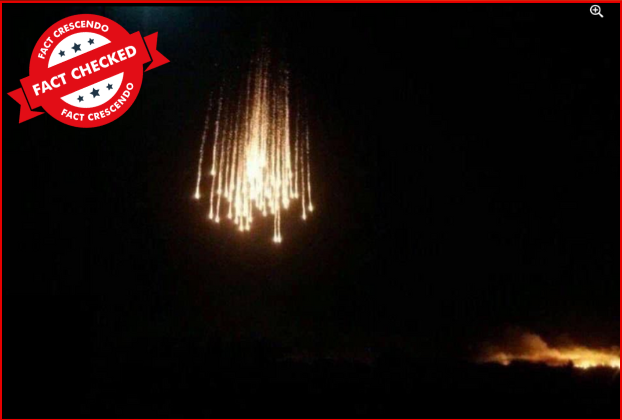
इज़रायली सेना गाजा के उत्तर में घनी आबादी वाले जिलों पर अंतरराष्ट्रीय स्तर पर प्रतिबंधित सफेद फास्फोरस का उपयोग कर रही है।
Publisher’s rating: False

De Duitse overheid instrueert kinderen uit arme gezinnen om een carrière in de prostitutie na te streven.
Publisher’s rating: Onjuist

The viral video shows the Chief Secretary of the Taliban praising BJP and RSS
Publisher’s rating: FALSE
The viral clip was presented as showing the Taliban’s Chief Secretary praising the BJP and RSS, including claims that no country would attack India while the BJP was in power. FACTLY identifies the man in the video as Khalid Mehmood Abbasi, an Islamic preacher based in Islamabad, Pakistan—not a Taliban official. It reports that Abbasi worked with Tanzeem-e-Islami for 30 years, left in 2018, and founded Shubban-ul-Muslimeen. The review says it found no information linking either organisation to the Taliban. [S1] To investigate the clip’s provenance, FACTLY describes searching online for the video and finding a longer video with the same visuals. That video was uploaded on YouTube on 3 August 2021, but appeared to have been recorded on 1 March 2019. FACTLY says the viral clip was cut from the longer video, from 0:53 to 3:31, and notes that the video’s title identifies Abbasi. [S1] The review also compares the viral interpretation with what it says is audible in the video: Abbasi discusses the ideas, policies and power of the RSS and related Sangh Parivar organisations, but does not say that no country would attack India while the BJP was in power or that the BJP must be removed before India could be attacked. FACTLY further reports that The Quint spoke with Abbasi in September 2021 and quoted him denying that he was the Taliban’s Chief Secretary or had links to the Taliban or any political party. Taken together, the identification, earlier recording date and omitted speech context contradict the video’s attribution and the claim about what Abbasi said. [S1]


Israeli Attacked On Gaza Tower Recently !!
Publisher’s rating: Misleading

Claim: 2021 dated israeli attack video shared now as recent one
Publisher’s rating: ஃபேக்ட் கிரஸண்டோ ரேட்டிங்: Missing Context
എന്താണ് ഇസ്രായേല്-പലസ്തീന് സംഘര്ഷങ്ങളുടെ കാരണം? നാള്വഴി ഇതാണ്..
Publisher’s rating: INSIGHT


Nobel laureate and renowned Indian economist Amartya Sen has died.
Publisher’s rating: False

Este video muestra un caza de Hamás atacando un helicóptero israelí.
Publisher’s rating: Falso


Este video muestra un bombardeo de Israel a Gaza tras el ataque de Hamas el 7 de octubre de 2023.
Publisher’s rating: Falso / Fuera de contexto

Bolsonaro entrou fardado na PM. Bolsonaro entrou para Polícia militar, ganhou até farda já”
Publisher’s rating: Falso
এই ভিডিঅ'টোত গাজাত ইজৰাইলৰ শেহতীয়া বিমান আক্ৰমণৰ ভিডিঅ' দেখা গৈছে।
Publisher’s rating: বিভ্ৰান্তিকৰ

Israel Destroyed Saint Porphyrius Orthodox Church At Gaza !!
Publisher’s rating: False
The claim concerned social-media posts saying that Israel’s attacks had destroyed Gaza’s Saint Porphyrius Orthodox Church. The review examined that specific rumor and reported that it found no credible news reports confirming the church had been destroyed. It also said the church administration denied the claims on its official Facebook page. These are the review’s reported findings; the supplied excerpt does not identify the news sources it checked or reproduce the church administration’s post. The review further reported that it found no photographic or video evidence supporting the destruction claim. Its conclusion was that there was no evidence the church had been destroyed. That conclusion addresses the claim of destruction, not whether the church or people sheltering there might later be affected by an attack.


วิดีโอของกลุ่มฮามาสขณะเข้าไปยังอิสราเอล
Publisher’s rating: Misleading
The claim concerns a TikTok video said to show Hamas entering Israel. The review identifies this as its first claim and says the post had received more than four million views. Its investigation sought news reports about parachutists in Israel but found none from sources it considered reliable. It also used keyframes from the video to search for matching images. The decisive evidence described in the review is a statement by BBC journalist Shayan Sardarizadeh, whose tweet the review found through that image search. He said the clip was filmed in Egypt, not Israel, and identified the building in the background as a military academy in Cairo. On the evidence presented, the footage does not show the claimed Hamas entry into Israel: it depicts a location in Cairo instead.

De thermosfeer is te warm voor satellieten. Die zouden daar smelten.
Publisher’s rating: Satellieten kunnen perfect bestaan in de thermosfeer. De oplossing voor deze vraag zit in het verschil tussen temperatuur en warmte. Hoewel de thermosfeer een hoge temperatuur kent, is er bijzonder weinig warmte aanwezig.
The claim reviewed is that satellites cannot survive in the thermosphere because its reported temperatures are high enough to melt metals. The review places this claim in the context of a Facebook video and asks whether satellites can orbit there without being endangered by the heat. It reports that the thermosphere lies roughly 80 to 1,000 kilometres above Earth and that NASA gives temperatures there as high as about 2,500°C. The review also notes that many satellites, including the International Space Station, are in this atmospheric layer. [S1: “Dat kan niet kloppen, volgens een video die gedeeld wordt op Facebook. Kunnen satellieten wel cirkelen in de thermosfeer en vormen die hoge temperaturen geen bedreiging?”; “Veel satellieten, zoals het ISS, bevinden zich in de thermosfeer”; “het kan er 2500 graden Celsius (4500 graden Fahrenheit) worden volgens NASA.”] The explanation turns on the difference between temperature and heat transfer. The review describes temperature as a measure of the average kinetic energy of particles, while heat concerns energy transferred between objects. It uses the example of a hot cup of coffee and the much larger ocean: the coffee is hotter, but the ocean contains more heat because it has many more particles. [S1: “De temperatuur van een object is de gemiddelde kinetische energie van alle deeltjes in dat object.”; “Warmte draait om de overdracht van die kinetische energie van het ene object naar het andere”; “een dampende kop koffie heeft een veel hogere temperatuur dan de oceaan, maar de oceaan heeft veel meer warmte omdat het veel meer deeltjes bevat.”] Applied to the thermosphere, the review says its sparse particles can have high average energy, producing a high temperature, but there are so few particles that they transfer very little heat to satellites or astronauts. It therefore distinguishes the thermosphere’s reported temperature from the heating that would be required to melt a satellite. The review separately notes that atmospheric friction can heat spacecraft during launch or return to Earth; that is not the same situation as a satellite orbiting in the thin thermosphere. [S1: “De gemiddelde kinetische energie van de deeltjes in de thermosfeer kan erg hoog zijn”; “Ze zijn met zo weinig dat ze amper warmte hebben en dus geen gevaar vormen voor satellieten of astronauten.”; “Hoe lager in de atmosfeer, hoe meer deeltjes. Deze zijn echter niet allemaal even warm als in de thermosfeer, maar veroorzaken wel warmte door wrijving.”]

Claim: Animated video shared as the Hamas shooting down an Israeli's helicopter
Publisher’s rating: ஃபேக்ட் கிரஸண்டோ ரேட்டிங்: FALSE
The claim concerned a video circulating on social media as footage of Hamas shooting down an Israeli helicopter. Fact Crescendo’s review says the post described it as an Israeli aircraft being shot down and notes that the video looked more like a video-game scene than real footage. The review reports that the clip was posted by a Facebook page called Vidiyal on October 7, 2023, and that it was then shared by others. To investigate, the publisher says it converted frames from the video into images and searched for them using Google reverse image search. That search led it to a YouTube upload dated October 4, 2023. According to the review, that upload identified the footage as a simulation, not a real incident. This provides both a stated origin predating the claimed event and a description of the clip as simulated. The timing is central to the review’s conclusion: it states that Hamas began its attack on Israel on October 7, 2023, whereas the YouTube simulation had been uploaded three days earlier. On the evidence described, the circulating animation could not be footage of a helicopter being shot down in that attack. Fact Crescendo concludes that a computer-game animation was falsely shared as an Israeli helicopter being downed by Hamas.
Where the data comes from
Fact checks come from Data Commons and link to the organizations that published them.
What you’ll find
Each result links to the original fact check. Open it to read the publisher’s findings, with summaries and supporting sources where available.
Report an error
To report an error, send the page URL and supporting evidence.