PeakMetrics / Fact Checks
Has this been
fact-checked?
Paste a claim or upload an image to find existing fact checks. See what fact-checkers found and read the evidence before you share.
Search fact checks ↓API & integrations ↗Browse by topic
Explore fact checks by subject.
Search fact checks
Search by text or imageLatest fact checks
98,211 published reviews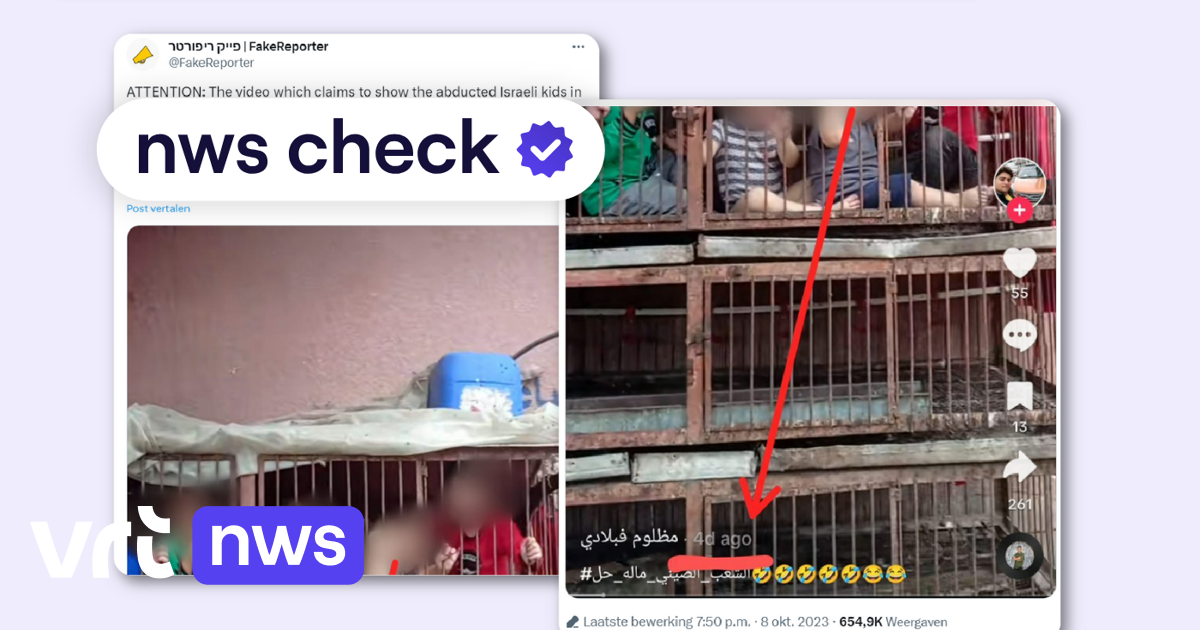
Dez video toont Israëlische kinderen die opgesloten zijn in Palestijnse kooien.
Publisher’s rating: Onwaar
The claim attributes a video of children in cages to Israeli children imprisoned by Palestinians. VRT’s review examined the viral footage circulated with claims that Jewish children had been locked up by Hamas after its attack on Israel. It reports that the footage was posted online before 7 October and was unrelated to that attack: “de video werd vóór 7 oktober online gepost en heeft niets met de aanval van Hamas te maken.” The review describes how the footage’s earlier posting was checked. Israeli fact-checking group FakeReporter found the account that first posted it on TikTok and captured screenshots in time. Those screenshots, posted by the group on X on 8 October, showed that the video was already four days old—at least two days before the Hamas invasion of Israel. The review also says LeadStories found the original post used a popular TikTok hashtag and an audio track unrelated to the conflict or kidnappings, suggesting it was part of a TikTok trend. The account and video were initially removed, but the account was visible again on 11 October, according to the review’s description of a Nieuwscheckers fact-check. The video’s creator said in another video that he had filmed children from his own family as a joke, not Israeli children, and that he recorded it three days before the invasion. This provenance and the earlier posting contradict the viral attribution of the footage to Israeli children held by Hamas.
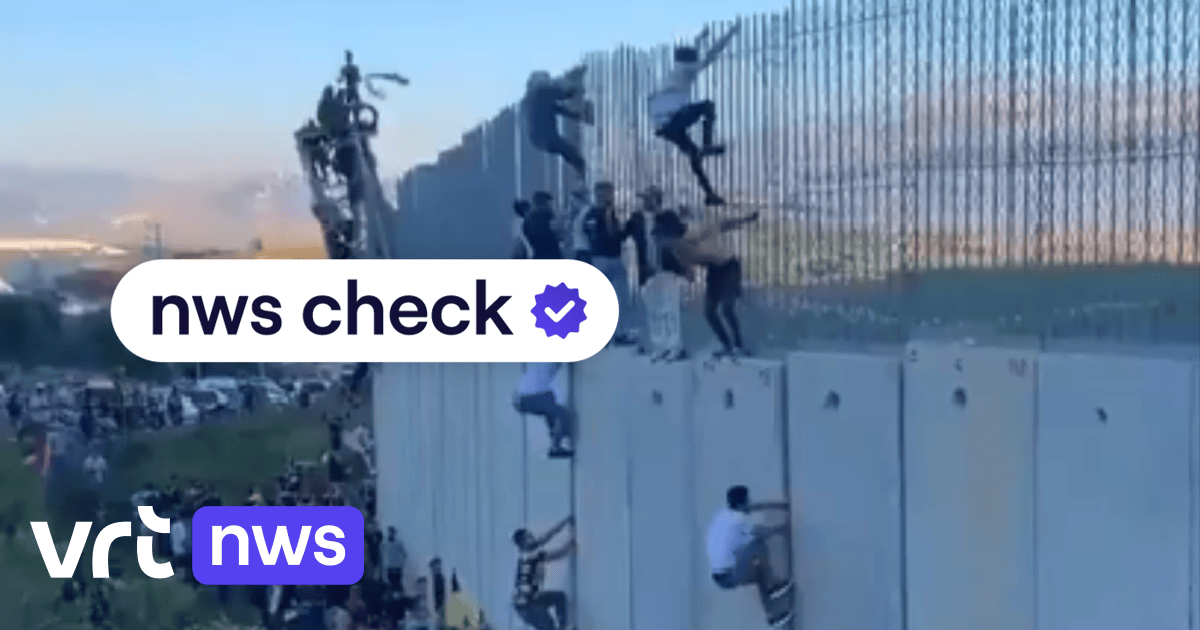
Deze beelden tonen Libanese burgers die sinds de aanval van 7 oktober massaal de Libanees-Israëlische grens beklimmen.
Publisher’s rating: Onwaar
The claim concerns viral footage presented as showing Lebanese citizens massing at the Lebanese-Israeli border after the 7 October attack, supposedly to support Palestinians. The VRT investigation says the footage does not show a new event connected to that escalation: it reports that the video had circulated since at least 2021, well before the claimed setting. To check the footage’s history, the investigation used a screenshot from the video in a reverse image search on Google. It found earlier versions online, including material posted on X and YouTube in May 2021. The article also reports that Reuters fact-checkers located archived photographs taken on 15 May 2021 in Adaisseh, a village on the Lebanese border. The comparison provides a location-based link between the old photographs and the viral footage: the article identifies the same large building in the background of the video and Reuters’s 2021 images, alongside people at the border wall. On that evidence, the footage is at least two years old and cannot substantiate the claim that it shows people gathering there in response to the October 2023 conflict. The review addresses the footage’s date and location; it does not establish that every description attached to every version of the video is accurate.
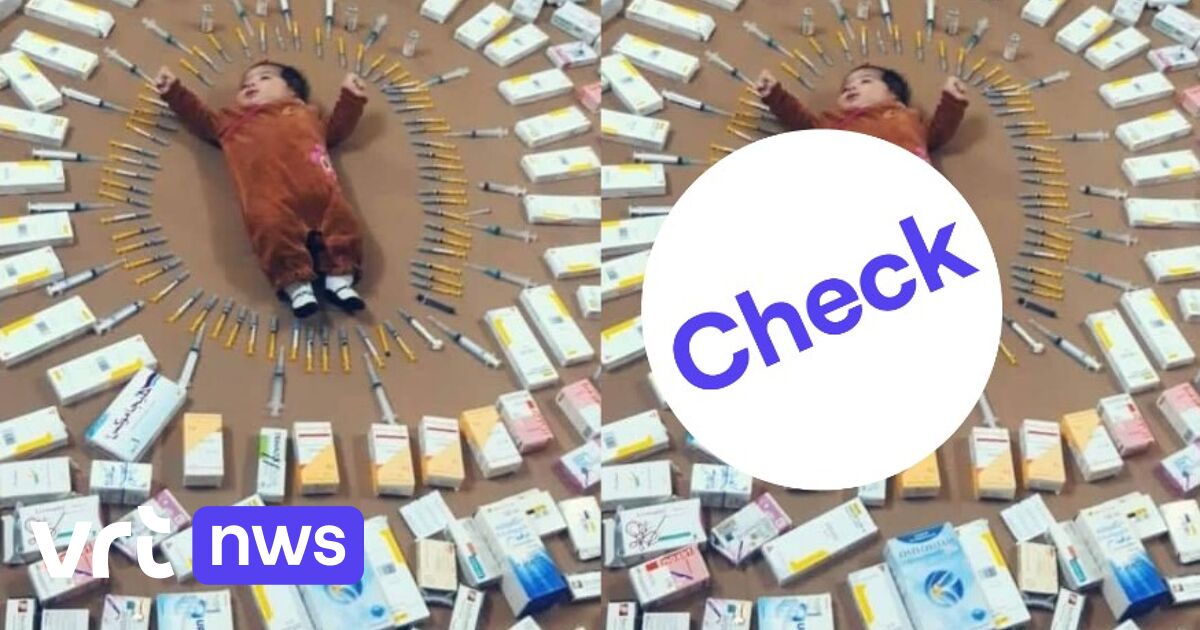
Deze foto toont de hoeveelheid vaccins die baby's krijgen.
Publisher’s rating: Onwaar
The claim concerns a photograph of a baby surrounded by syringes and medicine packages, presented as evidence of the number of vaccines babies receive. VRTNWS reports that the image circulated with anti-vaccination messages, including claims that the items showed what was being put into children. The investigation instead identifies the photograph as one of a child whose mother had undergone fertility treatment: “Op de bewuste foto zijn de verpakkingen te zien van alle vruchtbaarheidsmedicatie die de moeder van de baby gebruikte om zwanger te kunnen worden.” To investigate the image, the article says it used reverse image search to find other places where the photograph appeared. It also examined readable packaging and Arabic writing visible in the image. One readable product, Uroday, was identified as an antibiotic rather than a vaccine. Searching for the Arabic packaging led to a post by BMC TV, described as a television station in the Kurdistan Region of northern Iraq, and to posts on the Iraqi Facebook page Baghdad Model. Those posts attributed the photographs to a person in Kirkuk and described the medicines as treatments used before the family was blessed with a daughter: “De afgebeelde medicijnen zijn dus geen vaccinaties, maar behoren tot de vruchtbaarheidsbehandeling van de moeder.” The article places the image in a wider pattern: it says parents have shared photographs of babies surrounded by fertility medicines as a way of showing the treatment involved in conception. It also reports that the same image was later reused by anti-vaccination advocates to suggest it depicted childhood vaccines. The investigation’s evidence about the packaging and the image’s earlier circulation therefore contradicts the interpretation attached to the photograph; it does not establish that the pictured medicines were vaccines.

De RFID-chip met persoonsgegevens in je eID is een trackingapparaat waarmee de overheid je overal kan volgen.
Publisher’s rating: Onwaar
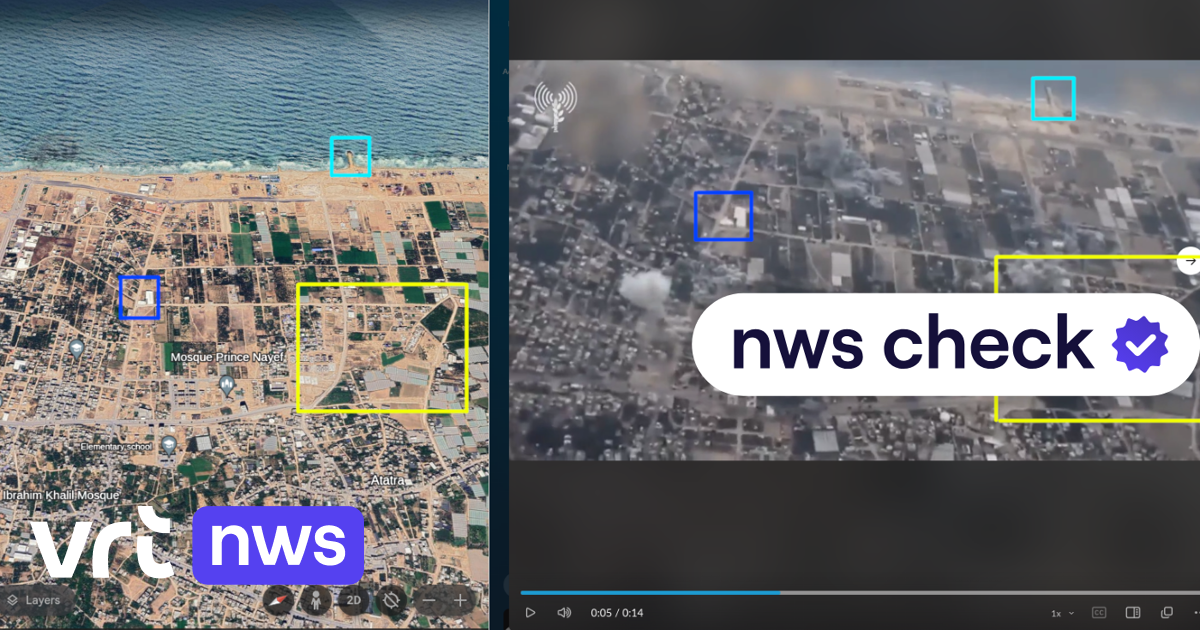
Dit zijn beelden van recente bombardement in Gaza.
Publisher’s rating: Waar
The claim concerns video circulating as footage of recent bombardments in Gaza. VRTNWS investigated the specific video it received, rather than relying only on the captions attached to it. The newsroom concluded that the footage did show recent bombardments in Gaza, after checking both its location and its timing. To locate the video, the journalists compared its visible coastline and piers with Google Earth, then looked for matching agricultural areas, buildings and road patterns. They report finding the same houses and intersections in the video and on Google Earth, establishing that it was filmed in Gaza. The article also describes the video’s on-screen Hebrew caption and date, 09.01.2023. Its translation indicated attacks on Hamas targets in Gaza, but the newsroom found no evidence of bombardments around 9 January and considered whether the date might have the zero and one reversed. The decisive provenance check was the logo in the video’s upper-left corner. Using a reverse-image search, the newsroom traced it to the IDF spokesperson’s communications operation, then found the same video in an IDF social-media post dated 9 October 2023. The post’s Hebrew caption, as translated by software, said that dozens of aircraft had recently attacked targets near Al Furqan. VRTNWS also says it found no older version of the video. Together, the location match, the IDF post and the absence of an older version supported its conclusion that the footage showed recent bombardments in Gaza.
De coronavaccins zorgden in de zomer van 2022 voor een hoge graad van oversterfte in Europa.
Publisher’s rating: Onwaar

Deze video toont hoe de Amerikaanse president Joe Biden wordt uitgejouwd tijdens een persconferentie.
Publisher’s rating: Onwaar
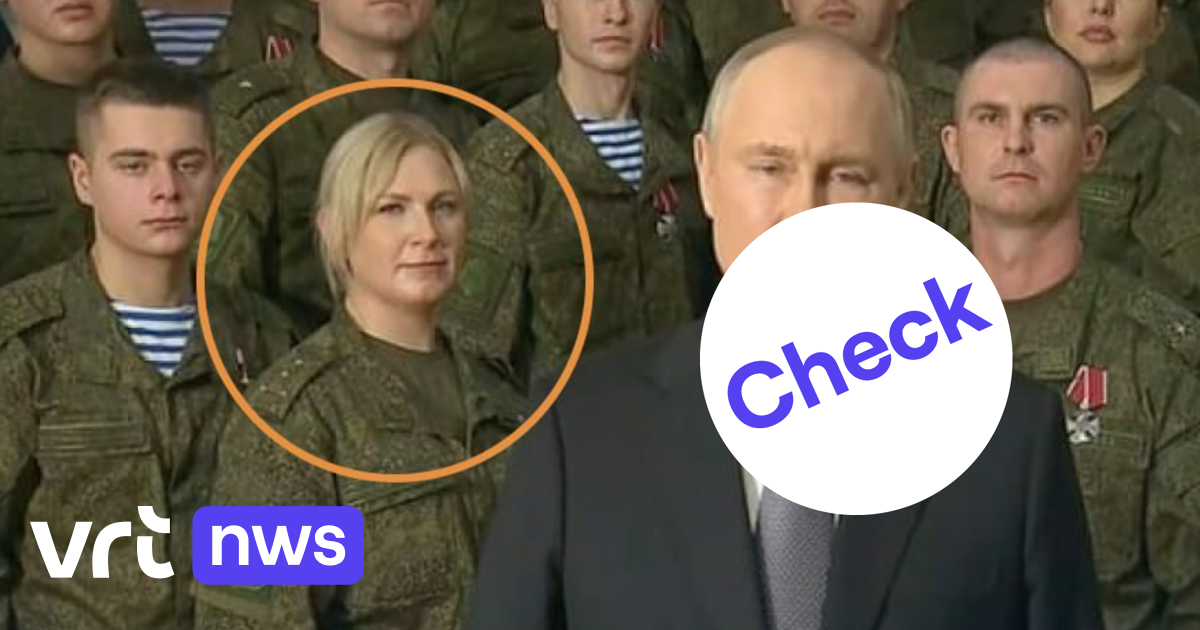
De Russische soldate naast Poetin op deze foto is eigenlijk een figurante.
Publisher’s rating: Onwaar

Het was recent geen 50 graden in Agadir.
Publisher’s rating: Eerder onwaar
De stad Brugge betaalde 16.000 euro voor een dragqueen die verhalen voorlas aan jonge kinderen.
Publisher’s rating: Eerder onwaar
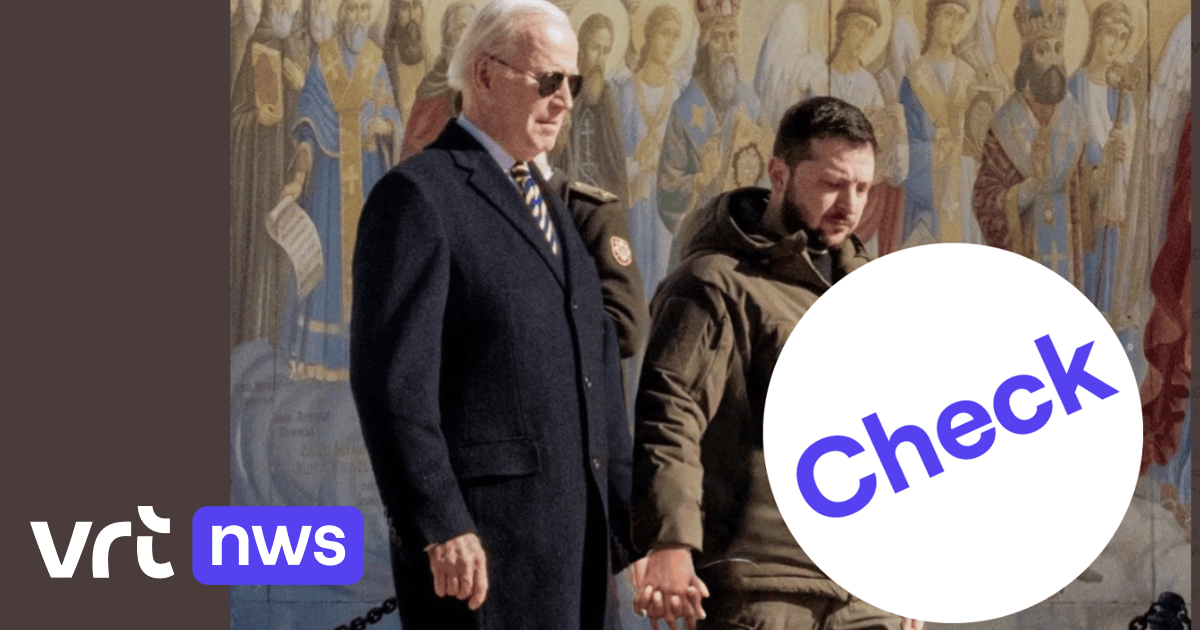
Dit is een foto van Zelenski en Biden die elkaars hand vasthouden.
Publisher’s rating: Onwaar

Er worden blonde hostessen gevraagd voor een bedrijf dat aanwezig zal zijn op het WEF in Davos.
Publisher’s rating: Waar
The claim is about a vacancy seeking blonde hostesses for a company event alongside the World Economic Forum in Davos—not a recruitment call issued by the WEF itself. The article reports that German job sites advertised positions for blonde women to work during the forum, which starts in mid-January. It identifies the event organizer as a company operating on the margins of the congress, rather than the forum organization. The investigation says the newsroom received a reader’s question about whether the vacancy was real or satire. It reports that the advert had appeared on Promotionsbasis and Jobwrk, and that the pages were saved on archive.org after the listings were taken offline. The article says the advert’s authenticity was confirmed by BNL Clean Energy, while noting that the company’s headquarters said it did not know who had placed it and was investigating. The article does not establish why the advert specified blondes. The article attributes the identification of BNL Clean Energy to Swiss newspaper Blick and reports that the WEF disassociated itself from the advert, saying BNL was not an official exhibitor. It also describes the requested candidates as preferably aged 18–26 and taller than 1.70 metres. VDAB spokesperson Joke Van Bommel is quoted as saying that hair colour was not relevant to doing the job and that the age requirements were discriminatory. The evidence therefore supports the narrower claim about a company-related vacancy, while clarifying that it was not an official WEF vacancy.
De prijs van sommige voedingsproducten is niet gestegen sinds de middeleeuwen.
Publisher’s rating: Geen bewijs
Deze video heeft te maken met de terroristische aanslag van 16 oktober in Brussel.
Publisher’s rating: Onwaar

Cafeïne heeft een positief effect op mensen met ADHD.
Publisher’s rating: Geen bewijs

Delhaize is een multinational met 87 miljard euro omzet per jaar.
Publisher’s rating: Eerder onwaar
Where the data comes from
Fact checks come from Data Commons and link to the organizations that published them.
What you’ll find
Each result links to the original fact check. Open it to read the publisher’s findings, with summaries and supporting sources where available.
Report an error
To report an error, send the page URL and supporting evidence.