PeakMetrics / Fact Checks
Science & space fact checks
Explore claims publishers have checked about science & space. Read their original ratings and follow the evidence.
Search fact checks
Search by text or image1,577 published reviews in this topic

హైదరాబాద్లో ఆకాశంలో కనిపించిన ఏలియెన్స్ వాహనం. వికారాబాద్ జిల్లాలో టైమ్ మెషిన్ లాగా ఉండే ఒక వింత పరికరం ఆకాశం నుంచి ఊడిపడింది
Publisher’s rating: MISLEADING
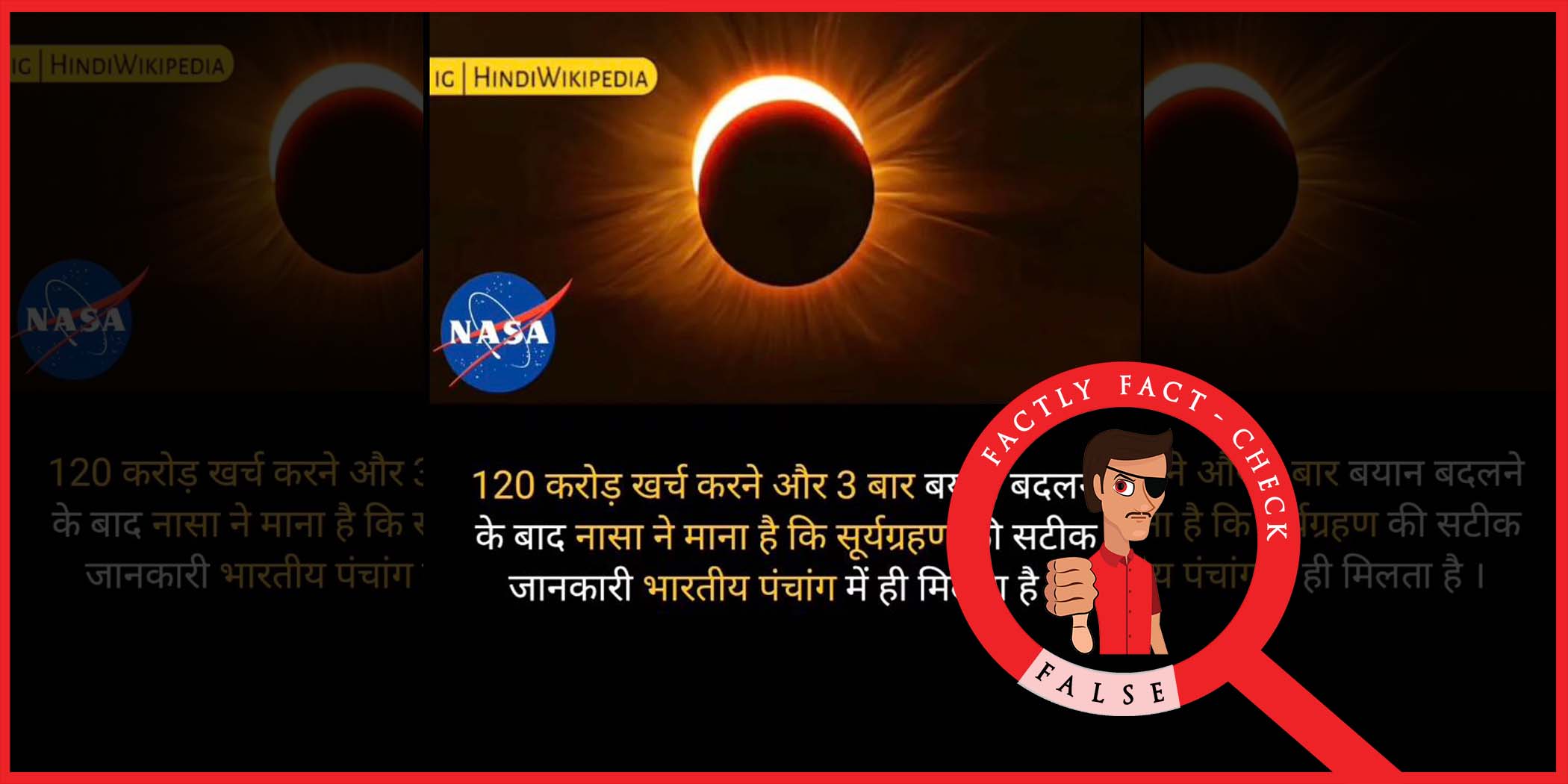
NASA has accepted that accurate information regarding solar eclipses can be found only in the Indian Panchang
Publisher’s rating: FALSE
The claim concerns an alleged NASA declaration that accurate information about solar eclipses can be found only in the Indian Panchang. FACTLY reports that it found no such declaration and says no credible reports of one were found in its internet search. It also notes that a similar article appeared on The Fauxy, which it describes as publishing fictitious news for entertainment purposes. As evidence about NASA’s actual account of eclipse forecasting, FACTLY points to a NASA website that says forecasts are produced using complex computer calculations. That supports a different explanation of how forecasts are made; the review presents no NASA statement endorsing the Panchang as the only accurate source. The review also gives context for an apparently related NASA comment about Hindu traditions. It quotes a NASA Marshall Space Flight Center solar astronomer discussing the relationship between Rahu and Ketu and the orbital nodes at which eclipses are possible. The quoted remarks express a suspicion that ancient Hindus knew about the nodes; they do not say that NASA accepts the Panchang as the sole source of accurate eclipse information.

Görüntülerdeki ritüelin CERN ile ilişkili olduğu iddiası
Publisher’s rating: Yanlış
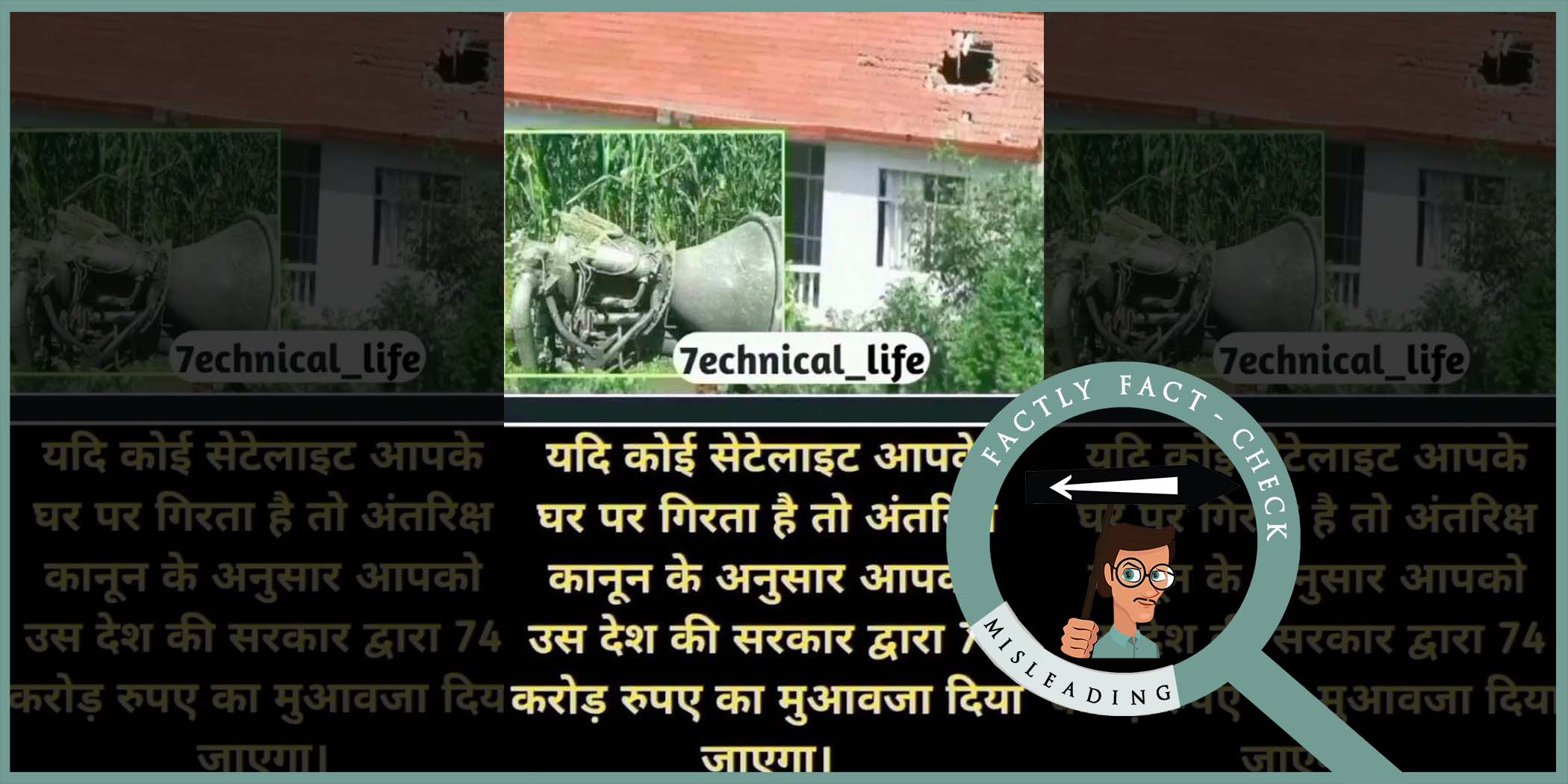
If a satellite falls on a house, the owner of that house will receive a compensation of 74 crore rupees from the country which launched it
Publisher’s rating: MISLEADING
The post’s claim is that a house owner would receive 74 crore rupees from the country that launched a satellite if it fell on their house. FACTLY says the launching state is liable for damage caused by its space object on Earth’s surface, but the compensation is not a preset amount. The review’s conclusion is that the specific 74-crore figure is unsupported as a fixed entitlement. To check the claim, the review reports searching the internet for relevant keywords and examining the Convention on International Liability for Damage Caused by Space Objects. It quotes the convention as making a launching state “absolutely liable” for damage caused by its space object on Earth’s surface or to aircraft in flight. That establishes a liability principle, not a guaranteed payment of 74 crore rupees. The review further quotes the convention’s rule that compensation is to be determined under international law and principles of justice and equity, with the aim of restoring the affected party to the condition it would have been in had the damage not occurred. It also notes that claims are presented to the launching state through diplomatic channels and that a Claims Commission may be established if diplomatic settlement fails. These provisions describe how claims are handled; they do not set the fixed payout asserted in the post.

“China ACABA DE DESTRUIR LOS satélites SpaceX de Elon Musk”.
Publisher’s rating: Falso

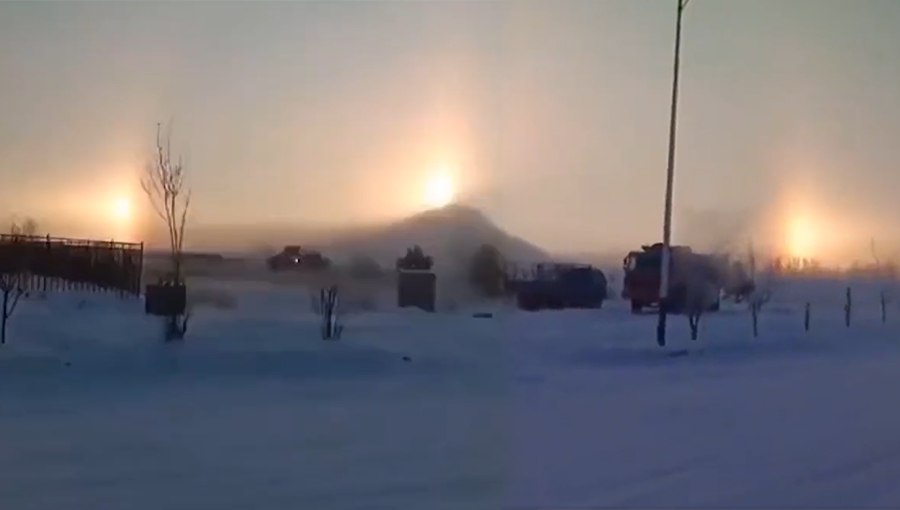

Underwater #volcano eruption in #Sumatra, #Indonesia. 🌋🌋🌋 #volcano #IndonediaVolcano
Publisher’s rating: Fake
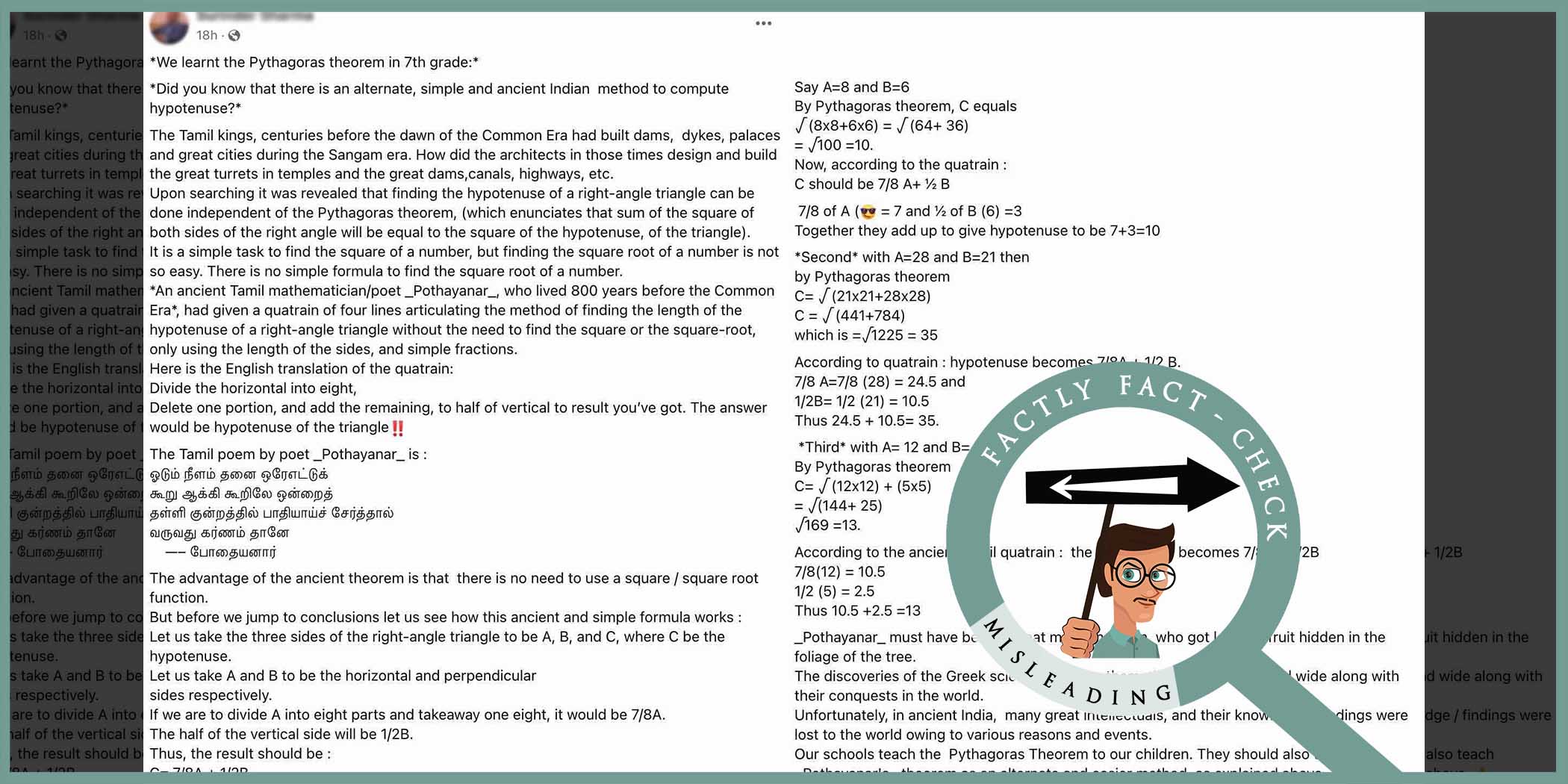
An ancient Tamil poet’s method finds the length of the hypotenuse of a right-angle triangle only using the length of the sides, and simple fractions; without the need to find the square or the square root.
Publisher’s rating: MISLEADING
The review examined a social-media claim that an ancient Tamil poet, identified in the post as Pothayanar, described a way to calculate a right triangle’s hypotenuse without finding squares or square roots. It gives the attributed rule as C = (7/8) A + (1/2) B, with A as the base, B as the perpendicular, and C as the hypotenuse. The review’s central qualification is that this rule does not reliably produce the hypotenuse in every case. To assess it, the article compares results from the attributed formula with those from the Pythagorean theorem across examples. It reports that the formula is accurate only in some cases. It also tests what happens when the two shorter sides switch roles: for one example, reversing A and B gives a hypotenuse of 5 using the Pythagorean theorem, but 4.625 using the attributed formula. Thus, the method’s result can depend on which side is designated the base, unlike the comparison method described in the review. The review also distinguishes whether the formula works from whether it was historically stated by the named poet. It says it could not independently verify that attribution. The evidence therefore supports a qualified assessment of the formula’s performance, but does not establish that Pothayanar originated or recorded it.

Bald Eagles can live up to 70 years by undergoing a painful regenerative process around their 40th year !!
Publisher’s rating: False
The claim says bald eagles can reach 70 years by, around age 40, flying to a mountaintop and knocking off their beaks, then removing their talons and aged features as those parts grow back. The review identifies this as the viral narrative and says it checked the image associated with the posts using reverse image search; the results linked the eagle shown to bald eagles. The investigation therefore addresses the same species and alleged process as the claim. [S1: “These posts carry an image of a white hooded majestic eagle, which says that these eagles have a lifespan of around 70 years. Yet, to reach this age, they have to undergo a painful process around their 40th year” and “reverse image search results showed that the type of eagle mentioned in these claims relates to bald eagles.”] On lifespan, the review says it checked multiple sources and found bald eagles’ average lifespan to be around 20–30 years. It reports that the oldest known wild bald eagle lived to 38, and that it found no record of a bald eagle living to 70, including in captivity. Those figures contradict the claim’s proposed lifespan; the review does not present the 38-year figure as the maximum possible lifespan in all circumstances. [S1: “We found out that bald eagles’ average life span ranges from around 20-30 years. Conservation efforts have meant that the average life span of bald eagles has increased, yet the oldest known wild Bald eagle lived only up to 38 years. Even though eagles in captivity can live longer than wild animals, there isn’t any record of a bald eagle living up to 70 years.”] The review also reports finding no reputable wildlife-information source supporting the claimed regeneration. It cites wildlife experts who say a bird cannot regrow an entire beak and that losing the bony core of a talon prevents its keratin sheath from growing back; a Sri Lankan bird expert likewise said a beak does not grow a second time. Taken together, the reported lifespan evidence and expert explanations undermine both the 70-year figure and the supposed self-inflicted renewal mechanism. [S1: “we didn’t find any evidence of the bizarre regeneration claims given in viral posts related to eagles renewing their body parts like beaks, talons and features etc., in any reputable information source of wildlife.” and “Birds absolutely cannot regrow an entire beak.” and “if the bird loses the bony core, then the keratin won’t grow back,” and “Beak of a bird never grows for the second time.”]

Mobile phone signals attract lightning !!
Publisher’s rating: Misleading
The review examines a viral video presented as showing a man struck by lightning while using a mobile phone, alongside the claim that phone signals attract lightning and make phone use outdoors in rain unsafe. The review says it traced the footage through a reverse-image search using InVID-WeVerify and found earlier reports describing a security guard struck in an open courtyard in North Jakarta, Indonesia. In the account quoted from the Mirror, the guard, Abdul Rosyid, was patrolling with an umbrella and a radio transmitter—not a mobile phone. The footage therefore does not establish that a phone caused or attracted the strike. For the broader claim, the review reports consulting lightning researcher Professor Reynaldo Zoro, who said cellular phones and handheld radios do not cause a person to be struck, and John Jensenius, a National Weather Service lightning-safety specialist, who said mobile-phone use is not a specific factor attracting strikes. It also describes a study rejecting the idea that ordinary metal objects such as phones increase the chance of a direct strike; it notes a qualification about possible side flashes near a lightning-struck object or in an unsafe shelter. The evidence presented supports the review’s conclusion that the phone-attraction claim is misleading, while not suggesting that being outdoors during lightning is safe.

Elon Musk explained the mysterious gravity of Sri Lanka !!
Publisher’s rating: Misleading
The video claimed that launching a SpaceX mission from Sri Lanka would cost about USD 190,000 less than launching from Florida because Sri Lanka experiences weaker gravity. The fact-check reports that it watched the full video and found no voice recording or video clip of Elon Musk. Instead, the video used his photograph as its thumbnail, creating the impression that he had made the statements. The review also says it could find no international media reports of Musk discussing “mysterious gravity” in Sri Lanka. The investigation traced the low-gravity narrative to a 2019 Medium article by Sri Lankan writer Indrajith Samarajiva. That article discussed a map showing gravity-related variations, but the review says it did not identify the image as a snapshot of Earth’s global surface mass anomalies. The fact-check describes this omission as a source of misinterpretation, rather than evidence that Musk had made the video’s claims. To check the map’s provenance and meaning, the review says it contacted NASA. NASA’s Office of Communications identified the widely shared map as belonging to the European Space Agency’s GOCE mission and said it represented two months of data from 2010. The review also examined newer gravity data and reported that it did not show a significant low-gravity area corresponding to Sri Lanka. Its conclusion was that the video falsely attributed the claim to Musk and presented changing gravity variations as a mysterious, persistent feature.

Der Fußabdruck auf dem Mond passt nicht zur Sohle des Raumanzugs.
Publisher’s rating: Die Sohle des abgebildeten Raumanzugs von Armstrong ist tatsächlich nicht identisch mit dem Abdruck auf dem Mond. Das liegt einerseits daran, dass die Astronauten bei ihrer Expedition zusätzlich Überschuhe trugen. Außerdem stammt der Abdruck auf dem Bild nicht von Armstrong, sondern von seinem Astronautenkollegen Aldrin.
The claim arose from a collage comparing images of an Apollo spacesuit with a lunar footprint, with the post suggesting that the footprint’s tread did not match the suit’s sole. The review confirms that the visible patterns differ, but explains why that comparison is misleading: the astronauts wore additional boots over their suit footwear, and the footprint pictured was made by Buzz Aldrin, not Neil Armstrong, whose suit is shown in the comparison. The review identifies the suit photographs as images taken during conservation of Armstrong’s equipment at the Smithsonian Museum of Space and Art. It says the footprint image came from a NASA archive, which identifies Aldrin as its maker. Thus, the collage compares Armstrong’s suit footwear with a print made by Aldrin while wearing an additional outer boot—not like-for-like images of the same footwear. The review describes the supporting visual evidence: the tread on the additional lunar boots is visible in other images from the moonwalk and in photographs of a lunar boot worn by Eugene Cernan on a later mission. It also reports that Armstrong and Aldrin left their lunar boots behind to reduce weight for the return to the command module. These details account for the apparent mismatch without showing that the footprint was inconsistent with the footwear actually used on the lunar surface.
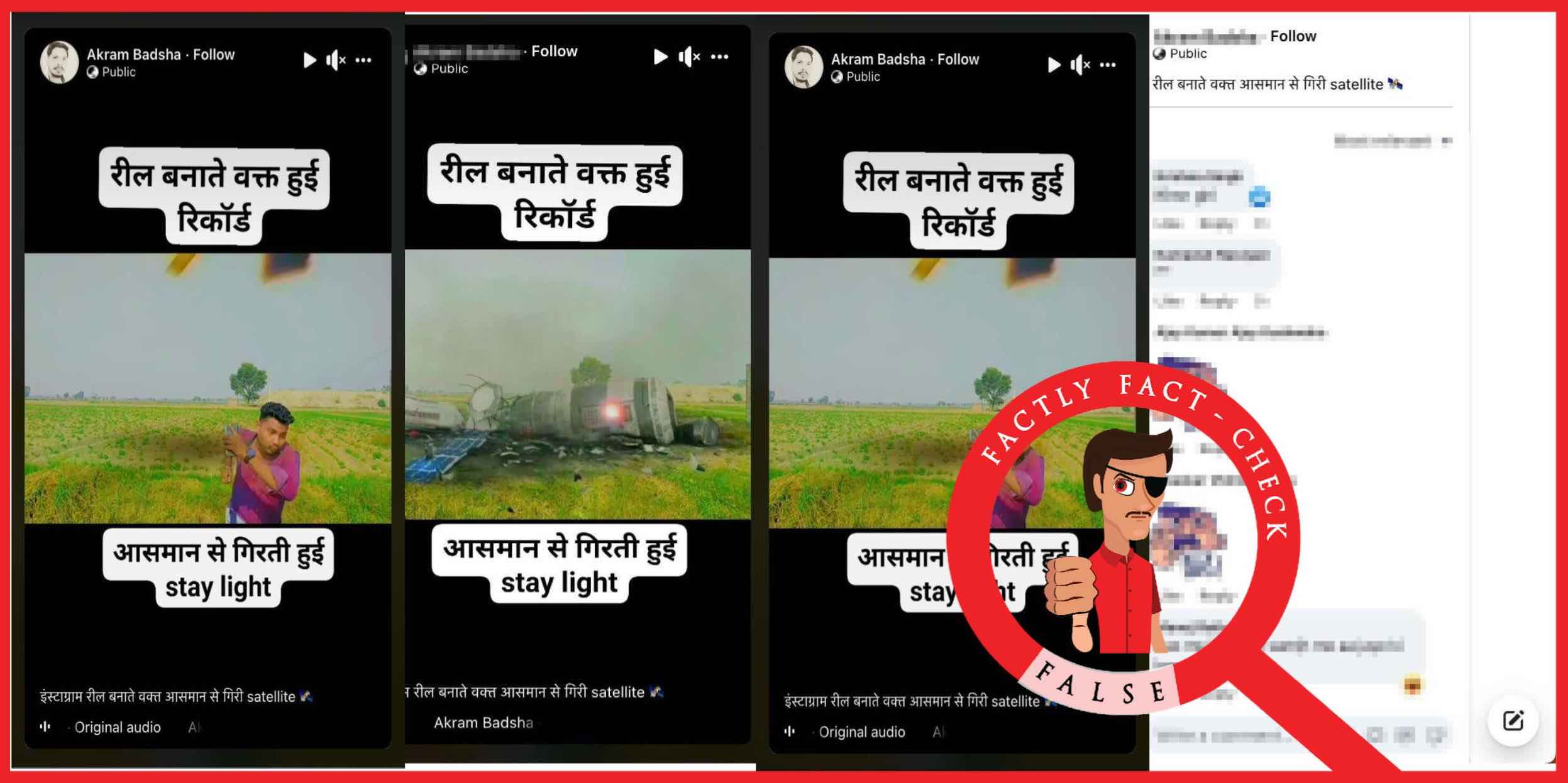
Visuals of a satellite falling on ground from the sky during an Instagram reel shoot
Publisher’s rating: FALSE
The claim concerns a video presented as showing a satellite falling to the ground while someone filmed an Instagram reel. FACTLY’s investigation concluded that the video was digitally created, rather than a recording of the claimed event. It reported that the same falling-satellite clip appeared in videos set in different locations and that the footage had been made using an existing green-screen overlay. To check whether the incident had been reported, the investigators searched online for relevant news. They found April 2022 reports about satellite parts falling in Gujarat, Maharashtra, Madhya Pradesh and Rajasthan, but said those reports did not establish that a satellite fell during an Instagram shoot or was captured on camera in the claimed video. The article also describes searching for the video’s imagery and finding the same satellite footage in videos with different titles and settings, including some that had been online since 2014. The review identifies chroma key as the editing technique used to create the video and points to a tutorial showing how stock green-screen footage can be used to make such clips. Together, the repeated use of the same satellite footage across locations and the stated editing method support the conclusion that the reel-shoot video is fabricated, not evidence of a satellite falling at the filmed location.

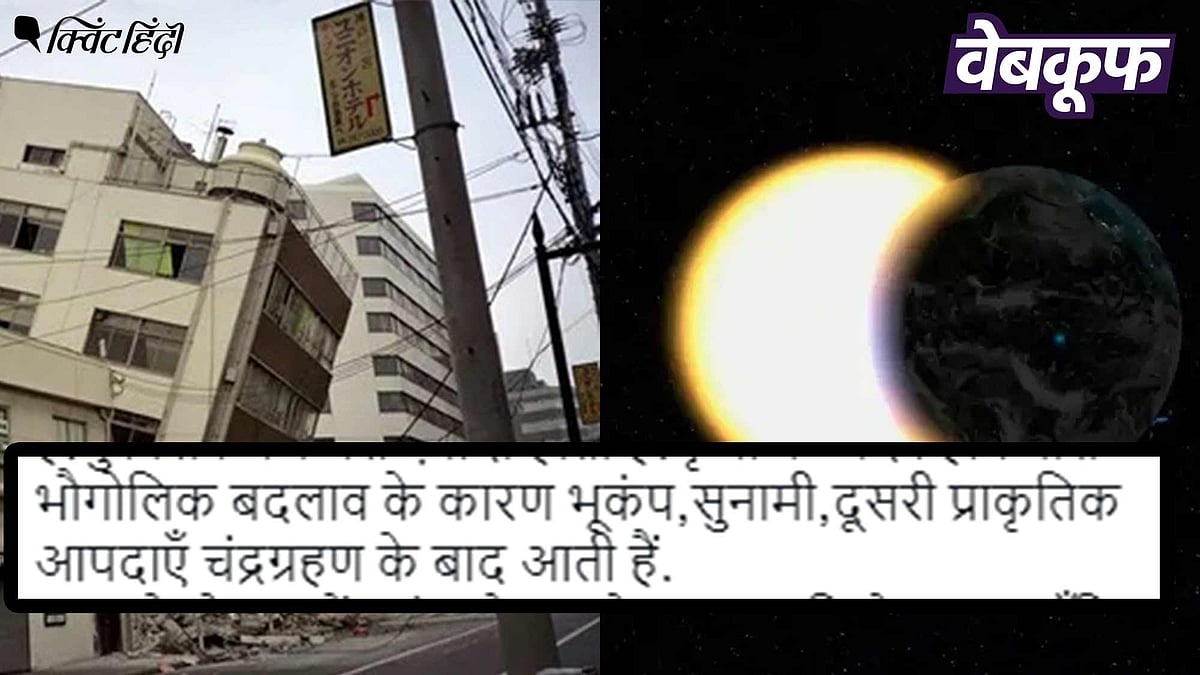
चंद्र ग्रहण के बाद भूकंप आने के पीछे वैज्ञानिक कारण है
Publisher’s rating: FALSE
Scientists reconstructed 3D model of how Adam, the first human created by God, might have looked and how humans will look in 300 years. Human body will physically changed due to consistent use of smartphones, laptops, and other tech, scientists explain Source – Daily Mail
Publisher’s rating: Fake