PeakMetrics / Fact Checks
Science & space fact checks
Explore claims publishers have checked about science & space. Read their original ratings and follow the evidence.
Search fact checks
Search by text or image1,577 published reviews in this topic
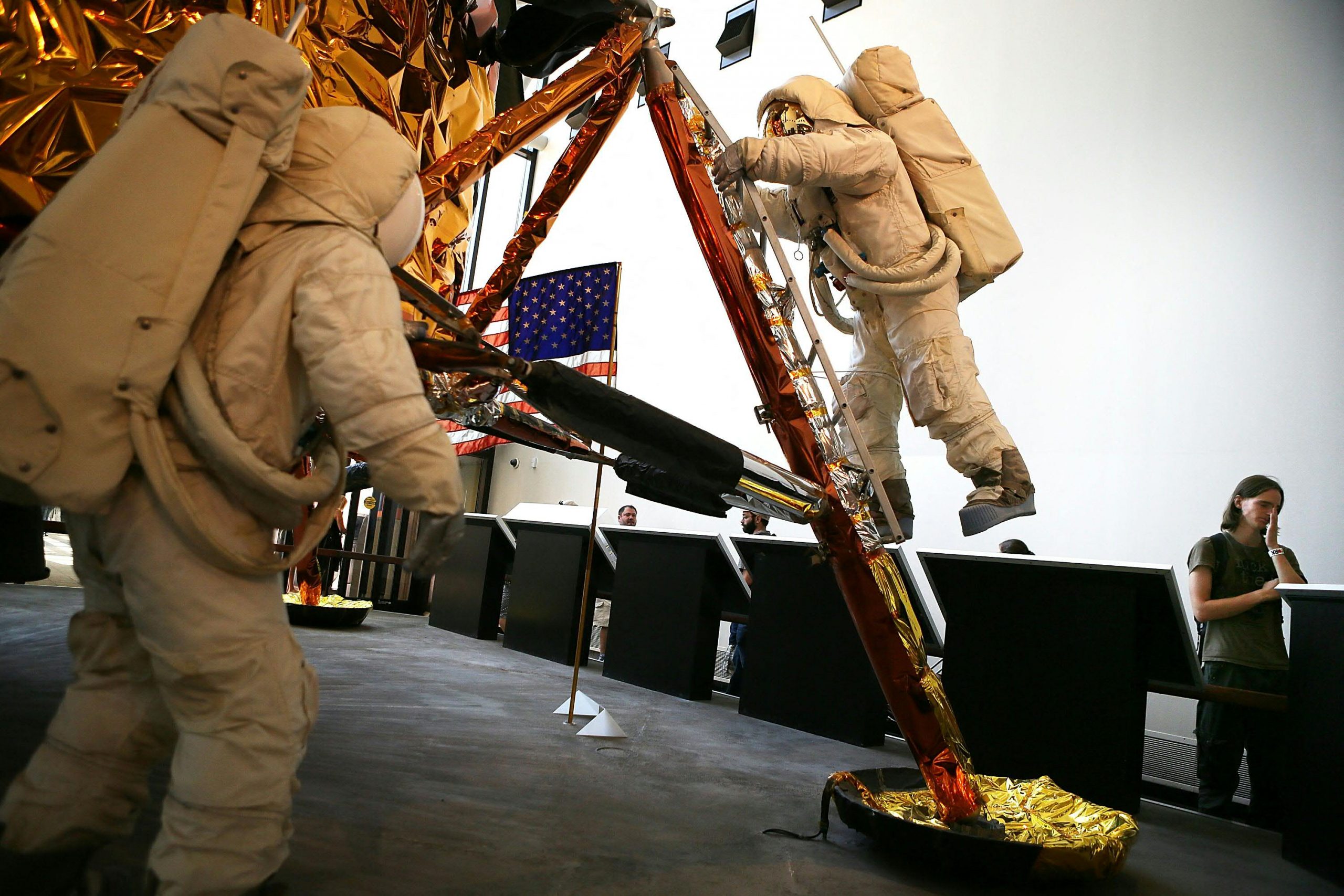
Das angebliche Verschwinden der Originalaufnahmen der Mondlandung aus den Archiven der US-Raumfahrtsbehörde NASA zeigt, dass die Mondlandung inszeniert war.
Publisher’s rating: Die Behauptungen sind nur teilweise richtig. Die telemetrischen Aufnahmen der Mondlandung wurden zwar überspielt, vermutlich um Geld zu sparen. Laut NASA fehlt allerdings kein Bildmaterial der Mondlandung, da es zahlreiche Kopien und Aufnahmen von dem historischen Ereignis gibt. Lediglich die Aufnahmen, die von Apollo 11 direkt in die NASA-Zentrale übertragen wurden, sind zum Teil gelöscht.
The claim links the loss of some original Apollo 11 recordings from NASA’s archives to the idea that the Moon landing was staged. The review distinguishes those missing recordings from the broader body of surviving Moon-landing imagery: it says the telemetry recordings were overwritten, while other copies and recordings of the event remain. It specifies that only some recordings transmitted directly from Apollo 11 to NASA headquarters were deleted. The review describes a NASA search for the old recordings before the landing’s 40th anniversary. NASA had said in 2006 that the tapes’ location was unknown. A team that included NASA Goddard engineer Richard Nafzger searched for them but did not recover the missing originals; instead, it found the best-formatted television recordings. The review says those tapes had been demagnetized and reused along with about 200,000 other recordings. That account supports the loss of particular tapes, but not the inference that the landing was fabricated. The review also identifies surviving material used to restore the record: NASA drew on CBS News recordings and kinescopes held at Johnson Space Center in Houston, and the restored footage remains available online. It notes that three of the missing video recordings later surfaced and were sold at Sotheby’s in 2019. The review’s account therefore describes a loss of specific source tapes alongside surviving and recovered recordings—not an absence of visual evidence for the event.
De thermosfeer is te warm voor satellieten. Die zouden daar smelten.
Publisher’s rating: Satellieten kunnen perfect bestaan in de thermosfeer. De oplossing voor deze vraag zit in het verschil tussen temperatuur en warmte. Hoewel de thermosfeer een hoge temperatuur kent, is er bijzonder weinig warmte aanwezig.
The claim reviewed is that satellites cannot survive in the thermosphere because its reported temperatures are high enough to melt metals. The review places this claim in the context of a Facebook video and asks whether satellites can orbit there without being endangered by the heat. It reports that the thermosphere lies roughly 80 to 1,000 kilometres above Earth and that NASA gives temperatures there as high as about 2,500°C. The review also notes that many satellites, including the International Space Station, are in this atmospheric layer. [S1: “Dat kan niet kloppen, volgens een video die gedeeld wordt op Facebook. Kunnen satellieten wel cirkelen in de thermosfeer en vormen die hoge temperaturen geen bedreiging?”; “Veel satellieten, zoals het ISS, bevinden zich in de thermosfeer”; “het kan er 2500 graden Celsius (4500 graden Fahrenheit) worden volgens NASA.”] The explanation turns on the difference between temperature and heat transfer. The review describes temperature as a measure of the average kinetic energy of particles, while heat concerns energy transferred between objects. It uses the example of a hot cup of coffee and the much larger ocean: the coffee is hotter, but the ocean contains more heat because it has many more particles. [S1: “De temperatuur van een object is de gemiddelde kinetische energie van alle deeltjes in dat object.”; “Warmte draait om de overdracht van die kinetische energie van het ene object naar het andere”; “een dampende kop koffie heeft een veel hogere temperatuur dan de oceaan, maar de oceaan heeft veel meer warmte omdat het veel meer deeltjes bevat.”] Applied to the thermosphere, the review says its sparse particles can have high average energy, producing a high temperature, but there are so few particles that they transfer very little heat to satellites or astronauts. It therefore distinguishes the thermosphere’s reported temperature from the heating that would be required to melt a satellite. The review separately notes that atmospheric friction can heat spacecraft during launch or return to Earth; that is not the same situation as a satellite orbiting in the thin thermosphere. [S1: “De gemiddelde kinetische energie van de deeltjes in de thermosfeer kan erg hoog zijn”; “Ze zijn met zo weinig dat ze amper warmte hebben en dus geen gevaar vormen voor satellieten of astronauten.”; “Hoe lager in de atmosfeer, hoe meer deeltjes. Deze zijn echter niet allemaal even warm als in de thermosfeer, maar veroorzaken wel warmte door wrijving.”]
Photo shows Elon Musk reading a flat-earth book
Publisher’s rating: False
Dieses Video zeigt eine Mücke, die eine Seriennummer trägt.
Publisher’s rating: Das Insekt ist keine Stechmücke, sondern ein Insekt der vielgestaltigen Ordnung Schnabelkerfe (Hemiptera), zu der sowohl Wanzen als auch Blattläuse gehören. Einige Arten haben schwarze Markierungen auf ihrem Körper, die in diesem Video wie die Zahl 36 aussehen.
The claim concerns a circulating video said to show a mosquito with a serial number on its back. The review examines that video, describing an insect held in someone’s hand, and says the dark marking viewers interpret as “36” is not a serial number. It identifies the insect as belonging to the order Hemiptera, which includes bugs and aphids, rather than as a mosquito. [Evidence: “In sozialen Medien kursiert ein Video, das ein solches Insekt in der Hand eines Menschen zeigen soll.”; “Diese Markierungen werden hier fälschlicherweise für die Zahl 36 gehalten.”] The review gives several visible features as grounds for rejecting the mosquito identification: the insect in the video has a pear-shaped, green body and two pairs of wings. It contrasts this with mosquitoes, which it says generally have narrow, elongated, brownish bodies and, as two-winged flies, only one functional pair of wings. The article says these characteristics fit an insect in Hemiptera, whose members can have dark back markings. [Evidence: “Der Körper des Insekts im Video allerdings ist birnenförmig und grün.”; “Das Insekt im Video hat zudem zwei Flügelpaare.”; “Stechmücken aber gehören wie Fliegen zur Familie der Zweiflügler (Diptera) und haben nur ein Paar funktionstüchtige Flügel.”] The review reports that insect researcher Marcel Dicke of Wageningen University confirmed the classification, and that scientists quoted in a USA Today fact-check also concluded that the insect was not a mosquito. It cautions that the precise species is unclear: the video alone does not allow a confident identification, even for scientists. The article also notes that posts often connect the alleged numbered mosquito to Bill Gates and a CDC project involving genetically modified mosquitoes to reduce Zika transmission, but says Gates was not involved in that project. [Evidence: “Diese Einordnung des Insekts bestätigt Insektenforscher Marcel Dicke von der Universität Wageningen in den Niederlanden der Deutschen Presse-Agentur.”; “Eine genaue Bestimmung anhand des Videos ist selbst für Wissenschaftler schwierig.”; “Bill Gates hat damit aber nichts zu tun”]
Cette vidéo montre comment l'alunissage a été mis en scène
Publisher’s rating: Non. La vidéo a été tournée à des fins humoristiques, jouant sur les théories du complot qui entourent les premiers pas des humains sur la Lune. Elle ne prouve aucunement une quelconque mise en scène de la part de la NASA.
The video shows a person in a spacesuit stepping down from a craft as a voice-over repeats Neil Armstrong’s famous words; the scene then cuts off when someone says “Cut” and what appear to be studio lights collapse. Some viewers presented this as evidence that the 1969 Moon landing was staged. The investigation instead traced the clip’s own reference to moontruth.com and examined archived versions of that site. The earliest archived version identified in the article, dated November 3, 2002, claimed the video proved Apollo 11’s landing footage was fake. But the investigation found a later notice on the site, also preserved in an archive, which explained that the clip was made in a London studio in spring 2002 to parody conspiracy theories about Apollo 11. The article also reports that the site gave production details and named British advertising agency The Viral Factory among the producers. The clip’s later publication on The Viral Factory’s YouTube channel provides further provenance: the article says it appeared there in 2006, with a caption describing it as a joke about a viral conspiracy theory. This evidence identifies the footage as a staged parody video, not documentation that NASA staged the Moon landing. The clip’s staged appearance is therefore not proof of the allegation; the source’s account of its production and the later production credit explain why it looks that way.
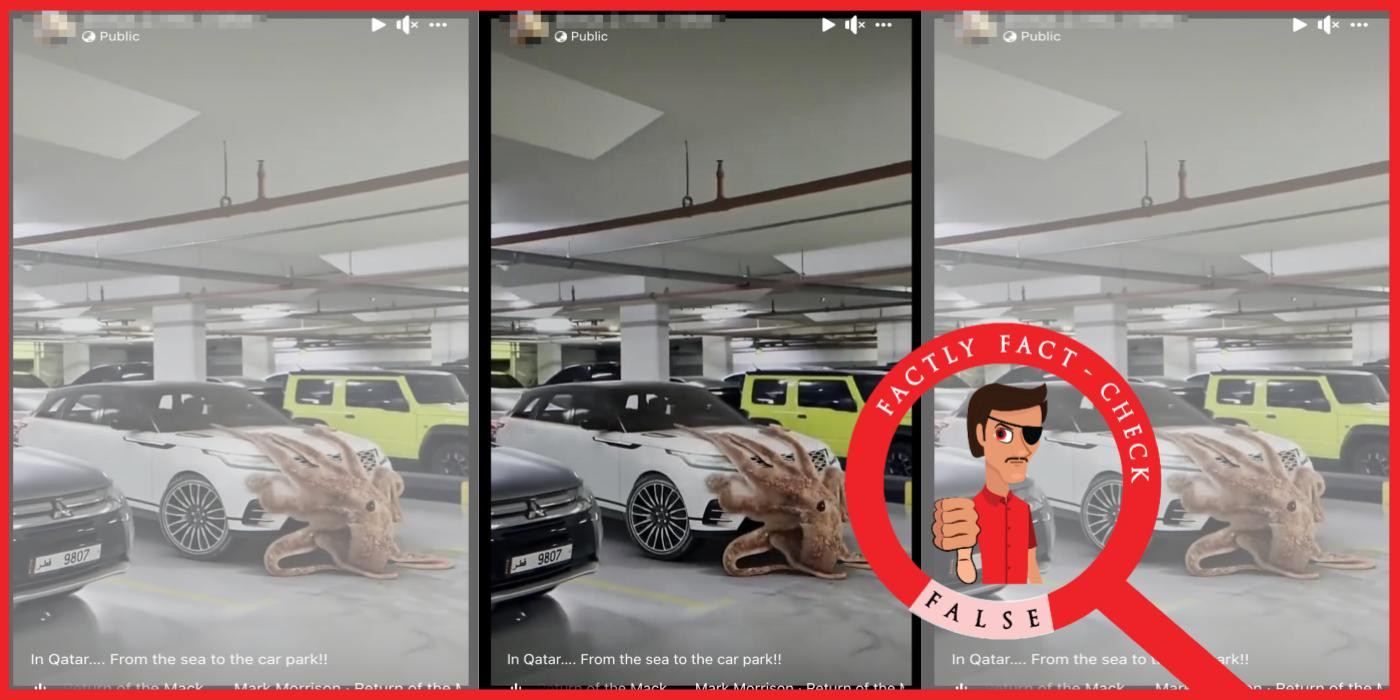
ภาพดอกไม้สีม่วงที่บานในทวีปแอนตาร์กติกา
Publisher’s rating: Misleading
Esta imagen muestra una nave espacial real fotografiada desde la ventana de un avión.
Publisher’s rating: Falso
The claim concerns a Facebook post saying a silver, futuristic-looking craft above an arid landscape was photographed “from the airplane window.” The review identifies the image’s distinctive details: a plane turbine in the foreground and the apparent craft below it. It reports that the post appeared on September 29, 2023, on a Facebook account devoted to UFOs; five days later, it had more than 3,400 reactions and 875 comments. The review’s conclusion is that the image is not a real photograph of a spacecraft in flight. To investigate, El Detector says it performed a reverse image search on Google. It found the same image in Spanish-language articles from 2015 describing it as an imagined spacecraft concept created by Ferrari design director Flavio Manzoni. The review also reports finding an Italian Corriere della Sera article in which Manzoni described the idea as beginning as a diversion or joke, inspired by his childhood fascination with science fiction and spacecraft. The review explains that the image depicts a 3D model, not a vehicle photographed from an airplane. According to its account, two members of Manzoni’s team helped turn his sketches into photorealistic 3D models that were not intended to exist in reality. The image at issue was one of those designs, which were shared in 2015. That earlier provenance explains why a convincing-looking spacecraft appears in the image, while contradicting the post’s claim that it documents a real craft seen from a plane.
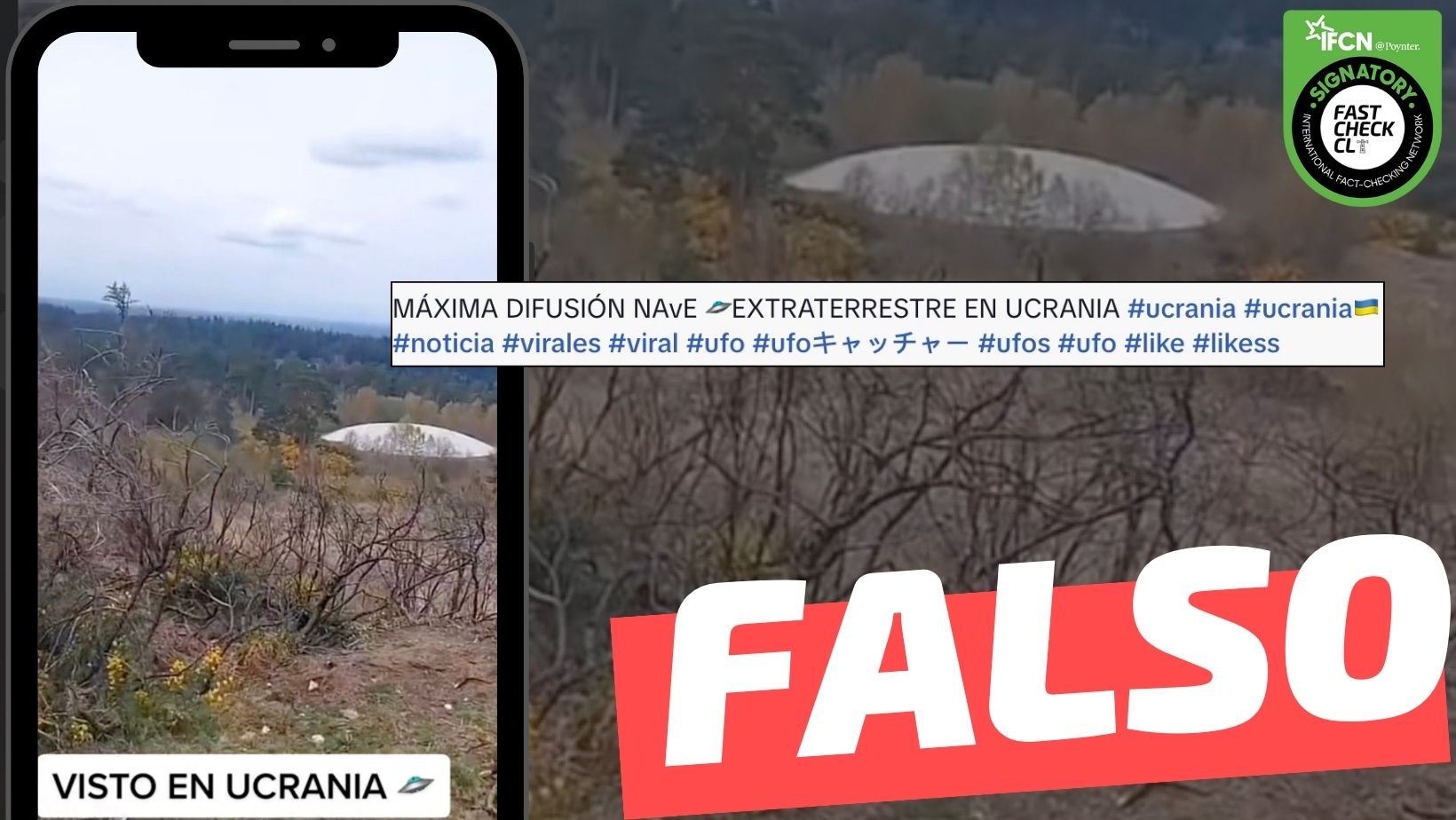
ഒരു പിടി ഗോതമ്പ് പൊടിക്ക് ഗ്യാസ് സിലിണ്ടറിന്റെ തീ തൽക്ഷണം കെടുത്താൻ കഴിയും
Publisher’s rating: FALSE
Deze video toont de interactie tussen grafeen en 5G-straling.
Publisher’s rating: De video toont niet de interactie tussen 5G en grafeen. De beelden staan al online van voor de uitrol van het 5G-netwerk en het beïnvloede materiaal is geen grafeen. Waarschijnlijk gaat het om een trucje met een magneet onder tafel. Er zit bovendien ook geen grafeen in de goedgekeurde coronavaccins.
The video was shared as an experiment supposedly showing 5G radiation making graphene move, with social-media posts connecting the claim to graphene in COVID-19 vaccines. The investigation traced an earlier version of the footage using a reverse-image search: it found the video on YouTube with Russian and English titles describing a mobile phone’s effect on magnetic ore. The footage had been online since January 2015, before 5G networks began operating. The phone shown is a Nokia Asha 501, which the review says does not support 3G, 4G or 5G. The material in the video is not identified as graphene. The YouTube title calls it “Magnetic Ore,” and the Russian narration uses a phrase meaning “magnetic ore.” The review says the exact metal powder cannot be established with complete certainty, but that the video does not call it graphene. It suggests the material may be an iron powder such as magnetite. The reported explanation for its movement is a concealed magnet beneath the table, not radiation from the phone: the review cites a 2015 investigation by the Russian newspaper Komsomolskaya Pravda that examined how the effect was produced. The review also addresses the vaccine implication separately. It says the video does not show graphene and reports that approved COVID-19 vaccines in the European Union do not contain graphene or graphene oxide. Thus, the footage’s date, the phone model, the material’s identification and the reported hidden-magnet explanation do not support the claim that it demonstrates an interaction between 5G and graphene.
Estas imágenes muestran a extraterrestres.
Publisher’s rating: Falso
The claim concerns a Facebook post presenting two images of tall, gray-blue figures in elaborate costumes as giant reptilian extraterrestrials from Russia. The review identifies the people in the images as sisters Liudmila and Tamara Titchenkova, who appeared in an outer-space-themed performance by the Great Moscow State Circus. Its conclusion says the composite does not show extraterrestrials, but the sisters in costumes. To investigate, the review describes a reverse-image search of the photo showing the sisters with a man. It found a higher-quality version on a website titled “Titchenko sisters as aliens,” where the women and costume details were more visible. Searching for the sisters’ names then led to an Associated Press video about the circus show “UFO: Circus from Another Planet.” The review reports that the video, uploaded in 2015, shows the sisters in the same outfits and identifies them by name; it also gives their height as 2.08 meters. The review traced the other image in the post to a screenshot from that AP video, at about 2:15. It says the screenshot had been reversed, had its color reduced, and had been stretched. In combination, the image matches and the video’s identification explain why the costumes and alien-themed setting could be mistaken for evidence of actual extraterrestrials.
The alien found in Mexico was a cake
Publisher’s rating: Misleading
Görüntülerin volkanik bir patlamayı gösterdiği iddiası
Publisher’s rating: Yanlış
De geluidstechnicus van NASA verschijnt per ongeluk op de camera tijdens een live-uitzending vanuit de 'ruimte'.
Publisher’s rating: De video is bewerkt. De man in de linkerhoek is digitaal aan de beelden toegevoegd en is geen technicus van de ruimtevaartorganisatie NASA.
The claim concerns a video presented as a live broadcast from the International Space Station, in which a man appears in the lower-left corner. The review says the clip was circulated with the suggestion that a studio technician had accidentally entered the shot, implying the space mission was staged. It traces the astronauts’ footage to an ISS Facebook livestream and a shorter YouTube version showing the crew after three astronauts had joined the station on 25 September 2019. The review reports that the astronaut movements in the viral clip match moments in the NASA footage, while the supposed technician does not appear there. (S1: “Bij een live-uitzending vanuit het Internationaal Ruimtestation (ISS) zou per ongeluk een technicus "uit de studio" te zien zijn geweest.”; “Drie ruimtevaarders voegden zich op 25 september 2019 bij een zeskoppige bemanning die op dat moment al in het ISS was.”; “Zoals verwacht: een technicus in de hoek is nergens te bekennen.”) The review describes several checks supporting that conclusion. A reverse-image search found the first segment on the TikTok account Spacesux, whose compilation’s black frame and font resembled other videos posted by that account. In the clip, the man’s left shoulder appears transparent, allowing a white wire behind him to remain visible through it. The review also compared specific actions in the viral video with the NASA footage: an astronaut looking aside and another person raising a hand to his ear correspond to a moment at 5:14 in that footage; another astronaut’s repeated glance also matches. (S1: “Het eerste fragment in de video is met een reverse image search ook terug te vinden op TikTok bij het account Spacesux.”; “Vanaf 0.06 in de TikTokvideo is te zien hoe zijn linkerschouder (rechts op beeld) doorzichtig is, waardoor je de witte draad die achter hem langs loopt door hem heen kunt blijven zien.”; “Dat komt overeen met minuut 5.14 in de NASA-video.”; “Ook dat is exact terug te zien in de NASA-beelden.”) The review further says it found a 29 November 2019 YouTube video that makes the compositing evident: the same man is inserted into multiple ISS scenes. This account of the footage’s provenance and the visual comparison directly addresses the specific video, rather than merely discussing spaceflight claims in general. The review also notes that later images in the compilation—a toy playset and memes—were not evidence that the Moon landing was staged. (S1: “De video verscheen op 29 november 2019 op YouTube.”; “In deze versie is heel duidelijk te zien dat de man in de hoek er in is gemonteerd.”; “De foto die na het gemanipuleerde fragment te zien is, toont een speelset met een astronaut en een cameraman.”)
Atommüller könne mit besonderen Dual-Fluid-Reaktoren wiederverwertet werden.
Publisher’s rating: Größtenteils richtig. Allerdings handelt es sich bei bisherigen Anlagen um Versuchsreaktoren. Laut Fachleuten dauere es noch Jahrzehnte, bis die Technologie in der Praxis Strom liefere.
"In der Forschung ist der Dual-Fluid-Reaktor, der kann zum Beispiel die alten Brennstäbe wiederverwerten. Da ist derzeit von deutschen Ingenieuren eine Anlage im Bau in Ruanda und es wurde auch schon in China eine Anlage gebaut basierend auf deutscher Technik, und da kann der ganze Atommüll, der bereits schon gelagert worden ist, wiederverbrannt werden."
Publisher’s rating: Größtenteils richtig. Allerdings handelt es sich bei den von Ebner-Steiner angesprochenen Anlagen um Versuchsreaktoren. Fachleute sagen, dass es noch Jahrzehnte dauern wird, bevor diese Technologie zum Einsatz kommen könnte.