PeakMetrics / Fact Checks
Religion & belief fact checks
Explore claims publishers have checked about religion & belief. Read their original ratings and follow the evidence.
Search fact checks
Search by text or image3,371 published reviews in this topic

ஜெர்மனியில் 800 கோடி செலவில் ஶ்ரீகாமாட்சி அம்மன் திருகோயில். மிக வேகமாக வளரும் இந்து மதம்.
Publisher’s rating: Mix

Claim: Church was built in Tirupathi Tirumala forest
Publisher’s rating: Fact Crescendo Rating: FALSE
The claim concerned a viral photograph said to show a Christian church built in the forest on Tirupati hill. The post alleged that missionaries had been allowed to build Christian places of worship on land belonging to the Tirupati temple. The review says the image was shared by the Facebook page Troll 420 on August 26, 2019, and describes how the building could appear church-like from a distance, including a cross-like feature and a sloping roof. To investigate the image, Fact Crescendo reports that it used reverse-image search and found Telugu reporting identifying the structure as a monitoring building belonging to Andhra Pradesh’s Forest Department, not a church. The review then says it searched for and watched a Bharat TV video about the building. According to the review’s account of that footage, the building was marked in English and Telugu as the Seshachalam Biosphere Reserve, and the apparent cross was a monitoring camera. A nearby tilted solar panel made the roof look sloped, contributing to the mistaken impression that the structure was a church. The review says the Bharat TV footage identified the structure as a forest-department monitoring building and stated that no Christian church was operating there. On the basis of that evidence, Fact Crescendo concluded that the building in the photograph belonged to the Andhra Forest Department and that the viral post’s description was false.

శ్రీ కృష్ణుడు నైతికత లేని వ్యక్తి అని ఆరోపిస్తూ ఇస్కాన్ సంస్థపై పోలాండ్ కి చెందిన ఒక నన్ కేసు వేసింది.
Publisher’s rating: FALSE


ఆలయాన్ని కూల్చి బాబ్రీ మసీదు నిర్మించారు అని అని సుప్రీం కోర్ట్ తెలిపింది
Publisher’s rating: FALSE
Claim Maa Kali idols are being desecrated in West-Bengal
Publisher’s rating: FALSE

Non-Hindu security personnel manhandling Hindu devotees at Tirumala.
Publisher’s rating: FALSE
The claim concerns a video presented as showing non-Hindu security personnel manhandling Hindu devotees at Tirumala in Tirupati. FACTLY’s investigation identifies the footage as depicting a different temple and incident: a policeman mishandling devotees at Banke Bihari temple in Uttar Pradesh in 2014. It therefore concludes that the video does not establish the claimed Tirumala event. To trace the footage, the review says it used the InVid plugin to extract keyframes from the circulating video, then ran reverse-image searches on those frames. A keyframe led to an APN news video showing the same footage. According to the review, the APN report places the incident at Banke Bihari temple and says police may have mishandled devotees amid a large crowd. The review also reports that the APN video’s timestamp showed it was uploaded on July 30, 2014. The review describes visual details that support the location identification: the side pillars and green cloth in the circulating footage match those at Banke Bihari temple. Its account thus links the viral video to the 2014 Uttar Pradesh incident, rather than to the claimed incident at Tirumala.

జంతువుల్ని వధిస్తున్నారని ముస్లింలను అసహ్యించుకునే ట్వీట్ లను నేను ఆమోదించను. కే.ఎఫ్.సీ, మెక్ డొనాల్డ్స్, బర్గర్ కింగ్ వంటి సంస్థలు ప్రతీ రోజూ ఒక మిలియన్ జంతువుల్ని కేవలం ధనవంతుల కోసం వధించి, డబ్బు కూడబెట్టుకుంటున్నాయి. ఈద్ సందర్భంగా ముస్లింలు జిబహ్ చేసే జంతువుల మాంసం పేదలకు ఉచితంగా పంచబడుతుంది అనే వాస్తవం మీరు తెలుసుకోవాలి అని బిల్ గేట్స్ అన్నాడు
Publisher’s rating: FALSE
Claim video claiming Muslims protesting in Jaipur
Publisher’s rating: FALSE
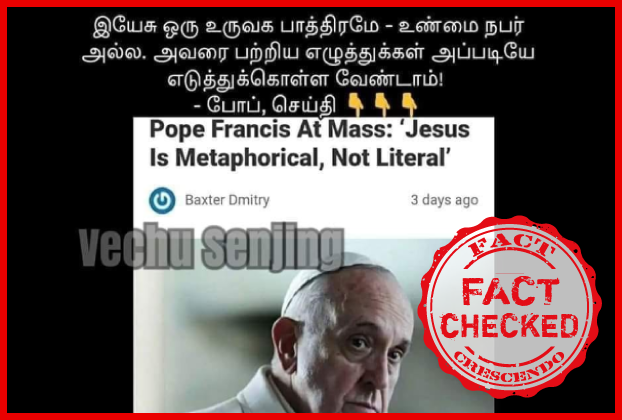
Claim: Pope Francis says Jesus Christ is Metaphorical
Publisher’s rating: FALSE

Bill Gates has tweeted- “I don’t want to see any tweet hating on Muslims for slaughtering animals, about 1 million animals killed each day by KFC, McDonald’s, Burger King etc. too feed the rich & making hella money out of it. During Eid Muslims sacrifice them to feed the poor for Free & y’all lose ur mind”.
Publisher’s rating: FALSE
The claim concerns a screenshot purporting to show Bill Gates tweeting in support of Muslim animal sacrifice during Eid. FACTLY reports that it checked Gates’s official Twitter account, @BillGates, and used Twitter’s advanced search with keywords from the screenshot. It says neither check produced a result for the alleged tweet. The review therefore concluded that the screenshot was fabricated rather than an authentic Gates post. The review also describes a search for media coverage of Gates expressing an opinion about religious practices, and says it found no such information. That absence is presented as additional support, not as a direct record of what Gates did or did not post. The review’s central evidence is its reported search of the official account and Twitter’s advanced search; the supplied excerpt does not include archived search results or a platform record independently documenting those searches. FACTLY identifies a possible origin for the message: it says a Twitter user named “Kurdistani,” using the handle @WolfieBabiee, posted it on August 10, 2019. The excerpt does not provide a link to that post or further evidence tracing how the message became a screenshot attributed to Gates.
Im Internet kursiert ein Video, in dem hunderte Menschen in einem Gebäude Parolen rufen und mit Papieren in der Hand wedeln. In dem nebenstehenden Text wird der Eindruck erweckt, dass es sich dabei um Muslime handelt, die eine Kirche besetzen und entweihen würden.
Publisher’s rating: Das Gebäude ist keine Kirche sondern eine Ruhmeshalle. Bei den demonstrierenden Menschen handelt es sich um Migranten, die auf die Situation von Einwanderern ohne Papiere aufmerksam machen wollen.
The claim concerns a video showing a crowd inside a building, chanting and waving papers. The accompanying post presents the people as Muslims occupying and desecrating a church. The dpa review identifies the footage as showing an occupation of Paris’s Panthéon by hundreds of migrants on 12 July 2019—not an occupation of a church. The review explains why the building’s appearance can be misleading: the Panthéon was originally planned as a church, but was later converted into a hall of honor. It also reports that the demonstrators were calling for better living conditions and accommodation for undocumented migrants. Many held a statement seeking a meeting with French Prime Minister Édouard Philippe, giving the papers a purpose different from the impression created by the post. The review identifies the group as the “Black Vests” (Gilets noirs), a name modeled on the Yellow Vests movement. As evidence visible in the video, it points to a banner reading “GILETS NOIRS” at about 00:28. It also refers to a video of the demonstration from another angle. Together, the location, the group identification and the stated demands support the review’s account of the footage as a migrant protest at the Panthéon, rather than the alleged desecration of a church.

1212 pillars meeting in one dot at the Rameshwaram temple.
Publisher’s rating: FALSE
1,300 ஆண்டுகளாக நீரில் மிதக்கும் விஷ்ணு சிலை. அறிவியலை மிஞ்சிய ஆன்மீகம்.
Publisher’s rating: Fake

Claim: False narrative on Athi Varadar temple
Publisher’s rating: FALSE
The review investigated a social-media video presented as showing offerings collected at the Athi Varadar temple in Kanchipuram. The accompanying post claimed that the temple had gathered “40 years’ collections” in a single day. The video showed a temple donation box being opened and valuables and money transferred into containers, but the review reports that it did not identify the temple as the Kanchipuram Varadaraja Perumal temple.

అయోధ్యలో రామ మందిరం కట్టాలని ఒక అరబ్ సుష్మా స్వరాజ్ ముందు పాట పాడాడు.
Publisher’s rating: FALSE
Kakek-nenek yang pernah viral saat menunaikan ibadah haji dikatakan meninggal bersamaan di Mekkah
Publisher’s rating: Keliru
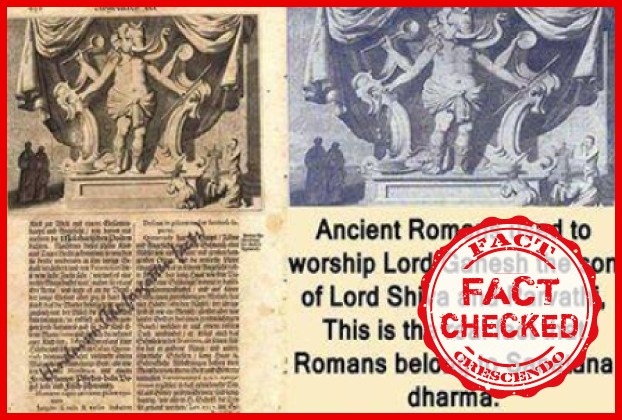
Claim: Rare picture of Lord Ganesha in Rome before birth of Christ
Publisher’s rating: FALSE
The claim concerned a viral image presented as evidence that ancient Romans worshipped Ganesha before the birth of Christ. The review describes the shared image as resembling Ganesha and notes that its accompanying English text said Romans worshipped Ganesha, Shiva and Parvati. It investigated whether the image really showed pre-Christian Roman worship, rather than whether Ganesha is worshipped in other traditions or regions. (S1: “அந்த செய்தியில், விநாயகர் போன்ற புகைப்படம் உள்ளது. அத்துடன், ‘’பழங்காலத்தில் ரோமானியர்கள் சிவன் மற்றும் பார்வதியின் மகனான கணேசனை வழிபட்டுள்ளனர்”) The review says it searched for the image using Yandex and found that earlier fact-checks had also examined it. It identifies the image as an illustration by French artist Bernard Picart, whom it says lived from 1673 to 1733, and reports that the illustration was made sometime between 1723 and 1743. Those dates place the image many centuries after the period asserted in the viral claim, so it cannot establish pre-Christian Roman worship. (S1: “குறிப்பிட்ட கணபதி ஓவியத்தை அவர் 1723 – 1743 ஆகிய இடைப்பட்ட ஆண்டுகளில் வரைந்திருக்கிறார்.”) The review adds that Picart had not travelled beyond European countries and says he drew on accounts he had heard about religious practices in the East. It concludes that the viral post misrepresented a later European illustration as evidence of pre-Christian Roman worship. Its stated conclusion is based on the image’s reported attribution and date, not on evidence that Romans did or did not worship Ganesha in every other context. (S1: “ஐரோப்பிய நாடுகளை கடந்து எங்கேயும் பயணம் செல்லாத அவர், கீழை நாடுகளில் காணப்படும் கடவுள் வழிபாடு பற்றியும், செவிவழிச் செய்திகள் மூலமாகக் கேள்விப்பட்டு, இந்த ஓவியத்தை அவர் வரைந்துள்ளார்.”)