PeakMetrics / Fact Checks
Religion & belief fact checks
Explore claims publishers have checked about religion & belief. Read their original ratings and follow the evidence.
Search fact checks
Search by text or image3,371 published reviews in this topic

Claim: MK Stalin promised to stop Laddu Prasam in Meenakshi Temple
Publisher’s rating: Fact Crescendo Rating: False
The claim concerned a viral Facebook news card attributing to M. K. Stalin a promise to stop the free distribution of laddus at Meenakshi Amman Temple in Madurai if the DMK came to power. The review says the card presented the statement as a report by Sathiyam TV, and that it was being widely shared as genuine. Its investigation focused on whether the card matched Sathiyam TV’s actual reporting.

అయోధ్య మందిరానికి 10,000 కోట్ల రూపాయులు కేటాయించనున్న కేంద్ర ప్రభుత్వం.
Publisher’s rating: FALSE
Foto batu yang diklaim sebagai batu yang dipijak oleh Nabi Muhammad untuk naik ke langit saat peristiwa Isra Mi'raj
Publisher’s rating: Keliru
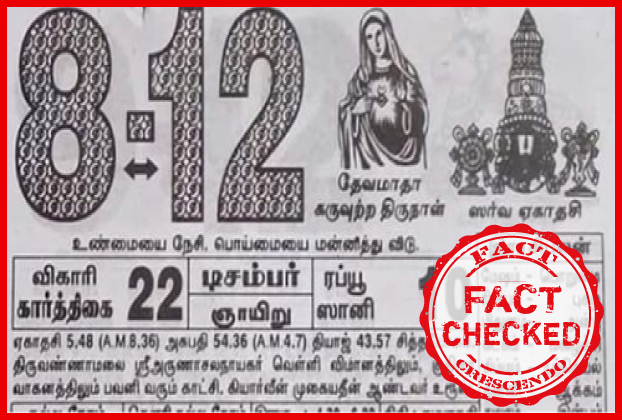
Claim: Mother Mary conceived on December 8
Publisher’s rating: Fact Crescendo Rating: False
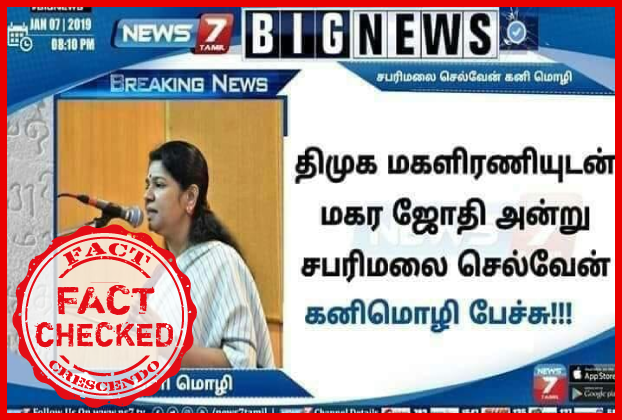
Claim: DMK MP Kanimozhi challenged to go to Sabarimala
Publisher’s rating: Fact Crescendo Rating: False
Initially Hinduism allowed eating of beef.
Publisher’s rating: Unverifiable
Related research includes a blog post that quotes Ananda Marga philosophy as saying that people in the Vedic age ate meat, including beef, and that after Shiva’s advent people were encouraged to rear cows for milk and stop eating meat. This is directly relevant to the claim that beef-eating was initially permitted in Hinduism, but the excerpt presents the statement as a religious-philosophical account; it supplies no historical evidence or method for establishing it. The available material therefore does not verify the claim.

Saudi Arabian government released the Bhagavad Gita in the Arabic language.
Publisher’s rating: FALSE
The claim concerned Facebook posts saying the Saudi Arabian government had released an Arabic-language Bhagavad Gita. FACTLY found no credible information authenticating a government release. It reports searching Google for terms about the Saudi government releasing an Arabic version and finding no relevant results; it also says no news agency had reported such a release. The review’s conclusion is that the claim was false, though the described checks rely on the absence of corroborating reports rather than on a cited government record or a direct statement from Saudi authorities. The review also investigated the Arabic-text image shared with the claim. It says the image was of a Bhagavad Gita translation by ISKCON devotee H.G. Ravanari Prabhu, rather than evidence that the Saudi government had issued the book. That provenance addresses the image’s apparent support for the claim, but the excerpt does not provide further details about the translation or how the image was traced.
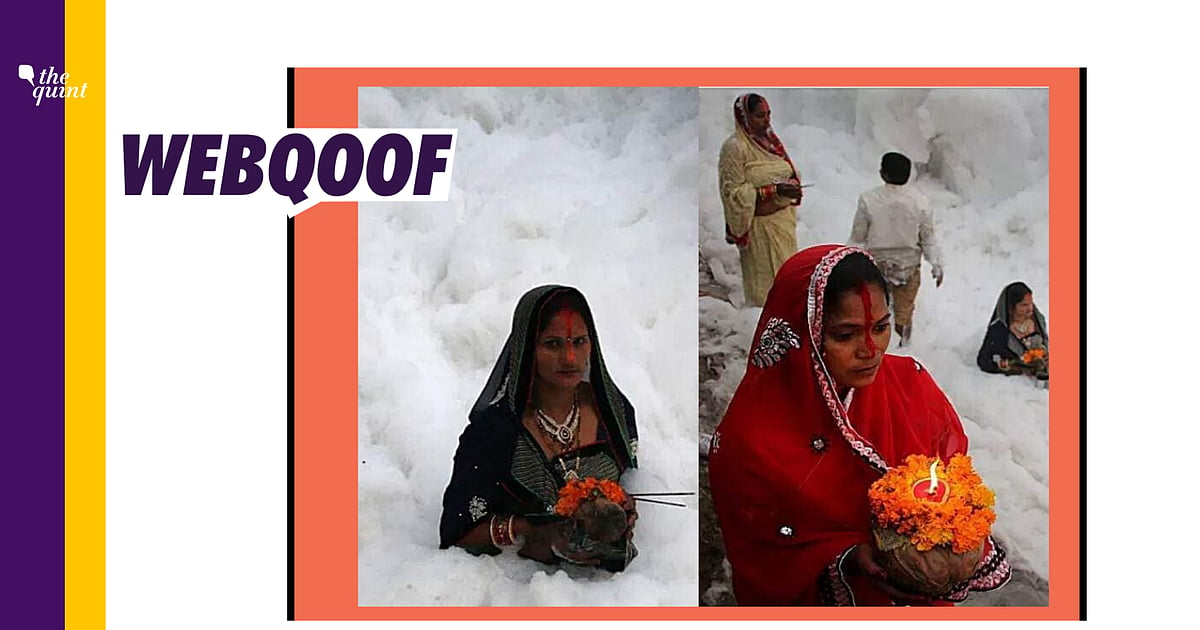
Photos of Chhath Puja from 2019 celebrations
Publisher’s rating: FALSE
The review examines photos circulated as showing the 2 November 2019 Chhath Puja celebrations at Kalindi Kunj in Delhi. The images depicted devotees standing in Yamuna water amid toxic foam. Its conclusion is specific: the photos were real, but two of them were from an earlier Chhath Puja, not the 2019 event. The two identified images show a woman in a red sari and a woman in a grey-and-black sari. To check their date, The Quint says it performed a reverse image search and traced those two images to The Indian Express’s 8 November 2016 coverage. The review reports that the older article carried the same pictures and credited them to photographer Abhinav Saha. This provenance supports dating those images to 2016, rather than 2019. The review does not say that every circulating photo was old. It distinguishes the two identified images from other pictures it describes as showing that year’s Chhath Puja. It also notes a visible difference: the foam reached waist level in the 2016 images, while it had receded to knee level in the 2019 images. The evidence therefore establishes that some, not all, of the photos presented as 2019 celebrations were misdated.
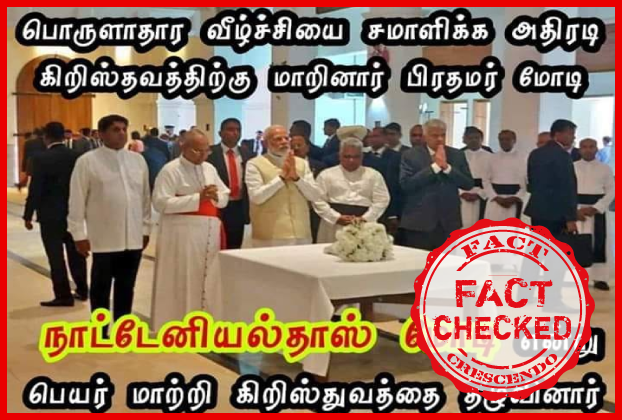
Claim: PM Modi converted to Christianity in Italy
Publisher’s rating: FALSE

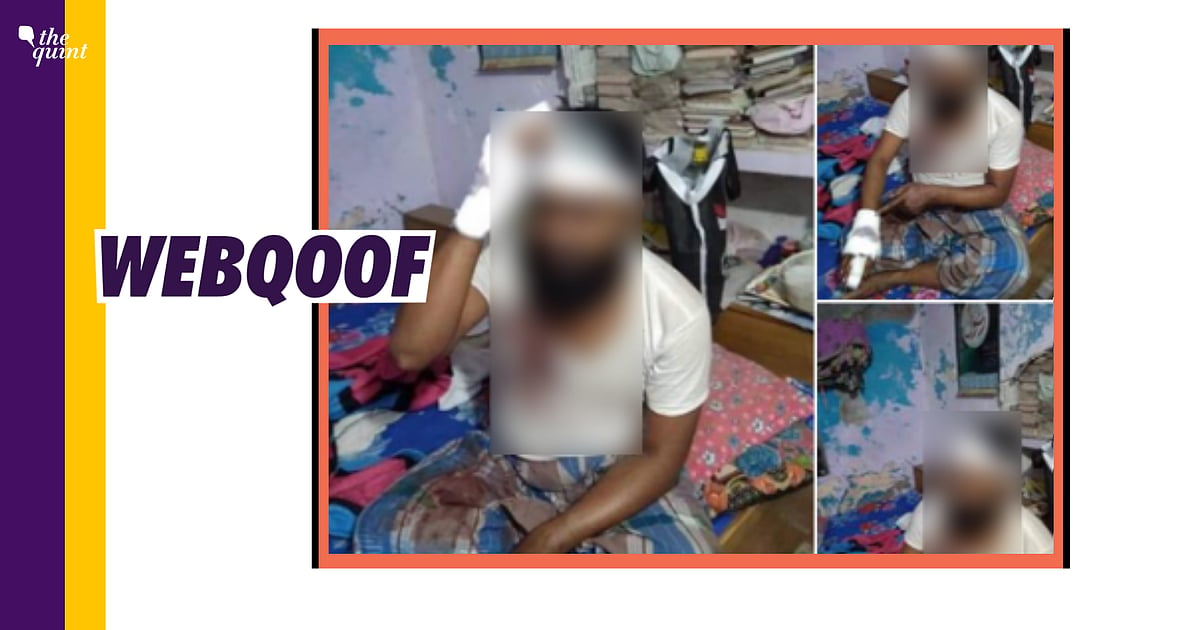
At 11 pm sanghs attacked imam hafiz adnan of Lucknow Jail Road mosque
Publisher’s rating: FALSE
The claim concerned images of an injured man circulated with a post alleging that, at 11 pm, Hafiz Adnan, imam of a mosque on Lucknow’s Jail Road, had been attacked with a sharp weapon by a group described as Sanghs and Bajrangs. The review found that the man in the images was an imam, but was Maulana Mukim—not Hafiz Adnan. It also reported that Mukim said he had been attacked with a sharp weapon, while describing what he saw as one attacker, not a group. The account of the incident came from Lal Pratap Singh, circle officer of Lucknow’s Alambagh police station, whom the review said spoke to The Quint. Singh said the incident occurred on 28 October, when a man named Suraj tried to enter Mukim’s home to rob it. He said Suraj did not succeed, and that Mukim saw one person. Singh denied a communal motive and links between the accused and the Sangh or Bajrang Dal, and said Suraj had been arrested. The review also reported that Mukim confirmed the incident occurred between 11 and 11:15 pm. Thus, the review distinguishes the reported assault from the post’s central allegations: the injured imam was not Hafiz Adnan, and the accounts cited by the review described one alleged attacker and a robbery attempt, rather than a group attack with a communal or political connection.
اسلام میں متعہ کا رواج ہے۔جس میں کسی بھی خاتون سے وقتی شادی کے بعد خواہشات پوری کرنے کے بعد آزاد کردیا جاتاہے۔
Publisher’s rating: FALSE


கோல்வால்கரை மீனாட்சி அம்மன் கோவிலில் அழைத்து செல்லும் முத்துராமலிங்கத் தேவர்
Publisher’s rating: Fake

Claim: Saravana stores denied to remove ganesha temple
Publisher’s rating: Fact Crescendo Rating: False


Diwali at Amritsar Golden Temple .
Publisher’s rating: FALSE
The claim concerns a photo circulated as showing the Golden Temple in Amritsar on Diwali, with sky lanterns above the site. FACTLY examined whether the image was an authentic photograph of that scene. Its review reports that the image had been edited: lanterns were added to the sky, so the picture did not document the claimed view.
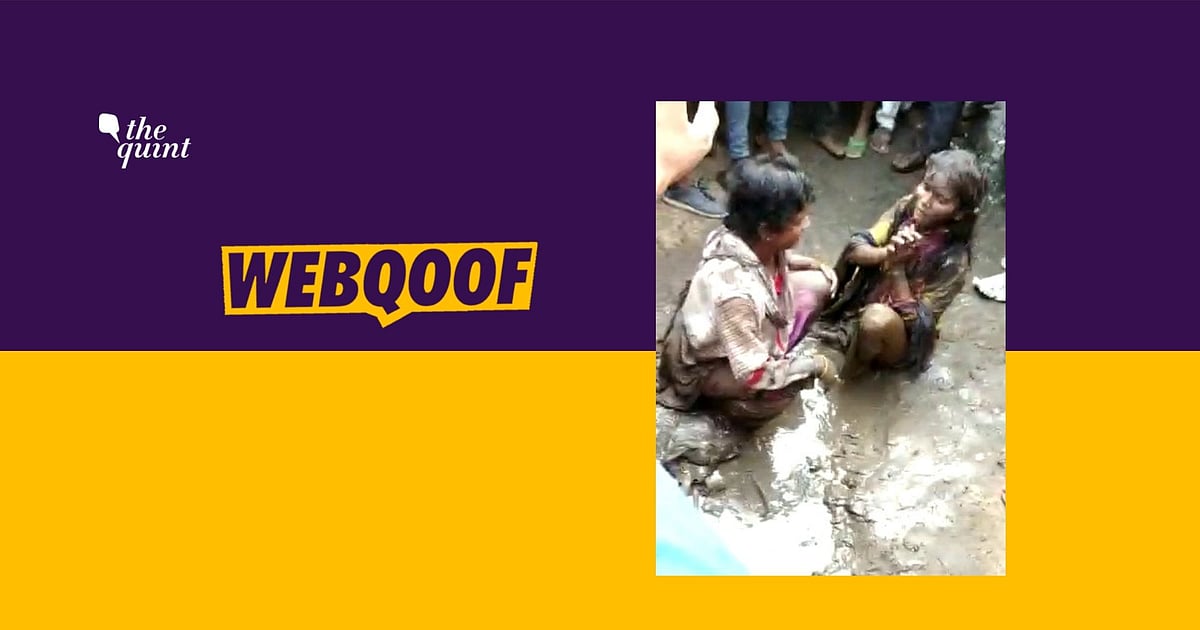
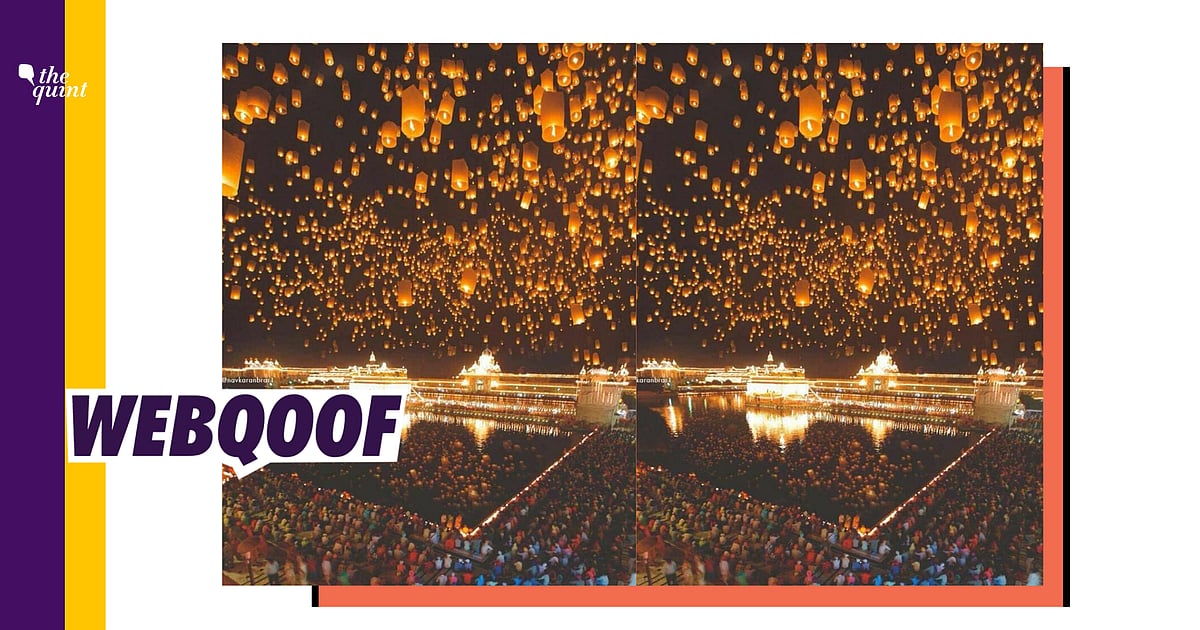
Photo of Golden Temple lit up by sky lanterns on the occasion of Diwali
Publisher’s rating: FALSE