PeakMetrics / Fact Checks
Religion & belief fact checks
Explore claims publishers have checked about religion & belief. Read their original ratings and follow the evidence.
Search fact checks
Search by text or image3,371 published reviews in this topic

La Iglesia de Suecia ha nombrado a Greta Thunberg «sucesora de Jesucristo»
Publisher’s rating: Engañoso
The claim concerns whether Sweden’s national church officially named Greta Thunberg the successor of Jesus. Newtral reports that headlines making this claim began circulating in December 2018, but says the post behind them came from a Swedish parish, not from the church’s national authority. The review notes that “Church of Sweden” is the official name of the country’s highest Protestant religious authority, making the distinction between a parish and the institution central to assessing the claim. According to the review, the Church of Sweden told Newtral that it had “totally disassociated” itself from the message because it did not represent the institution. Thus, the evidence supports a narrower account: a parish published a tweet describing Thunberg as Jesus’s successor, while the national church rejected that message as its own position. The review does not say that the tweet was never published; it explains why attributing it to the national church is misleading.
Claim Masjid found during Delhi metro construction
Publisher’s rating: FALSE

Claim image of a person who burned Quran, got his hands burned
Publisher’s rating: FALSE
Claim hindu and muslims quote by SP of Patiala
Publisher’s rating: FALSE

இலங்கையில் உள்ள அனுமன் பாதம். ஷேர் பண்ணுங்க. நல்ல செய்து வீடு தேடி வரும்.
Publisher’s rating: Fake

ಅಯೋಧ್ಯೆಯಲ್ಲಿ ರಾಮ್ ಮಂದಿರ ನಿರ್ಮಾಣಕ್ಕಾಗಿ ಮುಖೇಶ್ ಅಂಬಾನಿ ರೂ.500 ಕೋಟಿ ದೇಣಿಗೆ ನೀಡಿದ ಚಿತ್ರ.
Publisher’s rating: FALSE
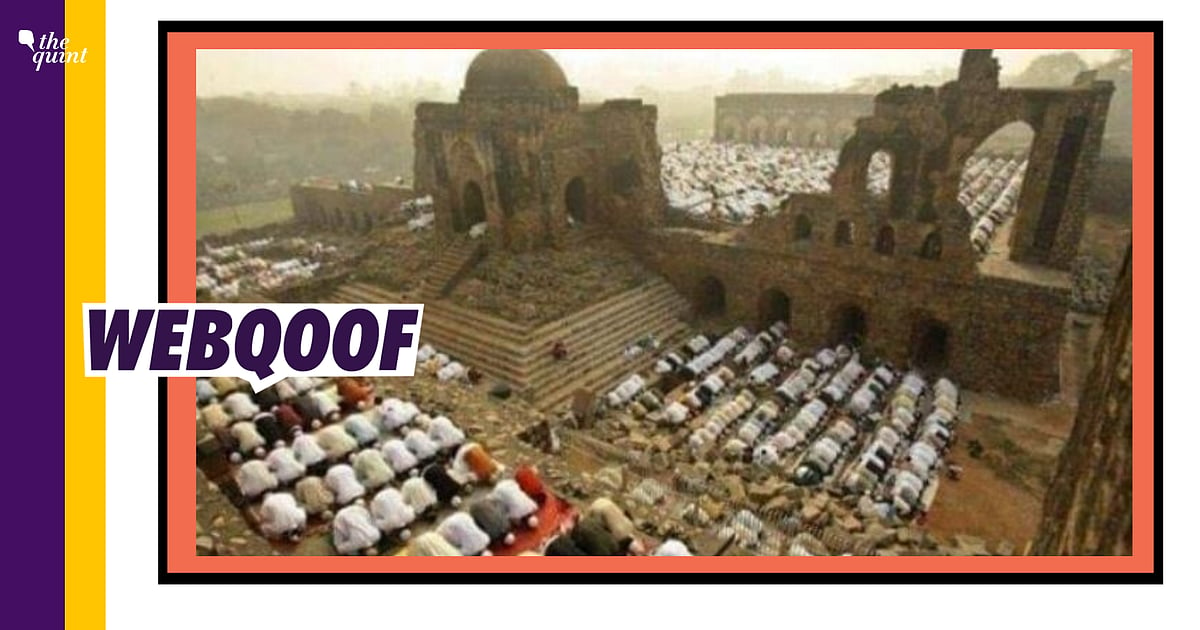
Muslims offering last prayer in Babri Mosque
Publisher’s rating: FALSE
The claim attached to the circulating image was that it showed Muslim men offering the last prayer at the site where the Babri Masjid once stood, before the place was handed over to Hindu administration. The Quint’s review says the Supreme Court’s Ayodhya judgment directed that Hindus would receive the disputed land, subject to conditions. It concludes that the image was genuine, but that the claim about where and when the prayer took place was false. To check the image’s location, the review describes searching for “Namaz Delhi mosque” after a comment suggested it might show a Delhi mosque. The search turned up an image showing the same structure; the site hosting it identified the location as Jami Masjid in the Feroz Shah Kotla area. The review says the investigators then used Google Maps to find the mosque’s location. The review also reports finding the same image on India Times, where it had been uploaded in 2008, and dates the photograph to December 2008 at a mosque in New Delhi’s Feroz Shah Kotla area. That provenance places the photograph well before the Ayodhya verdict and rules out the claim that it shows a final prayer at the former Babri Masjid site. The Quint states that the photograph itself had not been altered.
Sertifikat berlogo Unesco yang menyatakan Islam sebagai agama paling damai di dunia
Publisher’s rating: Keliru


అయోధ్య రామాలయ నిర్మాణానికి అక్షయ్ కుమార్ 10 కోట్ల రూపాయల విరాళం.
Publisher’s rating: FALSE
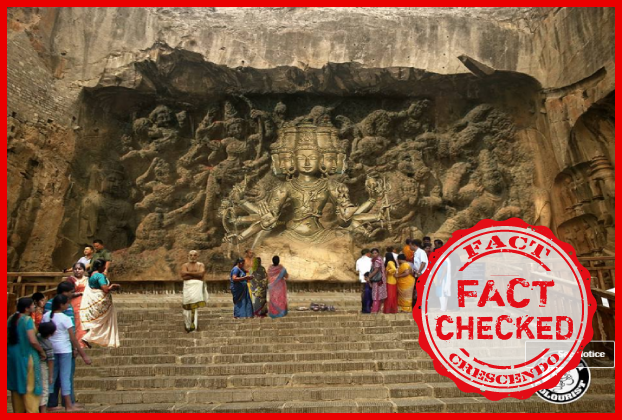
Claim: Hindu temple hidden inside of a mosque in Karnataka
Publisher’s rating: FALSE
The claim concerned a social-media image presented as a huge Hindu temple uncovered when a mosque in Raichur, Karnataka, was demolished for road widening. The review says the post appeared on Facebook on November 22, 2019, and that its image carried text alleging a hidden shrine had been exposed. The question was not whether road-widening work had affected religious buildings, but whether the image showed a temple inside the mosque and whether that discovery had happened. Evidence cited in the review supports the former event—demolition work affecting religious sites—but not the alleged discovery: “2016ம் ஆண்டு சாலை விரிவாக்கப் பணிக்காக ரெய்ச்சூரில் கட்டிடங்கள் இடிக்கப்பட்டதாக தி இந்து செய்தி வெளியிட்டிருந்தது. அதில் இரண்டு மசூதி மற்றும் ஒரு கோவிலில் சில பகுதிகள் மட்டும் இடிக்கப்பட்டதாக கூறப்பட்டு இருந்தது.” The review describes tracing the striking cave-temple image to its creator. It says the creator shared it as a digital artwork, without identifying it as a Raichur temple, and explains that a commenter asked where it was from. The review quotes the creator’s reply: “இது என்னுடைய டிஜிட்டல் படைப்பு”. It also reports that the cave image was from China’s Longmen Grottoes and that AFP compared the digital artwork with an image of the grottoes. Thus, the image used to support the claim was not photographic evidence of a newly uncovered Raichur shrine. The review distinguishes the image’s fabrication from a later allegation about mosque columns. It reports that two months after the 2016 demolition, a newspaper described Hindu organizations alleging that Hindu temple pillars were inside a mosque and calling for an investigation; that is an attributed allegation, not confirmation of a temple being uncovered. The review says contemporaneous reporting on the demolition did not mention a temple inside the mosque, and that the alleged hidden-temple story surfaced months later. It concludes that the social-media post’s image and accompanying claim were false. The article’s printed result is “False.”


అయోధ్య రామాలయ నిర్మాణానికి 500 కోట్ల రూపాయలు విరాళంగా ఇచ్చిన ముకేష్ అంబానీ.
Publisher’s rating: FALSE

నందీశ్వరుడి విగ్రహం కాశీ క్షేత్రంలోని జ్ఞానవాప్సి మసీదు ప్రాంగణంలో ఉంది.
Publisher’s rating: FALSE
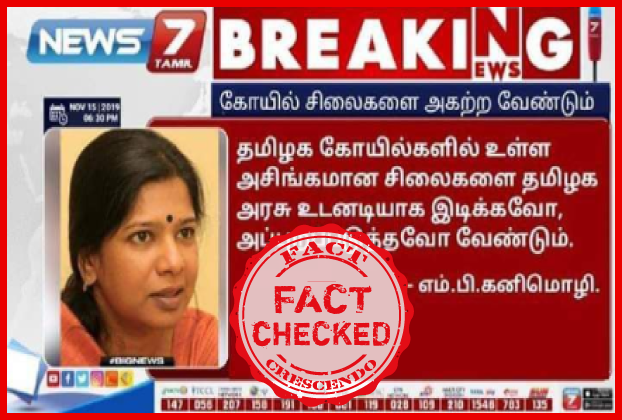
Claim: Kanimozhi appealed to demolish statues in Hindu Temples
Publisher’s rating: FALSE

0 నుండి 6 సంవత్సరాలలోపు ఉన్న పిల్లలలో 46 శాతం ముస్లింల పిల్లలే ఉన్నారు.
Publisher’s rating: FALSE

శబరిమల వెళ్లకుండా పోలీసు వారు ఆపిన 12 ఏళ్ళ బాలిక
Publisher’s rating: MISLEADING

Claim images related to Babri Masjid in Ayodhya
Publisher’s rating: FALSE