PeakMetrics / Fact Checks
Politics & government fact checks
Explore claims publishers have checked about politics & government. Read their original ratings and follow the evidence.
Search fact checks
Search by text or image12,749 published reviews in this topic

Faixa presidencial recebida por Lula na posse é falsa
Publisher’s rating: Falso

Das Foto von Biden und Selenskyj ist echt.
Publisher’s rating: Alle drei Fotos wurden manipuliert. Das kann man an mehreren Details erkennen.
The claim concerns images of Joe Biden and Volodymyr Zelenskyy during Zelenskyy’s visit to the United States shortly before Christmas 2022. The dpa review says several versions circulated with different arm positions and crops, and asks which version was original. It distinguishes the circulating altered images from the underlying photograph: the review describes the original as showing the Bidens’ hands touching Zelenskyy’s back while Zelenskyy’s arms hang down. To assess the versions, the review compares details that should be consistent with the original. In one variant, Biden appears to touch Zelenskyy’s backside, but the review notes that Biden’s thumb is visible between Jill Biden’s fingers as in the original, while the thumb’s tip is blurred. It also identifies an unnaturally broad shoulder and arm transition on Zelenskyy, and missing sweater folds. These details support the conclusion that the circulating versions were edited rather than faithful originals. The review also considers whether the apparent hand position could come from a moment in a video rather than image manipulation. It says the available reception footage shows only brief contact by Jill Biden, during which Joe Biden’s hand remains on Zelenskyy’s back. It further describes clues in the other variants, including a suspicious finger beside Jill Biden’s wedding ring, an arm positioned differently from the original, and poorly cut-out fingers and sleeves in another version. The claim that the photo is real is therefore misleading if it refers to the altered circulating images; the review identifies an original photograph but says the three versions it examines were manipulated.

Romeu Zema governador de Minas foi hoje para o quartel para ficar lá por tempo indeterminado, por estar sendo ameaçado.
Publisher’s rating: Falso
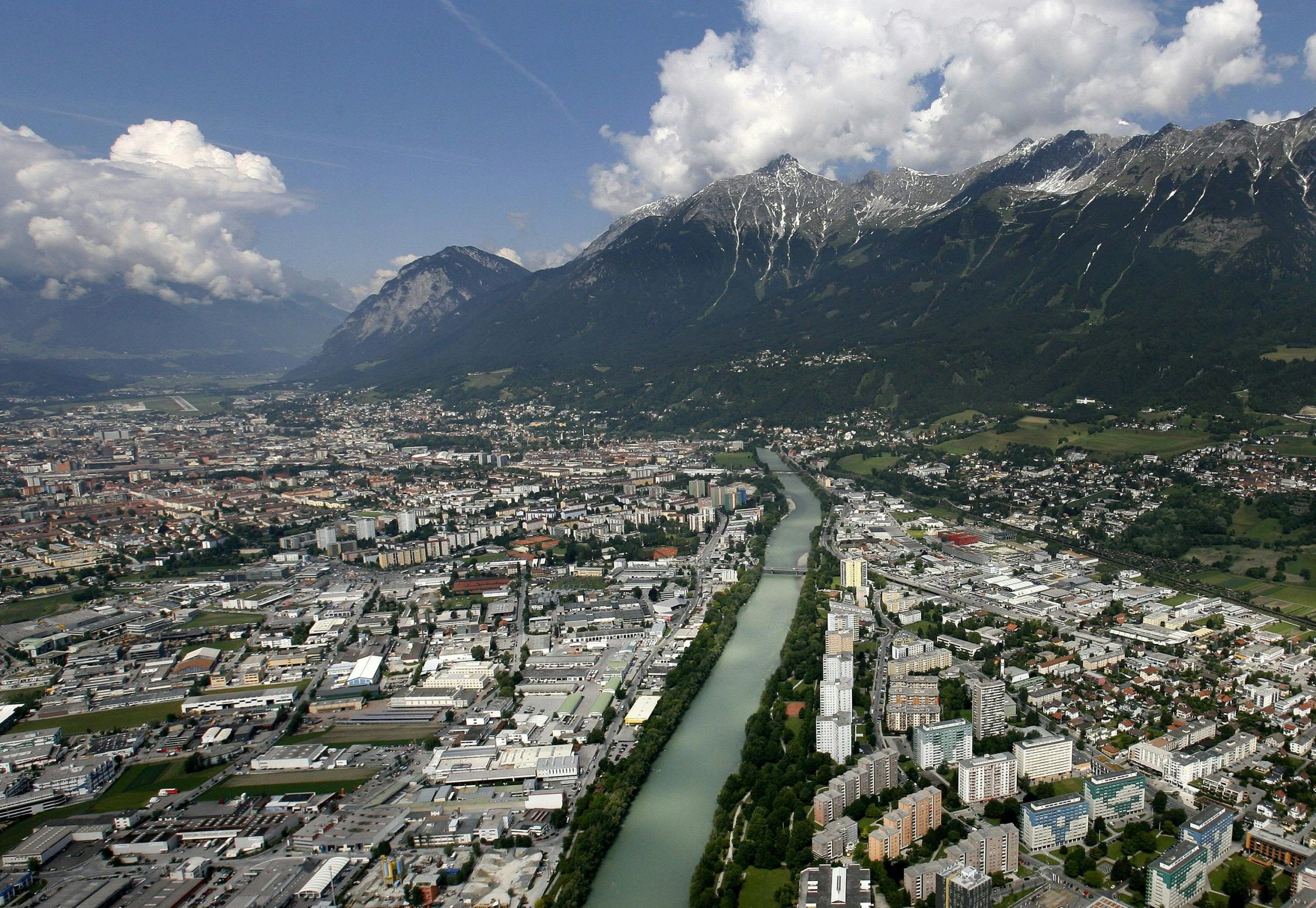
Bild zeigt schlafenden Politiker
Publisher’s rating: Der Screenshot ist kein Beweis für einen Schlaf des Gemeinderates Fritz, sondern wurde im Zuge einer Bewegung von Fritz aufgenommen. In der Videoaufzeichnung der Sitzung ist nie zu sehen, dass Fritz geschlafen hätte.
The claim concerned a widely shared screenshot said to show Innsbruck Gemeinderat Gerhard Fritz asleep during a council meeting. The APA investigation identifies the meeting as the one held on 15 December 2022 and compares the screenshot with the meeting’s video recording. It reports that Fritz is not shown sleeping in the recording, although he can be seen yawning at one point. To locate the screenshot in the lengthy recording, the investigation matched the distinctive positions of Fritz and Greens club leader Janine Bex, checking Bex’s contributions. It places the screenshot at 8:30:33 in the video, where Fritz is described as awake, blinking and moving his head. That comparison does not support treating the still image as proof that he had fallen asleep. The article also reports that the post was published on 16 December by Gerechtes Innsbruck. Asked by APA why the party believed Fritz had slept, it cited its own impressions at council meetings and the screenshot. The report says the party did not answer a follow-up about whether it had created the screenshot.

மோடியின் தயார் மறைவிற்கு பேனர் அடித்த விழுப்புரம் திமுகவினர்
Publisher’s rating: Fake

Diplomação do Governador eleito do Rio Grande do Sul e os cumprimentos da primeira Dama.
Publisher’s rating: Falso

O suposto espetáculo da suposta posse do Lula já desabou no 1º vendaval em Brasília...!
Publisher’s rating: Falso


Ekrem İmamoğlu’nun 2022’nin en başarısız belediye başkanı seçildiği iddiası
Publisher’s rating: Yanlış

Video of KCR calling himself the best friend of Narendra Modi after his daughter Kavitha was questioned by the CBI in the Delhi Excise policy case
Publisher’s rating: MISLEADING
The claim concerns a video presented as showing Telangana Chief Minister K. Chandrashekar Rao (KCR) calling himself Prime Minister Narendra Modi’s best friend after KCR’s daughter, K. Kavitha, was questioned by the CBI in the Delhi Excise Policy case. FACTLY’s review says the footage instead shows KCR speaking at a press meet on 3 March 2018, about reservations in government jobs and education. It concludes that the video is old and unrelated to the case. To check the footage, FACTLY says it searched online using relevant keywords and found a video with similar visuals published by NTV Telugu on 3 March 2018. The review places that footage at a press meet about reservations in jobs and education. It also describes the reporter’s question as asking what Telangana’s MPs would raise in Parliament and what problems KCR had with Modi or the central government. The review reports that, in response, KCR said he had respect for Modi and considered him a friend. The key issue is therefore not whether KCR made the friendship remark, but when and in what setting: the source identifies it as a 2018 statement, not a statement made after Kavitha’s questioning. The review concludes that the video’s presentation as recent footage connected to the Delhi Excise Policy case is misleading.

President Biden betast de billen van President Zelensky tijdens diens bezoek aan Washington op 21 december 2022.
Publisher’s rating: De bewering is onwaar. De foto waarop Biden zijn hand op de billen van Zelensky legt, is bewerkt. Sporen van de slordige bewerking zijn duidelijk herkenbaar op de foto. De originele foto is terug te vinden op het Twitteraccount van Bidens vrouw Jill. Bewegende beelden tonen aan dat de hand van Biden niet op de billen van Zelensky rust op het moment dat de foto is genomen.

Video of Prime Minister Narendra Modi making an announcement about him leaving the country
Publisher’s rating: FALSE
FACTLY examined social-media videos presented as recent footage of Prime Minister Narendra Modi announcing that he was leaving the country. It reports that the main video actually shows Modi speaking in the Lok Sabha on 7 February 2017, during the motion of thanks to the President’s address—not making the claimed announcement. The review says that he criticised the Congress Party and its leaders during the speech, but did not announce that he would leave the country. To identify the footage, FACTLY says it searched the internet using relevant keywords and found a video with similar visuals on the BJP’s official YouTube channel, published on 7 February 2017. The review also says that a copy of Modi’s full Lok Sabha speech was available for comparison, and states that he made no statement about leaving the country during that address. The article discusses another video shared with a similar claim, but distinguishes it from the Lok Sabha footage: it says that this second video shows Modi urging citizens to follow the Janata Curfew and asking them to thank frontline workers by clapping and ringing bells in March 2020, during the COVID-19 pandemic. Thus, the review’s account identifies two older, unrelated occasions represented in the shared videos, rather than evidence of the claimed announcement.

Imagen de Joe Biden tocando el culo de Volodímir Zelenski
Publisher’s rating: False

Die Videos illustrieren die aktuelle EU-Korruptionsaffäre.
Publisher’s rating: Der Mitschnitt aus dem Bild-Livestream ist echt und wurde weder in Bild noch Ton verändert. Der darunter laufende Clip ist zwar auch nicht bearbeitet, hat aber nichts mit der aktuellen Berichterstattung zu tun. Die Bilder gestapelter Banknoten sind wesentlich älter und stammen von einer Kunstinstallation.
The claim concerns a Facebook video pairing a Bild TV report on the EU Parliament corruption affair involving Greek vice-president Eva Kaili with footage of large stacks of euro banknotes. The review distinguishes the two components: the Bild livestream recording is genuine, but the accompanying money clip is not footage of the affair. It reports that the Bild TV clip was posted on YouTube on December 12, 2022, and introduced a report on the case; investigators had found cash in plastic bags at Kaili’s home, with Belgian investigators securing about €600,000. The review says the money shown in the second clip was unrelated to that case and to earlier similar allegations about politicians. To investigate the money footage’s provenance, the review describes a reverse-image search using the video’s first still. Results included a French fact-check from 2019, which had received the video in connection with a purported Haitian corruption scandal; the review also says editors found it amid similar claims in Russia and Cameroon. It identifies the footage instead as a work by Spanish artist Alejandro Monge. Monge shared and commented on a video of the work on Instagram in February 2019, and a photo of the complete installation had been shared a year earlier when it was shown at a gallery in Barcelona as part of a Spanish art fair. The review therefore distinguishes authentic reporting about the Kaili affair from older footage of an artwork that was presented alongside it.

US President Joe Biden threatened former prime minister Imran Khan with dire consequences and removal from the Prime Minister’s Office “if you don’t refrain from your acts” in a letter with the seal of the Executive Office of the President (EOP) of the United States.
Publisher’s rating: Doctored
दिल्ली शराब नीति मामले में बेटी का नाम आने के बाद केसीआर ने पीएम मोदी को बताया अपना 'बेस्ट फ्रेंड'
Publisher’s rating: FALSE


16 שרים לליכוד זה שיא של כל הזמנים
Publisher’s rating: כן, אבל
The claim concerned Miki Zohar’s statement about the government then being formed: that 16 ministers from Likud would be an all-time record. The review tested the claim in two ways: the number of Likud ministers on the day a government was sworn in, and Likud’s share of the government compared with its share of the governing coalition. It also considered whether the figure could be understood as the share of Likud’s lawmakers receiving ministerial posts. On the simple head count, the review found that the claim was not wholly precise across all periods: there were brief stretches, including near the end of Menachem Begin’s second government, when 16 or even 17 Likud ministers served. But it distinguished those episodes from the comparison Zohar was making, which was the count at a government’s swearing-in. On that basis, the review said the incoming government’s figure had not previously been recorded. The review cautioned that the number alone could make the achievement look larger than it was. It noted that governments have grown over time, and compared Likud’s share of the coalition with its share of ministerial posts. In the incoming government, Likud had 32 of the coalition’s 64 seats, or 50%, and was expected to receive 16 of about 29 ministries, or 55%. By contrast, in 2015 Likud held 49% of coalition seats but 61% of ministries; in Benjamin Netanyahu’s first government, formed in 1996, it held 48% of coalition seats and 67% of ministries. The review also noted that the share of Likud lawmakers becoming ministers was not unprecedented: it cited 47% in 2015 and 52% in 2009.