PeakMetrics / Fact Checks
Politics & government fact checks
Explore claims publishers have checked about politics & government. Read their original ratings and follow the evidence.
Search fact checks
Search by text or image12,745 published reviews in this topic

La Commission européenne blanchit le mari d'Ursula von der Leyen qui a touché 320 millions d'euros de l'Union européenne.
Publisher’s rating: Le mari d'Ursula von der Leyen n'a pas touché 320 millions d'euros de l'Union européenne. Il y a une confusion entre le financement d'un centre de recherche scientifique en Italie par le plan de relance de l'Union européenne et le lien qu'Heiko von der Leyen a entretenu avec ce centre.
The allegation combines two claims: that Heiko von der Leyen personally received €320 million in EU money, and that the European Commission “cleared” him. The investigation traces the €320 million to a research project in Italy, not to a payment to him. In June 2022, Italy’s Ministry of University and Research awarded that amount to a non-profit foundation led by the University of Padua for work on gene therapy and RNA technology. Orgenesis Italy, a subsidiary of the company where Heiko von der Leyen was medical director, was one of 49 project participants. The review reports that Heiko von der Leyen was appointed on September 30, 2022, to represent Orgenesis Italy on the foundation’s supervisory board, and left that role in October. It says Orgenesis could receive part of the European funding through its subsidiary’s participation, but found no evidence that Orgenesis received the full €320 million—or that Heiko von der Leyen received that amount. The distinction is central: the €320 million was awarded to the foundation, while the company’s participation does not establish that the entire grant went to it or to him. The review also examines the “cleared” framing. In December 2022, eight Green/EFA members of the European Parliament asked Commission Vice-President Věra Jourová about a potential conflict of interest. According to the review, Jourová’s response said the Italian ministry chose the project and an international expert committee selected the foundation; the Commission did not participate in that choice. It also noted that Heiko von der Leyen’s appointment came after the project had been selected. The review characterizes her response as addressing the conflict-of-interest concerns raised by the MEPs, not as a finding that he had received €320 million.

இவரை “சலீம்” என்று யாருக்கும் தெரியாது. கடந்த 2 தசாப்தங்களாக இவரை யோகேந்திர யாதவ் என்று அறிந்து நாம் ஏமாந்து வருகிறோம்.
Publisher’s rating: Misleading
در اسناد تازه منتشر شده ویکیلیکس گفته شده شاه ایران پرکارترین و بلندپروازترین حاکم تاریخ بشریت بود.
Publisher’s rating: نادرست
Bongbong Marcos ordered the appointment of his predecessor Rodrigo Duterte as his administration’s anti-drug czar
Publisher’s rating: False
A photo depicting Russia’s Putin Handcuffed
Publisher’s rating: Altered
ராகுல் காந்தியை அமெரிக்காவிற்கு வரவேற்கிறோம். ஆனால் நரேந்திர மோடியின் தலைமையில் இந்தியா திறந்தவெளி மலம் கழிப்பதில் இருந்து விடுபட்டுள்ளது. அதற்காக எப்போது வேண்டுமானாலும் திறந்த வெளியில் மலம் கழிக்க என் நாட்டிற்கு வரலாம் என்று அர்த்தம் கிடையாது. – அமெரிக்க அதிபர் ஜோ பைடன்
Publisher’s rating: Fake


Segundo ministro da Fazenda, Fernando Haddad, conhecido como Poste, o governo comunista quer regulamentar casas noturnas de prostituição.
Publisher’s rating: Falso
The claim is that Brazil’s finance minister, Fernando Haddad, intended to regulate prostitution businesses—said in one version of the viral message to number about 15,000—in order to raise tax revenue. Boatos.org directly examined that allegation. It reports that the viral messages attributed the proposal to Haddad but did not provide a reliable source for the supposed statement. The review says the story originated on a page parodying Estadão, which identified itself as a parody. Boatos.org reports that it found no confirmation of Haddad’s alleged statement on his ministry’s Twitter account, in news sites, or in official sources. It also says it found no government proposal under consideration to regulate prostitution businesses. These checks address both the attribution to Haddad and the claimed government action. The article distinguishes the claim from the legal situation it describes: exchanging sex for money is not illegal in Brazil, but third parties profiting from it may be treated as the crime of rufianismo under article 230 of the Penal Code. It also reports that the review found no reliable source for the viral message’s figures of 15,000 clandestine establishments or R$2 billion in potential annual revenue. The article mentions a 2012 proposal by then-deputy Jean Wyllys, but says that project was archived; it does not present it as evidence of a current government plan.
Sen. Risa Hontiveros called President Ferdinand Marcos Jr. lutang (spaced out)
Publisher’s rating: Misleading


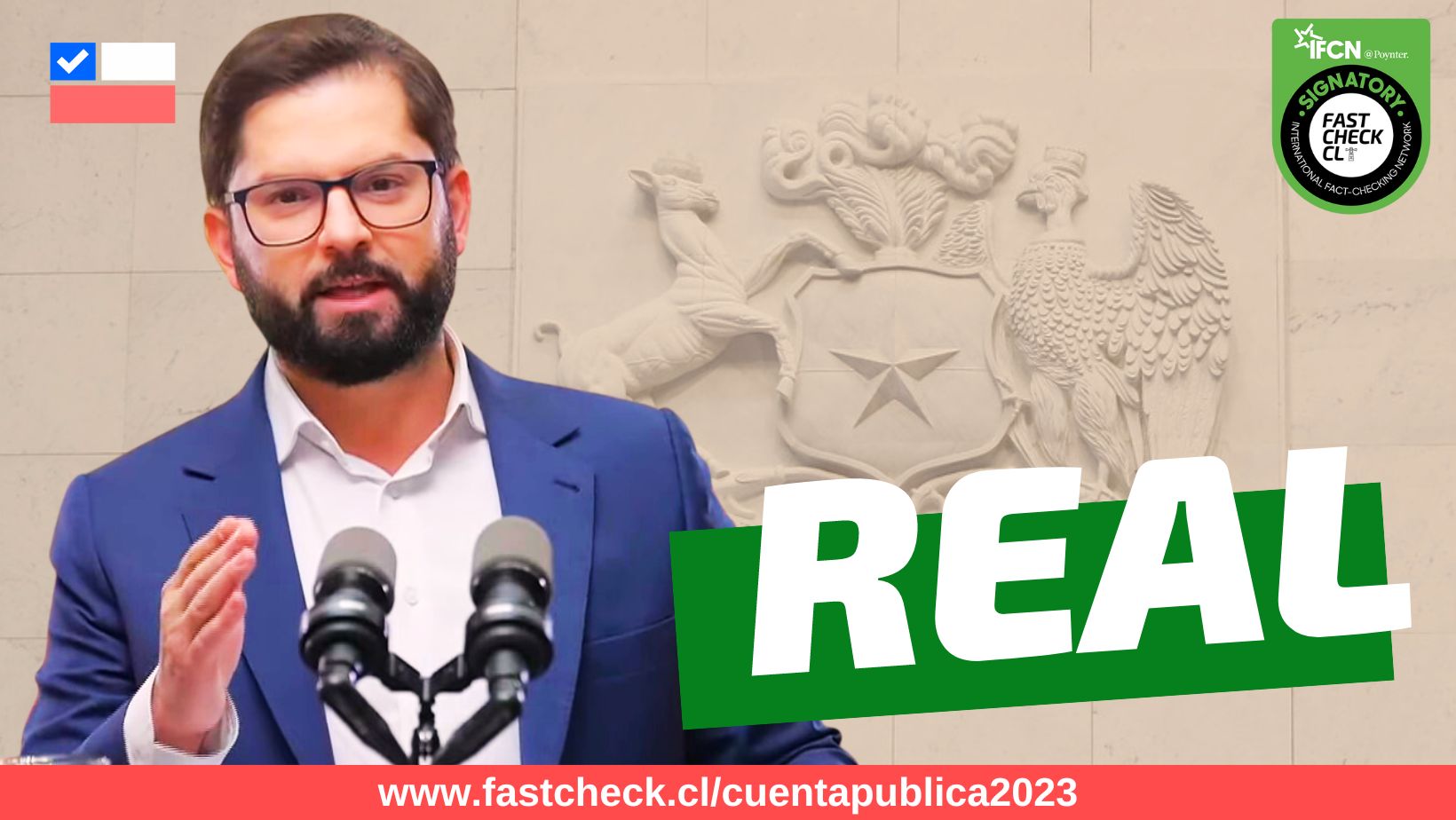
“Cumplimos con transferir casi 15 mil hectáreas de tierras ancestrales en la región de Tarapacá”
Publisher’s rating: Real
“A través del programa Chile para Todas, en donde, por ejemplo, rebajamos el precio de anticonceptivos, extendimos el postnatal de emergencia, aumentamos en 51% el número de mujeres conductoras del Transporte Público regulado y apoyamos a mujeres de la pequeña agricultura con el primer Concurso de Riego para Mujeres”
Publisher’s rating: Real

Collage of images showing anti-Modi billboards and graffiti displayed on the streets in Rajasthan
Publisher’s rating: FALSE
The claim concerns a collage presented as recent images of anti-Modi billboards and graffiti in Rajasthan, shared around Narendra Modi’s visit to the state. FACTLY’s review examined the two images separately and concluded that neither was from Rajasthan: it traced the billboard image to Andhra Pradesh and the graffiti image to Kolkata, West Bengal. The review’s conclusion is that the collage uses old images from other states as if they showed recent scenes in Rajasthan. For the billboard, the review says a reverse-image search found the same photograph in an Economic Times article dated 10 February 2019, which described it as an anti-Modi billboard put up ahead of Modi’s visit to Andhra Pradesh. It also reports finding the same photo in a News Minute article from February 2019. These earlier appearances support the review’s identification of the image as an Andhra Pradesh photograph from 2019, rather than a recent Rajasthan scene. For the graffiti, the review reports finding the same photograph in a tweet by Kolkata-based journalist Mayukh Ranjan Ghosh on 11 January 2020, identified as an image from Esplanade in Kolkata. It says further searches found January 2020 news articles with a similar image taken from another angle. Taken together, the reported image matches and earlier records address the provenance of both components of the collage, rather than merely showing similar anti-Modi messages elsewhere.

Vídeo de pessoas em uma fila na calçada acompanhado da seguinte frase: “Que maldade que o governo Lula está fazendo, deixando o povo em grandes filas pegando sol e cancelando o Auxílio Brasil. Você acha que o governo está agindo correto (sic) com a população?”
Publisher’s rating: Enganoso

Erdoğan’ın Twitter hesabından “Türkiye Cumhuriyeti” ibaresinin 2023’te kaldırıldığı iddiası
Publisher’s rating: Yanlış