PeakMetrics / Fact Checks
Health & medicine fact checks
Explore claims publishers have checked about health & medicine. Read their original ratings and follow the evidence.
Search fact checks
Search by text or image13,677 published reviews in this topic
The deductibles on Obamacare are so high, on average $7,000.
Publisher’s rating: This is exaggerated.
"We will always protect patients with pre-existing conditions."
Publisher’s rating: This is misleading.

La dieta alcalina cura el tratamiento contra el cáncer
Publisher’s rating: Falso
The review examines claims that an alkaline diet can prevent or defeat cancer and says such diets cannot replace established cancer treatments. It describes the diet’s premise as eating foods said to lower acidity in the body, and notes that claims circulating online invoke Otto Warburg’s hypothesis. The review distinguishes that hypothesis from the stronger dietary claim: Warburg’s hypothesis concerns a proposed origin of cancer, but, the review says, it did not link a particular diet to curing the disease. It also says Warburg’s 1931 Nobel recognition was for work on respiratory enzymes, not for discovering the cause of cancer. To assess claims about the body becoming alkaline through diet, the review quotes Sebastián Del Busto of the Spanish Association Against Cancer, who says it is wrong to describe the body generally as acidic and gives blood pH as 7.35–7.45. It also reports that Julio Basulto found no scientific-literature evidence that diet changes pH or that a supposedly alkaline diet helps, prevents, or alleviates cancer symptoms. The review warns that such a diet could unbalance nutrition and cites Basulto’s warning that changing the body’s pH could endanger health. The review further explains why studies cited in support do not establish that an alkaline diet kills cancer: it says a UK cancer research article described further studies as still planned, while a US National Library of Medicine article characterized the causal relationship between dietary acidification and cancer risk as poorly defined. It contrasts those claims with the review’s account of established dietary guidance: a balanced diet is recommended, while the cited discussion of red meat calls for moderation rather than eliminating it. The review concludes that the evidence presented does not support using an alkaline diet as cancer treatment.

El ajo cura el cáncer
Publisher’s rating: Falso
Newtral examines the circulating claim that eating garlic can reduce the risk of cancer or even kill cancer. It says the claim is often supported by population studies reporting an association between greater garlic consumption and lower rates of stomach and colorectal cancer. But those studies are correlational: by themselves, they do not establish that garlic caused the difference or that garlic treats cancer. The review describes limitations identified by the US National Cancer Institute, including uncertainty in reports of how much and how often people consumed garlic. It also cites the Institute’s call for well-designed human dietary studies using predetermined amounts. Nutrimedia, a project of Pompeu Fabra University, judged the available evidence too low in quality to confirm a preventive effect and said rigorous clinical trials are needed. Its conclusion, as reported by Newtral, was that the evidence could neither affirm nor rule out some protective effect; that qualified conclusion does not substantiate a claim that garlic cures cancer. The review also reports that Sebastián Del Busto, a preventive-medicine and public-health specialist with the Spanish Association Against Cancer, said there was no evidence that garlic can kill more than ten types of cancer. He distinguished occasional observational findings from proof that garlic reduces cancer, and called for appropriately designed clinical studies. Miguel Ángel Seguí of the Spanish Society of Medical Oncology was quoted saying there are no “anti-cancer foods.” Taken together, the evidence described in the review does not support garlic as a cancer cure.
vaccines cause autism
Publisher’s rating: Incorrect
The supplied material is related reporting, not the original Health Feedback review. It addresses the same general claim—that vaccines cause autism—but does not provide the review’s investigation or its underlying scientific studies, so it cannot establish what methods the original fact-check used. The reporting describes the autism link as discredited. One article says that some mothers attribute autism and other conditions to vaccines, while also reporting that the evidence overwhelmingly shows vaccination is safer than not vaccinating. Another calls the vaccine-autism connection “long-debunked,” and a third reports that a U.S. senator asked a surgeon general nominee whether there was credible evidence for the link. These excerpts convey the reporting’s assessment, but they do not present the research needed to independently evaluate it in detail.

Claim: Cancer is not a disease; it's a business
Publisher’s rating: Fact Crescendo Rating: False
An alarming message on a killer bug on the loose in Nigeria.
Publisher’s rating: This claim is false.

雞蛋、部分蔬果、大蒜、巧克力、咖啡豆不能放冰箱
Publisher’s rating: 部分錯誤
The claim presents refrigeration as categorically unsuitable for eggs, some produce, garlic, chocolate and coffee beans. The Taiwan FactCheck Center’s review examined a circulated warning naming these foods and assessed the advice item by item, drawing on views it said it obtained from Taiwan’s Food and Drug Administration, food-science associate professor Huang Jian-zheng, and nutritionist Hong Ruo-pu of Taipei City Hospital’s Zhongxiao Branch. The review’s conclusion was that the warning was only partly accurate. [Source: S1]


Cadbury products are infected with blood contaminated with HIV (AIDS). Do not eat their products for the next few weeks.
Publisher’s rating: FALSE
FACTLY examined a circulating social-media post that warned people not to eat Cadbury products for several weeks because they supposedly contained blood contaminated with HIV. Its review says similar versions of the hoax had circulated for years and that the image in the post came from a different story: the person pictured was Aminu Ogwuche, arrested for alleged involvement in the Nyanya Motor Park explosion. The review therefore identified the image as having been reused in a misleading context, rather than as evidence of contamination at Cadbury. [S1] The review describes two checks: searching online for the Cadbury-and-HIV claim, which surfaced earlier fact-checks by Snopes and PolitiFact, and cropping the image for a reverse-image search. FACTLY says that the reverse-image results led to an earlier version of the hoax, debunked by Snopes in 2011, and that filtering results to material available through 2014 surfaced reports identifying the person pictured as Ogwuche. [S1] FACTLY also cites the CDC’s explanation that ordinary consumption of food handled by someone with HIV does not transmit HIV. The review notes a narrow exception: very rare transmission has occurred when an infant ate food pre-chewed by a caregiver with HIV and infected blood from the caregiver’s mouth mixed with the food. That qualification concerns a specific circumstance, not the post’s claim that Cadbury products were infected. The excerpt provides no evidence of contamination in Cadbury products. [S1]

Claim: Burning cardamom and camphor helps in killing H1N1 virus
Publisher’s rating: Fact Crescendo rating: FALSE
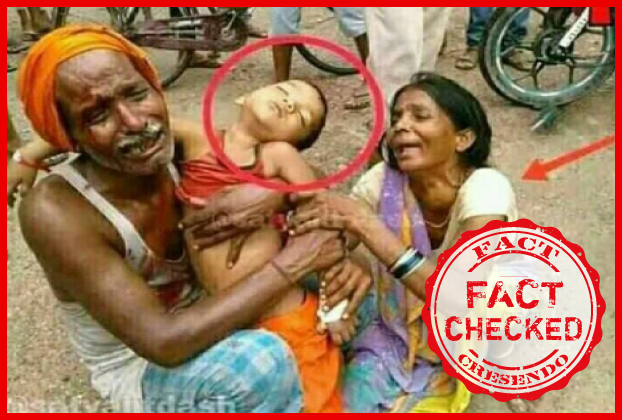
Claim by Facebook Page: Photo shared showing a couple with their child who is suffering from cancer.
Publisher’s rating: Fact Crescendo rating: False
El omeprazol acaba con tu salud
Publisher’s rating: Falso
Newtral examined a viral headline claiming that omeprazole, described as a “stomach protector,” ends your health. The review says the accompanying text was taken from an earlier article but had been edited: paragraphs were extracted, and the headline and opening sentences were changed. It also notes that the original text itself said the medicine was not a stomach protector. The review therefore addresses both an exaggerated claim about harm and a misleading description of the drug’s purpose. To assess safety, Newtral says it consulted Spain’s medicines agency, Madrid’s pharmacists’ association, SEMERGEN and the Spanish Society of Nephrology, as well as pharmacist Monika Hidalgo of the University of Costa Rica’s medicines information center. The experts it contacted described omeprazole as safe when used appropriately, while emphasizing medical supervision and periodic tests. The medicines agency characterized its safety and efficacy profile as sufficiently established, and said the risk of reduced vitamin B12 absorption is documented in the product information. The review does not say that omeprazole has no risks. It reports that prolonged use may be associated with effects including reduced absorption of vitamin B12 and iron, and that the cited study described effects after two years of use. It also says the product information warns of fracture risk with high doses and prolonged treatment of more than a year. The distinction the review draws is that such risks do not establish that the medicine inevitably “ends” a person’s health; appropriate use, clinical indications and monitoring matter.

部分新聞流傳:金針菇這樣煮防癌還助甩脂肪,有心血管疾病更要多吃。並描述一位平常不愛運動的婦人一個月後內臟脂肪減了20%,腹部瘦一大圈的效果。
Publisher’s rating: 半數屬實
La mamografía causa cáncer de mama
Publisher’s rating: Falso
Newtral examined a message circulated on Facebook and WhatsApp that blamed mammography’s radiation directly for breast cancer. Its review consulted two breast-cancer specialists: Alfonso Vega, head of breast radiology at the Marqués de Valdecilla University Hospital in Cantabria, and Marta Blanco, a physician with the Spanish Association Against Cancer’s Infocáncer service. Both said the review’s central claim was unsupported by scientific evidence. Vega said no study or scientific literature had demonstrated that mammography causes cancer; Blanco likewise said there was no scientific evidence of increased breast-cancer risk from the doses and methods used. The specialists did not say radiation can never cause cancer. They described radiation as a potential source of cancer over a lifetime, but characterized the specific risk attributed to mammography as theoretical and unproven, noting that the radiation dose is very small. Vega said the theoretical risk was far below a woman’s baseline risk of breast cancer, while Blanco said the benefits of the tests substantially outweigh the risk from accumulating the small radiation dose. The review therefore distinguishes a general possibility associated with radiation from evidence that mammography itself causes breast cancer. The article also addresses related claims in the circulated message. It says routine screening in Europe was recommended from age 50, with some Spanish regions beginning at 45, and that earlier examinations may be used for people at high hereditary risk. It reports that breast compression does not inflame or degenerate tissue and helps produce clearer images with less radiation. The review’s sources present mammography as the principal method for early detection, while describing MRI and thermography as non-equivalent alternatives; MRI may complement mammography, and thermography does not detect small cancers effectively.

(En Cataluña) Tenemos las peores listas de espera en dependencia de toda España
Publisher’s rating: Verdadero

在 Facebook 收到影片說「住家有種芒果樹的請注意!芒果樹葉中有罕見的昆蟲」、「如果叮咬一個人,他將在4小時內死亡,會大量出汗」這樣的謠言。
Publisher’s rating: 不實
NSW health spokesman Walt Secord claims nurse-led medical centres are a proven cure for overcrowded emergency departments.
Publisher’s rating: Mostly false - Mostly false with one minor element of truth.
Claim: oleifera leaf can cause cancer
Publisher’s rating: Fact Crescendo Rating: False Headline