PeakMetrics / Fact Checks
Health & medicine fact checks
Explore claims publishers have checked about health & medicine. Read their original ratings and follow the evidence.
Search fact checks
Search by text or image13,677 published reviews in this topic

Vinte e três pessoas já passaram pelo Hospital das Clínicas com um mesmo sintoma: falta de atividade renal e o aparecimento de tumores no reto. Todos os internados relataram o começo das dores e a conseqüente internação após ingerirem altas doses de Skol.
Publisher’s rating: Falso


媒體引述網傳影片報導:「1日,網上傳出視頻,顯示華信航空AE-218班機自武漢飛抵台灣松山機場,全副裝備的檢疫人員進行登機檢疫工作」,經查:2020年1月1日,華信AE218班機並未發現疑似肺炎感染者,全員平安下機,並無遭扣留之情事。網傳影片與2020年1月1日疾管署登機檢疫事件無關。媒體報導為「錯誤」訊息。
Publisher’s rating: 錯誤
The report checks the specific media claim that a video showed fully equipped Taiwanese quarantine personnel boarding China Airlines flight AE218 from Wuhan after it arrived at Taipei Songshan Airport on 1 January 2020. Taiwan’s Centers for Disease Control (CDC) confirmed that it did inspect AE218 that day, but said that inspection found no suspected infection and all passengers disembarked. The report distinguishes that actual inspection from the incident shown in the circulating video: the CDC said the people and aircraft in the video were not Taiwanese quarantine personnel and the Wuhan–Taipei flight. The report’s conclusion is that the media account’s pairing of the video with AE218 was false. Supporting evidence includes the report’s account that “疾管署表示,因應中國武漢發生肺炎疫情,疾管署為落實邊境檢疫,的確曾於1月1日執行武漢入境班機AE218之登機檢疫。” It also states: “疾管署檢視網傳影片指出,網傳影片中的檢疫人員並非台灣檢疫人員,且該航班亦非武漢飛往台北松山之航班。”
Mahasiswa meninggal karena kanker perut akibat mengkonsumsi mi instan setiap malam
Publisher’s rating: Keliru
Eggs increase bad colesterol in your body and should be avoided
Publisher’s rating: Misleading
Eggs increase bad colesterol in your body and should be avoided
Publisher’s rating: Misleading
Shaved hair grows back thicker
Publisher’s rating: False
Research from related reporting supports the conclusion that shaving does not make hair grow back thicker. One article quotes dermatologist Lawrence E. Gibson saying that “Shaving hair doesn’t change its thickness, color, or rate of growth.” This directly addresses the claim’s asserted change in thickness and also distinguishes it from changes in hair color or growth rate. (S4) Another report explains that shaving cuts hair at the skin’s surface and does not affect the follicle beneath it, which is responsible for hair growth. It also says that the blunt tip left by shaving can feel stubbly, and that short hair may look darker or more prominent against the skin. Those effects can create an impression of thicker hair without changing the strand’s actual diameter. (S6) The supplied excerpts do not provide the underlying study details or describe new testing by the fact-check publisher. The evidence here is therefore the dermatologist’s quoted statement and the explanations in related reporting—not a documented experiment described in these excerpts. Taken together, they distinguish the appearance and feel of regrowth from an actual increase in hair thickness. (S4, S6)
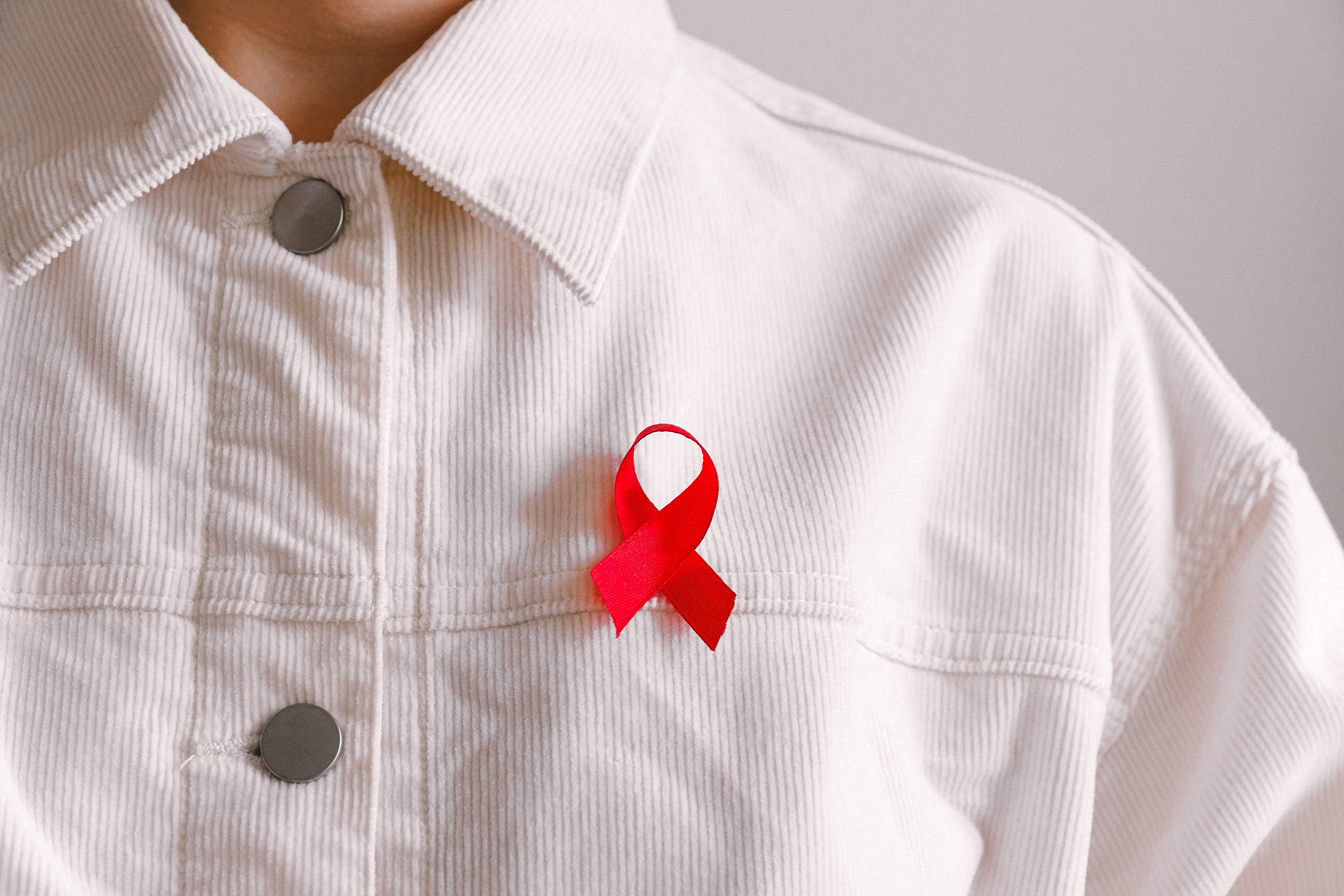
網傳圖片宣稱:「台灣新增愛滋以每天約6人的速度持續增加中,其中近九成為男男性行為」,經查:根據疾管署2019年1月至11月資料,台灣新增HIV感染者為平均每日4.8人,連續兩年下降。新增感染者97%為男性,主要感染原因為不安全性行為。傳言將感染HIV主因「不安全性行為」誤導為「男男性行為」。傳言推論台灣因有性別平等教育,導致HIV感染者較日本和韓國多。性別平等教育與HIV感染人數之間,並不相關,此推論並不合理。此為「錯誤」訊息。
Publisher’s rating: 錯誤
The review examined a circulating image comparing HIV/AIDS figures in Taiwan, South Korea, and Japan. It challenged the image’s assertions that Taiwan’s new infections were rising by about six a day and that nearly nine in ten were due to male-male sex, as well as its suggestion that gender-equality education explained Taiwan’s higher figures. The review’s account identifies Taiwan’s figures as reported HIV infections, not a measure of AIDS cases alone. <br><br>For January through November 2019, the review says Taiwan had 1,618 newly reported HIV cases over 334 days—an average of about 4.8 per day, not six. It also reports that the number of infections had fallen year by year since 2017, contradicting the image’s claim of continued increase. For transmission categories in those 1,618 cases, the review gives 10.88% for unsafe heterosexual sex and 80.53% for male-male sex. It explains that unsafe sex is the broader category and that other routes were possible; the proportion of male cases—97%—describes sex distribution, not transmission route. <br><br>The review separately compared the image’s international figures with cited national statistics: South Korea had 1,206 new HIV infections in 2018, while Japan had 940 new HIV infections and 377 new AIDS cases that year. It also reports that the review found no basis for the proposed causal link between gender-equality education and HIV totals: a sociologist said the academic field had no such research conclusion. Thus, the image’s daily rate, trend, interpretation of transmission data, and education-based inference were not supported by the evidence presented.

Un tribunal estadounidense ha desenmascarado “el fraude de las vacunas”
Publisher’s rating: Falso
The claim concerns a viral post saying the U.S. government had approved vaccines without quality controls for 32 years, and that a court had exposed fraud. Newtral reports that the post used an image of the first page of a lawsuit filed by the Informed Consent Action Network (ICAN) against the U.S. Department of Health and Human Services (HHS). The image establishes that a lawsuit was filed; it does not show why it was filed or what the case decided. The review says the post’s conclusion arose after HHS could not locate administrative reports that ICAN had requested, which ICAN interpreted as evidence that vaccine safety had not been adequately monitored. S1 states: “Esa captura de pantalla del documento, solo prueba que se ha interpuesto una demanda contra el Departamento de Salud, no por qué ni cuál fue el resultado.” It also explains that “El HHS no consiguió encontrar esos informes, por lo que el ICAN concluyó que el Departamento de Salud estaba obligando a los niños a vacunarse sin haber realizado el monitoreo de seguridad adecuado.” The review distinguishes the missing reports from an admission that safety monitoring never occurred. It says there was no evidence HHS had made such an admission, and describes vaccine testing and continuing monitoring as processes involving federal agencies. It also points to an HHS review of its vaccine-safety evaluation methods from 2008. The account’s central qualification is that the lawsuit image and missing reports do not establish the broader allegation: “Sin embargo, no hay ninguna evidencia de que el Departamento de Salud haya admitido que nunca ha monitoreado la seguridad de las vacunas en los últimos 32 años.” The post further claimed that the supposed court finding meant employers could no longer require workers to be vaccinated and that officials would face trial under the Nuremberg Code. Newtral rejects those conclusions too: it says neither employers nor HHS can force workers to vaccinate, while public-school vaccination requirements and state exceptions are a separate matter. It adds that the alleged fraud and prosecution do not follow from the case, and distinguishes marketed vaccines from medical experiments. S1 summarizes this point: “Por último, debido a que no existe ningún fraude, tampoco hay ningún funcionario que vaya a ser juzgado bajo el Código de Núremberg, como se dice en el bulo.”
Se suicidan «4.000 hombres al año por no poder ver a sus hijos»
Publisher’s rating: Falso

Empresa de Israel,faz anúncio da descoberta da cura do câncer e que tratamento estará disponivel a todos em um ano!”.
Publisher’s rating: Falso
Is it true that 17000 hospital beds have been cut by the Tories in the last 10 years?
Publisher’s rating: Partly True
About 17,000 hospital beds have been cut by the Tories in the last ten years.
Publisher’s rating: Partly True
Führen Grippeschutzimpfungen bei Senioren zum Tod? Zwei Studien sollen belegen, dass die Sterblichkeitsrate bei älteren Menschen durch Impfungen steige. Das wird in einem Artikel aus dem Jahr 2018 behauptet, der jüngst wieder in den sozialen Medien kursiert
Publisher’s rating: Die Studien belegen keinen Anstieg der Sterblichkeitsrate. Die angegebenen Werte sind niedriger als die Sterblichkeitsraten im Bevölkerungsdurchschnitt der USA und Kanadas.
The claim concerned two studies of flu vaccination in people over 65, which a 2018 article cited as evidence that vaccination raises mortality. The review reports that both studies were commissioned by vaccine manufacturer Sanofi Pasteur. It assesses the deaths recorded in the studies against the wider mortality rates in the relevant countries and age groups; it does not describe the studies as proving that vaccination caused the deaths. [S1: “In dem Artikel werden zwei Studien herangezogen, bei denen Menschen über 65 Jahre eine Grippeimpfung erhielten. Beide wurden vom Impfstoffhersteller Sanofi Pasteur in Auftrag gegeben.”] In the first study, conducted in the United States in 2006 with 3,851 participants, no one died during the first 28 days after vaccination; 23 participants died within six months. The review says most had pre-existing heart, liver, kidney or respiratory conditions. The reported mortality rate among participants was 0.6%, compared with annual U.S. rates of 2.1% for ages 65–74 and 5.1% for ages 75–84. [S1: “Dabei starb in den ersten 28 Tagen nach der Impfung niemand, in den ersten sechs Monaten wurden 23 Todesfälle unter den Studienteilnehmern festgestellt.”] [S1: “Die Sterblichkeitsquote unter den Probanden lag laut Studie bei 0,6 Prozent - und damit deutlich unter der Sterblichkeitsquote in den USA.”] The second study included 31,983 participants in the United States and Canada in 2011 and 2012. Six participants died within 30 days of vaccination and 167 within eight months; again, the review reports that most had a chronic condition. The study’s mortality rate was 0.5%. The review compares it with 2012 population rates that varied by age, from 1.5% in U.S. adults aged 65–69 (1.2% in Canada) to 6.0% in U.S. adults aged 80–84 (5.3% in Canada). These comparisons provide the review’s basis for rejecting the article’s interpretation: deaths occurred during follow-up, but the reported study rates were below the cited population rates. [S1: “An der zweiten zitierten Studie nahmen im Jahr 2011 und 2012 insgesamt 31 983 Personen in den USA und Kanada teil”] [S1: “Die Sterblichkeitsrate war mit 0,5 Prozent noch niedriger als bei der ersten Studie.”]

內容農場文章指稱「【米酒蒸地瓜】可治閃腰及僵直性脊椎炎等長期酸痛,簡單易學,效果好!」,經查:僵直性脊椎炎無法靠飲食治癒。米酒與地瓜都容易導致發炎反應,可能會使僵直性脊椎炎惡化。文章提及的「一斤地瓜加上三分之一瓶的米酒」,熱量很高,若經常食用,恐造成肥胖問題。此傳言為「錯誤」訊息。
Publisher’s rating: 錯誤
The review examined a content-farm claim that eating sweet potatoes steamed with rice wine could relieve a back strain and substantially improve long-standing ankylosing spondylitis. The recipe described in the report used one catty of sweet potatoes and one-third of a bottle of rice wine. The review distinguishes the two conditions rather than treating the reported improvement as evidence that the recipe works: a rheumatologist said a back strain can result from a muscle sprain and may recover with rest, whereas ankylosing spondylitis cannot be cured through diet and is treated clinically with medication. (“閃到腰與僵直性脊椎炎成因完全不同。閃到腰是因為施力方向錯誤,導致肌肉扭傷,即使不吃藥,光靠休息,也會痊癒;至於僵直性脊椎炎,無法靠飲食治癒,臨床上會用消炎止痛藥、免疫調節劑來處置,嚴重的話會使用生物製劑。”) For its dietary assessment, the center reports interviewing nutritionist Li Yu-shan of Shin Kong Hospital. She said both alcohol and sweet potatoes are foods likely to promote inflammation, and cautioned that consuming the recipe would not improve the inflammatory conditions and might worsen them. The report also gives the recipe’s energy estimates: one catty of yellow-fleshed sweet potato contains 726 calories, one catty of red-fleshed sweet potato 684 calories, and about one-third of a bottle of rice wine about 280 calories. It warns that repeated large servings could contribute to weight gain. (“她說,米酒熱量也不低,100毫升米酒熱量大約140大卡,三分之一瓶熱量大約280大卡,若再加上一斤地瓜,熱量更高,經常大量攝取恐造成肥胖。”) The report’s conclusion is that the recipe is not a treatment for ankylosing spondylitis, may worsen inflammation, and is high in calories when eaten in the stated quantity. Its evidence addresses both the claimed health benefit and the recipe’s nutritional implications; it does not establish that every serving will cause worsening or weight gain. (“一、僵直性脊椎炎無法靠飲食治癒。 二、米酒與地瓜都容易導致發炎反應,可能會使僵直性脊椎炎惡化。 三、文章提及的「一斤地瓜加上三分之一瓶的米酒」,熱量很高,若經常食用,恐造成肥胖問題。” )
Bisa ular kobra dapat diatasi dengan bawang merah
Publisher’s rating: Keliru

媒體報導「研究:睡太少會爆肥...平均睡眠介於3到5小時的民眾,肥胖機率比一般人高出73%」,經查:報導引述的是美國加州大學聖地牙哥分校精神病學系教授Daniel F. Kripke於2002年發表的研究,這項研究是在探討睡眠時間和死亡率的關係,其中,睡眠時間和BMI之間的關聯是次要議題。專家指出,此研究僅指出睡眠時數與肥胖之間的「相關性」,並未指稱「因果關係」。因此,報導提及「睡滿七小時會變瘦」是過度推論。「平均睡眠介於3到5小時的民眾,肥胖機率比一般人高出73%...」為另一篇研究之結果,這項研究結果已經被原始期刊刪除,但仍被部分學術資料庫、新聞和書籍引述。此傳言是「部分錯誤」。
Publisher’s rating: 部分錯誤

Tousser peut nous aider à survivre une crise cardiaque
Publisher’s rating: FAUX

Des clémentines du Maroc contiennent de l'E. coli
Publisher’s rating: FAUX
Semangka yang berongga berbahaya untuk dikonsumsi
Publisher’s rating: Keliru