PeakMetrics / Fact Checks
Health & medicine fact checks
Explore claims publishers have checked about health & medicine. Read their original ratings and follow the evidence.
Search fact checks
Search by text or image13,677 published reviews in this topic
Foto puluhan orang yang tergeletak di jalanan yang diklaim sebagai warga Cina yang terinfeksi virus Corona Wuhan
Publisher’s rating: Keliru

網傳「正骨醫院郭氏孫女郭豔娟(過去的同事,現三門峽正骨分院院長)所發分享給大家...每天出門前用棉籤蘸點小磨香油,滴進兩個鼻孔內,輕捏幾下即可,這樣就可以阻斷一切流感和溫疫傳染」?
Publisher’s rating: 錯誤
The claim attributes a supposed family remedy to Guo Yanjuan, described as a granddaughter of the Guo family associated with Luoyang Orthopedic Hospital and the head of its alleged Sanmenxia branch. It says that putting sesame oil in both nostrils with a cotton swab before going out can block all influenza and epidemic infections. The review also records a later variant that substitutes vinegar for sesame oil. The claimed hospital affiliation and the preventive effect of the remedy are separate points the investigation examined. (The review describes both the original claim and the variant.)

El Departamento de Salud de Canadá no ha aconsejado mantener la garganta húmeda para evitar el contagio del Coronavirus
Publisher’s rating: Falso
The claim concerned a WhatsApp message, also shared on Facebook, which attributed advice about keeping the throat moist to Canada’s Department of Health as a way to avoid coronavirus infection. The message reportedly included recommendations such as drinking “50–80cc of warm water.” Newtral’s review says Aosfatos contacted Canada’s Department of Health, which denied that the communication had come from the agency. The review also checked the recommendations against those published by the department and reported that the chain’s advice was not among them. On that evidence, the attributed guidance was not an authentic recommendation from the Canadian department.
Cina membangun rumah sakit khusus virus Corona Wuhan hanya dalam waktu dua hari
Publisher’s rating: Sebagian Benar

No hay evidencias científicas para afirmar que comer “12 salchichas o más” al mes suponga “9 veces más riesgo” de leucemia
Publisher’s rating: Engañoso
The claim concerns a circulating message that children who eat at least 12 hot dogs a month face nine times the risk of developing leukemia. Newtral traces the numerical claim to a 1994 study from the University of California’s medical school, which examined children aged 0–10 in Los Angeles County. The study considered several foods, including bacon, sausages, ham, oranges and grapefruit, and reported a persistent statistical association for children’s hot-dog intake. But Newtral notes that the study itself called for further investigation because of possible data biases; the reported association did not establish that hot dogs caused leukemia or validate the message’s broad risk claim. Newtral sought comment from José María Ribera, a leukemia specialist speaking for the Spanish Society of Hematology and Hemotherapy, and from Spain’s food-safety agency, AESAN. Ribera said there were no later studies confirming or refuting the finding and advised against treating results from a single study as valid in the absence of confirmation. AESAN said there was no scientific evidence establishing a relationship between processed-meat consumption and leukemia risk. Newtral therefore presents the 1994 result as an unconfirmed finding, not proof that eating 12 or more sausages monthly multiplies a child’s leukemia risk ninefold. The review also identifies a key limitation in the claim’s framing: the study found a correlation, which does not establish causation. Ribera described the proposed link between processed meat—or any consumption threshold—and leukemia as hypothetical, and said it would need experimental investigation. The review further reports that the World Health Organization’s 2015 monograph said there was insufficient information to identify a safer type of meat. Taken together, the evidence supports treating the specific ninefold-risk message as unsupported by the cited study and by the expert and agency statements reported in the review.
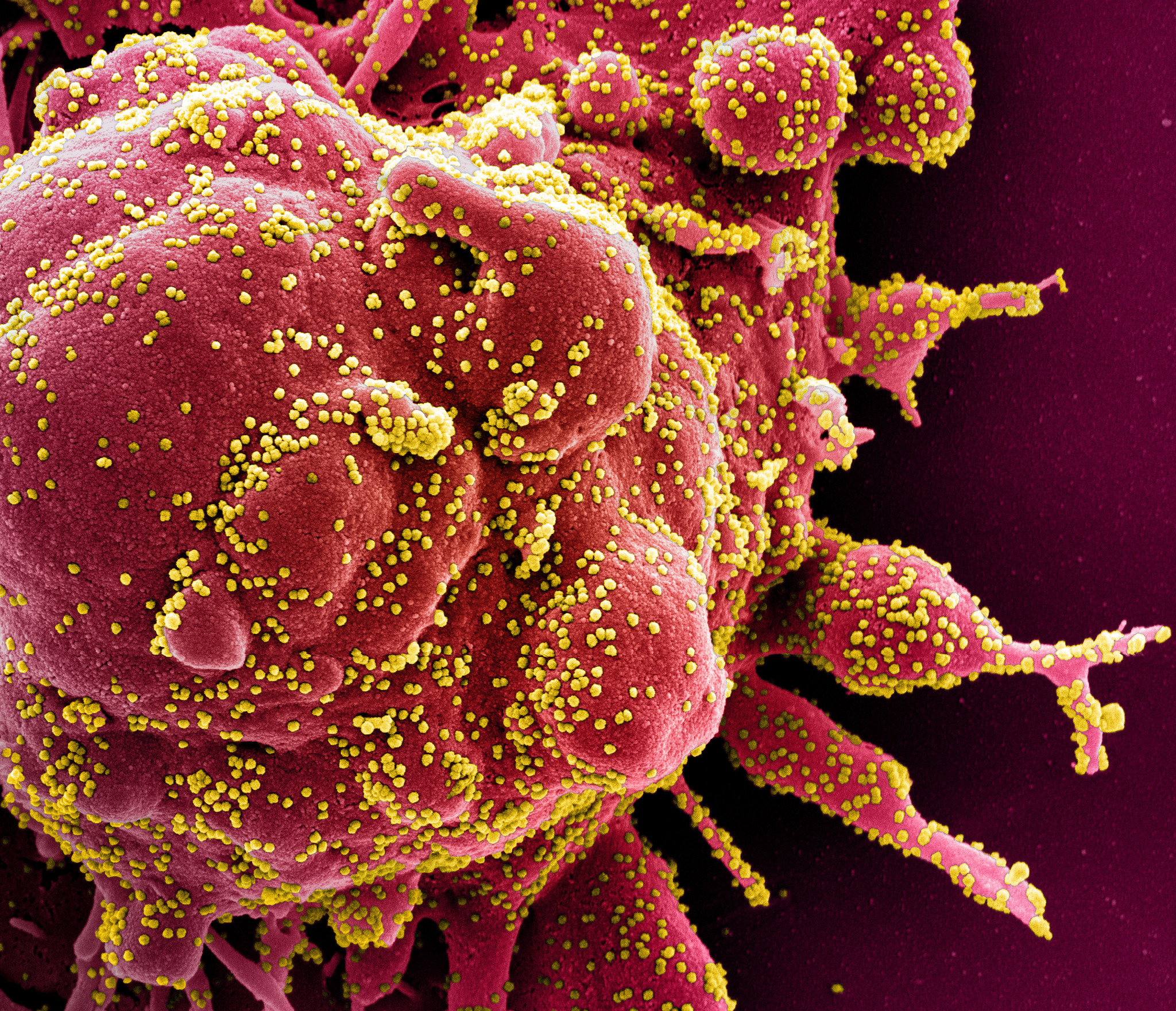
網傳「這次冠狀病毒對於(ACE-2蛋白血管緊張素)高的人最容易感染。ACE-2什麼人最高呢?也就是(高血壓患者)...酸脛菌可以干擾這隻冠狀病毒...」?
Publisher’s rating: 錯誤

Virus Corona Wuhan sudah ditemukan sejak 2012 oleh Ali Mohamed Zaki
Publisher’s rating: Sesat
A Facebook post repeats an often-debunked claim that there's a wax coating on instant noodles.
Publisher’s rating: False - The primary claims of the content are factually inaccurate.
Bill Gates es el propietario de la patente de la nueva cepa del coronavirus
Publisher’s rating: Falso
The claim circulated in social-media posts that Bill Gates owned a patent on the new coronavirus, pointing to a 2015 patent registered by the Pirbright Institute and to funding from the Bill & Melinda Gates Foundation. Newtral examined what the patent covered, what Pirbright researches, and whether Gates Foundation funding was connected to that patented work. The institute had issued a statement after false information about it began circulating following the Wuhan outbreak; Newtral also reports that it confirmed to the outlet that it does not work with human coronaviruses. The review distinguishes the virus in the patent from the virus identified as 2019-nCoV. Pirbright’s research described in the article concerns infectious bronchitis virus in poultry and a porcine deltacoronavirus, while 2019-nCoV is described as transmitted among humans. Pirbright said its 2015 patent covered developing an attenuated coronavirus that might help prevent respiratory disease in birds and other animals. The review identifies it as patent number 10130701 and says it did not correspond to 2019-nCoV. The article also addresses the alleged financial link: Pirbright said the patented work was not funded by the Gates Foundation. The foundation’s 2013 funding cited in the review was for research on peste des petits ruminants, not the patented work. Separately, the foundation announced emergency funding and technical support for the 2019-nCoV response on January 26. These details distinguish documented funding for other purposes from ownership or financing of a patent on the new human coronavirus.


Ways of wearing a surgical mask: Colored side out if you are sick and White side out if you do not want to become sick.
Publisher’s rating: FALSE
The claim concerns two suggested ways of wearing a surgical mask: colored side outward when sick, but white side outward to avoid becoming sick. FACTLY’s review addresses that specific advice and says a three-layered surgical mask has one correct orientation: its colored side faces outward. On that basis, the proposed switch to white-side-out for people trying to avoid infection is not supported by the review. The review describes checking information about mask-wearing and reports that it found no information supporting the two-way instruction. It then cites guidance it says it found from The Straits Times and the Centre for Health Protection: both descriptions specify the colored side facing outward. The Centre for Health Protection guidance also says the metallic strip should be uppermost. FACTLY additionally mentions a WikiHow article, expert videos, and Singapore Health Promotion Board posters, but the supplied excerpt does not give details from those materials.
Vídeo para crear alarma sobre el coronavirus
Publisher’s rating: Falso
The video was shared with Spanish-language text claiming that conditions in Wuhan were much worse than authorities were letting on. Newtral investigated the footage’s location and circumstances, rather than treating the accompanying caption as evidence of where it was filmed. Its account says that the video was recorded in Hejiang, in Sichuan province, more than 1,000 km west of Wuhan, and that the incident shown involved a patient’s death and a dispute with hospital staff—not a reported coronavirus outbreak. To trace the footage, Newtral used reverse image search on video frames and found an earlier upload on the Chinese messaging app QQ, dated January 19, 2020. It then used translation to interpret the video’s labels, which identified Hejiang and January 17. The labels described a patient who died after cardiac arrest and relatives who assaulted doctors. Newtral also located an official Hejiang government police bulletin about the hospital incident. The bulletin, as quoted in the article, says the patient was hospitalized on January 16 and suffered cardiac arrest; it reports that three people were injured in the ensuing confrontation. Newtral says the bulletin does not mention coronavirus. The article also notes that its cited Johns Hopkins map showed no coronavirus deaths in Sichuan as of January 29, though it recorded 108 cases. Together, the video’s provenance and the official account contradict the implication that the footage showed a coronavirus crisis in Wuhan.

Hay alerta de coronavirus en Madrid, Valencia y Barcelona
Publisher’s rating: Falso
The claim concerned a purported breaking-news message saying that three coronavirus cases had been confirmed in Barcelona, Valencia and Madrid. It also alleged that the patients had contact with several people at the buffet of the hotel where they were staying. Newtral’s review identifies the message as one posted by a Twitter account impersonating the newspaper El País, rather than as an announcement from the newspaper or health authorities. The review’s account-level evidence distinguishes the impersonator from the genuine newspaper account: the message circulated through @SoyFede_, while the official El País account is @el_pais. Newtral also notes that the false account’s profile described its user as “Vivo indignado porque no me dejan ser un bonsái” and had more than 9,000 followers. These details support the review’s identification of the source as an impersonation, not an authentic El País alert. The excerpt therefore supports rejecting the message as a false alert: it attributes the claim to a copying account and contrasts that account with El País’s official handle. It does not provide a separate case-by-case account of coronavirus surveillance or describe independent checks of hospital or hotel records, so those should not be inferred from this evidence.

El ministerio de Sanidad ha emitido una “notificación de emergencia” sobre el coronavirus
Publisher’s rating: Falso
The review investigates a WhatsApp message alleging that Spain’s Ministry of Health had issued an emergency notification about coronavirus. The message attributed alarming claims to the ministry, including that the disease was “very serious and deadly,” and advised keeping the throat moist. The review says the ministry’s press office told Newtral that it had issued no notification related to that message. The review also checks the claim against official information. It reports that the ministry’s website had a section on the outbreak, but that the ministry’s reports and official Twitter account contained no reference to the forwarded message or an emergency notification. In the ministry’s latest report, dated January 30, the review found no such notice. The article further says the World Health Organization’s latest report likewise did not mention the message or notification. The forwarded text advised avoiding crowded places until the end of March 2020, wearing a mask especially on public transport, and avoiding fried or spicy foods. The ministry’s stated advice for people in affected areas was different: avoid close contact with people with acute respiratory infections, wash hands frequently, maintain distance from people with symptoms, cover coughs and sneezes, and avoid contact with animals and eating undercooked meat. The review adds that the ministry was meeting daily to assess risk; its report estimated the likelihood of secondary cases in Spain as low at that time.
Hay informes sobre más de 10.000 muertos en Wuhan a causa del Coronavirus
Publisher’s rating: Falso
The review examines social-media posts claiming that 10,000 people had died after contracting coronavirus, and specifically the accompanying appeal to supposed reports about deaths in Wuhan. It says the posts relied on an English-language website that referred to rumors and alleged testimony disputing official Chinese figures, but supplied no evidence or sources to substantiate those accounts. The decisive point in the review is the absence of verifiable support for the purported reports: it describes the website’s claims as lacking proof, references, or sources. The review also notes that the claim had been addressed by the US website FactCheck.org. It points readers to Johns Hopkins University’s Center for Systems Science and Engineering, which compiled geographically mapped daily figures from sources including the World Health Organization, as a way to consult reported case and death figures. The article places the 10,000-death claim among several other coronavirus-related rumors it examines. Those other items concern different claims, so they do not provide evidence for the number of deaths; the relevant section is the one discussing the alleged reports and their unsupported sourcing.
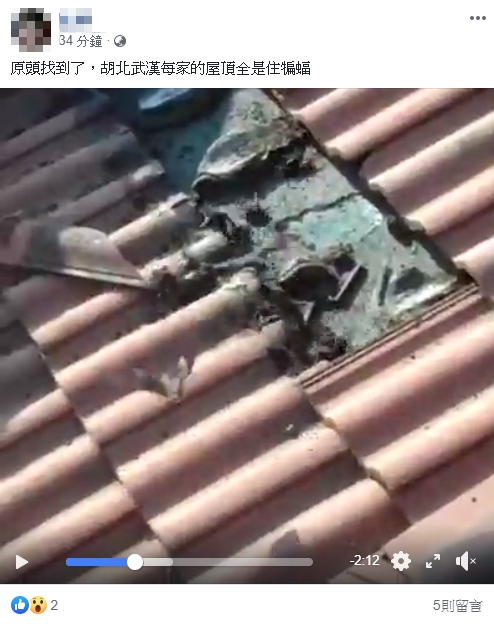
網傳影片宣稱:「原頭找到了,胡北武漢每家的屋頂全是住犏蝠」?
Publisher’s rating: 錯誤
The claim attached a video of bats emerging from beneath roof tiles to the assertion that Wuhan, Hubei, homes were sheltering bats. The Taiwan FactCheck Center reports that the circulating clip was not filmed in Wuhan: it was edited from a video uploaded by the Miami roofing company Istueta Roofing on June 10, 2011, and the original footage identifies a roofing project in Miami, Florida. The review’s conclusion is that the video does not establish the claimed Wuhan setting. (S1) To trace the clip, the review says it searched using terms for “roof” and “bat,” then compared the circulating video with a longer YouTube video from Istueta Roofing. The viral version runs 3 minutes 4 seconds, while the company’s upload runs 12 minutes 24 seconds. The review says the footage in the two videos matches, although the circulating version was cut down and some seconds removed. It also notes that the workers’ clothing and the bats shown on the roof match between the clips. (S1) The review describes further alterations that obscure the original setting: the viral video was cropped from a 16:9 rectangle to a nearly square frame, its on-site audio was removed and replaced with music, and the original dialogue was not Chinese. In the longer footage, the title and description identify a bat infestation under a tile roof, and a truck beside the home bears the Istueta Roofing name. These details support the review’s identification of the footage as a Miami roofing job rather than a scene from Wuhan. (S1)

Video of the effects of Coronavirus in China
Publisher’s rating: Misleading
Virus Corona Wuhan adalah hasil perkawinan virus kelelawar dan virus babi
Publisher’s rating: Keliru