PeakMetrics / Fact Checks
Health & medicine fact checks
Explore claims publishers have checked about health & medicine. Read their original ratings and follow the evidence.
Search fact checks
Search by text or image13,677 published reviews in this topic
Vídeo mostra feira de comida com animais vivos na China é falso
Publisher’s rating: De acordo com um vídeo, em especial, tem chamado a atenção. As imagens mostram uma feira que, supostamente, seria de comida com animais vivos. Em Wuhan, na China, feira de comida com animais vivos atrai diversas pessoas e vídeo mostra como a feira funciona.

El vídeo que muestra a “médicos” que “caen” mientras operan a un paciente con coronavirus
Publisher’s rating: Falso
The claim attached to the video was that medical staff collapsed while operating on a patient with coronavirus, supposedly because infection occurred immediately. Newtral’s account identifies the clip as showing a doctor fainting in an operating room, but says the accompanying claim about the patient and the cause of the collapse was false. The review reports that the doctor’s hospital and Chinese media attributed the fainting to low blood sugar after a 17-hour shift, and that the doctor recovered. To trace the clip’s context, the review says it searched several frames using Yandex and found the video on Chinese social platforms. It reports that Beijing News Video posted it on Miopai on January 17, and that Yangtze Evening News also posted it on Weibo that day. The reports placed the incident in Zhaotong, Yunnan province. This provides a documented, earlier context for the footage than the viral coronavirus explanation. The review also compares the clip’s reported posting date with the chronology of coronavirus cases in Yunnan: it says the video was online January 17, while the first case in the province was reported on January 21. It further notes that the claim of immediate symptoms conflicts with the cited World Health Organization incubation-period range of two to ten days. Together, the reported hospital explanation, video provenance and timing, and incubation evidence undermine the viral account of the scene.

Coronavirus victims in China.
Publisher’s rating: FALSE
The claim concerns a photo shared as showing coronavirus victims in China. FACTLY’s review says the photo instead shows people taking part in an art project in Frankfurt, Germany, commemorating victims of the Katzbach Nazi concentration camp. The review therefore distinguishes the scene in the image from the event and location assigned to it in the claim. [S1]

Video of the new hospital set up by China for Coronavirus patients
Publisher’s rating: FALSE
The claim concerned a social-media video presented as showing China’s new emergency hospital for coronavirus patients in Wuhan. FACTLY reports that it searched YouTube using the post’s description of a “57 floors hospital constructed in 19 days” and found the same video in a result uploaded in May 2018—before the coronavirus outbreak. The review says the search result provided no further information, so that result alone did not establish the video’s full provenance. The review also compared footage in the viral video with older videos. It reports that some visuals matched a Guardian search result dated 30 April 2015, showing construction of a 57-storey skyscraper in Changsha, Hunan Province, in 19 days. Other visuals matched a 2011 video of a six-storey building being constructed in five days. On that basis, FACTLY describes the viral clip as a combination of footage from multiple videos, rather than a recording of the hospital. The review distinguishes the real emergency hospital from the video: it says China did construct such a hospital, but that it did not have 57 floors. It also points to a video of the emergency hospital. The evidence described therefore challenges the identification of the circulated footage, not the existence of the hospital itself.
5 pasien suspect virus Corona di Semarang, 1 meninggal, 4 dalam ruang isolasi
Publisher’s rating: Keliru

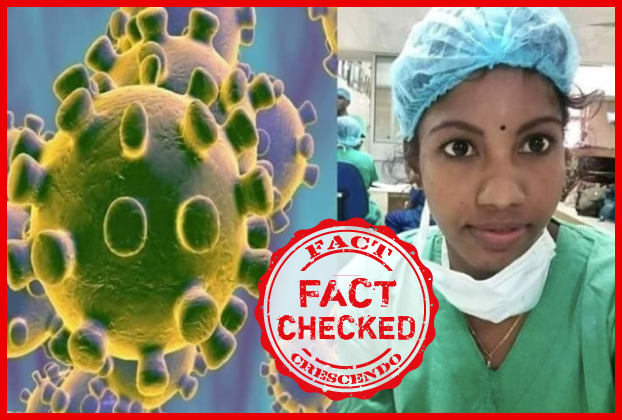
Claim: Lankan Tamil girl invented medicine for corona virus
Publisher’s rating: FALSE
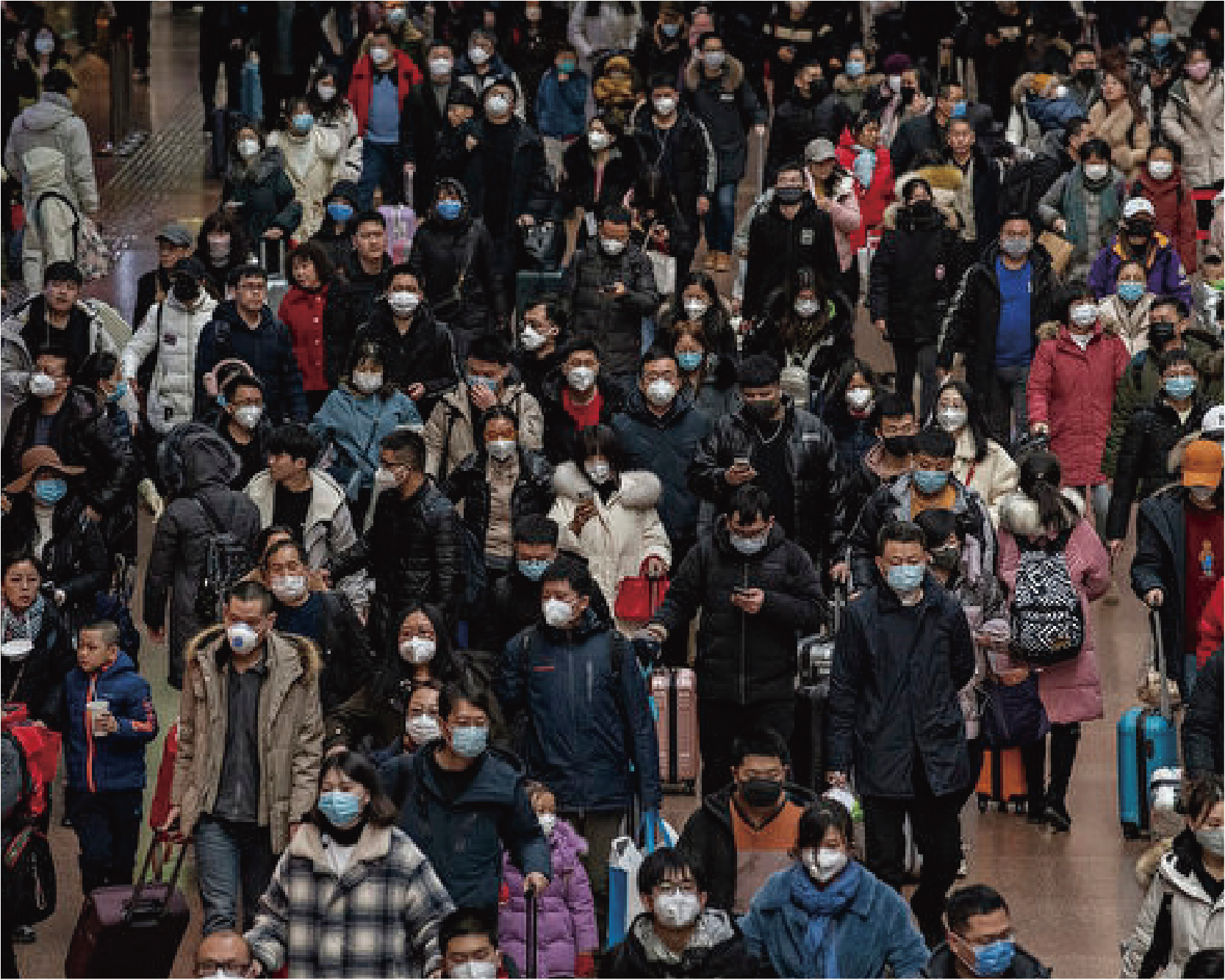
網傳「中國將承認新冠病毒來自P4實驗室」、「多位專家:病毒或來自武漢P4實驗室」?
Publisher’s rating: 部分錯誤
The review examines reports and online claims linking the new coronavirus to a Wuhan laboratory, including the specific suggestion that China would acknowledge a P4-lab origin. It traces three strands of reporting: comments by former Israeli military intelligence officer Dany Shoham, an allegation that Chinese scientists stole coronavirus from Canada, and a Daily Mail article about biosafety concerns at the Wuhan laboratory. On Shoham, the review says the Washington Times had reported that the virus might have come from a Wuhan lab associated with China’s biological-weapons research. But when asked by Kazakhstan’s Factcheck.kz, Shoham clarified that he had raised a possibility, not evidence of a connection. He said the outbreak might have occurred naturally and that more information was needed. The review therefore distinguishes his conditional speculation from proof that the virus escaped a lab. The review also checks the Canada allegation against statements attributed to Canadian authorities and reporting by CBC. It reports that the Public Health Agency of Canada called the claim that a Chinese spy team sent a virus to Wuhan and caused the outbreak baseless; a 2019 shipment to China involved Ebola and Nipah viruses, not coronavirus. Finally, the review traces the Daily Mail’s safety concerns to a 2017 Nature article and says the cited reporting offered no new evidence that the new coronavirus came from the Wuhan Institute of Virology. Its conclusion is that the cited material did not establish a Wuhan-lab origin.
Sejumlah warga Cina melempar kucing dan anjingnya dari apartemen karena takut tertular virus Corona Wuhan
Publisher’s rating: Benar

【錯誤】網傳「日本疾傳學和田教授」語錄圖:「醫學在亞洲排名數一數二的台灣,根本不用去攪和技術相對落後的WHO...」?
Publisher’s rating: 錯誤
The claim concerns a social-media quotation image attributed to a supposed Japanese professor and asserting that Taiwan should avoid the WHO and instead join a public-health system with the United States, Japan, and Australia. The review examined the image’s central identification: whether the pictured man was the claimed professor. It reports that the man was Japanese adult-film actor Shigeo Tokuda, not the alleged professor. The attribution in the image is therefore false. To check the identity, the center consulted adult-film commentator Huang Zheng, who identified the man as Tokuda. The report also says it searched TIME and CNN coverage: it describes TIME’s 2008 article and CNN’s 2008 article as identifying Tokuda as an adult-film actor, and notes that Tokuda was a stage name. Huang also supplied a cover from a Japanese film company’s January 2008 release, which the report used in comparing Tokuda’s image with the man in the circulating graphic. These checks address who is pictured; the excerpt does not independently assess the graphic’s policy statements about Taiwan or the WHO.

COVID-19 can be cured by freshly boiled garlic water.
Publisher’s rating: FALSE
Mit der Verbreitung des neuartigen Coronavirus 2019-nCoV werden gezielt Unwahrheiten über den Erreger verbreitet. Die orale Aufnahme einer Chlordioxid-Lösung soll beispielsweise gegen das Virus wirksam sein
Publisher’s rating: Es liegen keine wissenschaftlichen Belege vor, dass die Aufnahme von Chlordioxid Wirkung gegen Krankheiten beim Menschen zeigt. Im Gegenteil: Verschiedene Behörden warnen international davor, Chlordioxid einzunehmen. Laut der Weltgesundheitsbehörde (WHO) gibt es derzeit "kein spezifisches Medikament, das zur Vorbeugung oder Behandlung des Virus' empfohlen wird"
The dpa fact-check examines the claim that drinking a chlorine-dioxide solution could protect against or treat the newly identified coronavirus. It distinguishes disinfecting substances from treatments taken into the body: the article says chlorine dioxide is used as a bleaching agent and disinfectant, and that its effects can range from irritation to corrosive injury depending on concentration. It also reports possible harms from ingestion, including vomiting, diarrhea, kidney failure and blood-pressure drops. To assess evidence cited in support of the claim, the article discusses a 2005 study from the Tianjin Institute of Environment and Health. That study tested how a coronavirus behaved in water and wastewater in the presence of disinfectants; it did not test treatment in people. The reported finding was that free chlorine inactivated SARS-CoV more effectively than chlorine dioxide. The fact-check cautions that results about disinfection outside the body do not show that either chemical works against viruses or disease inside a person. The article also reports that Germany’s Federal Institute for Drugs and Medical Devices had classified products mixed into chlorine-dioxide solutions and sold as “Miracle Mineral Supplement” as requiring authorization and as concerning. It quotes a health official describing MMS as a bleaching chemical and recounts cases of people needing medical or poison-control assistance after taking it. The evidence presented therefore does not establish an antiviral benefit from ingestion, while the article documents health warnings and reported adverse effects.

【錯誤】網傳野味市場影片「看看武漢市場賣什麼??」?
Publisher’s rating: 錯誤
The claim concerns a 4-minute-41-second video circulated with wording that presents a wild-animal market as being in Wuhan. The review says the footage is real but was misidentified: it shows a market in Indonesia, not Wuhan. The text also describes a more hostile version of the accompanying message, which uses the footage to disparage Wuhan residents and argue for isolating them. To identify the footage, the review searched for the opening text visible in the video, “Pasar Extreme Langowan.” It found a video uploaded on July 20, 2019, with the same 4-minute-41-second runtime, and reports that the circulating clip and that video match in both opening text and scenes. The review also notes that people heard in the footage are not speaking Chinese. For the location, the review reports that Indonesian fact-checking organization Tempo.Co examined a sign visible from about 15 seconds into the video. The sign reads “Kantor Pasar Langowan”; Tempo.Co used Google Maps to locate the market in Toraget, north of Langowan, in Indonesia’s North Sulawesi province. The review says Tempo.Co also identified the language spoken in the footage as Indonesian. Together, the matching video and location clues support the conclusion that the clip was relabeled as Wuhan despite depicting an Indonesian market.

Ayush Ministry said homeopathy acts an anti-dote to Corona virus.
Publisher’s rating: FALSE

Virus Corona Wuhan atau 2019-nCoV dapat menular lewat game Free Fire dan ponsel Xiaomi
Publisher’s rating: Keliru
Health care spending under the current system "will be a lot more expensive than a Medicare for all single-payer system."
Publisher’s rating: This is disputed.

23-year-old man from Tripura died of coronavirus in Malaysia
Publisher’s rating: FALSE

Video show a market in Wuhan where Coronavirus originated
Publisher’s rating: FALSE
The claim concerned a viral video of a market selling wild animals, captioned as showing the market in Wuhan where coronavirus originated. The review investigated the video’s provenance rather than establishing where the virus originated: it reports that the footage was actually from a market in Indonesia. The distinction matters because footage of a market, by itself, does not establish that it is the location where an outbreak began. [S1: “a video of a market where wild animals are sold as exotic delicacies under unhygienic conditions has become viral on Facebook and WhatsApp. The video is captioned, ‘Whuan market China, the origin of the #Corona virus.’”] To identify the footage, the review says it used InVID to extract keyframes and conduct a reverse image search. It found a YouTube video uploaded on 20 July 2019, titled in Indonesian with an English translation of “Langowan EXTREME Market”; the video’s caption described Langowan Market. [S1: “Newsmeter performed a reverse image search using the Invid tool after extracting keyframes from the video. We found a video that was uploaded to YouTube on 20 July 2019.”] [S1: “The video's title which is in the Indonesian language translates to English as ‘Langowan EXTREME Market’. The caption reads, ‘The world's most extreme food is available only at Langowan Market.’”] The review reports two further clues identifying the location as Indonesia: search results associated the market with sales of animals including rats, snakes, bats and dogs, and a sign visible at the video’s 21-second mark translated to the Langowan Market Office under the Minahasa Regency Trade Department. It concludes that the viral video was originally from Indonesia, not Wuhan, and rates the video claim false. [S1: “Also, at the 21-second mark, the YouTube video shows a building with a sign in the Indonesian language, which in English translates to: ‘Government of Minahasa Regency, Trade Department, Langowan Market Office’.”] [S1: “The video which is going viral and claiming to show a market in Wuhau, China, is originally from Indonesia. The claim is FALSE.”]

China no ha construido un hospital en 48 horas para atender a pacientes del Coronavirus: lleva en construcción desde 2018
Publisher’s rating: Falso
The claim concerns images circulated as showing a Chinese hospital newly built in 48 hours to treat coronavirus patients. Newtral identifies the building in those images as the Dabieshan District Medical Center in Huanggang, and says it had been under construction since 2018. The review reports that footage of the same center appeared in a China Global Television Network report uploaded on January 28; the presenter described a two-day conversion of an empty building into a facility able to hold 1,000 beds, not the construction of a new hospital. The distinction is central to the review’s conclusion: patients with fever began being transferred to the Dabieshan center on January 28, but that use followed the preparation of part of an existing hospital. To check the building’s earlier history, Newtral points to an image on Baidu Maps dated 2018, which it says shows the infrastructure already almost entirely raised. These details support the review’s finding that the 48-hour claim conflated fitting out an existing building with constructing a hospital. The review also notes a separate source of confusion in the circulated posts: they included images of hospitals being built in Wuhan. It describes Huoshenshan and Leishenshan as separate projects, with contemporary reports saying they were under construction and expected to open the following week. That distinction does not change the identity of the Huanggang building examined in the claim, but explains why images of actual construction could be mixed with footage of the existing Dabieshan center.