PeakMetrics / Fact Checks
Health & medicine fact checks
Explore claims publishers have checked about health & medicine. Read their original ratings and follow the evidence.
Search fact checks
Search by text or image13,676 published reviews in this topic

Nuestro país fue el primero en número de contagiados y en número de muertos en adoptar el decreto de alarma
Publisher’s rating: Falso

El Gobierno paró de contabilizar los datos del coronavirus entre el 6 y el 9 de marzo
Publisher’s rating: Falso
The claim concerned a social-media post alleging that the Government had stopped counting coronavirus cases between 6 and 9 March 2020, supposedly to conceal deaths so the 8 March demonstration would go ahead. The post included a chart attributed to the Health Ministry in which 7 and 8 March had no entries. The review’s conclusion was that the claim was false. (S1: “Nos llegaron vuestros mensajes preguntando si era cierta una publicación que se compartía por redes sociales que aseguraba que el Gobierno no había estado contabilizando los afectados por coronavirus entre el 6 y el 9 de Marzo, y añadía la razón por la que se habría hecho esto. Porque ‘sabían que durante ese día fallecía gente y aun así lo ocultaron para que la manifestación del 8M fuese un éxito’. A este texto le acompaña una gráfica atribuida a Sanidad en la que los días 7 y 8 no muestran registros. Este mensaje es falso.”) The review’s central evidence is that the Ministry of Health continued making case lists public on Twitter from Friday 6 through Monday 9 March, inclusive. Those lists broke down detected cases by autonomous community. That documented publication directly challenges the claim that the Government stopped counting or reporting cases throughout the stated period. (S1: “Del viernes 6 al lunes 9, ambos inclusive, el Ministerio de Salud estuvo haciendo públicas a través de Twitter listas de los casos de coronavirus detectados desglosadas por Comunidad Autónoma.”) The review also describes public briefings over the weekend: Fernando Simón, director of the Centre for the Coordination of Health Alerts and Emergencies, attended press conferences on both Saturday and Sunday, while Health Minister Salvador Illa attended Sunday’s briefing. Simón read out infection figures at those events. This supplies additional evidence of public reporting on the days the circulating chart showed no entries, rather than evidence that the Government concealed the figures to facilitate the demonstration. (S1: “Fernando Simón, estuvo presente en ruedas de prensa tanto sábado como domingo. El ministro de Sanidad, Salvador Illa, sí que acudió solamente a la del domingo. En estos eventos Simón leyó en voz alta los casos de infectados.”)


No COVID-19 deaths in Israel as they found a cure for COVID-19 – a mixture of lemon and baking soda
Publisher’s rating: FALSE
The post claimed that Israel had recorded no COVID-19 deaths because a hot drink made with lemon and baking soda cured the disease. FACTLY checked both parts of that claim: the reported death toll in Israel and whether there was evidence that the mixture could kill SARS-CoV-2. Its review says that, as of 16 April 2020, Israel had reported 126 COVID-19 deaths, directly contradicting the claim of zero deaths.

"Had the WHO done its job to get medical experts into China to objectively assess the situation on the ground and to call out China’s lack of transparency, the outbreak could have been contained at its source, with very little death."
Publisher’s rating: WHO lacked the power
"There was credible information to suspect human-to-human transmission in December 2019, which should have spurred the WHO to investigate, and investigate immediately. ... Through the middle of January, it parroted and publicly endorsed the idea that there was not human-to-human transmission happening despite reports and clear evidence to the contrary."
Publisher’s rating: No clear early evidence
"The (WHO) told us, when we put on our travel ban — a very strong travel ban — there was no need to do it. ‘Don’t do it.’ They actually fought us."
Publisher’s rating: No fight, just policy

Video yang diklaim sebagai video uji coba tentang virus Corona Covid-19 yang takut dengan suara azan
Publisher’s rating: Keliru


Sonne oder UV-Strahlen helfen gegen Corona
Publisher’s rating: Falsch. Es geht um Oberflächen - nicht um Menschen.
Die Hypothese kam fast zeitgleich mit dem Erreger auf: Das neuartige Coronavirus sei gar nicht natürlichen Ursprungs, wird behauptet, sondern menschengemacht - als eine Art Biowaffe. Einer am 8. April veröffentlichten Umfrage zufolge glaubt zum Beispiel fast jeder dritte erwachsene US-Amerikaner, der Erreger sei absichtlich im Labor gezüchtet worden.
Publisher’s rating: Falsch. Renommierte Wissenschaftler halten das für vollkommen unplausibel.
Kabataan Partylist Rep. Sarah Elago told the public to sneeze with their eyes open to avoid infecting others
Publisher’s rating: Fake


網傳「之前有老虎確診...請小心遠離家中寵物貓狗及豢養的家禽...」?
Publisher’s rating: 錯誤
The message under review used the reported infection of a tiger to suggest that cats, dogs, birds, and poultry might be dangerous to people, and advised avoiding them and their droppings. The review separated the established tiger case from those broader warnings. It reported that Nadia, a Malayan tiger at the Bronx Zoo in New York, tested positive after several big cats showed symptoms. The zoo’s operator said on April 5 that Nadia tested positive; the review reported that an asymptomatic animal-care worker was the suspected source of infection and that the affected animals recovered. To assess whether the tiger case supported the warning about pets, the review described consulting two veterinary professors and examining research on animal susceptibility. The experts distinguished experimental infection from ordinary exposure: research found cats and ferrets susceptible under specific laboratory conditions, but those experiments used controlled, high-dose or invasive infection methods. The review also reported that the bird claim had no scientific support. Its account therefore did not treat laboratory susceptibility as evidence that household animals were commonly infected in natural settings. The central inference in the forwarded message was that infected animals could pass the virus back to people. The review said that the international organizations it consulted had found no evidence establishing animal-to-human transmission, and quoted experts who said the reported animal cases were sparse and initially thought to result from human-to-animal infection. Its conclusion was that the tiger case did not establish the broader transmission warning; it advised against treating animals as proven sources of infection to people.
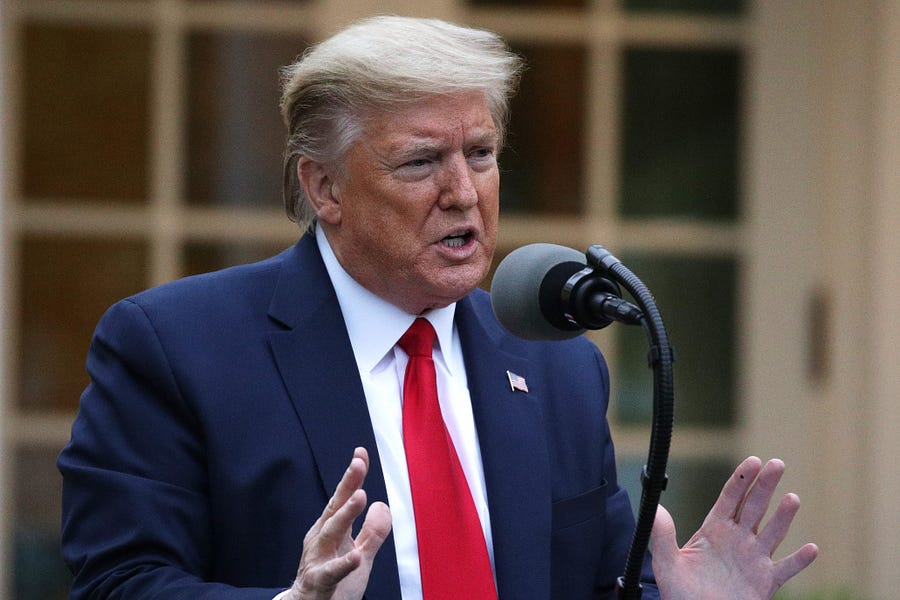
Donald Trump falsely claimed that World Health Organization took China at its word early in the coronavirus pandemic
Publisher’s rating: Mostly false.

Image shows people in Gujarat violating COVID-19 lockdown
Publisher’s rating: FALSE