PeakMetrics / Fact Checks
Health & medicine fact checks
Explore claims publishers have checked about health & medicine. Read their original ratings and follow the evidence.
Search fact checks
Search by text or image13,676 published reviews in this topic

臉上長脂肪粒不要用手擠,教你3個小妙招,就能快速去除脂肪粒,取一個維生素E膠囊,然後將它戳破,然後再用棉簽沾取,我們只要把維生素E塗在有脂肪粒的地方,過幾天就可以自動消除了
Publisher’s rating: 不實

Das neuartige Coronavirus kann mehrere Tage auf Oberflächen haften bleiben.
Publisher’s rating: Es gibt noch keine eindeutige wissenschaftliche Evidenz, wie lange SARS-CoV‑2 auf Oberflächen bestehen bleibt. Studien zufolge können sich zwar Coronaviren für ein paar Stunden bis zu mehrere Tage auf Oberflächen halten. Virologen sind aber skeptisch, dass sich diese Labor-Untersuchungen auf den Alltag umlegen lassen. In der Heinsberg-Studie wurden etwa nur „tote” Viren auf Oberflächen in hochinfektiösen Haushalten gefunden.
Op Facebook wordt beweerd dat Elisa Granato, een Britse wetenschapper die aan de universiteit van het Engelse Oxford heeft deelgenomen aan een eerste proef met een nieuw vaccin tegen het nieuwe coronavirus dat de ziekte COVID-19 veroorzaakt, zou zijn overleden. De Britse autoriteiten zouden dat hebben gemeld.
Publisher’s rating: Het bericht is fout. Het nepnieuws is verzonnen door een niet serieuze site, NewsNT, die zich presenteert als nieuwssite.
The Facebook claim concerned Elisa Granato, a British scientist who participated in an early trial of a coronavirus vaccine at Oxford University. It said she had died and that British authorities had reported her death. The review distinguishes her participation in the trial—which it says was also reported by reputable British media—from the allegation that she had died. (S1: “Over Granato’s deelname aan de proef wordt ook bericht in serieuze Britse media. Haar overlijden wordt echter door serieuze journalisten ontkend, op basis van uitspraken van haar universiteit en van haarzelf.”) The review points to two direct denials. It reports that the UK Department of Health and Social Care said at the end of April that the death reports were “completely untrue,” and that Granato herself confirmed in a video posted on the BBC health correspondent’s Twitter account that she was alive. These statements directly address the alleged death, rather than disputing her involvement in the trial. (S1: “Het Britse ministerie van Volksgezondheid en Sociale Zorg zegt eind april op zijn officiële Twitter-account dat de berichten over Granato’s overlijden \"volstrekt onwaar\" zijn.”; “In een videofilmpje dat de verslaggever gezondheidszorg van de BBC op zijn Twitter-account heeft geplaatst, bevestigt dr. Granato zelf dat zij niet is overleden.”) The review identifies NewsNT as the source of the false story and describes it as a site presenting itself as a news site but not a serious one. The excerpt does not provide further detail about how the site’s original post was investigated, so the stated basis for rejecting the claim is the reported denial from the department, university and Granato herself—not an account of additional verification steps. (S1: “Het nepnieuws is verzonnen door een niet serieuze site, NewsNT, die zich presenteert als nieuwssite.”; “Haar overlijden wordt echter door serieuze journalisten ontkend, op basis van uitspraken van haar universiteit en van haarzelf.”)
Video yang diklaim sebagai video kakak-adik di Tangerang yang tertular Covid-19 setelah bermain di luar rumah
Publisher’s rating: Sesat


Drinking tea can cure COVID-19
Publisher’s rating: FALSE
The claim was that drinking tea could cure COVID-19 because tea contains methylxanthines, and that Dr. Li Wenliang had proposed this as a cure. FACTLY’s review says the social-media post linked the supposed treatment to Li, whom it describes as an ophthalmologist. The review distinguishes the presence of compounds in tea from evidence that tea treats the disease: it reports finding no scientific evidence that drinking tea can cure COVID-19. [S1]

Le Prix Nobel de médecine 2018 Tasuku Honjo aurait dit que le coronavirus est artificiel
Publisher’s rating: Faux
Die einen schwören auf Knoblauch, andere auf Vitamin C. Geht es um angebliche Wundermittel gegen eine drohende Corona-Infektion scheinen der Fantasie kaum Grenzen gesetzt. Vielerorts im Netz wird zur Immunisierung zudem "kolloidales Silber" angepriesen, auch "Silberwasser" genannt. "Coronavirus ist harmlos, keine Panik", heißt es unter anderem. "Informiert euch zum Thema Kolloidales Silber! (...) 3x Schnapsgläser am Tag und die ganze Corona ist Geschichte."
Publisher’s rating: Forscher halten solche Versprechen für unseriös und warnen gar vor gesundheitlichen Schäden durch die Einnahme von kolloidalem Silber. Es gibt keine aussagekräftigen Studien zu dessen Wirksamkeit.
The review examines online claims that colloidal silver—also called “silver water”—could immunize people against coronavirus, including a post advising people to drink three shot glasses a day. It reports that the claimed preventive or therapeutic effect had not been established: the review says there were no scientific proofs for the asserted effect against the virus and quotes medical researchers who said drinking colloidal silver had never been seriously studied against pathogens such as coronavirus. The review distinguishes laboratory findings from evidence about people. It notes that experiments in test tubes suggested silver solutions could act against disease-causing microorganisms, but says this does not show that colloidal silver works against pathogens in the human body. It also cites an Austrian health ministry statement that independent expert commissions and government health authorities had found the safety and effectiveness of these preparations unestablished. The review adds that swallowing silver is not risk-free. Citing the US National Institutes of Health, it says that silver preparations may be used for wounds or skin infections, but that ingesting them can cause lasting blue-gray skin discoloration, known as argyria. These points address the post’s recommendation to drink silver water, rather than merely its broader assertions that coronavirus is harmless or that people should not panic.

మణిపూర్ (ఇండియా) లోని మార్కెట్ లో సామాజిక దూరాన్ని పాటిస్తూ కూరగాయలు అమ్ముతున్న ఫోటో
Publisher’s rating: FALSE
Une chaîne de messages contenant des conseils absurdes à propos du nouveau coronavirus se répand actuellement sur les réseaux sociaux. D’après le texte, il serait possible de vérifier rapidement et facilement si l’on a été infecté par le Sars-CoV-2 : il est conseillé de retenir sa respiration pendant dix secondes. Dans l’une des versions de cette chaîne de messages, il est expliqué : « Si vous réussissez l’examen sans toux, sans inconfort, sans sensation de pesanteur ou de pression, cela signifie qu’il n’y a pas de fibrose pulmonaire, et donc à priori pas d’infection dans les poumons ».
Publisher’s rating: Bloquer sa respiration ne constitue pas un test rapide de l’infection par Sars-Cov-2. Au début de l’infection, le virus se propage principalement dans la gorge, et non dans les poumons. Par ailleurs, d’autres maladies telles que l’asthme, peuvent rendre l’inspiration difficile. Enfin, la fibrose n’est pas un symptôme de Covid-19.
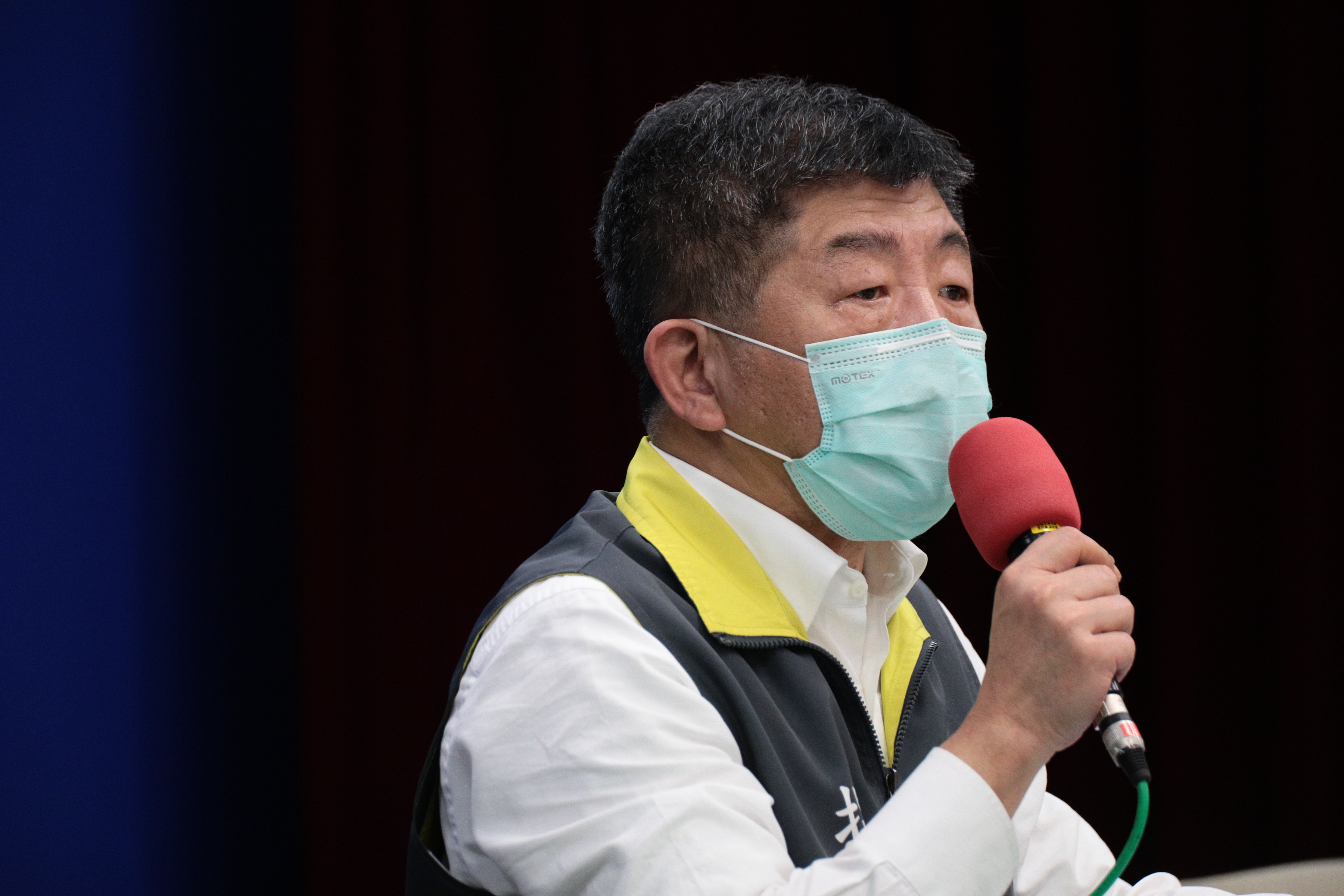
【錯誤】網傳「中華民國衛福部長: 陳時中提醒大家~再次強調:別出門,端午節(6月25日)過後,再看疫情控制情況...」?
Publisher’s rating: 錯誤
Certaines dates semblent étrangement redondantes : la peste en 1720, le choléra en 1820, la grippe espagnole en 1920, et maintenant le nouveau coronavirus en 2020. Le monde est-il réellement frappé par une pandémie exactement tous les 100 ans ? C’est la théorie qui se répand en ce moment sur les réseaux sociaux
Publisher’s rating: Bien que le temps écoulé entre chaque pandémie mentionnée soit bien d’environ 100 ans, la sélection de ces infections est totalement arbitraire : d’autres épidémies dévastatrices ont été laissées de côté pour donner l’impression d’une occurrence tous les 100 ans.
The claim strings together four dates—1720, 1820, 1920 and 2020—and asks whether they show that the world experiences a pandemic every century. The review consulted historian Karl-Heinz Leven of the University of Erlangen-Nuremberg, who cautioned that some pandemics can appear roughly a century apart at first glance, but that exact dates rarely match such a neat interval. He also noted that other pandemics have been omitted from the proposed sequence. The dates themselves do not support the pattern as presented. The review says the World Health Organization dates the first cholera pandemic to 1817, not 1820, and that Spanish flu had spread by 1918. It places the start of the coronavirus outbreak in 2019, when reports of the new disease emerged in China, rather than in 2020. It also distinguishes the 1720 Marseille plague outbreak from a scientifically dated plague pandemic: the review says the third such pandemic began only in the late nineteenth century. The selection is incomplete as well as imprecise. The review points to the Asian flu, smallpox and tuberculosis as omitted pandemics, and says the major sixth- and fourteenth-century plague pandemics are also absent. Thus the four chosen dates are not a reliable sequence from which to infer a recurring hundred-year cycle.

En Hungría el Gobierno ha enviado mascarillas a todos los hogares
Publisher’s rating: Falso
Ein in den sozialen Netzwerken verbreitetes Foto soll zeigen, dass es sich bei einem vermeintlichen Corona-Patienten in Wirklichkeit um eine Puppe handelt (http://dpaq.de/LqlTY). Dazu wird angedeutet, die Aufnahme sei in der Medienberichterstattung über die Pandemie und die Überlastung der Krankenhäuser dazu benutzt worden, Panik zu erzeugen und die Lage zu dramatisieren (http://dpaq.de/wB9Rt).
Publisher’s rating: Die Behauptungen treffen nur teilweise zu. Das Foto zeigt zwar eine Puppe. Sie ist jedoch Teil einer Übung der US-Marine. Hinweise, dass die Aufnahme von Medien in falschem Zusammenhang verwendet wurde, lassen sich nicht finden.
Rodrigo Duterte talked about the Fabunan Antiviral Drug in a speech on April 13
Publisher’s rating: False

Photo of social distancing in a market was taken in Manipur (India)
Publisher’s rating: FALSE
The claim concerns a photo of market vendors spaced apart that circulated as showing social distancing in Manipur, India. FACTLY also notes that some posts identified the image as being from Mizoram, but its investigation focused on locating the market shown in the photo. It concluded that the image was from neither Indian state, but from Kalaw market in Myanmar’s Shan state. To check the location, the investigation compared the circulated image with a similar photo found in a search for Kalaw market photos. It also examined visible details in the image: a hoarding carried an advertisement for Seagram’s High Class, which FACTLY identified as a Myanmar product, and other photos of that hoarding were associated with Kalaw market. The review further pointed to newer photos of the same market showing vendors beneath Mytel-branded umbrellas, identifying Mytel as a Myanmar mobile network company. Taken together, the market-photo comparison and the advertising and umbrella clues support the review’s conclusion that the photo was taken in Myanmar, not Manipur. The excerpt does not provide a date for when the pictured scene was photographed or identify the original photographer.

Seit Jahren arbeiten sich Impfgegner an Bill Gates ab, weil seine Stiftung weltweit Gesundheitsprojekte finanziert. Darunter sind auch Impfschutzprogramme. Über den US-Multimilliardär wird zum Beispiel verbreitet, er habe sich geweigert, seine eigenen Kinder impfen zu lassen
Publisher’s rating: Es gibt für diese Behauptung überhaupt keinen Beleg.
The review investigates the claim that Bill Gates refused to have his own children vaccinated. It says the allegation circulated online and was attributed to a former doctor of Gates who supposedly discussed it “behind closed doors” at a symposium in Seattle. The review reports that the claim’s accounts did not identify the symposium’s title or date, or name the supposed doctor. The review also says that the assertion that this person had been Gates’s private doctor in the 1990s was itself unsupported, and that the source for the alleged quotation was unclear. On the evidence described, the review found no substantiation for the story that Gates declined to vaccinate his children. As corroboration, the review notes that PolitiFact and Africa Check had also assessed the supposed private doctor’s account as false. It does not describe independent records of the children’s vaccinations; its explanation instead focuses on the missing identifying details and sourcing behind the account used to support the allegation.