PeakMetrics / Fact Checks
Health & medicine fact checks
Explore claims publishers have checked about health & medicine. Read their original ratings and follow the evidence.
Search fact checks
Search by text or image13,676 published reviews in this topic
Actress Angel Locsin tested positive for CVID-19 in a second test.
Publisher’s rating: Fake
Desinfektionsmittel gegen Corona verabreichen? Mit diesem Vorschlag hat US-Präsident Donald Trump unlängst für Unverständnis und Empörung gesorgt. Einen Tag später nannte er seine Worte zwar "Sarkasmus", doch da waren in den sozialen Netzwerken längst zustimmende Beiträge unterwegs. Bei Facebook heißt es, das Desinfektionsmittel Chlordioxid töte Viren binnen Sekunden ab - auch wenn es in den Körper injiziert werde
Publisher’s rating: Chlordioxid wirkt zwar gegen Viren, stellt aber auch eine große Gefahr für den menschlichen Körper dar. Wissenschaftler, Behörden und Hersteller warnen daher vor der Einnahme.
The Facebook post described in the review claimed that chlorine dioxide kills viruses within seconds, including when injected into the body. The claim circulated after US President Donald Trump’s remarks about administering disinfectant to counter coronavirus; Trump called his remarks “sarcasm” the following day, but the review says supportive posts were already circulating on social networks. The review’s evidence focuses on the hazards of chlorine dioxide and the lack of a basis for using it as an injection. It cites Germany’s Institute for Occupational Safety and Health on the substance’s irritating-to-corrosive effects on skin and mucous membranes. It also reports that the consumer advice centre lists possible consequences of ingestion including nausea, vomiting, diarrhoea, kidney failure, intestinal damage and a drop in blood pressure. Jürgen Floege, identified as chair of the German Society for Medicine, told dpa that an injection could be expected to have even more serious consequences and was not suitable as a medical treatment against coronaviruses. The article does not describe a test showing that injected chlorine dioxide kills viruses in people; instead, its cited evidence addresses toxicity and expert warnings against the proposed use.
Oxford University is offering Kshs 100, 000 to volunteers for a COVID-19 vaccine trials
Publisher’s rating: False.
Une publication diffuse sur Facebook des photos de textes appartenant censément au livre « Le nouveau rapport de la CIA - comment sera le monde demain? » (http://dpaq.de/X8wUy). Sur les photos de ce prétendu rapport, il est question « d'une maladie ressemblant à une forme grave de pneumonie » ou « d'une nouvelle maladie respiratoire humaine virulente » qui se propagerait «en/vers 2020» ou «d'ici 2025» à l'échelle de pandémie. La Chine serait même citée comme premier foyer de l'épidémie. Quant au mot « coronavirus », il apparaît dans ce contexte. Plus perturbant encore, les extraits traitent également du port de masques de protection et de gants en caoutchouc dans les lieux publics.
Publisher’s rating: la CIA, agence de renseignements américaine, a bien publié un rapport titré « Le nouveau rapport de la CIA ». Il est en effet question du « déclenchement possible d'une pandémie mondiale » en Chine. Cependant, les textes photographiés et publiés avec la couverture de cette œuvre sur les réseaux sociaux ne sont pas tous issus du même livre. Leur source est d'ailleurs peu fiable.

CDC has not stopped reporting flu deaths, and this season's numbers are typical
Publisher’s rating: True

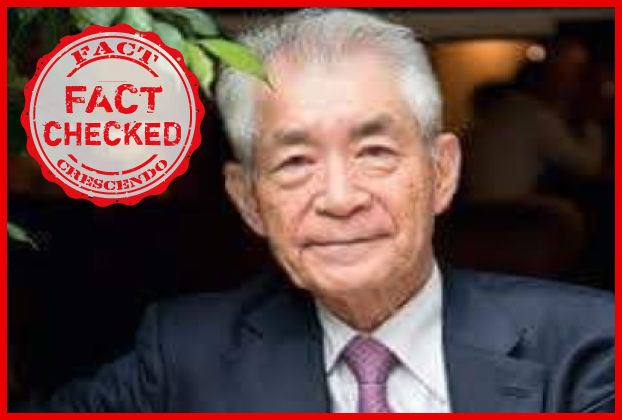
Claim: Japanese professor Tasuku Honjo did not said covid 19 was human made
Publisher’s rating: False
The claim concerned viral posts saying Japanese professor Tasuku Honjo had stated that COVID-19 was made by humans. Fact Crescendo’s review says it investigated the circulating information and found it false. The article also describes more elaborate versions of the story: that Honjo had researched viruses for 40 years, worked at a Wuhan laboratory for four years, and said the virus was deliberately created there. It rejects those assertions as well.

COVID-19 may be 'here to stay,' even after a vaccine
Publisher’s rating: Partly True
Homöopathische Arzneimittel sind umstritten: Während Befürworter sie als Alternative zur Schulmedizin sehen, bemängeln Kritiker, dass es keinen wissenschaftlichen Nachweis für ihre Wirksamkeit gibt. Im Zusammenhang mit dem Coronavirus wird nun behauptet, dass laut einer Umfrage eine "große Mehrheit der Deutschen" den Einsatz homöopathischer Arzneimittel bei Covid-19-Erkrankungen befürwortet - in einigen Beiträgen in sozialen Netzwerken ist von 61 Prozent die Rede.
Publisher’s rating: Die Behauptung, fast zwei Drittel der Deutschen befürworteten eine Covid-19-Behandlung mit homöopathischen Arzneimitteln, ist durch die Umfrageergebnisse nicht gedeckt. In der betreffenden Frage wird das Szenario vorausgesetzt, dass ein solches Arzneimittel bereits existiert und nachweislich wirksam ist. Zudem weisen die Zahlen im Text Unstimmigkeiten auf.
The claim concerned a Forsa survey commissioned by the German Central Association of Homeopathic Doctors. The association’s press release presented the results as showing that 61 percent supported using homeopathic medicines for Covid-19. The review explains that the survey question did not ask about treatment in general: respondents were asked to consider a hypothetical situation in which there were indications that a homeopathic remedy had helped during earlier epidemics. The question also described the remedy as being considered for seriously ill Covid-19 cases. Under that stated scenario, respondents were asked whether they would definitely, rather, rather not, or definitely not support treatment for themselves and people close to them. The review therefore says the answers cannot establish broad support for Covid-19 treatment with homeopathic medicines without those conditions. In particular, the result measures responses to a hypothetical premise, not support for an available treatment shown to work. The review also identifies a numerical discrepancy in the reported total. The press release and data sheet gave 26 percent as definitely supporting treatment and 34 percent as rather supporting it. Those figures add to 60 percent, not 61 percent. The review notes that rounding the individual percentages could possibly account for the one-point difference, but the figures as reported do not sum to the headline total.

網傳影片訊息:還以爲川普有神功護體呢!原來從頭到尾就是美國政府設好的局、研發出來的病毒,川普自己和團隊早就打了疫苗了
Publisher’s rating: 不實

Die Einnahme von Bleichmittel/Chlordioxid-Produkten wie „MMS“ hilft gegen das neuartige Coronavirus.
Publisher’s rating: Diese Behauptung kann auf wissenschaftlicher Basis nicht bestätigt werden. Diverse Gesundheitsorganisationen warnen bereits seit Jahren vor der Einnahme von „MMS”, da durch das enthaltene Natriumchlorit und Chlordioxid körperliche Schäden verursacht werden können.
گفتوگوی ضبط شده دو خبرنگار آمریکایی در کاخ سفید درباره «سرکاری بودن کرونا» و اینکه «واکسن کووید۱۹ زدهاند»
Publisher’s rating: گمراهکننده
Gibran Rakabuming salahkan rakyat yang tak patuhi aturan pemerintah atas merebaknya Covid-19
Publisher’s rating: Sesat
Filipino doctor Willie Fabunan has developed a COVID-19 vaccine
Publisher’s rating: False


Tasuku Honjo: Novo coronavírus não é natural
Publisher’s rating: Falso: O próprio pesquisador Tasuku Honjo desmentiu as alegações atribuídas a ele em mensagens no WhatsApp e em publicações em redes sociais. Além disso, pesquisas científicas confirmaram que o vírus causador da covid-19 não foi desenvolvido em laboratório. O Comprova verificou que o boato circula há alguns dias em diversos idiomas

【錯誤】網傳圖片宣稱「一位護士在摘掉口罩和眼鏡罩後,在紫外線下顯出臉上仍有殘留的病毒...」?
Publisher’s rating: 錯誤
The review examined a circulating image paired with the claim that ultraviolet light showed virus remaining on a nurse’s face after she removed her mask and eye protection. The accompanying message urged people returning home to close their eyes and wash their faces. The review framed the question as whether the image really showed residual virus under ultraviolet light. “通訊軟體、社群平台流傳一張圖片,搭配文字訊息指出: 「一位護士在摘掉口罩和眼鏡罩後,在紫外線下顯出臉上仍有殘留的病毒。這就是為什麼外出回家後,一定要馬上緊閉眼睛洗臉。」” The review consulted two named specialists. Lu Minji, identified as a microbiology department chair and infectious-disease professor at China Medical University, said he could not determine how the white spots in the image had been detected, but that ultraviolet light cannot detect viruses. He explained that some ultraviolet wavelengths can reveal fluorescence from certain bacteria, whereas detecting viruses requires laboratory instruments to examine nucleic acids or particular envelope proteins. “盧敏吉指出,不確定這網傳圖片中的白點是用什麼方式偵測的,但紫外線光無法偵測到病毒。” “特定波長的紫外線光,可以偵測細菌內產生的螢光,進而偵測出環境中沾染的某些細菌;而病毒比細菌小非常多,需要透過實驗室的精密儀器去檢測核酸或特別的外套膜蛋白,才能檢測出病毒。” The second specialist, Hsin-ju Shih, director of Chang Gung University’s Emerging Viral Infections Research Center, likewise could not identify how the image’s white spots were produced, but said they could not be viruses: viruses are nanoscale and require an electron microscope to see. The review therefore rejected the image’s claimed interpretation while leaving the actual method used to produce the spots undetermined. “施信如指出,無法確定照片用什麼方式偵測、顯示出白點,但照片中的白點不可能是病毒。因為病毒是奈米級的大小,必須要在電子顯微鏡下才能看到。”