PeakMetrics / Fact Checks
Health & medicine fact checks
Explore claims publishers have checked about health & medicine. Read their original ratings and follow the evidence.
Search fact checks
Search by text or image13,676 published reviews in this topic
The virus causing COVID-19, SARS-CoV-2, stays in the throat for four days before going to the lungs.
Publisher’s rating: Unproven

బీహార్ లోని పాట్నాలో ఉన్న ఒక కోవిడ్-19 హాస్పిటల్ లోని పరిస్థితి
Publisher’s rating: MISLEADING
Vaksin Covid-19 diuji coba di Indonesia karena laboratorium Cina kekurangan monyet
Publisher’s rating: Sesat
Der deutsche Bundesgerichtshof (BGH) hat im Dezember 2016 eine Beschwerde im Zusammenhang mit einer juristischen Auseinandersetzung zurückgewiesen, in der es um ein nicht gezahltes Preisgeld ging. Seitdem wird in den sozialen Medien immer wieder behauptet, der BGH habe bestätigt, dass es Masernviren nicht gebe.
Publisher’s rating: Es gibt keinen Beschluss des deutschen Bundesgerichtshofs (BGH) zur Existenz von Masernviren. Das Gericht wies lediglich eine Nichtzulassungsbeschwerde zurück. Im entsprechenden Beschluss äussert sich der BGH an keiner Stelle inhaltlich zur Sache, um die es im vorangegangenen Rechtsstreit gegangen war.
The review examines a social-media claim that the German Federal Court of Justice (BGH) confirmed that measles viruses do not exist when it rejected a legal challenge in December 2016. The dispute began with biologist Stefan Lanka’s 2011 offer of €100,000 for a single scientific publication that both proved the measles virus existed and specified its diameter. A medical student submitted six publications and sued after Lanka did not pay. The lower-court history matters because the BGH decision was not a ruling on the scientific question. The Ravensburg Regional Court initially ordered Lanka to pay, but the Stuttgart Higher Regional Court overturned that outcome. It found that the student had not met the offer’s requirement to provide the proof in one scientific publication: he had submitted several. The review says the existence of measles viruses played no role in the Higher Regional Court’s reasoning. The student then filed a non-admission appeal after the Higher Regional Court declined to allow a further appeal. The BGH rejected that procedural challenge on 1 December 2016. According to the review, the BGH’s short decision did not address the merits of the underlying dispute or whether measles viruses exist. Thus, rejection of the challenge did not amount to a judicial finding that the viruses do not exist.
In der Corona-Pandemie wird mit Hochdruck an Impfstoffen und Medikamenten gegen die Krankheit Covid-19 geforscht. In einem Artikel wird nun aber die Behauptung aufgestellt, der amerikanische Virologe Anthony Fauci habe bereits 2005 das Mittel Hydroxychloroquin für den Einsatz gegen Coronaviren genehmigt.
Publisher’s rating: Weder Anthony Fauci noch das von ihm geleitete Institut sind in den USA für die Zulassung von Medikamenten zuständig. Der Artikel bezieht sich lediglich auf eine Veröffentlichung in einer Online-Bibliothek aus dem Jahr 2005, wonach das Mittel Chloroquin gegen die Infektionskrankheit SARS Wirksamkeit gezeigt haben soll. Die Wirksamkeit von Chloroquin und Hydroxychloroquin gegen Infektionen mit dem neuartigen Coronavirus Sars-CoV-2 ist umstritten. Eine vorläufige Zulassung in den USA wurde wieder zurückgezogen.
The claim conflates a 2005 laboratory report about chloroquine with an approval supposedly granted by Anthony Fauci for hydroxychloroquine against coronaviruses. The review says the cited article reported antiviral effects of chloroquine, a drug related to hydroxychloroquine, in experiments on cells infected with the SARS pathogen. It does not describe an approval by Fauci: the review states there was no connection between him and the article. The review also distinguishes Fauci’s role from the US drug-approval process. It says he has led the National Institute of Allergy and Infectious Diseases (NIAID), which is part of the National Institutes of Health (NIH), rather than leading the NIH itself. The NIH is not the US authority responsible for drug approvals; the review identifies that authority as the Food and Drug Administration (FDA). It reports finding no evidence on the FDA website or in its available documents that either drug had been approved to treat SARS. A separate, later development may help explain the confusion: in late March 2020 the FDA issued an emergency authorization for chloroquine and hydroxychloroquine under specified conditions for use against SARS-CoV-2, the coronavirus associated with Covid-19. The review says that authorization was withdrawn in mid-June 2020. It also notes that the drugs’ effectiveness against SARS-CoV-2 and Covid-19 was disputed. These later actions do not substantiate the claim that Fauci approved hydroxychloroquine in 2005.
Ein Facebook-Beitrag stellt Aussagen von Gesundheitsminister Jens Spahn über eine vermeintliche Corona-Impfpflicht gegenüber und suggeriert, der Gesundheitsminister habe innerhalb weniger Wochen seine Meinung geändert und plane eine solche Impfpflicht.
Publisher’s rating: Falsch. Spahn hat seine Meinung nicht geändert. Denn der eine Artikel dreht sich um die Pflicht zur Impfung gegen Masern, in dem anderen geht es um Corona. Zudem erschien der erste Artikel bereits im Mai 2019 und nicht, wie behauptet, im Mai 2020.
Ein Foto zeigt Bundeskanzlerin Angela Merkel und EU-Kommissionspräsidentin Ursula von der Leyen, während sie sich einen Wangenkuss geben. Halten sich die beiden etwa nicht an Abstandsregeln und Maskenpflicht während der Corona-Pandemie? Diesen Eindruck vermitteln zumindest mehrere über soziale Netzwerke verbreitete Beiträge.
Publisher’s rating: Das Foto stammt aus dem Januar, als in Deutschland noch keine Abstandsregeln und Maskenpflicht galten.
The image circulated with the suggestion that Merkel and von der Leyen were disregarding distancing and mask requirements during the pandemic. The review identifies the pictured moment as their farewell before the Berlin Libya summit: it says the two met ahead of the summit on 19 January 2020, and that the image shows them exchanging two cheek kisses behind a car. To check that the circulated image depicted this event, the review compared it with footage from a ZDF “heute” broadcast on YouTube dated 18 January. It reports that the same people appear around the politicians and that the background matches; it also notes that von der Leyen wears a beige blazer and Merkel a purple one in the footage. Those visual details connect the still image to the January meeting, rather than to a pandemic-era encounter. The review places the meeting before the restrictions it discusses. It says Bavaria and Saarland introduced broad movement restrictions, including a minimum-distance rule, from 21 March, and that Saxony was the first federal state to require masks in public transport and shops, on 20 April. Thus, its examination addresses both the identity and timing of the scene and the rules in force at that time.
Gargling with water mixed with salt or vinegar can remove the virus causing COVID-19 from one's throat.
Publisher’s rating: False
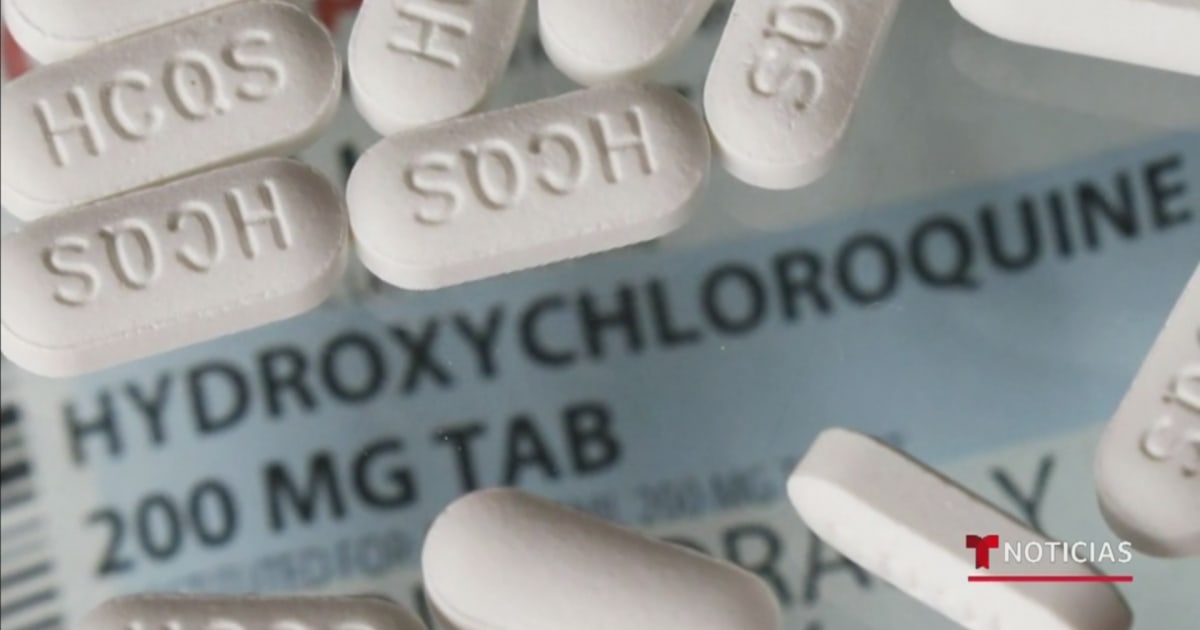
"Muchos estados le han dado la autoridad a sus farmacéuticos para que no respeten las prescripciones médicas”.
Publisher’s rating: Engañoso
Indonesia sudah borong vaksin Covid-19 dari Cina meski WHO sebut belum ada vaksin resmi
Publisher’s rating: Sesat
«Hör auf, dich testen zu lassen, wenn du nach 2021 leben möchtest», warnen Facebook-Postings, die seit Tagen vielfach geteilt und kommentiert werden. Gemeint ist der Corona-Test, dessen Grundlage zumeist ein Abstrich des Nasen-Rachen-Raumes ist. Die Einführung des Stäbchens sehr tief in die Nasenbahnen verursache nämlich nicht nur Schmerzen, sondern eine «hämato-enzephalische Barriereschädigung der Schädeltiefe», heißt es in den Postings weiter. So entstehe ein direkter Zugang zum Gehirn, durch den Bakterien ungehindert eindringen und lebensbedrohliche Entzündungen verursachen könnten. Eine mehrteilige Grafik, die veranschaulicht, wo der Abstrich entnommen wird und vermeintliche Verletzungen auftreten könnten, flankiert oft die Beiträge. Die Postings kursieren in verschiedenen Versionen.
Publisher’s rating: Ein Nasenabstrich verursacht keine Schädigung der Blut-Hirn-Schranke. Das Hirngewebe ist zusätzlich von einer Knochenschicht umgeben, die ein Abstrichtupfer unmöglich durchbohren kann.
The posts at issue warn that a deep nasal swab could damage the blood-brain barrier and create a route for bacteria to enter the brain. The review addresses those specific posts and the graphic accompanying them, and compares their implied anatomy with explanations from Wolfgang Wagner, an ear, nose and throat specialist and chief physician at Munich Clinic Schwabing. It describes the blood-brain barrier not as a boundary between the throat and brain, but as specialized cells lining blood vessels around and supplying brain tissue. Wagner says that a swab cannot reach or disable this barrier. The decisive anatomical point in the review is that bone separates the mucous membrane of the deep nasal passages and adjoining nasopharynx from brain tissue. Wagner states that a swab cannot pierce this bone. The review therefore rejects the posts’ proposed mechanism: a nasal swab cannot make the direct passage to the brain that the posts claim. It also explains why swabs are taken from deeper nasal sections: the review says the nose is usually an entry point for the virus and that its concentration there is relatively high. The review qualifies the posts’ claim that swabbing is necessarily painful. Wagner says discomfort is expected when there are narrow areas in the nose, but that a cautiously performed swab is not particularly unpleasant otherwise. These are distinct points: the review disputes the asserted brain injury and bacterial route, while acknowledging that swabbing can cause discomfort in some circumstances.
Een persconferentie van een groep artsen – die zichzelf 'America's Frontline Doctors' noemt – ging op maandag de wereld rond. In het filmpje op sociale media beweren de 11 artsen dat het middel hydroxychloroquine het medicijn is tegen COVID-19. Ze roepen de ziekenhuizen ook massaal op om het middel te gebruiken bij de behandeling. Verder maken de artsen verschillende claims over de besmettelijkheid van kinderen en het gebruik van supplementen als zink in de behandeling tegen het coronavirus. Maar wat klopt er precies aan dat verhaal?
Publisher’s rating: De artsen maken heel wat foute claims. Er is geen wetenschappelijk bewijs dat hydroxychloroquine en zink helpen in de behandeling tegen COVID-19. Ook is het niet uitgesloten dat kinderen het virus kunnen doorgeven. Verschillende Amerikaanse media hebben ook aangetoond dat de artsen zich in het verleden meermaals tegen de maatregelen hebben geuit.
Tes PCR tidak bisa membedakan terpapar dengan terinfeksi, sehat dengan sakit, serta virus hidup dengan virus mati
Publisher’s rating: Sesat

Video of nurses and medical staff protesting at a Government hospital in Telangana state.
Publisher’s rating: FALSE
The claim concerns a video of nurses and medical staff protesting over inadequate protective equipment and staffing, presented as showing a Government hospital in Telangana. FACTLY’s review identifies the protest as taking place at Government General Hospital in Tenali, in Andhra Pradesh—not Telangana. The location is central: the review says the video depicts a real protest, but the state attributed to it in the claim is wrong. (“A video showing a protest of nurses is being widely shared on Facebook claiming it to be the situation at a Government hospital in Telangana state.” “The video is of nurses and medical staff of Government General hospital in Tenali protesting due to the lack of sufficient medical equipment and hospital staff. The hospital is in Guntur district of Andhra Pradesh state.”) The review describes how it checked the video: searching YouTube with keywords based on the incident led to an ETV Andhra Pradesh news video. According to FACTLY’s account of that report, staff at the Tenali hospital protested outside the hospital over shortages of PPE kits, gloves, masks, and staff. FACTLY says it found the same information in an ANI article as well. (“When we searched on Youtube with keywords based on the incident in the video, a news video of ‘ETV Andhra Pradesh’ was obtained in the results.” “As per the news video, nurses and medical staff of Government General hospital in Tenali have protested outside the hospital complaining about the lack of sufficient medical equipment like PPE kits, gloves, masks and also hospital staff. The hospital is in Guntur district of Andhra Pradesh state.” “The same information was found in an article of ‘ANI’.”) The evidence therefore does not establish that the footage is fabricated or that no protest occurred. It establishes that the protest shown was at a hospital in Tenali, Guntur district, Andhra Pradesh, rather than at a hospital in Telangana. FACTLY consequently rates the state attribution in the claim false. (“The hospital is in Guntur district of Andhra Pradesh state. Hence the claim made in the post is FALSE.”)
കോഴിക്കോട് ജില്ലാ കളക്ടര് പുറത്ത് വിട്ട കോവിഡ് മാര്ഗനിര്ദേശങ്ങള്.
Publisher’s rating: FALSE
In einem Beitrag auf Facebook wird behauptet, es gebe «Kein Corona mehr seit 13 April 2020». Angehängte Berichte des Robert Koch-Instituts (RKI) sollen belegen, dass seitdem keine Nachweise des Coronavirus mehr verzeichnet worden seien
Publisher’s rating: Die Behauptung stützt sich auf Aussagen über Coronavirus-Meldungen aus der Influenza-Beobachtung des RKI, die nur einen kleinen Teil der Infektionsmeldungen an das Institut ausmacht. Insgesamt wurden dem RKI seit April Zehntausende Covid-19-Fälle gemeldet.
The Facebook post used excerpts from RKI reports to claim that coronavirus had ceased to exist after 13 April 2020. The original review identifies the highlighted passage as coming from page 12 of the RKI’s daily coronavirus situation report dated 25 June. It says the passage referred to the 16th calendar week, which began on 13 April that year, but concerned reports from one particular RKI network—not all infections in Germany. That network, the RKI’s Influenza Working Group (AGI), consists of sentinel medical practices that monitor acute respiratory illness and influenza. The review explains that the reports described coronavirus findings within this influenza-monitoring system. The RKI’s influenza monthly report said sentinel samples had been tested for SARS-CoV-2 since the eighth calendar week; across that system, only 13 positive cases had been reported. Thus, the absence of further reports from AGI after the 16th week did not establish that infections had stopped across the country. The review distinguishes AGI reporting from the principal route for reporting coronavirus infections: local health authorities, which receive reports from doctors and laboratories. It cites 633 new cases recorded by the RKI on 28 July compared with the previous day. It also reports that Germany’s cumulative total rose from 128,854 cases on 13 April to 206,926 by 28 July. These figures concern nationwide case reporting and directly contradict interpreting the limited AGI finding as evidence that there had been no coronavirus since 13 April.
"Estas medidas (bloqueos y reaperturas) moderadas no son inventadas. Está sucediendo en Suecia, y sus muertes son aproximadamente 564 por millón. Reino Unido, cierre total, 600 muertes por millón. Así que estamos viendo que las cuarentenas no están disminuyendo significativamente la cantidad de muertes por millón”.
Publisher’s rating: Mayormente falso
Seit Beginn der Coronavirus-Pandemie wird immer wieder behauptet, es gebe einen Zusammenhang zwischen dem neuen Mobilfunkstandard 5G und dem Aufkommen des Virus. Nun soll angeblich eine US-Behörde bestätigen, dass 5G-Strahlung die Viruserkrankung Covid-19 auslöse, wird in einem Artikel behauptet.
Publisher’s rating: Die vermeintliche Studie wurde in einer wissenschaftlichen Online-Bibliothek des «National Institutes of Health» hochgeladen, jedoch wieder zurückgezogen. Es gibt keinen Beleg dafür, dass die Behörde selbst etwas mit dem Artikel zu tun hat. Dessen Gehalt wird in der Fachwelt zudem stark angezweifelt.
The claim concerned an article titled “5G Technology and induction of coronavirus in skin cells,” which was presented online as evidence that a US authority had confirmed that 5G radiation causes COVID-19. The review traced the article’s appearance to July 16, 2020, on the National Center for Biotechnology Information website. That center belongs to the National Library of Medicine, which is part of the National Institutes of Health; however, the article was subsequently marked as withdrawn and was no longer available there as of July 28, 2020. The review also checked the publication route and the article’s other listed location. It says the manuscript appeared in PubMed Central through a journal, the Journal of Biological Regulators and Homeostatic Agents, and that the article had also been deleted from the journal’s site. The National Library of Medicine told the agency that it had raised scientific concerns with the journal and asked it to review the article, after which it was withdrawn. The review explains that an item’s presence in the library’s collections does not mean the NLM or NIH endorses, approves, or supports its contents. Finally, the review reports checking an archived abstract and the article’s full-text PDF for evidence of NIH involvement. It found no reference to NIH support or substantive backing in either. It also notes that other scientists strongly questioned the article’s content. Together, these details distinguish the article’s temporary appearance in an NIH-associated database from confirmation or endorsement by the agency; the evidence described does not support the claim that a US authority confirmed that 5G causes COVID-19.
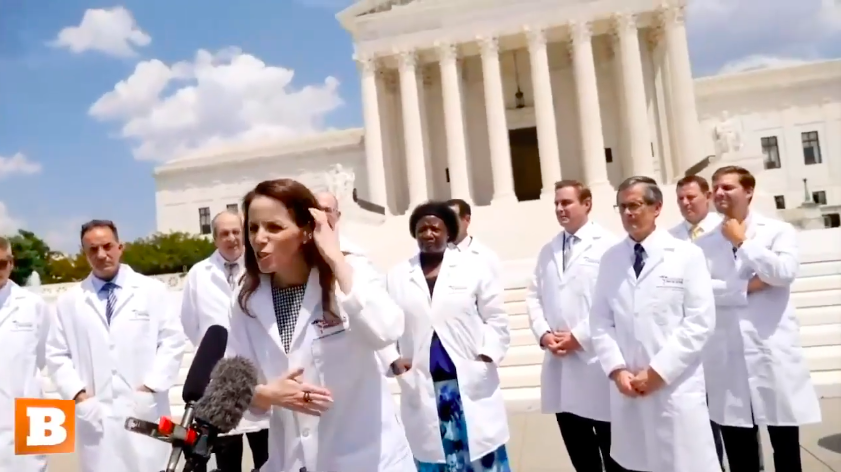
"So the case number is almost irrelevant. And that’s because there’s a lot of inaccuracies with the testing. And also even if the test is accurate, most people are asymptomatic or mildly symptomatic. So it’s not that important to know."
Publisher’s rating: Ignores how virus spreads