PeakMetrics / Fact Checks
Health & medicine fact checks
Explore claims publishers have checked about health & medicine. Read their original ratings and follow the evidence.
Search fact checks
Search by text or image13,675 published reviews in this topic

Video yang berisi klaim-klaim terkait Covid-19 oleh Aliansi Dokter Dunia
Publisher’s rating: Keliru

IDH රෝහලෙන් කොරෝනා වෛරසයේ PH අගය සම්බන්ධයෙන් නිවේදනයක් නිකුත් කලේ නැත! | False statement attributed to IDH Hospital about pH value of COVID-19
Publisher’s rating: False
The review says IDH Hospital confirmed it had not issued the circulated advisory about COVID-19 and pH. It also reports that an expert said the virus has no pH value, so the claim that alkaline foods can prevent COVID-19 is unfounded.
Die Zuverlässigkeit der PCR-Tests zum Erkennen von Corona-Infektionen wird von Kritikern immer wieder infrage gestellt. Nun kursiert die These, der Erreger Sars-CoV-2 sei bisher nicht isoliert untersucht worden. Damit fehle es an einem wissenschaftlichen Nachweis des Virus. Als vermeintlicher Beleg dafür wird etwa in einem Facebook-Post (hier archiviert) ein Papier der US-Gesundheitsbehörde CDC herangezogen.
Publisher’s rating: Falsch. Sars-CoV-2 ist wissenschaftlich belegt. Das CDC-Papier wird irreführend interpretiert.
The claim concerned a Facebook post citing a US Centers for Disease Control and Prevention (CDC) document as evidence that SARS-CoV-2 had never been isolated, and therefore lacked scientific proof. The review identifies the document as a July 2020 paper about PCR testing. It says the paper did not deny that the virus had been isolated: it described how test accuracy was assessed, including the use of artificially made genetic material rather than material from isolated virus for that particular assessment. The distinction was the purpose of the test material. According to the review, researchers lacked virus samples with a precisely measured quantity for this test evaluation. Measuring how little viral material a PCR test could detect required knowing the quantity in the sample; the review says an equivalent quantity of artificially produced genetic material was used instead. That testing choice does not establish that virus stocks did not exist or that the virus had never been isolated. The review also points to isolation and research outside the CDC paper. It reports that Chinese researchers isolated the virus, decoded its genome, and published results in January 2020, with subsequent isolation work reported from other countries. It quotes virologist Ralf Bartenschlager as saying the virus had been isolated, sequenced and characterized many times. Taken together, the review’s account distinguishes a limited choice of material for one PCR accuracy study from the broader scientific record of virus isolation and characterization.

Felicitation video of Kodagu district collector for controlling COVID-19
Publisher’s rating: FALSE
The claim concerned a video of a woman greeted by a group, said to show people in Kodagu district felicitating their collector for measures to control COVID-19. FACTLY’s review identifies the woman instead as Naziya Begum, an associate of the Safe Shop India e-commerce company, and says she is not Kodagu district’s collector. The video therefore does not show the claimed felicitation of the collector. [S1]


మెదడు దెబ్బతినే 7 అలవాట్ల జాబితాను WHO విడుదల చేసింది.
Publisher’s rating: FALSE
The claim concerns a social-media image attributing to the World Health Organization a list of seven habits said to damage the brain. The Vishvas News investigation says the image carried WHO’s logo, but concludes that the list was wrongly attributed to the organization. It reports that WHO did not share the list, based on information obtained after Vishvas News contacted the organization and spoke with a technical officer for health emergencies. The article also notes that the same claim had circulated in 2017 without the WHO logo and attributed to another organization. (The source describes that earlier circulation, but does not identify the other organization in the supplied text.) The review describes several checks: it examined the viral image’s wording, searched online for the claim’s history, contacted WHO, and assessed the individual health claims using sources it identifies as NIH, Harvard Medical School, the National Library of Medicine, and medical professionals. Its central distinction is that the listed habits were not shown to directly damage the brain; the article says some habits, when excessive, may nevertheless contribute to other health problems. It therefore does not treat possible health concerns as evidence that WHO issued the list or that each habit directly causes brain damage.


Brasil pode ser o primeiro país relevante do mundo a alcançar a imunidade de rebanho
Publisher’s rating: ENGANOSO: A imunidade de rebanho sem uma vacina não é apoiada pela comunidade científica, tampouco tem eficiência comprovada — por não haver provas de sua eficácia e por não existir um local que tenha usado o recurso com sucesso. Além disso, não existem dados suficientes para afirmar que a queda de infecções e de mortes por coronavírus no Brasil seja consequência da imunidade de rebanho
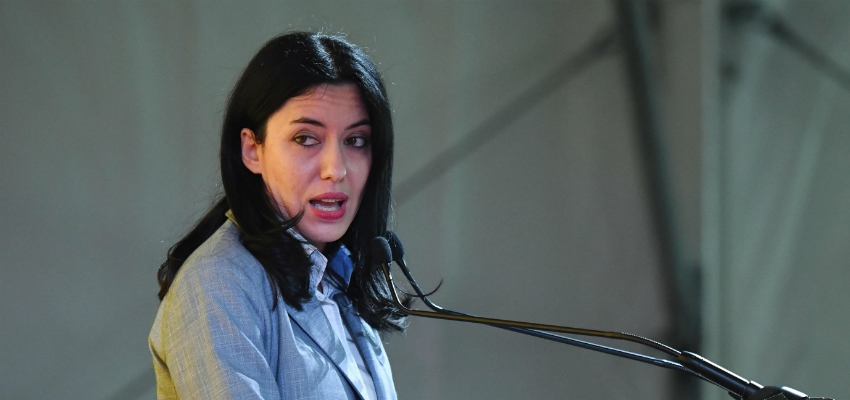
«L’Italia in questo momento nelle scuole ha il 3,5 per cento di focolai. In Francia abbiamo il 32 per cento nelle scuole» (min. 9:04)
Publisher’s rating: Pinocchio andante
The claim concerns remarks by Italy’s education minister, Lucia Azzolina, on the 25 October episode of Rai 3’s Che tempo che fa. She compared the share of outbreaks linked to schools in Italy and France, saying the figures were 3.5 per cent and 32 per cent. Pagella Politica checked the figures against Italian Health Ministry monitoring data and French public-health agency data, and concluded that the figures were not directly comparable. For Italy, the review reports that 3.5 per cent referred to school-linked transmission among 1,286 new outbreaks recorded from 12 to 18 October. It distinguishes that weekly measure from the 7,625 outbreaks active during the same week, and notes that about 82 per cent of the new outbreaks were linked to households. The review also cautions that the underlying report was not publicly available, although it says the figure appeared to be supported by official statistics. For France, the review cites 814 school- and university-linked outbreaks among 4,365 recorded from the beginning of May through 12 October, or 18.7 per cent. Including 376 outbreaks still under investigation gives 1,190 of 5,861, or 20.3 per cent. The French measure used a different outbreak definition, covered a longer period, and excluded household transmission—unlike the Italian count. The review says the 32 per cent figure came from an older count of outbreaks under investigation, with additional exclusions. It estimates that removing household outbreaks from the Italian figures would put the school-linked share at about 18 per cent, closer to the French figures, while noting that the comparison remains approximate.

Il y a plus de 20 suicides par jour au Québec en raison de la pandémie
Publisher’s rating: FAUX
Drinking boiled or pureed serpentina leaves can kill all the cancer cells in your body within 24 hours of intake.
Publisher’s rating: False

URGENTE! MÉDICO RESOLVE ABRIR O JOGO E EXPÕE TODA VERDADE SOBRE VACHlNA CHlNESA É DE ARREPIAR
Publisher’s rating: Falso
Gegner der Corona-Maßnahmen argumentieren seit langer Zeit, dass Covid-19 angeblich nur so gefährlich wie eine gewöhnliche Grippe sei. Das soll nun sogar die Weltgesundheitsorganisation (WHO) bestätigt haben. Die Sterblichkeitsrate liege angeblich weit unter den im Frühjahr von der WHO kommunizierten Zahlen, so Postings auf Facebook (hier archiviert).
Publisher’s rating: Die WHO hat nicht behauptet, dass das Coronavirus höchstens so gefährlich wie die Grippe sei. Die von ihr erwähnten Zahlen lassen derartige Rückschlüsse nicht zu. Zudem sind die Ergebnisse der damit angestellten Rechnungen nicht mit Werten der WHO aus dem Frühjahr vergleichbar. Studien weisen auf eine deutlich höhere Sterblichkeit bei Covid-19 als bei der Grippe hin.

Pessoas com mais de 50 anos de idade. S.A.D.A.I. é a Síndrome de Atenção Desviada Ativada pela Idade.
Publisher’s rating: Falso
Aus dem Internet in die Briefkästen: Deutschlandweit werden Flyer verteilt, auf denen die Gefahr durch das Coronavirus kleingeredet wird. Auf dem Flugblatt mit dem Titel «Positiv ist nicht krank» zum Beispiel verbreitet der Aktivist Bodo Schiffmann, die Pandemie werde allein durch die hohe Anzahl der Tests am Leben gehalten. «Der Anstieg der positiven Fälle entsteht nur, weil zu viel getestet wird», heißt es auf dem Infoblatt (hier archiviert).
Publisher’s rating: Seit August gibt es wöchentlich in etwa gleich viele Tests, dennoch werden immer mehr Infektionen entdeckt.

"Not one single person with private insurance" lost their insurance "under Obamacare … unless they chose they wanted to go to something else."
Publisher’s rating: Inaccurate
Penonton di bioskop saat pandemi Covid-19 wajib keluar studio tiap 30 menit
Publisher’s rating: Keliru

WhatsApp Info: * Italy is the first country to perform a post-mortem (autopsy) on a dead body since Covid-19, and after extensive investigation it was found that Covid-19 is not a virus, but rather it is a huge global fraud. People are actually dying because of “multiplied global 5G electromagnetic radiation (poison)”. * Doctors in Italy have violated World Health Organization (WHO) law that not to allow autopsies on corpses of people dying from the corona virus, so after some scientific discovery and investigation, they discovered it is not a virus, but a bacterium that causes death in the veins Blood vessels form, i.e., due to this bacterium, blood accumulates in the veins and veins causing this patient to die.
Publisher’s rating: Fake