PeakMetrics / Fact Checks
Health & medicine fact checks
Explore claims publishers have checked about health & medicine. Read their original ratings and follow the evidence.
Search fact checks
Search by text or image13,675 published reviews in this topic

Seringa falsa , com agulha retrátil ! Lembra ! Ou a agulha fica dentro da pessoa ! Tirando todo o mundo de otário !
Publisher’s rating: Falso

There is "not a real medical pandemic"
Publisher’s rating: This is false.
The review describes a video making two claims: that there is “not a real medical pandemic” and that coronavirus vaccines are not proven safe or effective because there has not been enough time. It says both claims are untrue. In the supplied excerpt, however, it does not present separate evidence about the pandemic claim itself; its detailed evidence addresses the video’s vaccine-safety allegations and related claims. On vaccine development, the review reports that safety steps were not skipped despite the unusually fast timetable. It explains that trial stages overlapped: phase three, involving tens of thousands of participants, began while phase two, involving a few hundred, was still underway. The excerpt also says Pfizer-BioNTech, Moderna and Oxford/AstraZeneca vaccines had been tested in animals and thousands of people before they could be considered for licensing. This supports the review’s rebuttal of the video’s vaccine claims, but the excerpt does not give further evidence for its brief conclusion about the pandemic claim.
Because of the pandemic, the pharmaceutical industry has been given permission to "skip the animal trials...we humans will be the guinea pigs."
Publisher’s rating: This is false. The Pfizer BioNTech, Moderna and Oxford/AstraZeneca vaccines have all been tested in animals as well as thousands of people, before they could be considered for licensing.

Falando da tal vacina. vejam o caso dessa enfermeira que acaba de tomar a vacina já passa mal e desmaia,
Publisher’s rating: Falso
One of the first nurses to recieve the vaccine in Alabama is now dead
Publisher’s rating: There is no evidence to supoort this claim. Responding to rumours on social media, public health authorities in Alabama contacted all vaccine-administering hospitals in the state and "confirmed there have been no deaths of vaccine recipients. The posts are untrue."
The coronavirus vaccine is not proven safe or effective because there "has not been enough time".
Publisher’s rating: This is not correct. Any vaccine approved for use against coronavirus will have been rigorously tested for safety and efficacy. It's true Covid-19 vaccines have been developed at a remarkable pace, but none of the steps needed to ensure safety have been skipped.

Tiffany Dover, enfermeira que passou mal ao tomar a vacina ao vivo nos EUA veio a óbito
Publisher’s rating: Falso
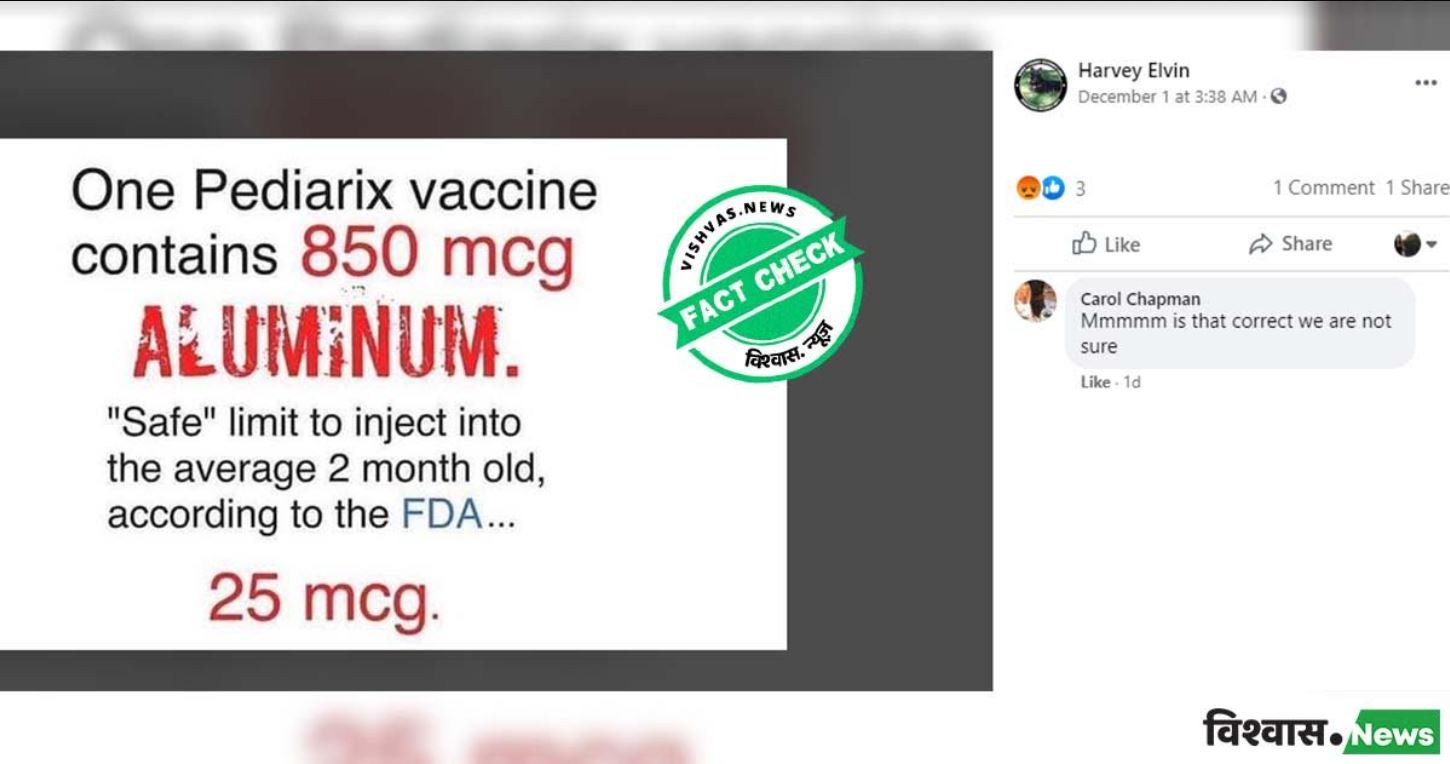
इस वैक्सीन से शिशुओं में जरूरत से कई गुना ज्यादा एल्युमीनियम की डोज दी जाती है,
Publisher’s rating: Misleading

Stf impediu alegando que é inconstitucional obrigar alguém a tomar vacina.
Publisher’s rating: Falso
Erst der Lockdown light, dann der harte Lockdown - über die aktuellen Maßnahmen zur Bekämpfung der Corona-Pandemie wird viel diskutiert. In Beiträgen in sozialen Netzwerken vom Dezember wird der Virologe Hendrik Streeck mit der Forderung nach einer Rückkehr zur Lebensnormalität zitiert (hier archiviert). Es werde nicht einmal durch den härtesten Lockdown gelingen, das Virus zu besiegen, soll er gesagt haben. «Endlich redet er klartext» (sic!), kommentieren Nutzer dies.
Publisher’s rating: Die Aussagen des Virologen sind aus dem zeitlichen Zusammenhang gerissen. Sie stammen von Anfang Oktober 2020 und beziehen sich nicht auf die aktuelle Situation.
The posts presented comments by virologist Hendrik Streeck as a response to the restrictions in force in December 2020, including a call to return to normal life and the claim that even the strictest lockdown could not defeat the virus. The review traces the quoted remarks to an article by publisher Wolfram Weimer dated October 5, 2020, which reported what Streeck said at the “Neu Denken” economic forum in Hamburg. The forum took place from October 1 to 3, so the remarks predated the December restrictions and did not address that situation. The review explains why that timing matters: it reports about 2,500 new confirmed cases on October 1, compared with about 13,600 on December 1, citing Robert Koch Institute figures. It also notes that, in a December 16 interview with Münchner Merkur, Streeck described stricter restrictions as a right way to reduce the high number of new infections, while maintaining that restrictions without a long-term strategy were insufficient. The evidence therefore distinguishes the earlier remarks from his later comments and from the December conditions, rather than treating the earlier quotations as his response to the measures then in place.
Seit Längerem kursieren im Netz Verschwörungstheorien, die hinter dem Rachenabstrich für die Testung auf das Coronavirus einen chirurgischen Eingriff oder die Implantation eines Chips vermuten. Derzeit wird auf Facebook ein Sharepic verbreitet, das einen vermeintlichen historischen Beleg für eine missbräuchliche Intention der Probenentnahme anführt. «In Ägypten war das eine Strafe für Slaves», wird dort in Verbindung mit einer ägyptischen Illustration behauptet. Im Text wird eine «Drüse der Blutenzephalitis» erwähnt und auf die wichtige Funktion der «Blut-Gehirn-Barriere» zum Schutz des Hirns hingewiesen. Eine Userin kommentiert das Sharepic in einem Posting (hier archiviert) mit: «Der Test ansich(sic!) ist schon vorsätzlicher Mord».
Publisher’s rating: Die Illustration zeigt eine Augenbehandlung im alten Ägypten und keine Strafe für Sklaven.
The review investigated a Facebook sharepic that presented an Egyptian illustration as evidence that coronavirus swab testing had a harmful purpose. The image was accompanied by claims about a supposed punishment for enslaved people and about a “blood-brain barrier.” The review also noted a commenter’s assertion that the test was deliberate murder. Its investigation focused on whether the image and the sharepic’s medical-sounding language supported those claims. The review reports that searches for terms including “Drüse der Blutenzephalitis,” “Mondanta Hohl” and “Hematoenzephalitis” returned no suitable results. It suggests the wording may have come from text translated automatically more than once. It also says the images do not substantiate the sharepic: the illustration connected to Egypt was not a punishment but an eye treatment, while the other image depicts pathogens entering the brain and shows them only at its lower edge. The review adds that an earlier dpa fact-check had addressed the claim that coronavirus testing damages the blood-brain barrier. For the Egyptian image, the review cites Friedhelm Hoffmann, head of the Institute of Egyptology and Coptology at Ludwig Maximilian University of Munich. Hoffmann said the picture was unrelated to the blood-brain barrier and was likely about treating an eye problem; a wood splinter may have entered the depicted worker’s eye. He also distinguished the modern illustration from the ancient scene on which it was based: the original, in poor condition, is in the tomb of Ipi. The review says a specialist book captions the scene as the apparent removal of a foreign object from an eye.
Rund um die Corona-Pandemie kursieren etliche Verschwörungstheorien. In sozialen Netzwerken wird beispielsweise ein Video geteilt, in denen es um ein Gerücht zur Corona-Impfung geht. «Geldgierige Geschäftsleute um Microsoftgründer Bill Gates wollen das nutzen, um der Menschheit einen Mikrochip einzupflanzen», heißt es darin. Das Video scheint ein Ausschnitt aus der Sendung «Galileo» bei ProSieben zu sein, wie anhand der eingeblendeten Logos zu erkennen ist. «Galileo verbreitet Verschwörungstheorien!», kommentieren Nutzer das Video
Publisher’s rating: Der Ausschnitt ist aus dem Kontext gerissen und wirkt dadurch missverständlich. Die Sendung nennt das Gerücht als Beispiel für verbreitete Verschwörungstheorien. Das Phänomen wird jedoch journalistisch aufgearbeitet und von Experten eingeordnet.
The review investigated a video shared on social media that appeared to come from ProSieben’s «Galileo» and showed a claim about Bill Gates and a microchip being inserted through vaccination. Viewers used the clip to accuse the programme of spreading a conspiracy theory. The review identifies it as an excerpt from the «Galileo Spezial» episode «Unterm Aluhut - warum Verschwörungstheorien boomen», broadcast on 13 December 2020, and explains that the clip’s removal from its surrounding discussion made the programme’s purpose misleadingly unclear. «ProSieben hat die Vorwürfe zurückgewiesen», the review reports, quoting the broadcaster’s spokesperson as saying that experts critically assess the scenes in the original programme. The surrounding segment is central to the review’s conclusion. Before the viral excerpt, a worker from a counselling centre discusses psychological reasons for the spread of conspiracy theories. The programme then describes how such theories can help people manage fear of an unknown virus, while warning that it becomes problematic if people refuse vaccination. The video’s dramatic scene—a vaccination tent, armed soldiers and a sign referring to compulsory Covid-19 vaccination—is presented as an illustration of a theory, not as factual reporting that the theory is true. The review also supplies the full narration accompanying the scene: «Die Theorie hier: Wir sollen aus Angst vor dem Virus dazu gezwungen werden, uns impfen zu lassen.» It continues by describing the alleged microchip plot as part of that theory. In context, the review says, «ProSieben verbreitet hier also keine Verschwörungstheorien, sondern versucht, deren Ursachen mit Hilfe von Fachleuten zu analysieren.» The accusation rests on a clip that omits that framing and the expert discussion around it.
Ein Video soll beweisen, dass Antigentests sehr unzuverlässig sind und sogar bei absurden Proben zu positiven Ergebnissen führen. Angeblich reicht dafür Apfelmus aus. Ein Beitrag eines Users (hier archiviert) kommentiert das Video mit: «Gefährlichster Apfelmus der Welt hat Corona!!!». Ein anderer User (hier archiviert) meint ebenfalls: «Apfelmus hat Corona».
Publisher’s rating: Der Antigentest liefert selbst bei einem sichtbarem Teststreifen bei Apfelmus kein technisch korrektes positives Ergebnis. Das säurehaltige Mus zerstört lediglich die Struktur der Proteine des Teststreifens und macht so die Farbpartikel sichtbar.
The review examines a video presented as evidence that an antigen test could return a positive result from apple purée, alongside social-media posts claiming that the purée had COVID-19. It notes an important limitation in interpreting the footage: the video is unclear, and it is not possible to tell whether a test line is absent or faint. The review therefore considers the possibility of two visible lines, while explaining that the test instructions treat even faint or uneven test lines as positive when interpreting a properly conducted test. This does not establish that the apple purée contained the virus. To explain the apparent line, the review describes the test strip as having a membrane with a control line and a test line, both invisible before the test is read. It says that antibodies—proteins linked to colored particles—are present around the test line. In a human sample containing viral antigens, these produce a visible line. But the review also cites apple purée’s acidity, reporting a pH range of 3.1–3.6, and explains that acid can damage the proteins on the strip and make the colored particles visible. A visible mark caused this way is not evidence that viral antigens were detected. The review identifies a further procedural issue: the test sample should be mixed with extraction buffer before being applied to the strip. It says the buffer helps prevent substantial pH changes. Thus, the footage’s ambiguous line and the possibility of an acidic sample disrupting the test do not support the social-media interpretation that the test demonstrated COVID-19 in apple purée.

Jarosław Fiebig przedstawił zdjęcia manekinów sugerując, że zamiast pacjentów na COVID leczone są manekiny.
Publisher’s rating: Fałsz

Die Corona-Pandemie führte auch im Herbst zu keiner Übersterblichkeit in Österreich und anderen europäischen Ländern.
Publisher’s rating: Die Corona-Pandemie hat im Herbst zu keiner generellen Übersterblichkeit in allen Ländern geführt, die Situation hängt aber stark vom jeweiligen Land ab. Betrachtet man die Übersterblichkeit im Herbst, zeigt sich deutlich, dass diese zwar in Ländern wie Österreich oder Italien zu bemerken ist, jedoch nicht in Deutschland oder Schweden. Auf das ganze Jahr gesehen wird es zu einem leichten Plus bei der Übersterblichkeit in Österreich kommen.
The claim under review was that the pandemic had caused no excess mortality in Austria and other European countries during autumn. The APA investigation examined death records and mortality-monitoring data, including comparisons with recent years and with other European countries. Its findings show that the claim does not fit the reported autumn picture for Austria: Euromomo classified the country as experiencing very high excess mortality from 9 November, and the reported weekly death totals rose substantially above the five-year average. The review cites Statistics Austria figures showing that 2,445 people died in Austria in the week of 23–29 November, more than half above the average for the previous five years. It also reports that, across the five weeks from 19 October to 22 November, deaths were 36% above that average. These comparisons are the investigation’s direct evidence that the autumn pattern in Austria was not one of no excess mortality. The claim also refers broadly to other European countries, but the review describes differing national patterns rather than a uniform result. It reports autumn excess mortality in Switzerland, Slovenia, Italy, France and Belgium, while saying Denmark and Germany had no excess mortality over the year according to the cited comparisons. Thus the evidence distinguishes countries and periods: it does not support a blanket assertion covering Austria and other European countries.
Wie viele Menschen sind im Pandemie-Jahr 2020 gestorben? Eine Tabelle mit dem Titel «Sterblichkeit in den verschiedenen Ländern auf Jahressicht», die in sozialen Medien geteilt wird, scheint auf den ersten Blick eine Antwort darauf zu geben - unter anderem für Deutschland (hier archiviert). Demnach starben 2019 exakt 939 520 Menschen - im Jahr 2020 hingegen erst 838 484. Für beide Werte sind Links als Quellen angegeben. Als Stand ist der 13. Dezember 2020 verzeichnet, 14 Uhr.
Publisher’s rating: Nur die Werte bis 2019 beruhen auf tatsächlichen Zählungen. Die Zahl für 2020 stammt von einer Seite der Vereinten Nationen mit Schätzungen aus dem Jahr 2019 - also vor Beginn der Corona-Pandemie.
The claim concerns a social-media table that presents Germany’s 2019 and 2020 death totals as 939,520 and 838,484, respectively, with a status time of December 13, 2020. The investigation traced the figures to different kinds of sources rather than treating them as comparable final counts. For 2012–2019, the table used Statista figures. The review says most of those matched, while the entries for 2016 and 2017 differed slightly. It explains that Statista’s graphic was based on figures from Germany’s Federal Statistical Office, whose data are compiled from electronic notifications of deaths sent by registry offices to state statistical offices. The 2020 figure, by contrast, came from Countrymeters’ population clock. The review reports that this running estimate showed more than 850,400 deaths at 13:00 on December 18—already about 12,000 above the table’s figure from five days earlier—and was continuing to rise. Countrymeters’ projections were based on UN calculations; the linked UN material, World Population Prospects 2019, used earlier source data and estimates for subsequent years. The review therefore finds that the table’s 2020 number was not a completed count of deaths in 2020 and could not establish the pandemic’s effect on mortality.

China compra vacinas da Austrália e não usará a que fabricou
Publisher’s rating: FALSO: A China já usa suas próprias vacinas em grupos de profissionais em alto risco e há ao menos 13 imunizantes em desenvolvimento no país. Além disso, chineses aguardam os resultados da fase 3 da Coronavac que estão sendo realizados no Brasil pelo Instituto Butantan.


China compra um bilhão de vacinas da Austrália nem eles vão tomar a própria vacina mais você que tá lendo vai
Publisher’s rating: Falso