PeakMetrics / Fact Checks
Health & medicine fact checks
Explore claims publishers have checked about health & medicine. Read their original ratings and follow the evidence.
Search fact checks
Search by text or image13,674 published reviews in this topic
Volgens een bericht op Facebook zouden twaalf mensen in Kenia zijn overleden nadat ze "het vaccin" toegediend hadden gekregen. Het Afrikaanse land startte op 1 januari met het vaccineren met hetzelfde vaccin dat in Nederland is goedgekeurd, zegt de facebookgebruiker in de week dat in Nederland de eerste mensen met een covid-vaccin zullen worden ingeënt.
Publisher’s rating: Hier is niets van waar. Kenia is nog niet begonnen met het vaccineren tegen het coronavirus. Daarbij is het door Kenia bestelde AstraZeneca vaccin ook nog niet goedgekeurd voor Nederland.
Een facebookgebruiker deelt in een post een lange lijst medische aandoeningen met daarbij de tekst dat dit volgens de FDA bijwerkingen zijn van het Pfizer Covid-19 vaccin. Op de lijst staan onder andere beroertes, het syndroom van Guillain-Barré en de Ziekte van Kawasaki. De facebookgebruiker voegt aan de lijst met aandoeningen toe dat het Pfizer vaccin uit twee injecties bestaat: “Het eerste shot is acetaminophen, het wordt toegediend om te proberen de ernstige bijwerkingen van het tweede shot, het vaccin, te verlichten,” schrijft zij. Kan deze lange lijst met ernstige kwalen inderdaad in verband worden gebracht met het Covid-19 vaccin?
Publisher’s rating: De uitleg van de facebookgebruiker over wat de twee injecties van het Pfizer vaccin doen klopt niet. In beide injecties zitten dezelfde ingrediënten, waar acetaminophen er niet één van is.
The post combines two claims: that a long list of serious conditions consists of FDA-identified side effects of the Pfizer Covid-19 vaccine, and that the first of the vaccine’s two injections contains acetaminophen to ease side effects from the second. The review says the conditions do appear on a list used in FDA safety monitoring, but that list is not a catalogue of established vaccine side effects. Its purpose is to flag conditions for closer investigation after vaccination; a report of a condition is a reason to investigate a possible relationship, not proof that the vaccine caused it. The review notes that the Facebook list corresponds to conditions in an FDA safety-monitoring protocol for the Pfizer/BioNTech vaccine. [S1: “De onderzoekers gebruiken lange lijsten met aandoeningen waar zij extra aandacht aan besteden bij het onderzoeken van de veiligheid van het vaccin.”; “De aandoeningen op deze lijst komen overeen met de lijst die de facebookgebruiker deelt.”; “De meldingen van gezondheidsproblemen die via VAERS binnenkomen hoeven niet gelijk bijwerkingen te zijn van het vaccin.”] The post’s explanation of the injections is also contradicted by the review: it says both doses have the same dose and ingredients, and that acetaminophen (paracetamol) is not among them. The first injection therefore is not a different, acetaminophen-containing dose intended to counteract the second. In the review’s account, a condition qualifies as a side effect only when scientific research links it to the vaccine; the monitored list alone does not establish that link. [S1: “Beide prikken zijn van dezelfde dosis, met dezelfde ingrediënten. Acetaminophen, ook wel paracetamol, is niet een van deze ingrediënten, zoals de Facebookgebruiker beweert.”; “Een symptoom of aandoening is pas een bijwerking als het met wetenschappelijk onderzoek kan worden gelinkt aan het vaccin, verklaart de FDA.”]

Il y a eu moins de morts en 2020 qu'en 2019 au Québec
Publisher’s rating: FAUX

COVID-19 vaccine causes infertility in men
Publisher’s rating: The COVID-19 vaccine does not cause infertility; the rumour is unfounded and has no scientific evidence backing the claim.
Das Video eines Polizeiautos macht unter Impfgegnern die Runde. Der Clip soll zeigen, wie aus dem Fahrzeug heraus per Lautsprecher vor Impfungen gegen das Coronavirus gewarnt wird. Diese Behauptung kursiert in Messengerdiensten und wird auch auf Facebook verbreitet (hier archiviert): «Im Polizeiwagen warnt ein Arzt vor der mRNA Impfung!» Andere Nutzer schreiben (hier archiviert): «Ein Arzt mit Polizei Begleitung (sic!) in Frankfurt warnt vor Impfung.»
Publisher’s rating: Die Durchsagen kam nicht aus dem Polizeiauto, sondern von Teilnehmern eines Autokorsos. Die Beamten begleiteten die Proteste lediglich. Auf einem der Demo-Fahrzeuge ist ein Lautsprecher zu erkennen.
The claim concerns a video from Frankfurt in which an anti-vaccination warning is audible while a police car with its lights on leads a procession. Posts interpreted the sound as coming from the police vehicle and asserted that a doctor was warning people against vaccination. The review says the clip was recorded from a balcony in the Preungesheim district during a registered car procession by people opposed to vaccination. The warning included the words “Lasst euch nicht impfen” (“Don’t get vaccinated”).

FAUSTÃO ESTÁ EM UTI DE SÃO PAULO DEVIDO A COMPLICAÇÕES DA COVID-19
Publisher’s rating: Falso

Vídeo Para vocês que estão com esperança Nessas “VACINAS" mostra que é melhor não se vacinar
Publisher’s rating: Falso
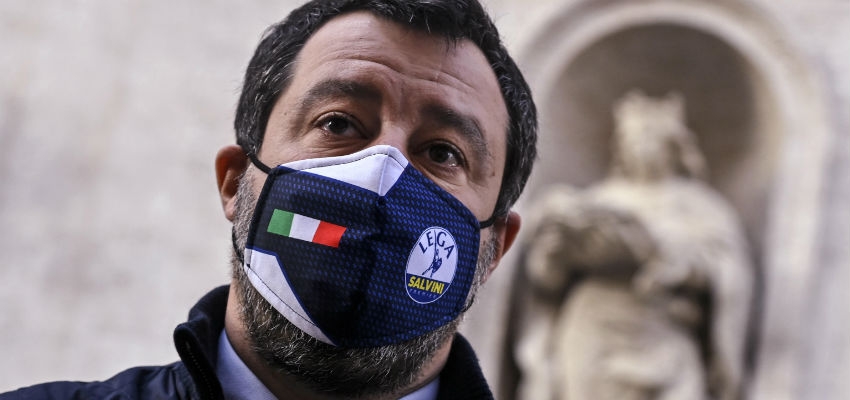
«Adesso è la Cina (...) che vende vaccini al resto del mondo, che sta vaccinando mezzo continente africano, che sta vaccinando interi Paesi in Asia e in America»
Publisher’s rating: Nì
On January 3, Matteo Salvini said China was vaccinating “half the African continent” and entire countries in Asia and the Americas. The review assessed that claim using information available at the time, including country purchase agreements recorded by Duke Global Health Innovation Center’s Launch and Scale Speedometer. Its data were updated through December 29, 2020, and distinguished confirmed purchases from countries merely testing Chinese vaccines. That tracker’s recorded agreements did not support the claim about Africa: the review reports that no African country appeared among the countries shown as having bought doses from Chinese manufacturers. It notes that Egypt and Morocco had been reported as interested in purchasing Chinese vaccines, but says these cases might not yet be reflected because purchases were later, not officially confirmed, or were donations rather than purchases. The review also describes broader Chinese vaccine diplomacy in Africa, while distinguishing that policy effort from evidence that China was already vaccinating half the continent. The claim about entire countries was also overstated. The review says Chile had purchased enough doses to cover its population, while Hong Kong was also listed but is part of China. Indonesia had ordered 205.5 million doses from Chinese companies, but its roughly 270 million people were not fully covered; the government had also negotiated for 130 million doses from Western companies. The review therefore found some substantial Chinese vaccine sales and diplomatic activity, but not the broad coverage Salvini described.
Politiker lassen sich in vielen Ländern öffentlich gegen Covid-19 impfen, um das Vertrauen in den Impfstoff zu stärken. Ein Video auf Facebook legt nun nahe, bei der Corona-Impfung der gewählten US-Vizepräsidentin Kamala Harris sei etwas nicht mit rechten Dingen zugegangen. «Das toppt jeden zuvor gesehenen Fake!», heißt es im Beitrag zum Video (Beitrag und Video archiviert). In anderen Beiträgen heißt es, Harris habe sich «scheinimpfen» lassen und die Nadel sei vorher abgeknickt worden. In dem kurzen Clip ist zu sehen, wie eine Krankenschwester die künftige Vizepräsidentin in den linken Oberarm impft. Am Ende wird ein Videoausschnitt vergrößert, der zeigt, wie die Krankenschwester die Spritze an der Armlehne des Sessels entlang streift, auf dem Harris sitzt. Dabei klappt ein hellrosa Aufsatz nach vorne.
Publisher’s rating: Das Video ist kein Beleg dafür, dass bei der Impfung von Kamala Harris etwas gefälscht wurde. Die vergrößerte Szene am Ende zeigt lediglich, wie die Krankenschwester nach der Impfung eine integrierte Schutzkappe über die spitze Nadel klappt. Das soll verhindern, dass sich jemand an der Wegwerf-Spritze verletzt.
The Facebook clip was presented as evidence that Kamala Harris’s vaccination was staged, with other posts alleging that she had been given a sham injection and that the needle had been bent beforehand. The review examines the clip’s closing close-up: after the nurse administers the injection, she moves the syringe along the chair arm and a light-pink part folds forward. The review says that this visible movement does not show that the vaccination was faked; it is the syringe’s integrated safety cap being folded over the needle after the injection. [S1: “In anderen Beiträgen heißt es, Harris habe sich «scheinimpfen» lassen und die Nadel sei vorher abgeknickt worden.”; “Nach der Impfung wird sie umgeklappt, - das ist im Facebook-Video zu sehen - damit sich niemand an der spitzen Nadel verletzt”] To identify the pink part, the review compares images from Harris’s vaccination. It reports that the part is visible on a photo Harris posted to Twitter after the shot, and that a Getty Images press photo shows it raised at a right angle while the needle is in her arm. Those images support the review’s distinction between the needle and the cap: the pink component is not the needle itself. The review also points to a medical-device manufacturer’s webpage depicting a safety needle with an integrated protective shield. [S1: “Schaut man genau hin, ist auf dem Twitter-Foto von Kamala Harris in der rechten Hand der Krankenschwester nach der Impfung an der Spritze ein hellrosa Aufsatz zu erkennen - jener Aufsatz, der in dem auf Facebook verbreiteten Videoausschnitt umgeklappt wird.”; “Es handelt sich bei dem hellrosa Aufsatz also nicht um die Nadel selbst, sondern um eine integrierte Schutzkappe der Impf-Spritze.”; “Eine solche Sicherheitskanüle ist etwa auf der Webseite des Medizinprodukte-Herstellers «BD» zu finden.”] The event being checked is identified as Harris’s vaccination at United Medical Center in Washington on December 29, 2020. The review says her husband received a Moderna shot shortly afterward and notes that US media reported on the vaccination with articles and videos. This chronology and the comparison images place the disputed clip in the context of the reported vaccination; the excerpt does not describe a separate examination of the vaccine dose or injection contents. [S1: “Die gewählte US-Vizepräsidentin Kamala Harris hat sich am 29. Dezember im Krankenhaus «United Medical Center» in der Hauptstadt Washington gegen Covid-19 impfen lassen.”; “Ihr Ehemann ließ sich kurz nach ihr die Spritze mit dem Impfstoff der Firma Moderna geben.”]
Telah terjadi penyebaran penyakit baru di Kodi, NTT, lewat konsumsi ikan, terutama ikan tembang dan tongkol
Publisher’s rating: Keliru
Kritische Beiträge zum Thema Impfen haben in den Sozialen Netzwerken derzeit Konjunktur. Einige Menschen glauben gar an Fake-Impfungen oder dass nicht alles mit rechten Dingen zugeht. Ein Facebook-User teilte zuletzt in einem Posting (hier archiviert) ein kurzes Video, in dem eine Impf-Szene zu sehen ist. Als die Frau, die die Injektion verabreicht hat, die Spritze entfernt, ist die Nadel nicht mehr zu sehen. Der Kommentar zum Video: «Die NADEL bleibt also auch im Körper».
Publisher’s rating: Das ist falsch. Im Video ist eine Art von Impfung zu sehen, bei der die Nadel nach Verabreichen der Injektion in die Spritze eingezogen wird. Das soll Verletzungen mit der kontaminierten Nadel verhindern. Das Video zeigt, wie die ersten Mitarbeiter einer US-Klinik Covid-19-Impfstoff erhalten.
The post showed a vaccination scene in which the needle was no longer visible after the woman administering the injection withdrew the syringe. Its accompanying comment claimed that the needle remained in the recipient’s body. The review identifies the scene instead as use of a safety syringe: after the injection, the needle retracts into the syringe. The review explains that this design is intended to prevent injuries from a contaminated needle. To identify the footage, the investigation compared the video with a BBC report from the week of 14 December 2020 and with a video published by US broadcaster WFSB 3 on 15 December. It reports that the woman in the Facebook clip also appears in the WFSB footage, and that the logo on her work clothing is used by Backus Hospital in Connecticut. The review says the scenes’ matching visual features support identifying the Facebook clip as footage from that hospital’s first Covid-19 vaccine doses, rather than evidence that a needle was left in a patient. The review also describes the mechanism shown in videos from syringe manufacturers: the needle retracts into the syringe after use. It notes that the World Health Organization recommended retracting needles for vaccination safety in 2020 and discussed this type of injection in 2016. Thus, the missing visible needle is consistent with a safety syringe’s retraction mechanism, not with the post’s interpretation that the needle remained in the body.
Einige Menschen sehen die vor kurzem gestartete Corona-Impfung kritisch. Manche glauben gar, dass dabei nicht alles mit rechten Dingen zugeht oder vermuten eine Verschwörung dahinter: In einem Facebook-Posting teilt eine Nutzerin (hier archiviert) zwei Screenshots, auf denen zu sehen ist, wie dieselbe Frau in Großbritannien die Corona-Impfung verabreicht bekommt. Zwischen den Datumsangaben in den Beiträgen der britischen «BBC» und des US-amerikanischen Fernsehsenders «CNN» liegen jedoch mehrere Wochen - angeblich ein Beleg dafür, dass die Frau an zwei unterschiedlichen Tagen geimpft wurde.
Publisher’s rating: Die Screenshots sind keine Belege dafür, dass die Frau an unterschiedlichen Tagen geimpft wurde. Das Bild- und Videomaterial der Impfung entstand am 8. Dezember 2020 und nicht früher. Dass ein aktuelles Video eingebettet in einem alten Artikel auftaucht - wie es in einem der Screenshots der Fall ist - liegt an der Darstellungsweise der «CNN»-Webseite.
The Facebook post presented screenshots from BBC and CNN as evidence that the same woman had been vaccinated on two different days, because the dates associated with the posts were weeks apart. The investigation identifies the woman as Margaret Keenan, then 91, and says the UK’s first COVID-19 vaccination took place on 8 December 2020. It concludes that the different dates on the screenshots do not establish separate vaccination events: the image and video material of Keenan’s vaccination was made on 8 December, not earlier. (S1: “Die erste Person, die dort geimpft wurde, war die heute 91-jährige Margaret Keenan. Sie ist die Frau auf den Screenshots.”; “Das Bild- und Videomaterial der Impfung entstand am 8. Dezember 2020 und nicht früher.”) The review describes several checks supporting that date. Photographer Jacob King posted the photographs on 8 December, saying he had been in Coventry that morning, and other media outlets also credited him as their source. The review additionally examined figures visible in the CNN video: it says the US death toll shown was reached on 8 December and the infection count on 8 or 9 December. It reports that news agencies first carried the image material on 8 December and that a search for the video produced no earlier results. (S1: “King, der Fotograf der Bilder, die Fotos am 8. Dezember mit den Worten «Ich hatte das große Glück, heute Morgen der Fotograf in Coventry gewesen zu sein» auf Twitter.”; “In diversen Nachrichtenagenturen taucht das Bildmaterial am 8. Dezember zum ersten Mal auf. In der Google-Suche nach dem Video gibt es vor dem 8. Dezember keine Treffer.”) The apparent October date in the CNN screenshot refers to the article, not necessarily to the video shown with it. The review says that CNN’s 22 October 2020 article remained online but its embedded video display functioned as a changing gallery: videos on related subjects could be replaced while the article stayed the same. It also found archived versions of the article containing different embedded videos, including the one shown in the Facebook screenshot. Thus the screenshot’s older article date does not establish when the vaccination footage was recorded. (S1: “Je nach Aktualität werden sie ausgetauscht, der Artikel bleibt aber gleich.”; “Das Video, das im Screenshot auf Facebook zu sehen ist, findet sich ebenfalls in einer archivierten Version eingebettet in den Artikel.”)
Um die Gefährlichkeit des Coronavirus herunterzuspielen, wird die Zahl der insgesamt in Deutschland Gestorbenen im Jahr 2020 häufig mit angeblich höheren Todeszahlen vergangener Jahre verglichen. Es wird etwa behauptet, trotz Pandemie seien übers Jahr gesehen 54 000 Menschen weniger gestorben als noch 2019. So soll es 2020 rund 885 800 Tote gegeben haben, während im Jahr zuvor rund 940 000 Menschen gestorben seien. «Eine mehr als deutliche Untersterblichkeit» suggerieren damit mehrere Sharepics in den sozialen Medien (etwa hier und hier archiviert).
Publisher’s rating: Zahlen und Behauptungen sind falsch. Vorläufige Daten deuten auf eine Übersterblichkeit hin - vor allem wegen der Corona-Pandemie.
The posts compared an alleged 885,800 deaths in Germany in 2020 with about 940,000 in 2019, presenting the difference as evidence of substantial under-mortality despite the pandemic. The review explains that, in early January 2021, Germany’s full-year 2020 death count was not yet available from the national statistics office. Its latest cited special evaluations covered deaths only through November: one through 22 November and another through 30 November. The figures available at the time did not support the posts’ comparison. Germany had already recorded 874,340 deaths by the end of November, a total close to the posts’ claimed figure for the entire year. The review illustrates the problem with an explicitly conditional estimate: if 75,000 people died in December—a monthly average it describes as a conservative assumption given the rising death rate—the year-end total would be around 950,000, above the previous year’s nearly 940,000. This was a projection, not a final count. The review also points to mortality patterns during the pandemic. It reports elevated deaths compared with previous years in calendar weeks 13–18, with the largest cited deviation—14% above the four-year average—in the week of 6–12 April. It says deaths were again substantially above prior-year levels from mid-October; in the week of 23–29 November, they were 14% higher. The review further notes that the RKI’s figures showed more than 33,000 people in Germany had died from coronavirus by then. Taken together, these provisional data undermine the posts’ claimed comparison; they do not establish a final 2020 annual total.
Eine Klinik in Rheinland-Pfalz soll angeblich aufgrund zu geringer Belegung in der Pandemie den Betrieb eingestellt haben. «Nicht genug Corona-Patienten: Krankenhaus in Ingelheim wird geschlossen», heißt es auf einem Foto, das sich auf Facebook verbreitet (hier archiviert).
Publisher’s rating: Die Schließung der Klinik steht nicht im Zusammenhang mit der Corona-Pandemie. Das Krankenhaus war schon davor insolvent. Das bestätigte der Insolvenzverwalter auf Anfrage der Deutschen Presse-Agentur (dpa).
The claim concerned a Facebook photo saying the Ingelheim hospital was closing because there were not enough coronavirus patients. The investigation found that the hospital’s financial problems and insolvency proceedings predated the pandemic, and that the closure was not caused by a shortage of those patients. The review traces the hospital’s difficulties to 2019, when insolvency proceedings under self-administration began. That rescue effort failed. In early summer 2020, the city of Ingelheim took over the clinic and intended to restructure it and keep it operating, but no financing could be found. A further insolvency proceeding began in October 2020, and the hospital ended operations on 31 December. The review also reports that nearly 200 employees lost their jobs shortly before Christmas. For the cause of closure, the review cites the lawyer responsible for the insolvency administration, who told dpa that the shutdown had nothing to do with a lack of coronavirus patients. The lawyer said the business had already been heavily loss-making before the pandemic and that the coronavirus crisis had no effect on the closure, which had ultimately become unavoidable. The review also notes accounts describing the clinic’s longstanding financial difficulties and the failure to find an interested party to continue operating it.
Een korte video wordt gedeeld op sociale media waarin de politie marcheert door een Parijse straat. Op de achtergrond zijn protestgeluiden te horen. Een vrouwelijke stem spreekt een mannelijke toeschouwer aan in het Frans. "Is dat tegen het vaccin? Het is een mirakel!", zegt ze. "Eindelijk en merci", roept ze de voorbijgaande stroom politieagenten nog toe. Ook in Nederland wordt de video online gedeeld op Facebook (
Publisher’s rating: Het filmpje is inderdaad in Parijs opgenomen, maar de politie neemt er niet deel aan een anti-vaccinatieprotest. Integendeel, de agenten zijn bezig met het beveiligen van een protest van de Gele Hesjes op 26 december 2020.
The video is indeed from Paris, but the police in it were not joining an anti-vaccination demonstration. The review says they were securing a Yellow Vests protest on 26 December 2020. The woman’s remarks in the clip therefore do not establish that the officers were themselves protesting against vaccination. To locate the footage, the review identifies three visible businesses: a cheese shop, a Carrefour City supermarket and a shop marked “Degriff.” It says those storefronts match Avenue de Clichy in northwest central Paris. The review then compares the street with footage of the Yellow Vests’ 26 December protest, in which it identifies nearby businesses, including a Calzedonia opposite Degriff at number 20. The review further reports that a Paris police prefecture spokesperson confirmed the officers were deployed to secure the demonstration, not to take part in it. It notes that the exact subjects of the Yellow Vests’ protest were not fully clear: an anti-vaccination placard appears in another video, but the movement also protested about other issues. That qualification supports the distinction between a protest that may include anti-vaccination messaging and police participating in an anti-vaccination protest.

Bei der in einem Video zu sehenden Impfung verbleibt die Nadel nach der Injektion im Körper.
Publisher’s rating: Das ist falsch. Im Video ist eine Art von Impfung zu sehen, bei der die Nadel nach Verabreichen der Injektion wieder in die Spritze eingezogen wird. Das soll Nadelstich-Verletzungen vorbeugen und verhindert die Freilegung der kontaminierten Nadel. Das Video wurde im Backus-Krankenhaus im US-Bundesstaat Connecticut gedreht und zeigt, wie Mitarbeiter die ersten Dosen des Covid-19-Impfstoffs erhalten.
Ein Foto soll einen unsachgemäßen Umgang mit dem Corona-Impfstoff zeigen. «Gekühlt, bei - 70 Grad in der OBI-Box» schreibt ein Nutzer bei Facebook über Fotos, die die Verteilung von Impfstoff in einem Krankenhaus zeigen (hier archiviert). Wurde der gezeigte Impfstoff nicht wie vorgeschrieben bei besonders niedrigen Temperaturen transportiert?
Publisher’s rating: Der Impfstoff der Firmen Biontech und Pfizer wird zwar bei sehr tiefen Minustemperaturen ausgeliefert, kann vor der Verabreichung aber mehrere Tage lang bei Kühlschranktemperaturen und für kurze Zeit sogar bei bis zu 30 Grad Celsius aufbewahrt werden. Vor der Verwendung muss er aufgetaut werden. In den Boxen auf den Fotos befinden sich bereits vorbereitete Spritzen mit aufgetautem Impfstoff.
The Facebook post claimed that photographs of vaccine distribution in a hospital showed Pfizer-BioNTech’s COVID-19 vaccine being kept in an ordinary OBI box at around –70°C, suggesting mishandling. The images were from Warsaw, shortly before Poland’s first COVID-19 vaccination on 27 December 2020. The review identifies the vaccinated person as a nurse at a Warsaw hospital, and says the photographs showed prepared syringes in the transport boxes. The key distinction is between the vaccine’s required storage before preparation and the handling of doses ready to administer. The review cites Pfizer’s information that the vaccine is shock-frozen after packaging and transported in special containers with dry ice, at temperatures as low as –80°C. It also cites the European Medicines Agency’s product information: unopened vials can be stored for six months between –90°C and –60°C, but after removal from the freezer can be kept for up to five days at 2–8°C or up to two hours at temperatures as high as 30°C. The vaccine must be thawed before use. The images therefore do not establish that the vaccine was being transported in the pictured boxes at its required frozen-storage temperature. The review reports that the videos show prepared syringes in the boxes presented at the event, consistent with thawed vaccine prepared for use. It notes a limitation: the videos show the nurse receiving an injection, but not the step of drawing the dose from a thawed vial. The reported evidence supports the explanation that the boxes contained prepared syringes, not frozen vials being stored improperly.

COVID-19 vaccination will reduce virus carriers
Publisher’s rating: MISLEADING