PeakMetrics / Fact Checks
Health & medicine fact checks
Explore claims publishers have checked about health & medicine. Read their original ratings and follow the evidence.
Search fact checks
Search by text or image13,674 published reviews in this topic

Amul ice cream contains an E-471 emulsifier which is manufactured from pig fat
Publisher’s rating: FALSE
The review examines a social-media video in which a speaker claims that Amul ice cream contains an E-471 emulsifier made from pig fat and urges people not to consume it. The review identifies the post’s claim as that Amul’s E-471 is manufactured from pig fat, rather than treating the mere possibility of animal-derived E-471 as proof about Amul’s products. The review says it checked how E-471 can be made and found that the emulsifier can come from either plant oils or animal fats. It then cites an Amul press release stating that the company uses E-471 manufactured only from plant oils. The decisive distinction is therefore the source used by Amul, not whether animal-derived versions of E-471 exist. The review also reports that Amul described its ingredients as vegetarian and its ice cream as Halal certified. On the evidence presented, the review concludes that Amul ice cream uses plant-oil-derived E-471, not an emulsifier manufactured from animal fats. The excerpt does not independently identify the supplier or provide laboratory testing; its conclusion rests on the company’s stated clarification and the other evidence it describes.


Mariana Gross (APRESENTADORA RJTV RIO) pede a população do Rio de janeiro para FICAR EM CASA, a mesma com o salário em dia
Publisher’s rating: Falso
Bis zum 10. Januar 2021 wurden in der Schweiz 482 808 laborbestätigte Corona-Infektionen gemeldet. In einem Sharepic (hier archiviert), das an diesem Tag auf Facebook verbreitet wurde, wird behauptet, dass bei einer Corona-Infektion die Überlebenschance bei weit über 99 Prozent liege. Des Weiteren wird behauptet, dass der PCR-Test nicht validiert sei.
Publisher’s rating: Die Behauptungen sind irreführend. In der Schweiz werden validierte PCR-Tests verwendet. Im Zusammenhang mit der Überlebenschance sind weder Datenbasis noch Rechnungsmethode angegeben. Da sich die Daten zur Corona-Pandemie täglich ändern, kann man daraus keine allgemeingültige Überlebenschance ableiten.
The review concerns a Facebook sharepic circulated on 10 January 2021, when Switzerland had recorded 482,808 laboratory-confirmed coronavirus cases. It challenged two assertions in the image: that a person infected with coronavirus had a survival chance “far above 99 percent,” and that the PCR test was not validated. The review assessed the survival figure against Swiss case, death and population counts available by that date, and examined how PCR testing was authorized and validated in Switzerland. [S1: “Bis zum 10. Januar 2021 wurden in der Schweiz 482 808 laborbestätigte Corona-Infektionen gemeldet.”; “In einem Sharepic (hier archiviert), das an diesem Tag auf Facebook verbreitet wurde, wird behauptet, dass bei einer Corona-Infektion die Überlebenschance bei weit über 99 Prozent liege. Des Weiteren wird behauptet, dass der PCR-Test nicht validiert sei.”] For the survival calculation, the review reported 7,968 laboratory-confirmed deaths associated with coronavirus by 10 January 2021 and a Swiss resident population of 8,606,033 at the end of 2019. Comparing deaths with the total population produced a figure of about 0.09 percent dead and 99.91 percent surviving over the period considered. But that calculation uses the whole population, not just infected people. Comparing deaths with the 482,808 registered cases instead yielded a reported fatality share of about 1.65 percent and survival of 98.35 percent among registered cases. The review cautioned that neither result can be generalized: unrecorded infections, public-health measures, age structure and medical care affect the figures, and the data change over time. [S1: “Bis zu diesem Zeitpunkt wurden insgesamt 7 968 laborbestätigte Todesfälle im Zusammenhang mit einer Corona-Infektion registriert.”; “Ende 2019 betrug die ständige Wohnbevölkerung in der Schweiz 8 606 033 Personen gemäss BFS.”; “Im Vergleich zur Gesamtbevölkerung sind rund 0,09 Prozent im Zusammenhang mit einer Corona-Infektion gestorben. Die Überlebenschance würde nach dieser Rechnung bei 99,91 Prozent liegen.”; “An der Gesamtzahl der registrierten Infizierten gemessen sind rund 1,65 Prozent an oder mit einer Corona-Infektion verstorben. Folglich haben demnach 98,35 Prozent der Infizierten überlebt.”; “Beide Werte werden durch viele Faktoren beeinflusst, so dass sie sich nicht verallgemeinern lassen.”] On PCR validation, the review cited statements from the Federal Office of Public Health, Swissmedic, a Basel University Hospital laboratory specialist and the Swiss Federal Council. It reported that laboratories performing PCR analyses required Swissmedic authorization, that laboratories were responsible for validating the tests they offered, and that Swissmedic regularly inspected them. It also described additional comparison of initial samples with a reference laboratory in Geneva for laboratories newly introducing these tests. This evidence addresses the claim about Swiss testing practice; it does not establish that every PCR test everywhere is validated. [S1: “Sämtliche vom Bund vergüteten PCR-Tests sind in der Schweiz validiert. Dies bestätigt Jonas Montani, Mediensprecher des Bundesamtes für Gesundheit (BAG), gegenüber Keystone-SDA.”; “Die Laboratorien, die PCR-Tests durchführen, sind für die Validierung der von ihnen angebotenen Tests verantwortlich.”; “Die Laboratorien werden regelmässig von Inspektorinnen und Inspektoren von Swissmedic kontrolliert.”]

सरकार ने या वर्षी ३० एप्रिल, २०२१ पासून जून पर्यंत लोकडाऊन ची घोषणा केली आहे.
Publisher’s rating: FALSE

Die Maßnahmen zur Eindämmung von SARS-CoV‑2 wie etwa Lockdowns führten in Österreich zu einer erhöhten Anzahl an Suiziden.
Publisher’s rating: Das ist falsch. Bisher ist kein Anstieg ersichtlich. Experten rechnen allerdings mit einem verzögerten Effekt.
The APA investigation assessed whether pandemic containment measures, including lockdowns, had led to more suicides in Austria. It examined national suicide figures, information from the Health Ministry, a study of suicides in Tyrol, and statements and survey findings from suicide researcher Thomas Niederkrotenthaler. The investigation reported that the national 2020 total was 1,068, down from 1,113 in 2019 and 11% below the average of the previous five years. It therefore found no increase in the available figures, while noting that an effect might emerge later. [S1] The regional Tyrol study likewise found no increase in the first six months of the pandemic: from April 1 to September 30, 2020, it recorded 45 suicides, compared with at least 50 in each corresponding period since 2006 and a high of 71 in 2011. The researchers proposed that stronger social cohesion during a shared threat, social initiatives, and financial support might help explain the decline; these were suggested explanations, not proof that any one factor caused it. [S1] The review also reported that Niederkrotenthaler said national figures were stable and that international comparisons had not found an increase through summer 2020. At the same time, the article noted rising depression and anxiety symptoms, described as risk factors, and emphasized that delayed effects remained a concern. The evidence it presents thus addresses observed suicide counts, not whether restrictions had no psychological effects or could not contribute to later risk. [S1]

The Government of India has decided to impose a complete lockdown from 29 Feb to 31 Feb 2021
Publisher’s rating: FALSE
The claim concerned a social-media message saying the Government of India had decided on a three-day nationwide lockdown from 29 to 31 February 2021. FACTLY characterizes the message as a joke, rather than an announcement of government policy. Its central check is the date in the message: 30 and 31 February do not occur, and 2021 was not a leap year, so 29 February did not occur that year either. The review also says the image itself marked the message as a joke and that the Government of India had not released a statement announcing new complete-lockdown restrictions. Those points address both the implausible dates and whether the post reflected an official announcement. FACTLY concludes that the circulated message was not a real lockdown decision. The review notes that some state governments extended lockdown restrictions with relaxations after COVID-19 cases rose in their states, and that the central government sent high-level teams to ten states and union territories experiencing surges. That context describes separate measures; it does not substantiate the post’s claim of a complete nationwide lockdown beginning on the stated dates.

The WHO doesn't recommend using rapid Covid-19 tests in schools
Publisher’s rating: Misleading
Ist die Entscheidung, die Verbreitung des neuen Coronavirus als Pandemie einzustufen, ein Verbrechen oder eine Straftat im Sinne des Schweizer Gesetzes? Lässt sich eine Pandemie anhand der Mortalität definieren? In einem auf Facebook (hier archiviert) verbreiteten Sharepic wird behauptet: «Bei 0.085% Mortalität auf die Gesamtbevölkerung von einer Pandemie zu sprechen ist ein Verbrechen und deswegen die Wirtschaft zu ruinieren entspricht einer vorsätzlichen Straftat!»
Publisher’s rating: Die Weltgesundheitsorganisation (WHO) hat den Covid-19-Ausbruch als Pandemie eingestuft. Dafür muss keine bestimmte Mortalitätsrate überschritten werden. Der Vorwurf, die Wirtschaft sei vorsätzlich geschädigt worden, ist nicht belegt.
The Facebook sharepic links two allegations: that calling Covid-19 a pandemic despite a mortality figure of 0.085% was a crime, and that damaging the economy was an intentional criminal act. The review distinguishes the WHO’s classification from Swiss government decisions. It says the WHO classified Covid-19 as a pandemic on March 11, 2020, while the Swiss Federal Council declared an extraordinary situation and ordered business closures on March 16. The WHO, not the Federal Council, made the pandemic classification. On whether the 0.085% figure invalidates that classification, the review describes the WHO’s definition as a worldwide spread of a new pathogen against which most people are not immune. It notes that the definition does not require a particular mortality threshold. The sharepic’s figure is also explained as a calculation for Switzerland: 7,294 deaths counted as related to coronavirus by December 30, 2020, divided by a 2019 population of 8,606,033. That is a specific death-to-population measure, not a threshold the review says the WHO uses to decide whether an outbreak is a pandemic. On the allegation of criminal intent, the review cites University of Bern criminal-law professor Jonas Weber. He said that if the Federal Council ordered business closures wrongly in order to deliberately harm the economy, that could potentially constitute fraud under Article 146 of the Swiss Criminal Code. But the review reports no evidence that the closures were ordered for that purpose; the sharepic’s accusation is therefore not established by the evidence presented.
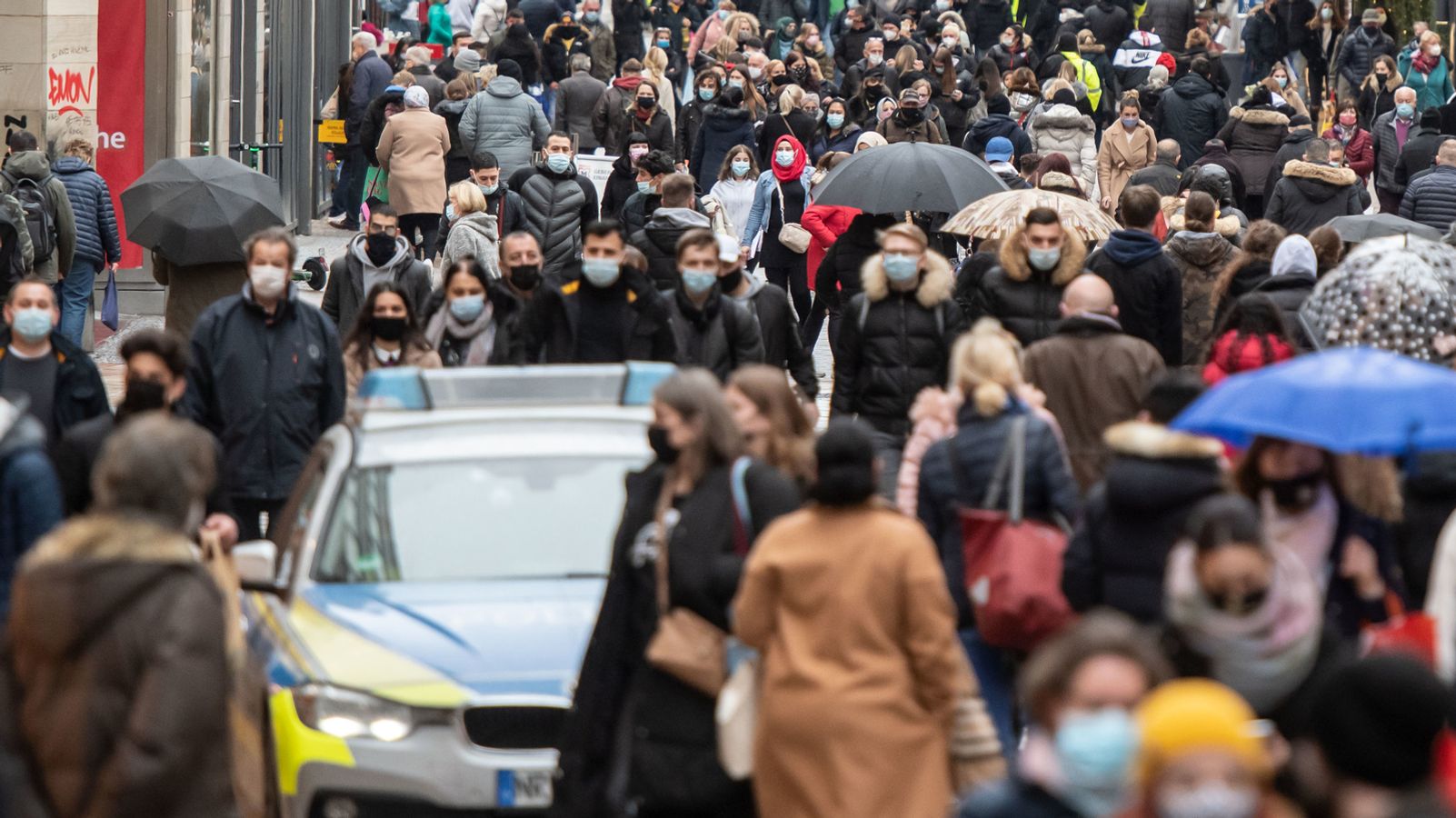
Der Einzelhandel ist ein Infektionstreiber
Publisher’s rating: Es liegen nicht ausreichend Daten vor, um Corona-Ansteckungsorte zu definieren; die Behauptung lässt sich nicht verifizieren oder falsifizieren.

Fact Check : වෛද්ය නලින්ද ජයතිස්ස මහතා පසුගිය දා කොවිඩ් එන්නත ලබා ගත්තා ද?
Publisher’s rating: False
The review examines a social-media post suggesting that Dr. Nalinda Jayatissa had received a COVID-19 vaccine at Nagoda, in the Kalutara area. The post used a vaccination form bearing his details. The review reports that Jayatissa publicly denied having received a dose at that time, saying he would be vaccinated when his place in the priority order arrived and alleging that the form had been misused to make a false post. To check the claim, the publisher says it contacted two senior public health inspectors responsible for areas in Kalutara. They reported that vaccination was being carried out in selected areas and that they had not seen Jayatissa receive a vaccine. The review also contacted Kalutara Hospital because the form named Nagoda as the vaccination centre. According to the article, the hospital’s deputy director said Jayatissa had emailed the hospital asking it to investigate the matter. The hospital’s initial examination, as recounted by the review, found that the form showing a vaccination had been falsified and that Jayatissa had not yet been vaccinated. The article’s conclusion is therefore that the circulated post did not establish that he had received a dose; it misrepresented a form to suggest that he had.
“If this package was clearly about crushing the virus, then why is less than 9 percent of all total spending actually used to put shots in people’s arms?”
Publisher’s rating: Needs context
Während die Corona-Impfung in der Europäischen Union schleppend voran geht, wurde in Israel bereits ein beträchtlicher Teil der Bevölkerung geimpft. Das bringe aber nichts, wird nun in einem oft geteilten Facebook-Posting (hier archiviert) behauptet: «Sehr enttäuschende Daten aus Israel, dem am stärksten durch-impften Land» (sic!). Die Impfung der Hochrisikopopulation hätte zu einem starken Rückgang der Todesfallrate (CFR) führen sollen. Leider bleibe die CFR in Israel aber unbeeindruckt von der Impfung, heißt es.
Publisher’s rating: Aktuelle Untersuchungen aus Israel zeigen, dass die Corona-Impfung wirksam ist. Unter den Geimpften werden viel weniger Covid-19-Fälle, schwere Verläufe und Todesfälle verzeichnet. Eine konstante Case fatality rate ist kein Beleg für die fehlende Wirksamkeit eines Impfstoffes.
The post relied on a graph showing Israel’s case fatality rate (CFR) from 13 January to 13 February 2021, which stayed a little above 0.7. The review explains that CFR is the share of confirmed cases that result in death, and cautions that it is affected by factors including which cases are detected, the timing and setting of an outbreak, the population, and testing levels. It therefore does not directly show whether vaccination is preventing infections or severe outcomes among vaccinated people. The review also describes why Israel’s overall CFR could remain fairly steady while vaccination was having an effect. Epidemiologist Eva Schernhammer said Israel’s CFR had already been among the world’s lowest in mid-2020. She cited the country’s relatively young population, extensive testing that could identify mild or asymptomatic cases, and protection of care homes as factors that could keep the overall rate low. The review reports that Israel began vaccinating on 19 December 2020, initially prioritizing medical staff and people over 60. To assess outcomes among vaccinated people, the review cites several studies and reports. It says that among half a million people who had received both doses, 0.1% were diagnosed with coronavirus, four had severe cases, and none died. It also reports a Clalit health-fund comparison finding fewer symptomatic infections and severe cases among twice-vaccinated people than in a control group. Separately, it describes research finding earlier declines in cases and hospitalizations among older people and in cities where vaccination began earlier. These findings concern infection and disease outcomes in vaccinated groups; they are not the same measurement as Israel’s overall CFR.


Dr., em Brasília, e repassa o protocolo de enfrentamento do COVID com nebulizador caseiro e bicarbonato de sódio
Publisher’s rating: Falso
Vor längerer Zeit hat die Europäische Union definiert, was unter einer seltenen Krankheit zu verstehen ist: Wenn nicht mehr als 5 von 10 000 Menschen in der EU von der Krankheit betroffen sind. Dies greift ein Facebookpost auf: In einem Sharepic wird behauptet, Covid-19 würde unter die EU-Kategorie der seltenen Krankheit fallen. Es heißt: «bei 50 von 100000 Erkrankten handelt es sich laut EU Definition um eine "SELTENE KRANKHEIT"! Und da sind es echt Erkrankte und nicht nur positiv getestete. Die Regierung setzt Maßstäbe (35) oder weniger, die niemals erfüllt werden können.» (hier archiviert) Politische Maßnahmen gegen die Corona-Pandemie sollen also angeblich an Werte geknüpft werden, laut denen Covid-19 eigentlich eine seltene Krankheit ist. Stimmt das?
Publisher’s rating: Covid-19 zählt nicht als seltene Krankheit. Der Facebookpost verwechselt zwei unterschiedliche Maßstäbe für die Verbreitung einer Krankheit - die Prävalenz zur Einstufung als seltene Krankheit und die Inzidenz zur Angabe neuer Fälle innerhalb einer Woche. Politische Maßnahmen gegen Corona orientieren sich an der Inzidenz der Neuerkrankungen - zum Beispiel an einer Inzidenz von 35.
The Facebook post takes the EU threshold of no more than five people in 10,000 for a rare disease and compares it with the pandemic policy threshold of 35 cases. The review explains that these figures measure different things: the rare-disease threshold concerns prevalence—the number of existing cases in a population at a particular time—whereas the policy threshold refers to incidence, or newly occurring cases during a period. Comparing them as if they were interchangeable makes the post’s argument misleading. (S1: “Allerdings bezieht dich diese Quote auf die Gesamtzahl aller Fälle einer Krankheit in der Bevölkerung zu einem bestimmten Zeitpunkt. Man nennt das den Wert der Prävalenz”; “Gemeint ist eine Inzidenz von 35 Neuerkrankungen pro 100 000 Einwohner innerhalb von sieben Tagen.”) The review reports that Covid-19 did not appear on Orphanet’s list of rare diseases in January 2021. It also notes a limitation: establishing a prevalence figure for Covid-19 was difficult because the numbers of people ill, deceased, recovered and newly infected changed daily. The Robert Koch Institute told dpa that prevalence was not especially useful for describing Covid-19, given how dynamic the situation was. (S1: “Covid-19 wurde hier im Januar 2021 nicht aufgezählt und fällt nicht in diese Kategorie. Die Prävalenz für Covid-19 zu ermitteln, ist aktuell schwierig”; “Bei Covid-19 scheint den Fachkollegen zufolge die Angabe einer Prävalenz nicht so sinnvoll - es handelt sich um ein sehr dynamisches Geschehen”) The review distinguishes the Facebook post’s reference to “35” from the EU rare-disease threshold: 35 meant new cases per 100,000 residents over seven days. It says governments used incidence values such as 35 or 50 as thresholds for easing or tightening coronavirus measures. Thus, the post’s comparison does not establish that Covid-19 qualified as a rare disease or that the policy threshold used the same measure. (S1: “Hier geht es also um neue Krankheitsfälle, nicht um die Quote aller Fälle in der Bevölkerung”; “Den Inzidenzwert von 35 oder 50 nutzen die Regierungen von Bund und Ländern, um einen Grenzwert festzulegen, zu dem Corona-Maßnahmen gelockert oder verschärft werden.”)

MARCAS DE COMIDA DE GATO ESTÁN SIENDO INVESTIGADAS POR CAUSAR ENFERMEDADES NEUROMUSCULARES Y MUERTES EN FELINOS
Publisher’s rating: Real

Schadet der Lockdown laut WHO mehr, als er nützt? Ist die Zahl der Corona-Toten in Schweden seit dem Sommer "sehr niedrig"? Sind die sinkenden Infektionszahlen in den Herkunftsländern der Virus-Varianten ein Indiz für die Ansteckungsgefahr? Rating
Publisher’s rating: Größtenteils falsch. Die WHO sieht Lockdowns zwar kritisch und weist auf die negativen Auswirkungen hin, spricht Lockdowns allerdings nicht den Nutzen ab. Die schwedischen Corona-Toten sind im skandinavischen Vergleich hoch, im Vergleich mit anderen europäischen Ländern liegen sie im Mittelfeld. Die sinkenden Infektionszahlen in Südafrika und Großbritannien sind auf Maßnahmen der Regierung, ein verändertes Verhalten der Bevölkerung und den natürlichen wellenartigen Verlauf einer Epidemie zurückzuführen. Eine Aussage über die Infektiosität kann man dadurch nicht treffen.

Covid-19 vaccines are ineffective.
Publisher’s rating: False
The review says the viral screenshot misrepresented uncertainty about whether vaccines prevent infection or transmission as proof that vaccines were ineffective. It explains that clinical trials found the vaccines reduced the risk of developing Covid-19, while research into preventing infection and transmission was ongoing.