PeakMetrics / Fact Checks
Health & medicine fact checks
Explore claims publishers have checked about health & medicine. Read their original ratings and follow the evidence.
Search fact checks
Search by text or image13,674 published reviews in this topic

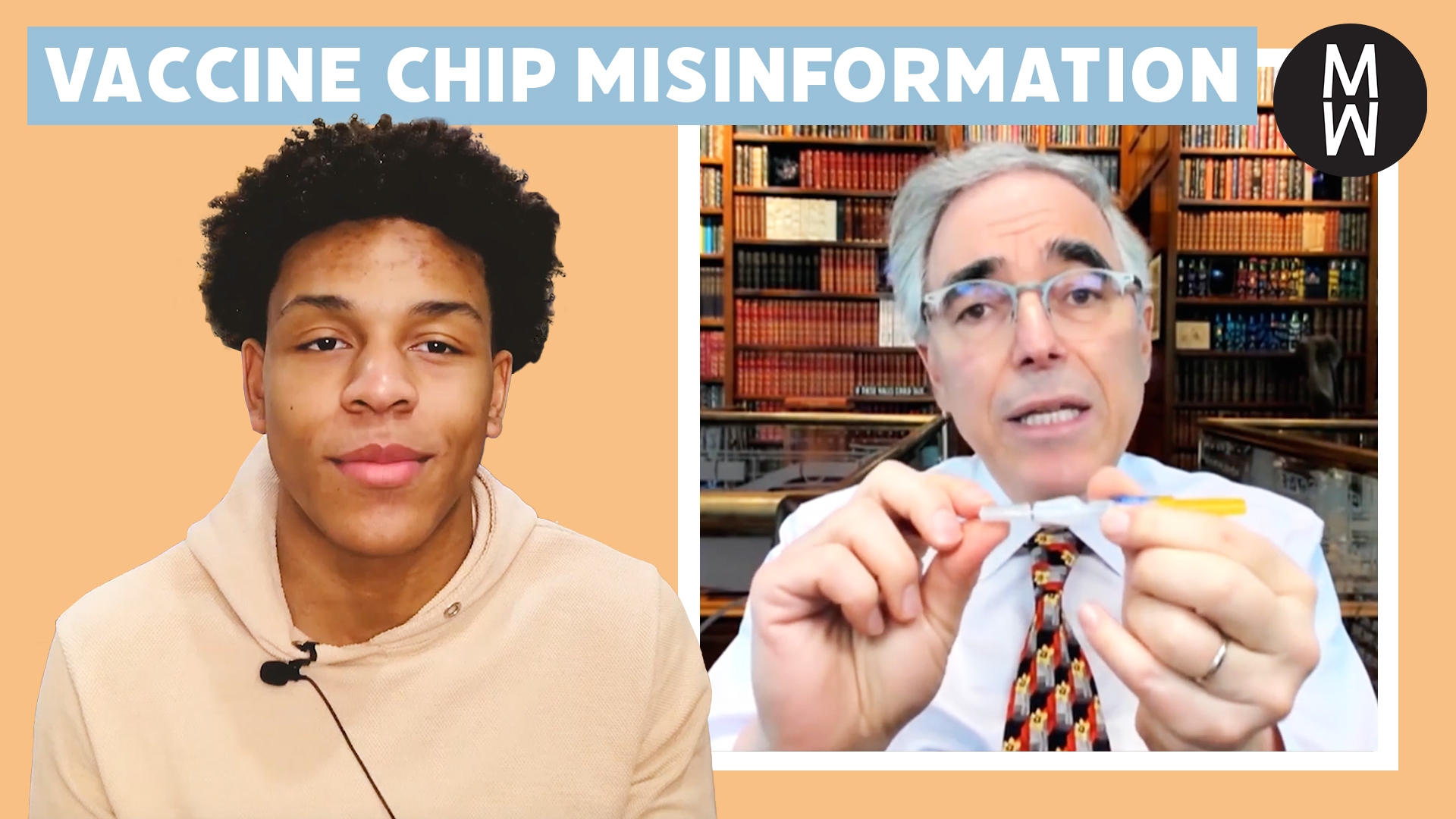
Will there be a chip inside the vaccine?
Publisher’s rating: Needs Context
The review examines the claim that COVID-19 vaccines contain tracking chips, prompted by a YouTube video from 700 Club Interactive. Its reporter, Lorie Johnson, interviewed Jay Walker, executive chairman of ApiJect, a company that received a Department of Defense contract to increase production of medical injection devices. The review says the video’s title and description suggested a microchip was inside the vaccine, even though the video itself did not say that. (S1: “We came across a video on YouTube from 700 Club Interactive, which is part of the Christian Broadcasting Network. In the video, health reporter Lorie Johnson interviews Jay Walker, the executive chairman of ApiJect.”; “Despite Walker detailing how the optional RFID chip works in the video, the YouTube video’s title and description both suggest that the microchip is placed inside the vaccine itself.”) To check the implication, the review describes watching the video rather than relying on its title: Walker explains that the chip functions like a barcode, helping public-health officials track where and when doses have been used. The review distinguishes that optional RFID chip on the outside of some syringes from the vaccine dose injected into a person; it also says the chip does not enable tracking patients. (S1: “Watching the video, it’s clear that the microchip is not inside the vaccine. Instead, Walker explains that the chip acts as a ‘bar code,’ and is used to help public health officials keep track of where and when the doses have been used.”; “While there is a radio-frequency identification chip on the outside of some syringes, it’s there to track the vaccine doses, not people.”) The review also reports using a keyword search for “RFID chip coronavirus vaccine” and consulting other coverage, naming Reuters, USA Today, BBC and PolitiFact. It says those sources likewise described an optional chip on a syringe label—not inside the injected dose—and reported that vaccine recipients could not be tracked. The review’s key qualification is that the video’s title and description were misleading even though the video did not claim the chip was inside the vaccine. (S1: “Searching with words like ‘RFID chip coronavirus vaccine,’ brought up several fact checks on this subject, including an article from Reuters.”; “USA Today, BBC and PolitiFact have all reported the same thing — that the syringes can include an optional RFID chip on the label, similar to a barcode — but the chip is not inside the injected dose itself.”; “While the actual video from 700 Club Interactive never states that a chip is inside the vaccine, the title and description are both misleading, and would definitely benefit from more information.”)

CREAN PRUEBA QUE DETECTA EL COVID-19 A TRAVÉS DE GRITOS
Publisher’s rating: Incompleto

Alerta Contra O Uso De Máscaras: 'A Privação De Oxigêncio Causa Danos Neurológicos Permanentes'
Publisher’s rating: Falso

Un décès lié à un vaccin COVID-19 n'est pas couvert par les assureurs canadiens.
Publisher’s rating: FAUX
Les enfants font de l'hypoxie sévère à cause du masque
Publisher’s rating: Experts et médecins l’affirment : le port du masque ne provoque pas d’hypoxie sévère. La mesure du taux de saturation en oxygène des enfants peut être faussée par différents éléments comme le froid ou des doigts fins. Enfin, seul un professionnel de la santé est à même d’interpréter des résultats, en plus de l’analyse d’autres signes cliniques.
The review traces the claim to a Facebook post shared by a Belgian user. The post urged parents to measure children’s oxygen saturation before and after school with a fingertip oximeter, then asserted that many children were in severe hypoxia by the end of the day. The review addresses that specific school-and-mask allegation, rather than a different claim about oxygen measurement.

Des cellules de fœtus sont présentes dans les vaccins contre la COVID-19
Publisher’s rating: FAUX

No opposition leader in India took the COVID-19 vaccination until PM Narendra Modi got vaccinate
Publisher’s rating: FALSE
The claim concerned the order of COVID-19 vaccinations among Indian politicians: it said no opposition leader had been vaccinated before Prime Minister Narendra Modi. The review says India’s campaign began on 16 January 2021, initially prioritising healthcare and frontline workers, with politicians and people over 60 included in a later phase. It also reports that Modi had advised politicians to stay out of the first round. The decisive counterexamples identified by the review were two Trinamool Congress (TMC) MLAs in West Bengal. Katwa MLA Rabindranath Chatterjee and Bhatar MLA Subhash Mondal received vaccinations on 16 January 2021, before Modi was vaccinated at AIIMS Delhi on 1 March. The review further reports that BJP MP Mahesh Sharma, a trained doctor, was vaccinated on 16 January, though he was not an opposition leader. The TMC vaccinations directly contradict the claim’s assertion that no opposition leader had been vaccinated before Modi. The review says the leaders were members of West Bengal’s Patient’s Welfare Committee, a detail that provides context for their early vaccinations but does not change the reported dates or their party affiliation. It also notes that politicians from both BJP and opposition parties were vaccinated on 1 March after Modi.
Returning overseas Filipino workers (OFWs) and non-OFWs going to their home provinces no longer need to undergo quarantine and swab testing
Publisher’s rating: Misleading
Artikel in The Lancet haalt PCR-testen onderuit
Publisher’s rating: Het artikel in The Lancet gaat over een vergelijkende studie die correct werd uitgevoerd. Heel wat sociale mediagebruikers hebben na publicatie het artikel fout geïnterpreteerd, waardoor desinformatie tot stand is gekomen. De studie focust zich op de snelle antigentesten, niet specifiek op de PCR-testen. Wél vergelijkt het de positieve en negatieve aspecten van de snelle antigentesten met die van de PCR-testen. De berichten missen dus context of zijn onwaar.
The claim arose from social-media posts saying that a recently published Lancet article discredited PCR testing. The review identifies the article as a comparison of COVID-19 testing methods, with its main focus on rapid antigen tests and how they compare with PCR tests—not an argument specifically aimed at discrediting PCR. It reports that experts described PCR as the benchmark used for comparison. [S1: “In tegenstelling tot wat het gros van de berichten beweerd, gaat de studie vooral om het gebruik van de snelle antigeentesten (RAT of LFT) en hoe die zich verhouden tot de PCR-testen. Experts benadrukken aan de redactie van dpa dat de PCR-testen niet afgebroken, maar eerder als maatstaf worden gebruikt om de twee soorten testen te vergelijken.”] The study’s reported comparison did identify a limitation of rapid antigen tests: some people without symptoms tested negative on an antigen test but positive on PCR. The review says that this reflects differences in test performance and sensitivity, rather than showing that PCR is unreliable. It quotes virologist Steven Van Gucht, who explains that PCR can detect very small amounts of virus, while an antigen test is less sensitive and is intended to detect people shedding more virus. [S1: “De vergelijkende studie wijst op het feit dat de prestatie van de sneltesten ondermaats is, omdat vele mensen zonder symptomen negatief waren met een antigentest, maar wel positief met een PCR-test.”] [S1: “Met een PCR-test kan je hele lage hoeveelheden virus detecteren, terwijl de snelle antigentest vaker een negatief resultaat zal tonen.”] The key context omitted in the posts is that the tests have different applications. The review reports Van Gucht’s view that antigen tests may be useful when repeated frequently, and that the study was about their role and validation in relation to PCR—not evidence that PCR testing should be rejected. [S1: “De discussie in het artikel is of snelle antigentesten wel een volwaardig alternatief zijn voor PCR-testen. Het enige wat je hier eventueel uit kan afleiden is dat de antigentesten minderwaardig zijn aan de PCR-testen.”] [S1: “Kortom, de studie belicht puur de verhouding tussen de twee testen en hoe je een snelle antigeentest moet valideren. Er is geenszins sprake van baanbrekend onderzoek dat het gebruik van PCR-testen onderuit haalt.”]
Vaksin Covid-19 Sinovac sebenarnya diperuntukkan bagi ayam, serta barcode aslinya ditukar
Publisher’s rating: Keliru

Bereits positiv Geteste Corona-Infizierte werden bei erneutem positiven Test als Neuinfektion gezählt
Publisher’s rating: Falschbehauptung. Die Gesundheitsämter gleichen die Meldungen von positiv Getesteten ab und übermitteln nur die tatsächlichen Neuinfektionen anonymisiert.


Several posts on social media have tried to play down the need for lockdowns by looking at excess deaths figures
Publisher’s rating: False
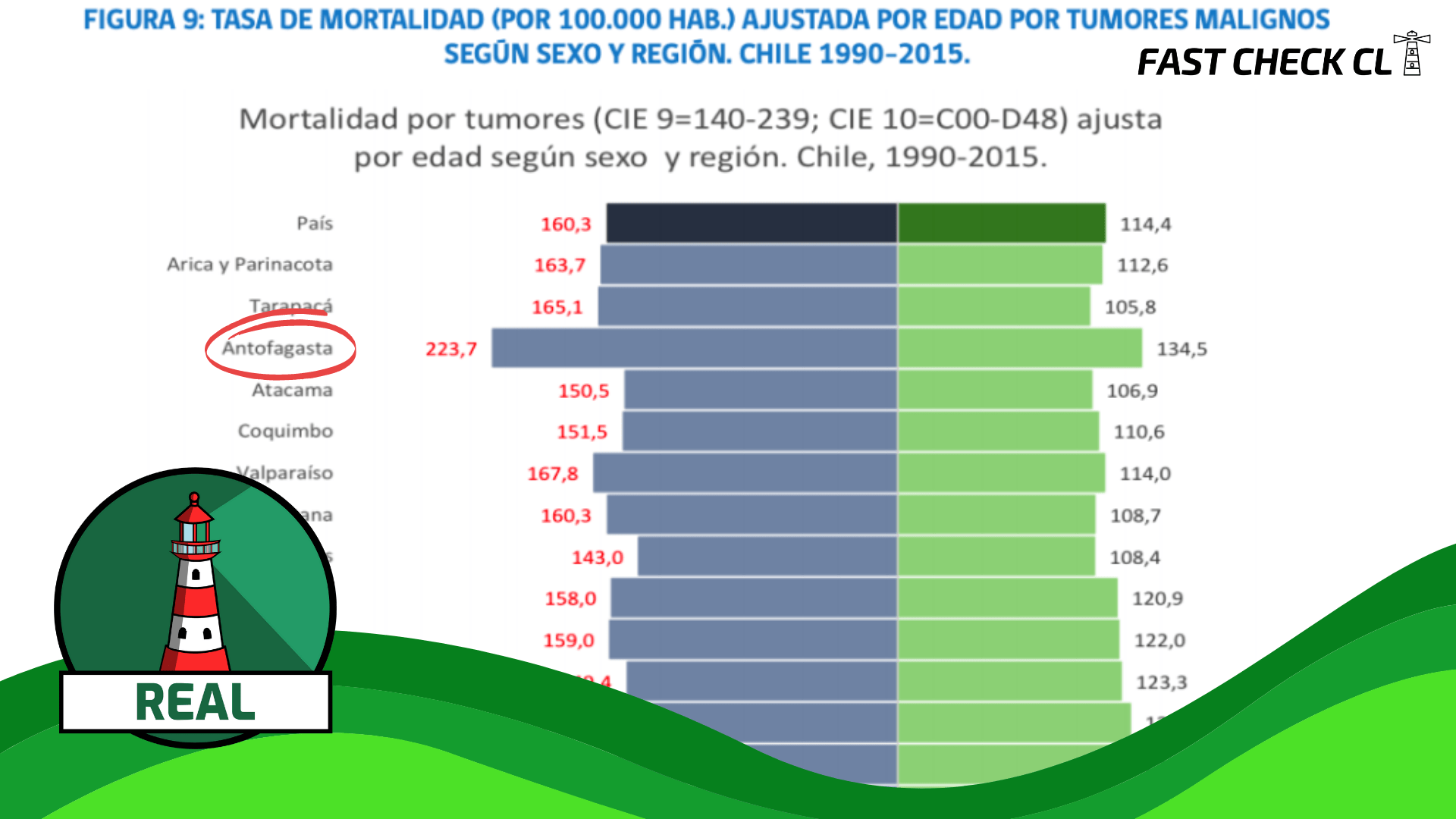
ANTOFAGASTA ES LA REGIÓN CON LA TASA DE MORTALIDAD POR CÁNCER MÁS ALTA DEL PAÍS
Publisher’s rating: Real

Governadores ESCONDENDO vacinas para desestabilizar o presidente? Parece ficção!!! Sqn!!!
Publisher’s rating: Falso
L'OMS affirme que "Si vous n'avez aucun symptômes, pas de toux, pas de fièvre vous n'avez aucune raison de porter un masque! "
Publisher’s rating: L’usage du présent dans la vidéo rend le message faux. Cette vidéo date du mois de mars 2020, lorsque les pays européens entraient en confinement et que l’usage du masque était essentiellement recommandé aux professionnels de la santé. Les recommandations ont, depuis lors, été modifiées.
The claim presents the WHO’s statement that people without symptoms, cough, or fever had no reason to wear a mask as current. The review traced that statement to an earlier WHO video, rather than finding that the WHO made it in March 2021: it says the original capsule was published on March 9, 2020, and identifies Dr. April Baller as the speaker. In the video, Baller said masks should be used only by health workers, caregivers, or people with symptoms such as fever and cough. The review distinguishes that 2020 guidance from the later Facebook post and its accompanying video. It reports that the Facebook post was dated March 2, 2021, while the YouTube video’s description referred to March 9, 2020. The review says the present-tense framing made the old statement appear current, and concludes that the WHO had not made those remarks in March 2021. The Belgian timeline provides context for the older video: the review says Belgium announced confinement on March 17, 2020, entered lockdown at noon on March 18, and did not make masks obligatory at that point. It reports that mask use was generalized in Belgian public places in July 2020. Thus, the evidence supports the distinction central to the claim: the quoted advice came from March 2020, not from current WHO guidance in March 2021.
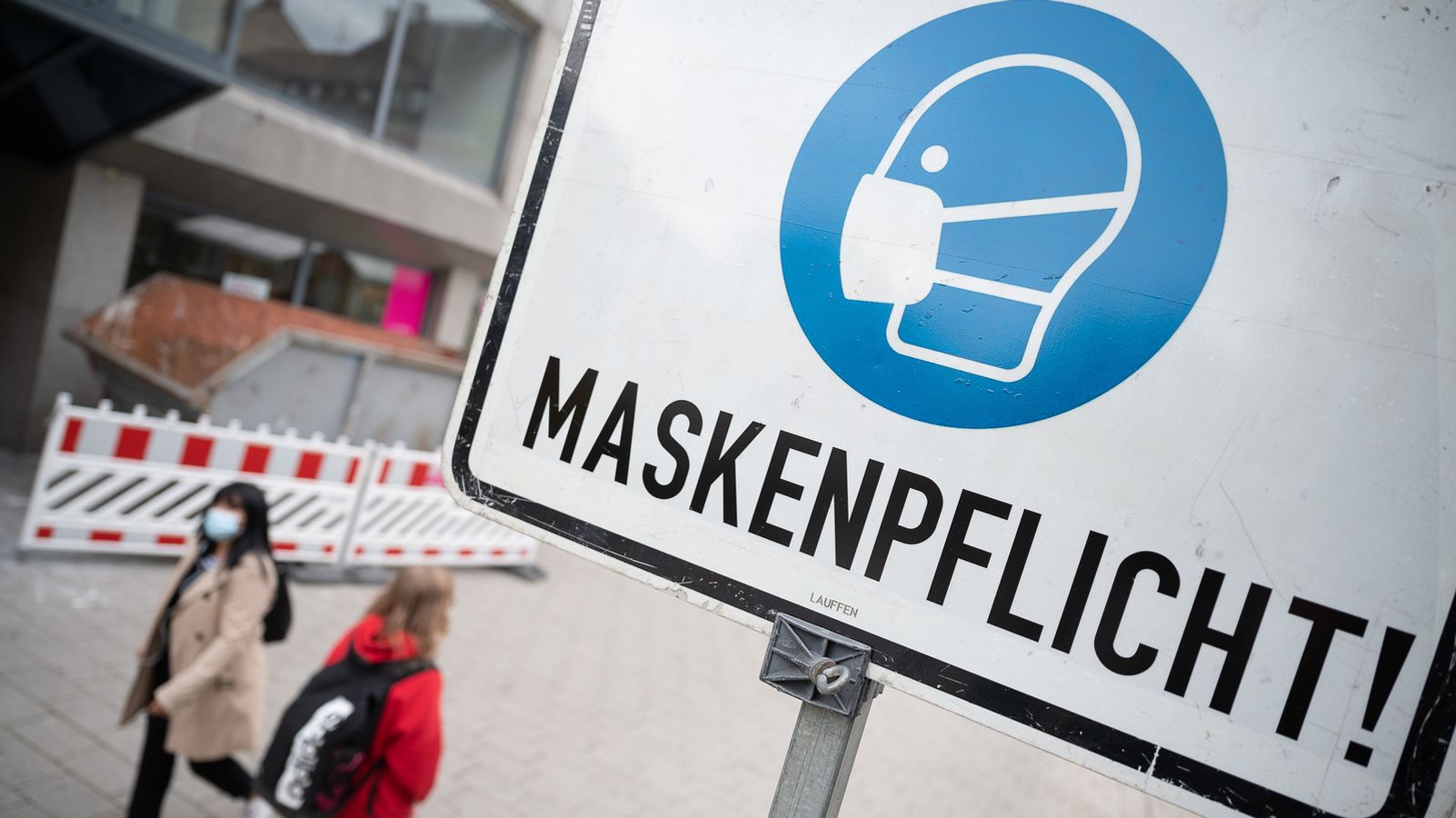
Die Maskenpflicht ist eine "medizinische Zwangsmaßnahme". Die arbeitsmedizinischen Vorschriften für FFP2-Masken können im Alltag nicht umgesetzt werden. Angela Merkel hat 2020 20 Krankenhäuser und 3000 Krankenhausbetten geschlossen. Bisher sind 0,08 Prozent der deutschen Bevölkerung an Corona gestorben, das steht in keinem Verhältnis mit den Maßnahmen.
Publisher’s rating: Falsch bis irreführend. Die Maskenpflicht ist keine medizinische Zwangsmaßnahme. Arbeitsschutz-Vorschriften können Hinweise für den Gebrauch von FFP2-Masken geben, aber sind grundsätzlich nicht auf die Allgemeinbevölkerung anzuwenden. Angela Merkel kann keine Krankenhäuser schließen, denn Krankenhausplanung ist Ländersache. Die offiziellen Zahlen zu Klinikschließungen 2020 gibt es noch nicht. Die Corona-Toten in Deutschland sind immer im Kontext der Präventionsmaßnahmen zu sehen - Griesz-Brissons Schlussfolgerung ist deshalb falsch.