PeakMetrics / Fact Checks
Health & medicine fact checks
Explore claims publishers have checked about health & medicine. Read their original ratings and follow the evidence.
Search fact checks
Search by text or image13,674 published reviews in this topic

تحذير: لا تتناولوا مسكّنات الألم قبل تلقّي لقاح كورونا
Publisher’s rating: صحيح
The review examines advice not to take painkillers before receiving a COVID-19 vaccine. It describes people taking nonprescription medicines such as ibuprofen or acetaminophen in advance to prevent side effects, and reports that the CDC does not recommend taking ibuprofen, aspirin or acetaminophen before vaccination for that purpose. The review says the effect of those medicines on vaccine effectiveness was not yet known. It also quotes Gregory Poland, director of the Mayo Clinic’s vaccine research group, as saying that taking a painkiller before vaccination could reduce the body’s antibody response. The review reports that Sankar Swaminathan, an infectious-disease department chair at the University of Utah, agreed. These comments explain the caution presented in the claim, while the review frames the issue as uncertainty about possible interference rather than a demonstrated effect. The review distinguishes advance use from treatment after vaccination: it says the CDC permits nonprescription medicines afterward to relieve pain or discomfort. It also reports CDC suggestions such as applying a clean, cool cloth to the injection site, moving the arm, and drinking fluids if fever occurs. Thus, the claim reflects the review’s reported advice against taking painkillers in advance to prevent vaccine side effects, not a blanket prohibition on using them after vaccination for symptoms.
Les médecins ont l'interdiction de soigner (le Covid), sauf dans les hôpitaux.
Publisher’s rating: « Ce message est parsemé de faussetés, de mensonges et de détournements de ce qui a été dit », commente, pour la dpa, le professeur Philippe Boxho, vice-président francophone du Conseil national de l’Ordre des médecins et professeur à l’Université de Liège. Un médecin généraliste, confronté à de nombreux cas de Covid dans sa patientèle, abonde dans son sens.

Mandetta embolsou 5 bilhões da União, enquanto Ministro da Saúde e não comprou 1 dose de vacina. Gravíssimo
Publisher’s rating: Falso
Der Lancet hat den PCR-Test "gekippt". Karl Lauterbach und Christian Drosten haben stets behauptet, ein positiver PCR-Test bedeute Infektiosität.
Publisher’s rating: Es ist falsch, dass der «Lancet»-Text den PCR-Test «kippt» oder grundsätzlich anzweifelt. Der Text in «The Lancet» enthält keine neuen wissenschaftlichen Erkenntnisse. Es ist ein Meinungsbeitrag, in dem die Autoren auf Basis bekannter Studienergebnisse Thesen aufstellen. Dabei ist allerdings nie die Rede von «bis zu 75 % falsch positiven Befunden». Sowohl Christian Drosten als auch Karl Lauterbach haben mehrfach darauf hingewiesen, dass ein positiver PCR-Test nicht zwingend bedeutet, dass der Corona-Infizierte ansteckend ist.
The claim combines two assertions: that a Lancet article overturned or fundamentally questioned PCR testing, and that Christian Drosten and Karl Lauterbach had maintained that a positive PCR result meant a person was infectious. The review identifies the cited Lancet text as a “Comment,” or opinion piece, rather than a study reporting its own new findings. Its authors discussed implications of existing research for infection-control policy; the review says this did not amount to a new scientific finding or an institutional judgment by the journal. The comment addressed the use of antigen rapid tests for infection control and compared their role with PCR testing. The review reports that the authors described PCR as highly accurate and able to detect remnants of the virus after a person had passed the infection. They argued that public-health measures also needed to identify how infectious someone was at that time. Their estimate that a PCR-positive person was “probably” no longer infectious in 50–75 percent of cases was an inference from other researchers’ studies, not presented as an established fact. The review also says the comment did not explicitly discuss false-positive tests or test specificity, contrary to the claim about “up to 75% false positive results.” The review gives examples contradicting the claim about Drosten and Lauterbach: Drosten had called for a testing strategy focused on infectiousness rather than infection, and Lauterbach had repeatedly said a positive PCR result did not necessarily mean someone was contagious. It cites Lauterbach tweets from September 1 and 2, 2020, including one noting that a PCR test could remain positive when a patient was no longer infectious. Thus, the review’s account distinguishes a positive laboratory result from current contagiousness and does not support attributing the opposite position to either man.

Colocar refrigerante (Pepsi ou Coca) na carne de porco detecta parasitas
Publisher’s rating: Falso
Frans universitair onderzoek toont aan dat het Pfizervaccin voor tientallen (voor jongeren) tot honderdtallen (ouderen) meer overlijdens zorgt in Israël.
Publisher’s rating: Het bericht is op meerdere vlakken fout. Het houdt geen rekening met het feit dat bij het Pfizervaccin volledige bescherming pas intreedt na de tweede injectie. Verder worden verkeerde datasets gebruikt om percentages te berekenen. Het gaat ook niet om 'Frans universitair onderzoek', maar om een post op een Israëlisch internetforum.


Um inalador,uma garrafa pet ,um caráter nasal e um pouquinho de silicone e um litro de água pode salvar uma vida
Publisher’s rating: Falso

Photos show bandage of Mamata Banerjee changed from her left leg to right leg
Publisher’s rating: FALSE
The claim concerned two photos shared together as evidence that Mamata Banerjee’s bandage had moved from her left leg to her right. The review says the first image showed Banerjee in a wheelchair after she was admitted to hospital, while the second was taken when she was discharged on 12 March 2021. Its central finding is that the apparent change in the second image results from the image being reversed, not from the bandage being on a different leg. To check the images’ origins, the review reports running the first photo through Google Reverse Image Search. It found the same photo in multiple news-agency articles and in a 11 March 2021 tweet by AITC leader Abhishek Banerjee; the review says the bandage is on Mamata Banerjee’s left leg in that image. For the second photo, it compared the shared version with the original posted by ‘Banglar Gorbo Mamata’ and identified the shared image as a mirror-image version. The original also shows the bandage on her left leg. The review adds that a video published by ANI News showed similar visuals and the bandage on the left leg. Taken together, the image comparison and the video support the conclusion that the apparent right-leg bandage in the shared photo came from mirroring the image, rather than a change in which leg was bandaged.
Mit Corona-Antigentests können keine Infektionen nachgewiesen werden.
Publisher’s rating: Corona Schnell- und Selbsttests sind zwar etwas weniger zuverlässig als sogenannte PCR-Tests, die im Labor ausgewertet werden müssen - dennoch lässt sich auch damit in den meisten Fällen eine Corona-Infektion zuverlässig nachweisen.
The claim under review was that coronavirus rapid and self-tests were not capable of detecting infections. The review explains that these tests are intended to help identify infected people, including those without typical symptoms. It describes antigen tests as detecting SARS-CoV-2 proteins and distinguishes tests performed by trained personnel from self-tests approved for use by the public. This evidence directly challenges the claim that such tests cannot detect infection at all. The review acknowledges that antigen tests are more prone to error than laboratory PCR tests. But it reports that the Robert Koch Institute regarded them as a useful supplement to PCR capacity, particularly when a quick initial assessment is needed during the acute phase of infection. The evidence therefore supports a qualified conclusion: antigen tests can detect infections, though they are not infallible and a negative result does not rule one out. To quantify detection, the review says the German Federal Institute for Drugs and Medical Devices reported sensitivity of at least 80 percent for all tests then approved—meaning at least four in five infected patients were detected—and sensitivity above 90 percent for most products. Those figures concern approved tests as described in the review; they do not establish that every test result is correct or that a negative result guarantees absence of infection.
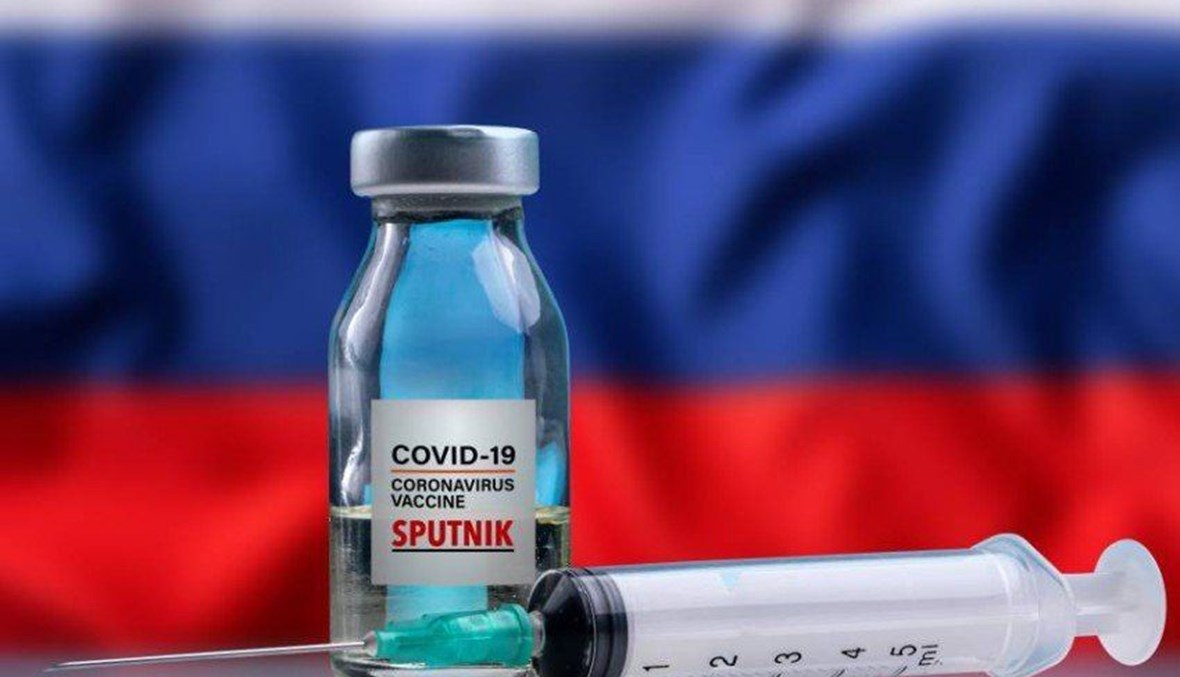
لقاح كوفيد-19 الروسي: "صنع في لبنان" قريباً؟
Publisher’s rating: صحيح
The investigation concerns the possibility of making Russia’s Sputnik V vaccine at the Arwan pharmaceutical factory in Jadra, in Lebanon’s Chouf area. It reports that on 20 February 2021, Industry Minister Imad Hoballah and Russian Ambassador Alexander Rudakov visited the factory to discuss whether it could help manufacture the vaccine. The factory’s board chairman said it had experience in pharmaceutical production and that its facilities and capabilities were suitable for the proposal. The evidence establishes that discussions and contacts were under way, not that vaccine production had begun or that an agreement to manufacture it had been completed. Hoballah said matters were still being discussed; the Russian ambassador said contact would take place with relevant Russian and Lebanese companies. The Russian ambassador’s media adviser confirmed the reported discussions but said no further information was available while talks between the Russian Direct Investment Fund and Lebanese partners were ongoing. Lebanon’s Health Ministry said it had supported and facilitated the project. The article therefore supports the prospect of near-term consideration, while its account leaves the outcome of negotiations unresolved.
In Nederlands ziekenhuis worden vaccins getest op kinderen vanaf 13, voornamelijk kinderen uit instellingen met een beperking.
Publisher’s rating: Er wordt op dit moment in Nederland geen vaccin tegen Covid-19 getest op kinderen. Het gaat hier dus niet om het Janssen-vaccin. Plannen voor dit soort onderzoeken binnen de EU liggen wel bij het Europees Geneesmiddelenagentschap. Er wordt in Nederland wel onderzoek gedaan rondom andere vaccinaties bij kinderen, bijvoorbeeld tegen kinkhoest en baarmoederhalskanker. Er zijn momenteel geen studies te vinden die focussen op kinderen vanaf 13 jaar, die met een beperking in een instelling wonen.
The claim originated in a Facebook post describing a parent’s alleged conversation with a professor during a child’s hospital check-up. It said that vaccines were being tested on children aged 13 and older, mainly children with mental or physical disabilities living in institutions. The person sharing the post added that the vaccine was supposedly Janssen’s. The review addresses that specific Dutch-hospital claim, rather than just vaccine research in general. (S1) The review reports that, at the time it examined the claim, there were no Covid-19 vaccine tests on children in the Netherlands and no Dutch-hospital study matching the described group of children aged 13 or older with disabilities living in institutions. It also distinguishes the alleged Janssen study from plans for future research: Janssen and AstraZeneca had submitted plans to the European Medicines Agency’s pediatric committee, but the review says coronavirus vaccines were not yet being tested on children within the EU. (S1) There was Dutch research involving children and vaccines, but the details do not establish the post’s claimed study. The review describes a whooping-cough booster study that included participants aged 7 to 70, and monitoring of girls receiving HPV vaccination, which they were invited to receive in the year they turned 13. It further notes a Utrecht study of coronavirus-vaccine effects in people with Down syndrome, whose participants were adults. These examples concern different vaccines, study populations, or settings from the post’s allegation. (S1)

«SEREMI DE SALUD DE VALPARAÍSO, CON AMBAS DOSIS PUESTAS, SE CONTAGIÓ CON COVID»
Publisher’s rating: Real
Ein Video zeigt Fahrzeuge des Bundesheers, die nach Wiener Neustadt fahren, um die Stadt im Zuge der Maßnahmen gegen die Ausbreitung des Coronavirus abzuriegeln.
Publisher’s rating: Das ist falsch. Die Fahrzeuge des Bundesheers waren zwar wirklich vergangene Woche in Wiener Neustadt unterwegs, sie befanden sich allerdings auf dem Weg zu einem Übungsplatz. Der Einsatz hatte nichts mit der Corona-Pandemie zu tun.
The claim concerned a widely shared video of Austrian Armed Forces vehicles in Wiener Neustadt, which some viewers interpreted as evidence that the city was being sealed off amid coronavirus measures. The review confirms that the vehicles were in the city, but says their presence did not indicate a pandemic-related operation: they were travelling to a military exercise site. To locate the footage, the review identified a JET petrol station visible in the video and compared it with Google Street View. It also checked whether the readable fuel prices were consistent with the relevant week, finding no timing contradiction. These checks support the identification of the recording’s location and show that the video itself does not establish the alleged reason for the vehicles’ presence. The decisive evidence reported by the review is a statement from Bundesheer spokesperson Colonel Michael Bauer. He said the vehicles were travelling from Graz to the Tritolwerk training site near Eggendorf, where soldiers were to conduct a target-verification exercise. The review reports that the site is close to the petrol station and identifies it as a Bundesheer training ground. It also cites statements from the military’s ABC Defence Centre confirming that the video showed vehicles passing through on their way from Graz to the exercise. Thus, the footage showed real vehicles in Wiener Neustadt, but the reported destination and purpose contradict the claim that they were there to seal off the city.
L'infirmière enceinte de 14 semaines a fait une fausse couche quelques jours après le vaccin contre le coronavirus.
Publisher’s rating: L’infirmière sur l’image est Amy Guy-Ulrich. Elle était enceinte de 28 semaines au moment de la vaccination. Elle a confirmé, le 14 mars 2021, qu’elle était toujours enceinte et que tout allait bien. Elle avait également réagi en février 2021 en affirmant qu'elle attendait toujours un petit garçon « costaud ».
Nach Angaben der Europäische Medizinagentur EMA wurden 1724 Todesfälle durch Impfungen gegen Corona verursacht.
Publisher’s rating: Auf der Website der EU-Datenbank wird nicht behauptet, dass die Impfstoffe Nebenwirkungen und Tode verursachen. Es wird darauf hingewiesen, dass die Informationen nicht als Bestätigung für einen derartigen Zusammenhang zu verstehen sind.
The claim attributes 1,724 deaths to COVID-19 vaccinations based on figures said to come from the European Medicines Agency’s (EMA) adverse-event database. The review says the database records observed symptoms reported after vaccination, but its entries do not establish that a vaccine caused a reported event. Its terms state that the data are not confirmation of a connection between a medicine and an observed reaction; reports may also include more than one reaction, so symptom counts do not necessarily equal counts of individual cases. To assess the death figure, the review describes examining the database’s “Number of Individual Cases for a selected Reaction” category and its “Death” entries for 2021. It reports 235 entries for Moderna, 395 for BioNTech/Pfizer and 70 for AstraZeneca—a total of 700, below the 1,711 deaths that the article reportedly cited for 2021. The review also says it could not determine where the figure 1,724 came from. These database entries indicate reported deaths in temporal proximity to vaccination, not deaths established as caused by vaccination. Other database counts do not resolve the causal question. The review notes roughly 2,200 fatal outcomes for BioNTech/Pfizer, 290 for AstraZeneca and 750 for Moderna when looking across listed diseases, but cautions that a single report can contain multiple reactions. A broader selection of death-related reactions produced 887 entries, including categories such as a pet’s death or witnessing a death. The review’s conclusion is therefore that presenting the database records as 1,724 vaccine-caused deaths is misleading: the records are suspected or observed reports, not proof of causation.
Lijst toont 11 landen die gestopt zijn met gebruik van het coronavaccin van AstraZeneca, inclusief 2 (Zwitserland en Zuid-Afrika) waar het vaccin nooit werd goedgekeurd.
Publisher’s rating: Het bericht mist context. Negen van de landen schorsen het gebruik voorlopig, maar hebben de vaccinatie niet stopgezet. Vijf van die negen schorsen ook slechts één lading van het vaccin, terwijl de andere vier het gebruik geheel schorsen. Drie van de in totaal elf landen gebruikt het vaccin helemaal niet.

São Lourenço adotou o TRATAMENTO PRECOCE e está há 3 semanas sem NENHUMA INTERNAÇÃO EM UTI OU ÓBITO POR COVID - 19
Publisher’s rating: Falso
