PeakMetrics / Fact Checks
Health & medicine fact checks
Explore claims publishers have checked about health & medicine. Read their original ratings and follow the evidence.
Search fact checks
Search by text or image13,674 published reviews in this topic
Wattenstaafjes die gebruikt worden bij PCR-tests zijn bedekt met ethyleenoxide, een kankerverwekkende stof.
Publisher’s rating: Het bericht is deels fout. Ethyleenoxide, of ethylene oxide in het Engels, is een kankerverwekkende stof. Het wordt gebruikt om medische hulpmiddelen zoals wattenstaafjes te steriliseren. Maar het zit niet 'op' de wattenstaafjes: de aanwezige ethyleenoxide wordt na sterilisatie weer verwijderd en het is dan ook niet gevaarlijk in die situatie.
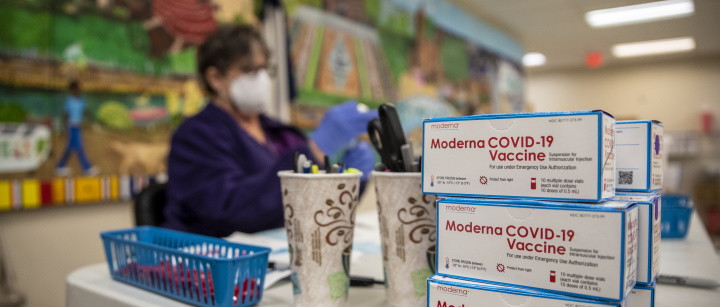
Massavaccinatie zal een zogenoemde 'immune escape' of immuunontsnapping ter gevolg hebben.
Publisher’s rating: Experts in binnen- en buitenland verwijzen een hoop van de beweringen in de brief van Vanden Bossche naar de prullenmand. Het klopt niet dat massavaccinatie het virus dwingt om meer besmettelijke varianten te ontwikkelen. De stelling dat vaccinatie het aangeboren immuunsysteem sterk zou beschadigen is eveneens onjuist. Ten slotte werkt massavaccinatie de immuunontsnapping niet in de hand, maar vermijdt het net de verdere verspreiding. Ook dat werd recent aangetoond.
Die gezeigten Überlebensraten gelten für die angegebenen Altersgruppen.
Publisher’s rating: Bei den im Sharepic angegebenen Überlebensraten ist weder ersichtlich, um welche Krankheit es sich handelt, noch welches Land und welche Zeitspanne gemeint sind. Auch ist die verwendete Berechnungsmethode nicht angegeben. Die Zahlen entsprechen nicht den über laborbestätigte Corona-Fälle ermittelbaren Werten für die Schweiz.
The claim concerns a social-media graphic that gives survival chances by age: over 99% for people aged 0–69 and 94.6% for those over 70. The review notes that the graphic does not identify a disease, place, period, or calculation method. Although the graphic itself does not link the figures to a diagnosis, the review says comments suggested that some users understood them as relating to COVID-19. To assess that interpretation, the review compared the figures with Swiss laboratory-confirmed COVID-19 data through week 53 of 2020. It explains that the comparison gives different results depending on what “survival rate” is taken to mean. Read as a relative survival rate, the graphic’s figures would imply more deaths in every age group than had actually occurred by that point. Read instead as an absolute survival rate based on confirmed infections and deaths, the figures match the Swiss data for ages 0–19, 20–49, and 50–69—but not for those over 70: the review reports 89.27% for that group, rather than 94.6%. Thus, the graphic’s figures are not established as applying to the stated age groups in a general or clearly specified way. Under the review’s COVID-19 comparison, three age-group figures match only under one calculation, while the oldest group does not; the graphic also leaves essential information about disease, location, time period, and method unspecified.

Schwarze Fäden deuten auf Parasiten oder ʺMorgellonsʺ auf Abstrichstäbchen bei Corona-Schnelltests hin.
Publisher’s rating: Falsch. Die schwarzen Fäden sind Textilfasern. Sie bewegen sich, weil sie ein Luftzug trifft oder weil antistatische Kräfte wirken. Morgellons gibt es nicht, Mediziner sprechen von einer psychischen Krankheit.

In Israel haben die gegen Sars-CoV-2 Geimpften eine 40-mal höhere Mortalität als nicht Geimpfte.
Publisher’s rating: Die israelische Behörde bestätigte die Wirksamkeit des Covid-19-Impfstoffes von Pfizer und Biontech.

Se están cometiendo “crímenes de guerra” y experimentos humanos sin consentimiento con las vacunas contra el covid-19
Publisher’s rating: Falso
Chili ist ein wirksames Krebsmedikament.
Publisher’s rating: Die Informationen sind ihrem Kontext entrissen und irreführend dargestellt: Capsaicin - ein Inhaltsstoff der Chili - zeigte in einzelnen Tests mit Zellkulturen Wirkung. Ein auf diese Erkenntnisse aufbauendes Krebsmedikament ist noch lange nicht in Sicht.
The claim is that chili is an effective cancer medicine. The review focuses on capsaicin, the chili compound responsible for its heat, and checks the blog post’s assertion that chili ingredients work against cancer cells, including in lung and pancreatic cancer. It reports that researchers have tested capsaicin on tumor cells, but the research described had not advanced beyond experiments in cell cultures. The review says it examined the research paper cited by the blog and consulted PubMed, where it found studies testing capsaicin on cell cultures. It also points to other studies that, at the time of the review, tested the substance only in cell cultures. On that evidence, it says there was no evidence that capsaicin could slow or eliminate cancer in a person. Results in cells therefore do not establish that eating chili treats cancer or that capsaicin is an effective cancer medicine. The review quotes Susanne Weg-Remers of the German Cancer Information Service on what would be required for a drug: further testing in animal models and staged clinical trials in human patients. She describes this as a lengthy process, and the review notes that only a small fraction of investigated substances ultimately receive approval as cancer medicines. The reported cell-culture findings are preliminary research, not proof of a treatment.

"We've got 1,500 young people who are waiting for mental health support for over a year"
Publisher’s rating: This is correct.
Ziekenhuizen zijn niet vol. Deze video, door een medewerker van het VUmc, bewijst het.
Publisher’s rating: De video is inderdaad gefilmd in het VUmc in Amsterdam. Het gaat echter om een beddencentrale waar de ziekenhuisbedden worden schoongemaakt. Hier liggen nooit patiënten. De beelden missen dus context. Het is daarnaast niet met zekerheid te zeggen of de video daadwerkelijk door een medewerker van het VUmc is gemaakt.
The video showed a room full of empty hospital beds at VUmc in Amsterdam. The review distinguishes what the footage actually depicts from the claim attached to it: the room is a bed-processing area, not a ward where patients would be expected to lie. The hospital described it as the place where used beds are cleaned, and said patients are never there. The video therefore cannot establish that hospitals are empty. To check the location and the room’s purpose, the review cites the hospital’s replies on Twitter. Amsterdam UMC identified the space as its beddencentrale and explained that beds are cleaned there for the next patient. The review also reports that the room is in the basement beneath the main entrance and is accessible to the public. This means the footage’s location does not establish who recorded it. The claim that a VUmc employee made the video is not confirmed: a hospital spokesperson told dpa that the hospital had not investigated the sender and could not officially confirm or deny the claim. As for hospital occupancy, the review reports that on 29 March 2021, 2,342 people with COVID-19 were hospitalized in the Netherlands, including 675 in intensive care. Those figures, alongside the footage’s limited setting, contradict using this room as proof that hospitals were empty.
Pesan berantai berisi klaim kebiasaan minum air es menyebabkan penyakit jantung
Publisher’s rating: Keliru

Hay una lista de vitaminas y suplementos para prevenir y curar el covid-19
Publisher’s rating: Falso
The claim concerns a social-media list presented as a way to prevent or cure COVID-19. Univision’s review identifies the post’s ingredients—including zinc, vitamins C and D3, quercetin, budesonide, dexamethasone, turmeric, colloidal silver and iodine—and says it circulated on Twitter and Facebook. The review’s central distinction is between supporting general health and demonstrating prevention or treatment: it reports that some nutrients may help maintain health, but says they do not by themselves prevent infection or cure the disease. The review describes different evidence for different items, rather than treating the list as one proven remedy. It reports that studies during the pandemic found vitamin C and zinc did not reduce the intensity or duration of symptoms in COVID-19 patients, and that ingested vitamin D3 made no difference in those patients. It also says evidence was insufficient for turmeric, iodine and quercetin as treatments. By contrast, the review reports limited findings for two medicines: inhaled budesonide reduced the likelihood of urgent medical care and recovery time early in symptoms, while dexamethasone reduced deaths and hospitalization duration among patients needing respiratory support. Those findings do not establish the entire list as a preventive or curative regimen. The article also supplies context missing from the post’s framing: Fauci’s reported comments about vitamins D and C concerned health and antioxidants, not replacing masks or vaccines. The review notes that COVID-19 transmission could be reduced by measures including masking, distancing and vaccination, and concludes that the list does not work as a set of preventive and curative methods. Its evidence therefore distinguishes specific, qualified findings from the broader claim that the listed products prevent or cure COVID-19.
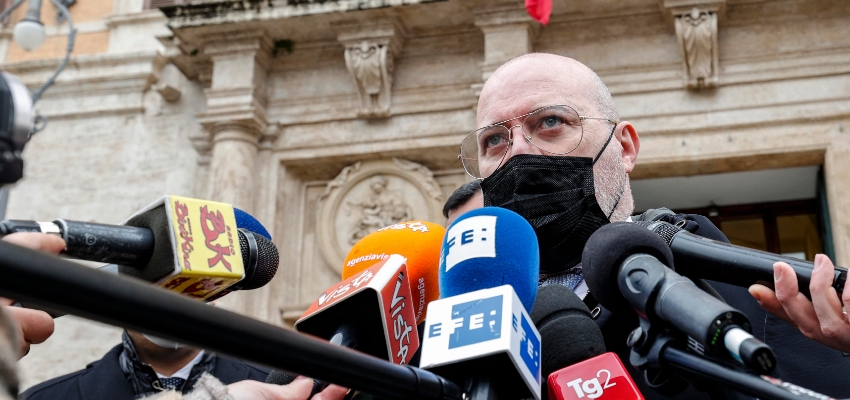
«Nessuna regione italiana può acquistare i vaccini senza avere l’autorizzazione di Ema e di Aifa, ma soprattutto perché le regole oggi impongono che sia l’Unione europea ad acquistare i vaccini, a firmare i contratti, e i singoli Stati, ovviamente mettendoci risorse, fanno le richieste di fornitura necessarie»
Publisher’s rating: Nì
The review examines remarks by Emilia-Romagna president Stefano Bonaccini on 28 March, after Campania announced an agreement to obtain Russia’s Sputnik vaccine. Bonaccini said regions could not buy vaccines without authorization from the European Medicines Agency (EMA) and Italy’s medicines agency (AIFA), and portrayed EU purchasing arrangements as rules requiring the EU to contract for vaccines while member states requested supplies. The review concludes that this account oversimplified both purchasing and authorization. On purchasing, the investigation describes the EU’s centralized strategy as an arrangement in which member states authorized the European Commission to negotiate and sign advance purchase agreements. It distinguishes vaccines covered by those agreements from others: citing a Commission spokesperson’s earlier statement, the review says regions could conclude contracts for products outside the EU strategy. It also notes that the EU had not contracted for Sputnik, and that Hungary and Slovakia had bought it. Thus the review rejects the suggestion that EU arrangements categorically barred regional deals, while describing the legal position as qualified rather than unrestricted. The review separates making a supply agreement from using a vaccine. It says AIFA authorization was required for commercialization and use in Italy, but that an EMA authorization was not necessarily required: in an emergency, a member state could authorize use without European approval. It cites Campania’s statement that its Sputnik contract would take effect after EMA or AIFA approval, and reports that Veneto’s Luca Zaia likewise acknowledged the need for authorization before use. The article’s overall conclusion is that regional purchasing appeared possible for vaccines outside the EU’s agreements, subject to authorization and other constraints; it also notes that the issue involved political decisions as well as legal ones.
Auf medizinischen Masken und Corona-Teststäbchen finden sich Würmer, Nanotechnologien oder Mogellons.
Publisher’s rating: Die dunklen Fasern finden sich entweder produktionsbedingt auf den Masken und Teststäbchen oder sie sind nach dem Auspacken darauf gelandet. Dabei handelt es sich weder um Lebewesen noch um Nanotechnologien, sondern in der Regel um unbedenkliche Stoffe wie beispielsweise Textilfasern. Solche Fasern können sich durch Temperaturveränderung oder Elektrostatik bewegen - nicht aber aus eigener Kraft.
The claim concerns small, dark, thread-like objects shown in online microscope images and videos of medical masks and COVID-19 antigen-test swabs. The review describes how these images were used to allege contamination, including claims that the objects were worms, nanotechnology, or “Morgellons.” Its investigation examined similar fibres on test swabs: biological-trace expert Mark Benecke put swabs from a COVID-19 antigen test under a microscope and identified the dark threads in his sample as blue textile fibres. The review reports that Benecke said such fibres could come from the factory, including workers’ clothing, because the swabs are not made in a clean room and are sterilised after production. The review also addresses why the objects may appear to move in videos. Benecke explained that fibres can bend or move when they absorb warmth and moisture from someone breathing on them, or through electrostatic attraction, including beneath packaging film. That observed movement therefore does not establish that the objects are living organisms. The review describes the microscope images and videos as showing objects that move under certain conditions, but reports no evidence that they move by themselves. The review’s account supports identifying the examined threads as fibres, not worms or nanotechnology. It says masks and swabs can acquire fibres during production or after unpacking, and notes that the materials commonly used in these products include synthetic fabrics. Its conclusion concerns the dark fibres described in the review; it does not establish the identity of every object in every online image or video.


In FFP2-Masken befinden sich Schadstoffe ("Gift im Gesicht")
Publisher’s rating: Größtenteils falsch. Es gibt keine wissenschaftlichen Belege für Schadstoffe in Masken, in einzelnen Untersuchungen wurden aber zwei Masken wegen Schadstoffen aus dem Verkehr gezogen. Produkttests fanden keine Schadstoffe.