PeakMetrics / Fact Checks
Health & medicine fact checks
Explore claims publishers have checked about health & medicine. Read their original ratings and follow the evidence.
Search fact checks
Search by text or image13,674 published reviews in this topic

Morte de Agnaldo Timóteo, Alberto Fernández com Covid-19 e surto no Chile provam que Coronavac não funciona
Publisher’s rating: Falso
Auf einem Corona-Gipfel wurde ein "totaler Shutdown" ab dem 12. April für 6 Wochen beschlossen.
Publisher’s rating: Die Meldung ist erfunden. Weder gab es am 4. April einen Corona-Gipfel, bei dem ein Shutdown beschlossen wurde, noch hielt Bundeskanzlerin Angela Merkel am 6. April zu dem Thema eine Pressekonferenz ab.
The claim concerned a Facebook image announcing a “total shutdown” from 12 April for six weeks. It presented the restrictions as already agreed at a coronavirus summit on 4 April and said that Angela Merkel would explain them at a press conference on 6 April. The image, according to the review, did not identify a verifiable news outlet, and its purported report contained spelling and grammar errors. The review checked the alleged events against records and contemporaneous reporting. It says no coronavirus summit took place on Easter Sunday, 4 April. For 6 April, it found no press-conference announcement in Merkel’s public calendar or in communications from the Chancellery. The review also reports finding no coverage of either alleged event by the German Press Agency or other media, although an announcement of that significance would be readily searchable. The image used a photograph of Merkel and several state premiers, but the review traced it to 16 November 2020, rather than the purported April announcement. The review distinguishes the fabricated claim from genuine discussions about stricter measures: federal and state governments were due to discuss new measures on 12 April, and a government spokesperson had said on 7 April that calls for a short, uniform lockdown were justified. Those facts do not establish that the claimed summit or six-week shutdown had already been agreed.
Les enfants ne sont pas porteurs du Covid-19 et donc pas contaminants.
Publisher’s rating: C’est faux. Les enfants sont moins gravement touchés que les adultes par le Covid-19. Mais ils peuvent être porteurs du coronavirus et vecteurs de transmission de la maladie, donc contaminants.
The review concerns a Facebook post by a member of the “Cov-Exbis” group. The post said children were not carriers, vectors or contaminants, alongside a message alleging that children were being targeted by vaccination and a video compiling French scientists discussing vaccinating children. The review distinguishes two issues the post conflates: children are generally less severely affected by Covid-19 than adults, but they can still become infected and transmit the virus. To support that distinction, the review reports that Belgium’s public health institute, Sciensano, had recorded more than 34,000 Covid-19 cases among children aged 0–9 and more than 102,000 among adolescents aged 10–19 since March 2020. It also quotes Harvard Medical School’s explanation that children can develop Covid-19, often without symptoms, and that those who become ill tend to have milder symptoms, while serious complications are less frequent. Those points support the review’s distinction between lower average severity and the ability to be infected; the review separately cites international health bodies on transmission. The review quotes the United Nations as saying that children can be infected and are capable of transmitting Covid-19 to others. It also quotes the European Centre for Disease Prevention and Control (ECDC), which says children and adolescents can transmit the virus. Together, these cited statements directly contradict the post’s categorical claim that children cannot be carriers or transmitters. The review’s discussion of vaccine trials and plans for adolescent vaccination supplies context for the post’s vaccination framing, but does not establish that children cannot spread the virus.
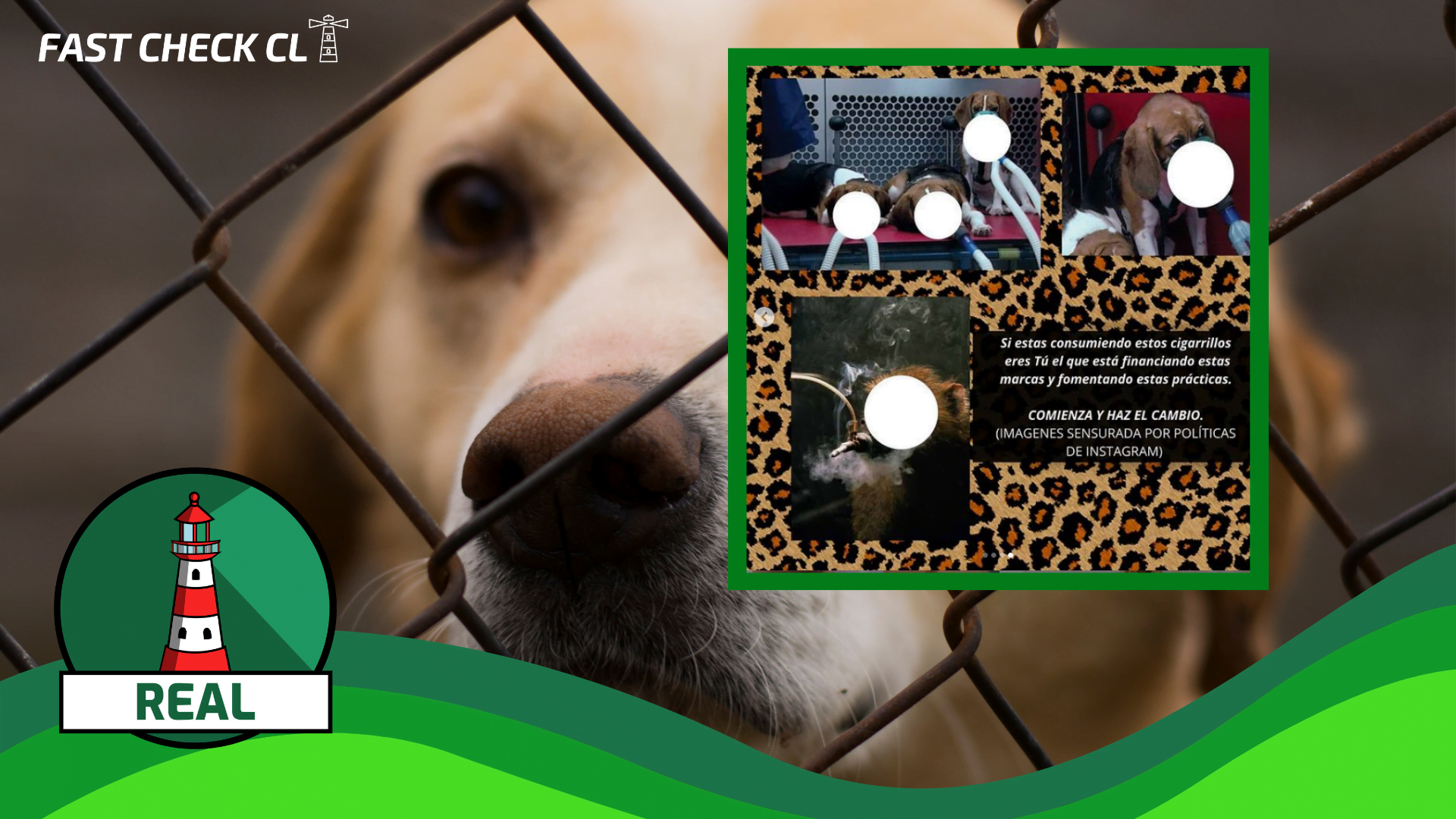
MARCAS DE CIGARRILLOS QUE SE DISTRIBUYEN EN CHILE HAN TESTEADO EN ANIMALES
Publisher’s rating: Real

Das Coronavirus ist auf keinen Fall gefährlicher als Influenza, sagt Infektiologe Clemens Wendtner.
Publisher’s rating: Studien belegen, dass Sars-CoV-2 dreimal tödlicher ist als das Influenza-Virus. Das Zitat ist älter als ein Jahr, Clemens Wendtner hat seine Einschätzung später geändert.
The claim repeats a statement attributed to infectious-disease specialist Clemens Wendtner that coronavirus was “auf keinen Fall gefährlicher als Influenza.” The review says the quote was genuine, but dates it to 6 February 2020, at the start of the pandemic. It therefore reflects Wendtner’s early view, not his later assessment. The review reports that he subsequently described the impact of Covid-19 cases at his Munich clinic and, by September 2020, said the illness’s scale was only becoming clear gradually. (S1) In January 2021, Wendtner told Bayerischer Rundfunk fact-checkers that he had repeatedly said SARS-CoV-2 was considerably more dangerous than influenza, including in transmission, clinical course and mortality. He gave estimated fatality rates in Germany of about 1.0% for Covid-19 and 0.1–0.2% for influenza. These later remarks directly contradict the claim’s presentation of his earlier statement as his current position. (S1) The review also cites a French researchers’ study comparing data from more than 135,000 people infected with SARS-CoV-2 or influenza. It reports mortality of 16.9% among the Covid-19 patients and 5.8% among influenza patients, a difference of nearly threefold, and says Covid-19 patients more often required intensive care. The excerpt does not provide further details about the study population or methods, so those figures should be understood as the review reports them, rather than generalized beyond that comparison. (S1)
AstraZeneca-trial bij kinderen gestopt. Er waren ernstige bijwerkingen, zoals SIDS en SUDS.
Publisher’s rating: De beweringen in het artikel kloppen niet. De proef met het AstraZenecavaccin bij kinderen is kort stilgelegd vanwege de zorgen rondom trombose bij volwassenen. Inmiddels gaat de universiteit van Oxford verder met het onderzoek, maar zetten ze voorlopig nog geen nieuwe prikken. Er is volgens de universiteit geen bezorgdheid over de veiligheid van de studie zelf. Er zijn geen meldingen van wiegendood (SIDS) of plotselinge dood (SUDS) bekend bij de kinderen die meedoen aan het onderzoek.
The claim concerned a De Kleintjeskrant article, shared on Facebook, alleging that children in Oxford had died after receiving the AstraZeneca vaccine and that severe effects including SIDS and SUDS had caused the children’s trial to stop. The review says the article gave no source for those allegations: it notes that the site sometimes republishes other outlets’ work, but that this particular article did not identify where its information came from. The review found no report of a death among trial participants. The review describes a small Oxford study involving 300 participants aged 6 to 17, intended to assess whether the vaccine produced an immune response in children. Oxford announced on 6 April 2021 that it had paused the children’s study while awaiting the UK health regulator MHRA’s investigation of blood-clot reports involving adults who had received the vaccine. The review says Oxford’s pause was precautionary, not a response to deaths or safety concerns arising in the children’s study; Oxford would hold off on new injections while discussions continued, while the study continued for children already vaccinated. The review also explains why the SIDS allegation does not fit the participants: it describes SIDS as applying to children in their first or second year of life, whereas the study participants were at least six. It says there was no report of an unexplained death among participants, and quotes the MHRA head as saying that no safety concerns had been reported with the trial. Thus, the evidence presented does not support the article’s alleged deaths or its claimed reason for the pause.


కోవిడ్-19 వ్యాధి సోకకుండా ఉండటానికి ICMR న్యూఢిల్లీ ఇచ్చిన మార్గదర్శకాల లిస్ట్
Publisher’s rating: FALSE

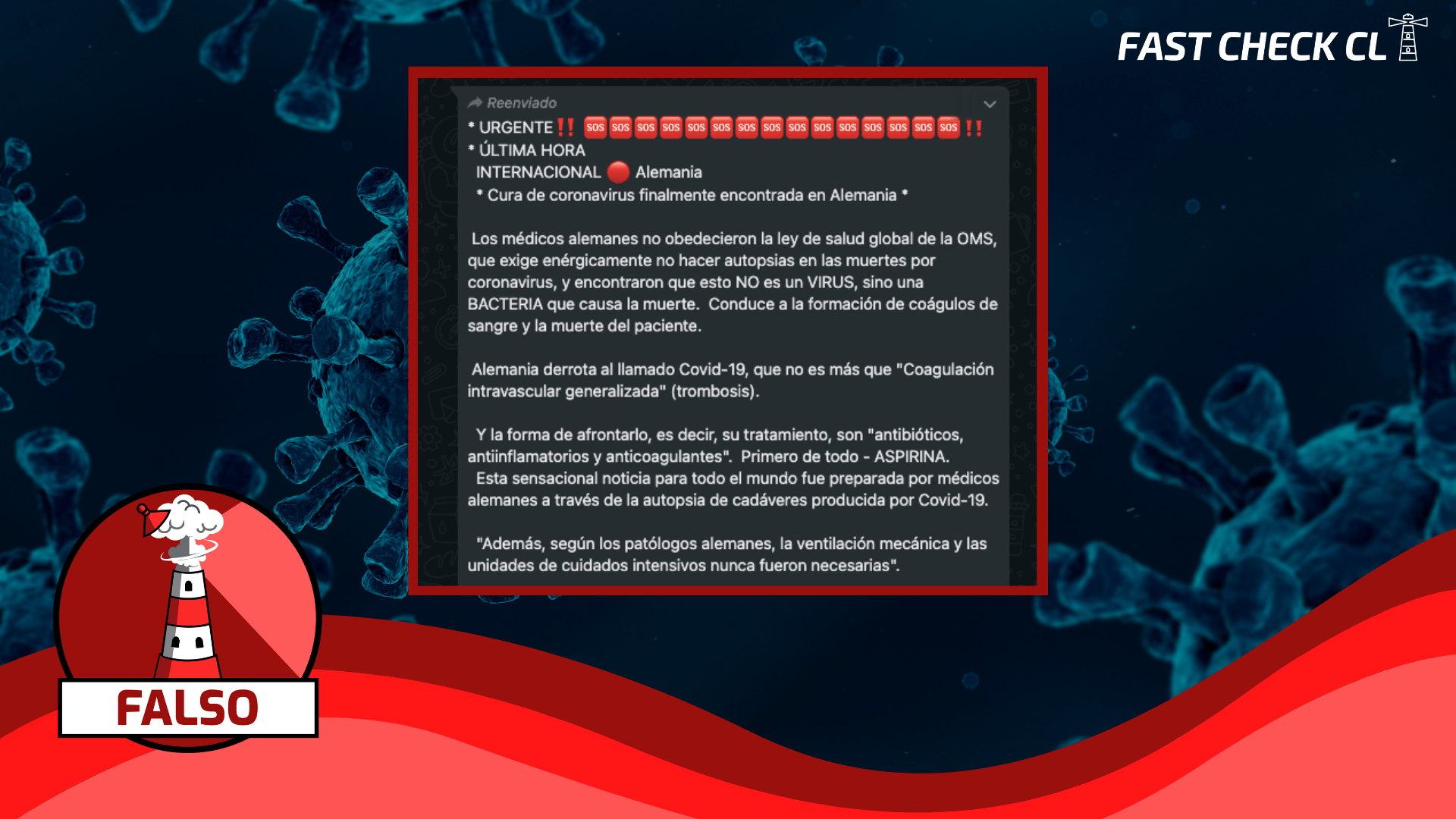
(WHATSAPP) CURA DE CORONAVIRUS FUE ENCONTRADA EN ALEMANIA
Publisher’s rating: Falso
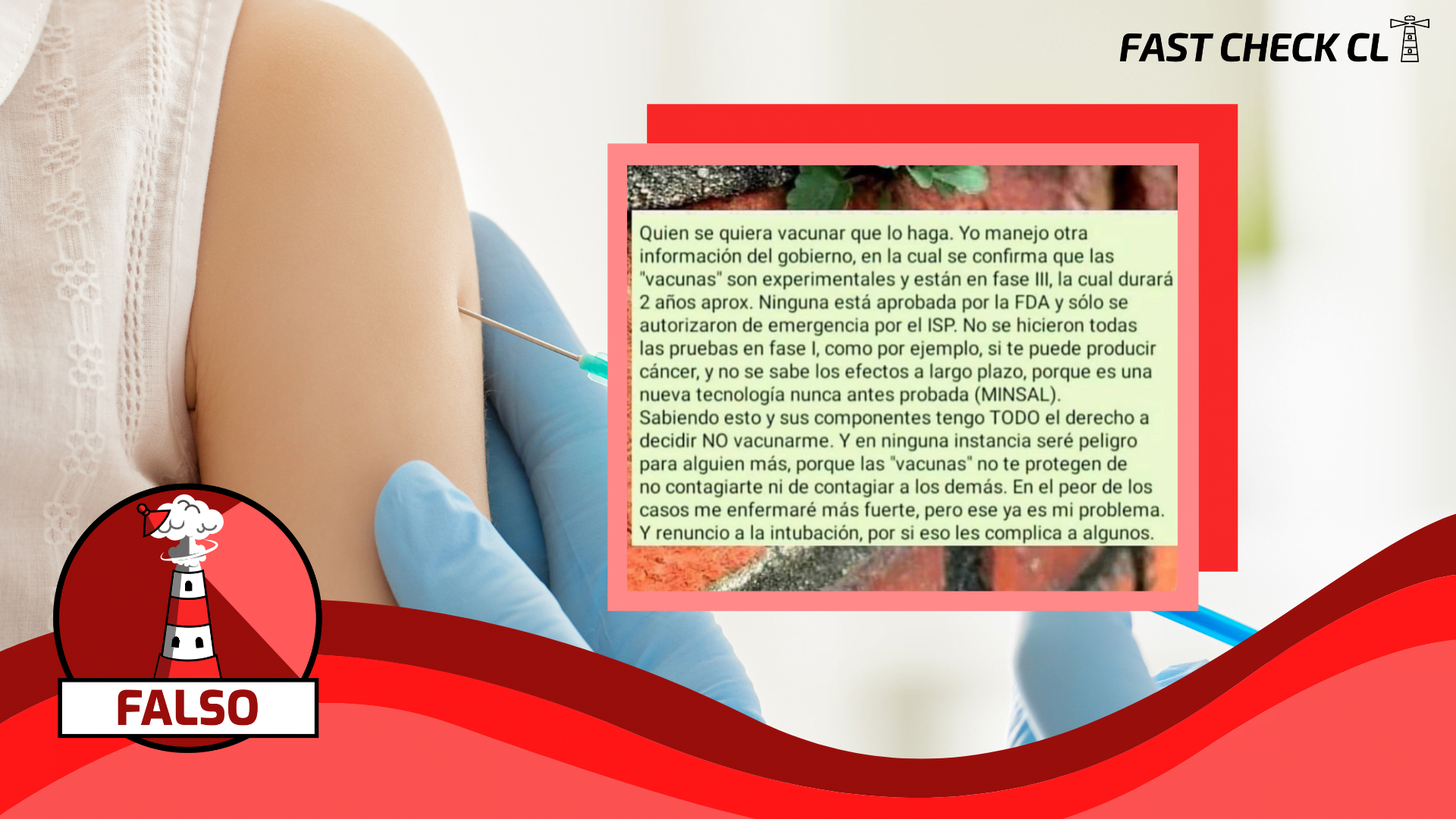
“SE CONFIRMA QUE LAS VACUNAS SON EXPERIMENTALES Y ESTÁN EN FASE III”
Publisher’s rating: Falso
Mehrere gängige und in der Corona-Krise grundlegende Annahmen zur Wirksamkeit von Schutzmasken, Definition von Corona-Infizierten, PCR-Tests und Infektiosität sind laut einer Entscheidung des Verwaltungsgerichts Wien nachweisbar falsch.
Publisher’s rating: Es handelt sich bei den Behauptungen in der Entscheidung großteils um falsche, unbelegte oder irreführende Informationen. Laut einem Verwaltungsjuristen hat das Erkenntnis des Verwaltungsgerichts Wien methodische Mängel.
Das Foto zeigt die Fake-Impfung des Bundespräsidenten
Publisher’s rating: Das Foto ist kein Beleg dafür, dass Steinmeier nicht gegen Covid-19 geimpft wurde. Schutzkappen («Tülle») an Spritzen sollen Verletzungen des Impfpersonals verhindern. Die Aufnahme zeigt den Moment vor der Entfernung der Spritze.
The post used a photo of Bundespräsident Frank-Walter Steinmeier being vaccinated to suggest he had not really received a Covid-19 vaccine. Its stated clues were that a protective cap remained on the syringe and the person administering the injection was not pressing the plunger. The review identifies the image as the same photo Steinmeier shared on Instagram and reports that he said he was vaccinated with AstraZeneca on 1 April. The review describes examining the syringe in the photo: the black marking indicated that it was already empty. That observation supports the explanation that the doctor had injected the vaccine and was no longer pressing the plunger. The apparent cap was instead an integrated safety cover, which is folded over after an injection to reduce the risk of injury from the needle. The review also points to a University Hospital Tübingen instructional video showing the same type of safety cover and a similar hand position while it is being removed. Taken together, the image details and the post’s own provenance do not support the claim that the photograph proves Steinmeier’s vaccination was fake.
WHO की भारत को चेतावनी, कोविड से देश में 15 अप्रैल तक होंगी 50,000 मौतें
Publisher’s rating: FALSE

Fiocruz atrasou entrega de vacinas porque faz boicote a Bolsonaro
Publisher’s rating: Falso

Nakaz noszenia maseczek jest już zgodny z prawem.
Publisher’s rating: Prawda