PeakMetrics / Fact Checks
Health & medicine fact checks
Explore claims publishers have checked about health & medicine. Read their original ratings and follow the evidence.
Search fact checks
Search by text or image13,674 published reviews in this topic

Video toont hoe mensen in Indisch dorp coronavaccinatie- en testteams verjagen.
Publisher’s rating: De bewering over wat er zich afspeelt is fout. De beelden werden gefilmd in Saraikela, een plaats in het oosten van India, op 23 april 2021. Politie werd daar weggejaagd nadat ze een druk dorpsfeest wilden opbreken. Het gaat dus niet om coronatest- of vaccinatieteams.


FACT CHECK: ලලිත් වීරතුංග ඇස්ට්රාසෙනෙකා එන්නත ගෙන්වීම ප්රතික්ෂේප කළාද?
Publisher’s rating: Misleading
The review investigates a WhatsApp message alleging that private companies had arranged to bring in AstraZeneca vaccine doses, but that presidential adviser Lalith Weerathunga rejected their request. The post connected that alleged rejection to a resulting shortage and the difficulty of obtaining second doses. The article sets this against Sri Lanka’s reliance on AstraZeneca and the reported inability of India’s Serum Institute to supply doses as expected. It also notes that private companies had discussed importing vaccines with agents, but that emergency-use vaccine imports were being prioritised through the government. To check the allegation, Fact Crescendo says it contacted Weerathunga, identified in the article as head of the presidential task force on vaccination, and State Minister Sudarshini Fernandopulle. Weerathunga called the claims false and malicious, and said the problem was a shortage caused by Serum Institute’s inability to supply as anticipated—not a lack of government funds or his rejection of the import request. Fernandopulle also described the circulating message as false and baseless. The review reports that she said manufacturers were willing to work directly with the government and that promised supplies had been only partly delivered. The account supplies further context for the shortage and the second-dose search: it reports that 925,242 people had received a first dose and 196,546 had received a second dose by May 9, while the government was seeking doses through other governments and the World Health Organization. Its conclusion is that the WhatsApp claim was false and misleading. The evidence presented does not establish that Weerathunga rejected an arranged import; instead, it attributes the supply difficulty to constrained availability and describes government efforts to obtain doses.

ఆంధ్రప్రదేశ్ రాష్ట్రంలో కలెక్టర్ కార్యాలయంలో చలానా కట్టి రెమెడెసివిర్ పొందొచ్చు
Publisher’s rating: FALSE

FACT CHECK: කොරෝනා රෝගය වැලඳීමෙන් පසු මවගෙන් දරුවා වෙන් කළ අවස්ථාවක් ද?
Publisher’s rating: Misleading
The review examined a social-media photo shared with a caption suggesting that a baby had COVID-19 and was being taken away from its mother. The image showed a person in protective clothing carrying a small child while a woman watched in tears. The investigation used a Google reverse-image search to find the earlier image and information about its origin, rather than treating the later caption as evidence of what had happened. According to the review’s account of a post by the social worker who took the photo, the event occurred in South Dagon, Myanmar. A mother and her four-month-old daughter were quarantined there; test results showed that the mother had COVID-19 but the child did not. The review says the child was separated from her mother to reduce the child’s risk of infection. It also notes that a Myanmar Facebook post about the incident appeared on 16 October 2020. The review concludes that the image was misleadingly captioned: it was not a case of a child being separated from a mother because the child had COVID-19. Rather, the reported reason for the separation was the mother’s confirmed infection, and the incident took place in Myanmar in October 2020—not in Sri Lanka. These details address the caption’s central implication while preserving the distinction between what the image depicts and the reason given in the source post.
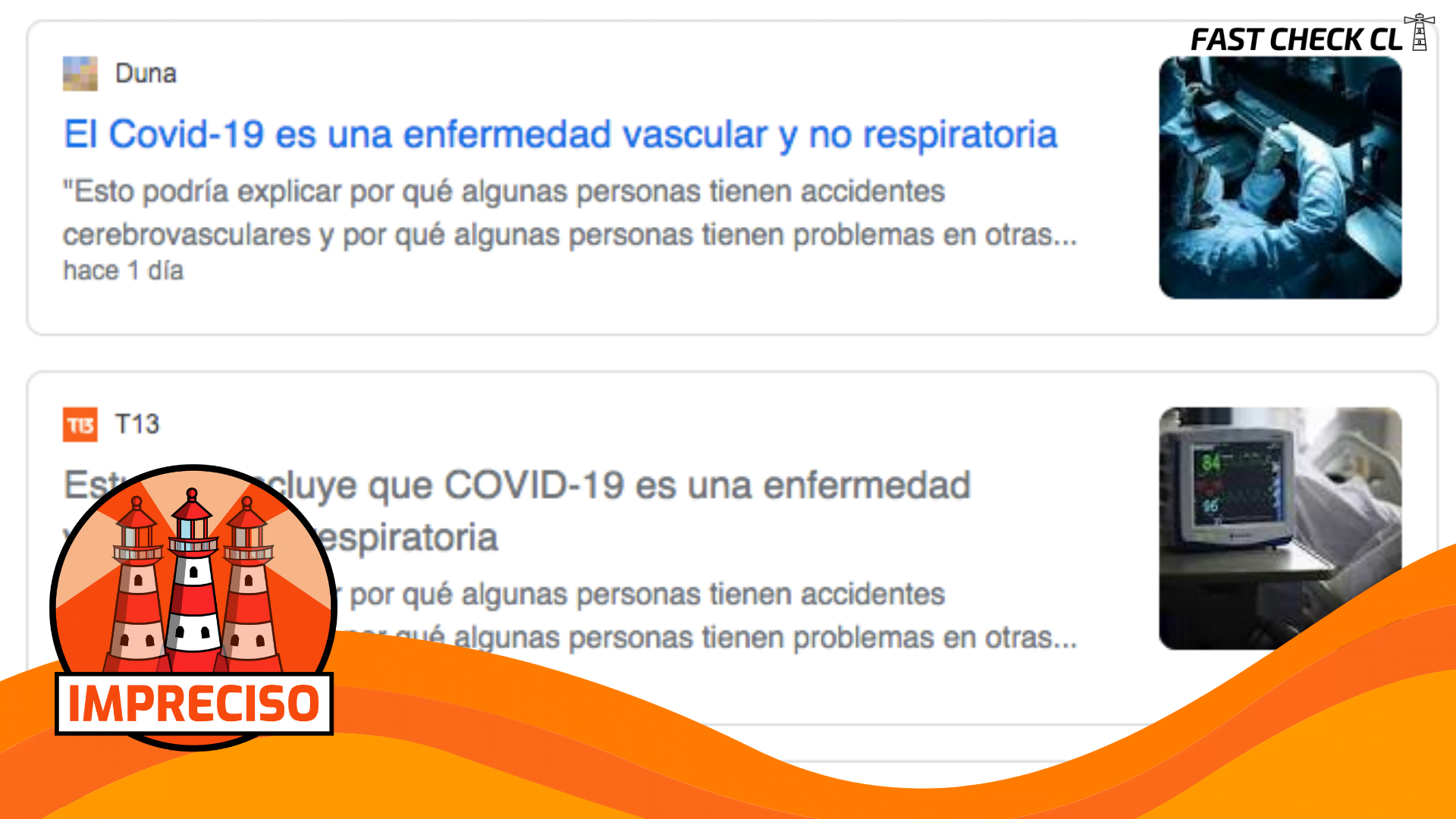
“EL COVID-19 ES UNA ENFERMEDAD VASCULAR Y NO RESPIRATORIA”
Publisher’s rating: Impreciso

Baba Ramdev admitted in a hospital and is on ventilator support
Publisher’s rating: MISLEADING
The claim concerned a social-media image said to show Baba Ramdev’s present condition, with a post asserting that he was on a ventilator. FACTLY identified the image as an old photograph from his 2011 hospitalization, rather than evidence of a current admission or ventilator support. The review says he was hospitalized in Dehradun after a nine-day hunger strike against corruption and black money.

"Entre finales de diciembre de 2020 y el mes pasado, un total de 3,362 personas aparentemente murieron después de recibir la vacuna contra el COVID-19 en Estados Unidos: 3362"
Publisher’s rating: Falso
Bij de Ikea moet je nu verplicht een sticker op als je geen mondkapje wil dragen.
Publisher’s rating: Veel van de beweringen die over de stickers rondgaan kloppen niet. De sticker werd alleen aangeboden bij het Ikea-filiaal in Delft, het was geen landelijk beleid van de meubelketen. Daarnaast waren de stickers altijd vrijwillig om te dragen. Ze dienden alleen om scheve gezichten en opmerkingen van andere winkelbezoekers en medewerkers te voorkomen. Inmiddels is ook de Ikea in Delft gestopt met de stickers.
The claim says Ikea required shoppers who did not want to wear a mask to put on a visible sticker. The review examined that specific allegation, which circulated online alongside claims that the yellow sticker was required for entry. It reports that the sticker was offered only at the Delft store, rather than being a nationwide Ikea policy, and that wearing it was voluntary—not a condition of entering the shop. The review says the Delft store began handing out the stickers on May 6. An Ikea spokesperson confirmed this to dpa and said the stickers were intended for people with a medical reason for not wearing a mask, to make the exception clear to other customers and employees and potentially prevent stares or comments. The sticker showed a yellow face mask and the word “exception.” The evidence therefore distinguishes the existence of a short-lived, local sticker scheme from the claim that it was compulsory. The store stopped the practice on May 9 after online controversy arose. The review also notes that masks were required in Ikea, as in other enclosed public spaces, while exceptions could apply in some cases.
Na de massavaccinatie in de Seychellen zien ze daar een massale toename aan overlijdens door COVID-19
Publisher’s rating: Het bericht is deels fout en mist context. Het klopt dat er sinds eind april een toename is van het aantal coronagevallen in de Seychellen. Maar 80% van die gevallen bevindt zich bij het niet-gevaccineerde deel van de bevolking. Het aantal ernstige gevallen en overlijdens valt mee en het gezondheidssysteem staat niet onder druk.

BOMBA: Documentos da Pfizer admitem que vacinados espalharão doenças para os não vacinados
Publisher’s rating: Falso

Information on suspected reactions to Covid-19 vaccines is being hidden
Publisher’s rating: False
Nicht ein Virus, sondern Impfungen haben die Spanische Grippe ausgelöst.
Publisher’s rating: Die im Video aufgestellten Behauptungen über die Spanische Grippe und Impfungen als deren Ursache sind durch nichts belegt. Wissenschaftler widersprechen solchen Aussagen vehement. Die zitierten Quellen im Video folgen keinen wissenschaftlichen Standards, kursieren aber seit Jahrzehnten unter Menschen, die Impfungen pauschal ablehnen. Für viele der zur Untermauerung angegebenen Zahlen gibt es keinerlei Belege oder aber sie sind gänzlich falsch.
The claim comes from an online video alleging that mass vaccinations, not an influenza virus, caused the Spanish flu pandemic roughly a century ago. The review examines that specific assertion and reports that the evidence does not support vaccinations as the cause. It also notes that the video relies on purported eyewitness accounts and infection experiments, but says their content and authenticity cannot be verified or generalized, and that such accounts have no role in medical history research. The review describes the Spanish flu as an influenza pandemic that spread in waves beginning in 1918. It says researchers analyzed preserved lung tissue taken in 1918 from a soldier who died of influenza; genetic analysis by a team including virologists Jeffery Taubenberger and Ann Reid identified the pandemic virus as influenza A, subtype H1N1. The review presents this as evidence establishing a viral cause, rather than vaccination. The review also addresses the suggestion that vaccination campaigns occurring in different places explain simultaneous outbreaks. It says the pandemic’s precise origin is unknown, but that the proposed link between decentralized outbreaks and simultaneous vaccinations is unsupported. It further reports that there is no evidence vaccinated people were more affected: according to historian Wolfgang U. Eckart, the vaccines commonly administered at the time were for smallpox, tetanus, and diphtheria, and there are no indications that vaccinated people suffered more from Spanish flu.
Intensivbetten werden abgebaut, 20 Krankenhäuser wurden geschlossen, in Berlin steht ein Corona-Krankenhaus leer, es gibt im März keine Übersterblichkeit
Publisher’s rating: teilweise falsch
99 Prozent aller Menschen in Deutschland sind trotz Pandemie gesund. Die Impfstoffe gegen Corona wurden nicht getestet.
Publisher’s rating: Falsch
The dpa review examined a Facebook sharepic making two claims: that 99 percent of people in Germany were healthy during the pandemic and that COVID-19 vaccines had not been tested. It explains why the first claim cannot be established by subtracting recorded infections from the total population. Official figures counted infections confirmed by positive PCR tests, while infections among people who were not tested did not appear in the statistics. The review therefore describes the word “healthy” as misleading: lack of a recorded infection does not show that someone was healthy, including because of other illnesses and uncounted COVID-19 cases. The figures illustrate that distinction. Using population data and RKI figures, the review says that 282,900 people in Germany were recorded as infected on May 5, 2021, against a population of 83,190,556. The subtraction left 82,907,656 people without a detected infection—99.66 percent of the population—but the review cautions that this did not establish that they were healthy. It also reports that RKI president Lothar Wieler said the unrecorded number of infections might be four to six times the reported number. The review separately addresses the assertion that the vaccines had not been tested. Citing Germany’s Paul-Ehrlich-Institut, it says the vaccines were tested before authorization like other vaccines used in Germany. For the then-authorized Comirnaty and Moderna vaccines, it reports efficacy data from about 14,000–18,000 vaccinated participants per vaccine in Phase 2/3 studies, with more than 30,000 participants overall. For AstraZeneca, it reports efficacy data from about 6,000 vaccinated participants in studies involving about 12,000 people, and safety data from more than 20,000 participants. These details contradict the sharepic’s claim that the vaccines were untested.
سالی یک میلیون و ۳۰۰ هزار سقط جنین در کشور انجام میشود.
Publisher’s rating: شاخدار
Related reporting discusses estimates of intentional abortions in Iran, the same national statistic addressed by the claim. It says a study of women of reproductive age put the number at about 254,000 in 1402 (2023–24), compared with an estimate of 300,000–500,000 in 1398 (2019–20). Those figures are substantially below 1.3 million a year, but the excerpt provides estimates for two particular years—not a continuous annual series or a direct assessment of the claim’s source.

“Between late December of 2020 and last month, a total of 3,362 people apparently died after getting the Covid vaccine in the US… That’s an average of roughly 30 people every day.”
Publisher’s rating: These comments are misleading as dying after receiving a vaccine doesn’t mean the death was caused by it.
Die Karte zeigt den Anteil Gesunder an der Gesamtbevölkerung.
Publisher’s rating: Die Grafik ist irreführend. In Deutschland sind mehr Menschen krank, als die Karte suggeriert. Sollte sich die Grafik ausschließlich auf Sars-CoV-2 beziehen, sind weder Dunkelziffer noch «Long-Covid» berücksichtigt.
The reviewed Facebook graphic purported to show the proportion of healthy people in Germany’s federal states, with figures ranging from 99.16 to 99.79 percent. The review explains that these figures do not establish how many people are actually healthy: Germany has illnesses other than Covid-19, and the number of people currently ill is difficult to determine. It cites, among other evidence, the estimate that around 17.8 million adults in Germany are affected by mental illness, and notes that some people with symptoms do not seek medical care. The review also examines a possible Covid-19 interpretation of the graphic. It distinguishes cumulative cases recorded since tracking began from active, laboratory-confirmed cases, which are a snapshot. Neither figure captures infections that go undetected because people are not tested. The review reports 3,217,710 registered cases through 22 April 2021; using Germany’s 2019 population as the denominator gives a 3.9 percent rate. It says the graphic probably represents the share of the population without a positive test at the time of calculation—not the share in good health. That distinction matters because the RKI’s statistical recording depends on laboratory confirmation, not on whether someone is ill, and case statistics do not include people still suffering effects after an infection has subsided. The graphic therefore cannot support the broader implication that nearly everyone was healthy: it treats the absence of a recorded positive test as if it established health, while overlooking other illnesses, undetected infections and continuing effects after Covid-19.