PeakMetrics / Fact Checks
Health & medicine fact checks
Explore claims publishers have checked about health & medicine. Read their original ratings and follow the evidence.
Search fact checks
Search by text or image13,674 published reviews in this topic
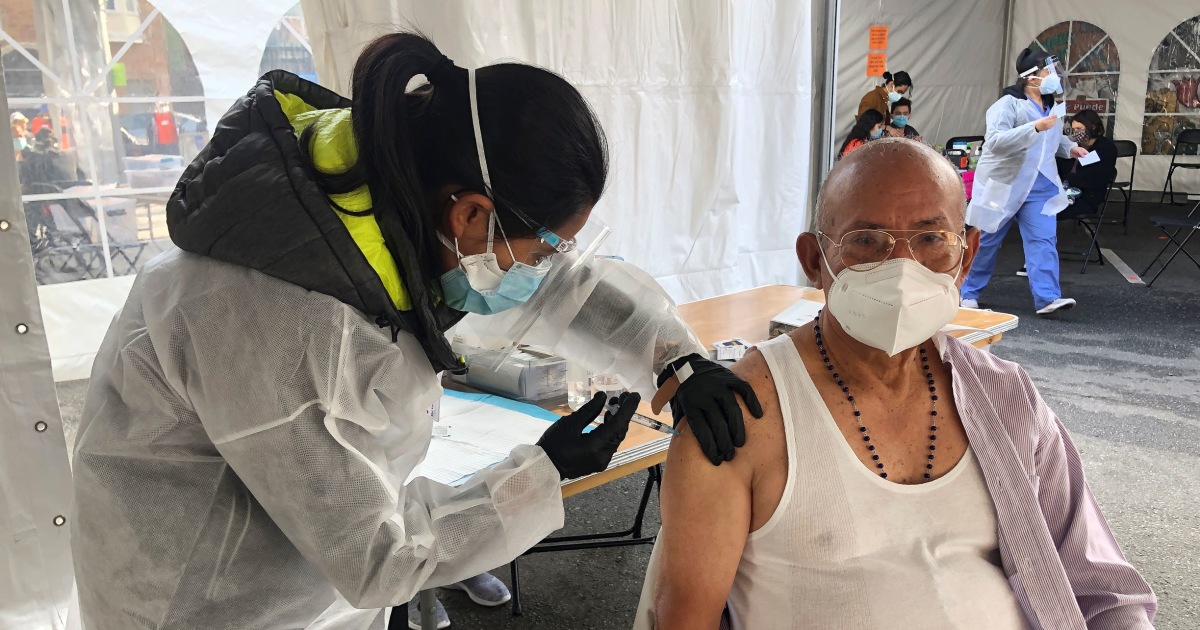
No hay diferencia en la vacunación contra el COVID-19 entre personas blancas, negras, hispanos o asiático-americanos mayores de 65 años.
Publisher’s rating: Falso
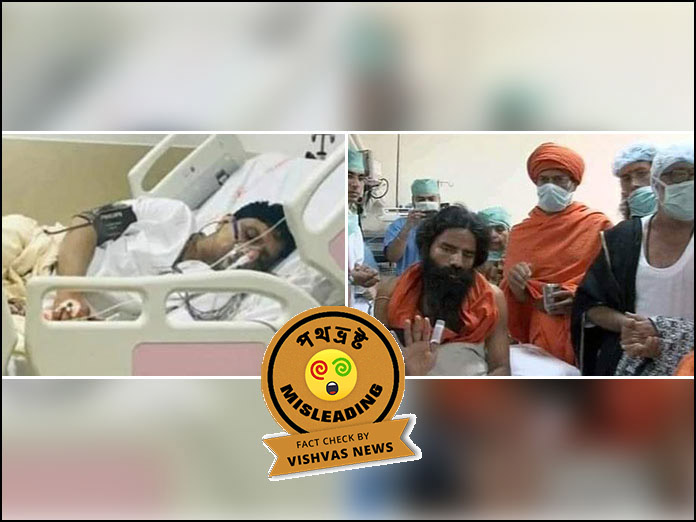
ইয়াৰ সৈতে দাবী কৰা হৈছে যে বাবা ৰামদেৱ আৰু আচাৰ্য বালকৃষ্ণ কৰোনাত আক্ৰান্ত হৈছে আৰু গুৰুতৰ অৱস্থাৰ বাবে দুয়োকে ভেণ্টিলেটৰত ৰখা হৈছে।
Publisher’s rating: Misleading

Die 7‑Tage-Inzidenz geht automatisch mit der Anzahl der durchgeführten Tests einher.
Publisher’s rating: Die Zahlen der durchgeführten Tests der vergangenen Wochen zeigen im Vergleich zu den Zahlen der positiven Tests, dass es keinen direkten Zusammenhang gibt. Vielmehr zeigt eine sinkende Positivitätsrate einen Rückgang des Infektionsgeschehens. Bei der Bewertung der Situation in Österreich wird nicht nur der Inzidenzwert herangezogen.
The claim arose from a Facebook post arguing that incidence increases as more people are tested while the share of positive tests stays constant. The review notes an important conditional: within a homogeneous group, if the number tested rises and the positivity rate remains unchanged, incidence in that group would also rise. But it says the post’s assumption of a constant positivity rate does not reflect the observed situation; that rate varies and can differ by region. To compare the claim with Austrian data, the review used figures from the AGES-based Covid dashboard. Between 13 April and 8 May 2021, the reported 7-day incidence fell from 206 to 104, while tests declined only from about 350,000 to about 310,000. Over the same dates, the national positivity rate fell from 5% to 2%. Thus, the observed pattern was a nearly halved incidence alongside broadly similar testing volume, with a marked decline in positivity—not an automatic incidence increase whenever more tests are conducted. The review also qualifies what these figures can show: low testing volumes make incidence estimates less precise, particularly because infections vary regionally and undetected cases may be more numerous. It further notes that Austrian decisions were not based on incidence alone, but also considered transmission risk, traceability, testing activity and hospital capacity.
Menschen mit Behinderung werden durch die Corona-Impfung getötet. Es gibt Zwangsimpfungen für Behinderte und Obdachlose. Die Corona-Pandemie wurde inszeniert.
Publisher’s rating: Die Corona-Pandemie ist real. Doch werden weder in den USA noch in Deutschland Menschen unter Zwang gegen Sars-CoV-2 geimpft. Auch Menschen mit Behinderung oder wohnungslose Menschen müssen ihre Zustimmung zu einer Impfung geben.
The claim concerned a Facebook video showing people being vaccinated in Los Angeles. Its accompanying post alleged that police were forcibly vaccinating disabled people and people experiencing homelessness, described the vaccinations as intentional killings, and called the pandemic staged. The review traced the footage to Operation Homebound, a Los Angeles-area program run by the Los Angeles County Sheriff’s Department to reach people who might otherwise have difficulty accessing vaccination, including people with disabilities and people experiencing homelessness. The decisive issue was whether the vaccination was administered without consent. The review reports that consent was required: most people with intellectual disabilities in California’s care system could make their own medical decisions and accept or refuse vaccination; where a person could not decide, a representative could provide consent. A sheriff’s department employee also told Snopes that those vaccinated had either consented themselves or had consent through a legal guardian. The review further cautions that visible reactions in the clips do not by themselves show that a vaccination was forced. It also says that in Germany the person being vaccinated or their legal representative had to consent. The review distinguishes rare reports of blood clots and deaths potentially associated with the Johnson & Johnson vaccine from the post’s claim of deliberate killing. It reports that US health and drug agencies paused recommending the vaccine after those events, then allowed its use again from April 23, 2021, after assessing the risks as substantially lower than the benefits. Finally, it rejects the claim that the pandemic was staged, citing reported infections and deaths, including 6,922 new cases and 54 deaths in Germany on May 10, 2021, and more than 33,000 pandemic deaths in Germany during 2020.

"Waiting lists at a record high of 4.7 million"
Publisher’s rating: This is correct but it's important to note that at that time the health service was dealing with the Covid pandemic.

FACT CHECK: තේ පානය කිරීම කෝවිඩ් වැළකීමට ප්රතිකර්මයක්ද?
Publisher’s rating: Misleading
The review investigates social-media claims that tea prevents or cures COVID-19. The posts reportedly attributed the advice to Chinese doctor Li Wenliang and claimed that tea drinking explained recoveries in China. It also addresses a video advising people to drink hot water and tea and inhale steam. The review says it examined the claims and contacted the World Health Organization’s Sri Lanka office.
Verplichte vaccinatie voor kinderen op komst in Duitsland" en "families met ongevaccineerde kinderen worden buitengesloten
Publisher’s rating: De berichtgeving klopt niet. Eén en ander is gebaseerd op de conclusies van de jaarlijkse Ärztetag, als medisch specialisten vanuit het hele land samen vergaderen. De artsen adviseren de regering een vaccinatiestrategie voor de leeftijdsgroep tot zestien jaar te ontwikkelen, maar stellen geen verplichte vaccinatie of uitsluiting van families met ongevaccineerde kinderen voor.
The claims circulated in social-media posts about the conclusions of Germany’s annual Ärztetag: that children would soon face compulsory vaccination and that families with unvaccinated children would lose equal participation in society. The review examined the 172-page document of shared conclusions, particularly pages 31–32, where the relevant passage appears. It says the doctors asked the federal government to develop a vaccination strategy for children and adolescents and put it in place before the winter of 2021/2022; the document did not call for compulsory vaccination. (S1: “In het 172-pagina’s tellende document waarin alle gemeenschappelijke conclusies gedeeld worden, komt inderdaad de bepaling terug (p.31-32) die op sociale media circuleert. Deze bepaling bestaat uit twee delen: het advies aan de regering en de onderbouwing daarvan. De artsen verzoeken de regering een strategie te ontwikkelen voor het vaccineren van kinderen en jongeren en deze vóór de winter van 2021/2022 in te passen.”; “Er wordt nergens in deze koersbepaling gesproken over een verplichte vaccinatie.”) The wording about equal participation appears in the document as a supporting argument, not as a proposed exclusion policy. The doctors’ concern, as the review explains it, was that children might be denied equal participation if they were not vaccinated; they used that concern to argue for a vaccination strategy. The review also reports that Bundesärztekammer spokesperson Mark Berger confirmed this interpretation to dpa, saying the association had neither discussed nor advised a vaccination requirement. (S1: “De zin

FACT CHECK: කෝවිඩ් නිසා අසාධ්ය වී මිය යෑම වැළැක්විය හැකි ආහාර අතිරේකයක්?
Publisher’s rating: Misleading
The claim concerned Megha Primal Intake, a supplement promoted on Facebook as preventing COVID-19 patients from becoming critically ill or dying. The review describes the product as having been presented as a discovery by a Sri Lankan research team and says a promotional leaflet claimed it was suitable even for people with COVID-19. The review also notes that the product was advertised for sale. These are claims made in the promotion, not evidence that the product had been shown to prevent severe illness or death. To assess whether the supplement could be recommended for COVID-19, the investigation reports asking several relevant institutions and specialists. The Director General of Health Services said the Health Ministry had begun an investigation and that products could not be made at will without approval from relevant authorities. An Ayurveda Department official said the product was not registered there; the review also reports that a senior lecturer in indigenous medicine said the listed ingredients had individual medicinal properties but were not substances capable of controlling a virus. The review further reports that Karapitiya Hospital had neither been informed about the product nor tested or approved it in its laboratories, and that the hospital had no connection to its production. It also says the Health Ministry’s investigation was still ongoing at the time covered by the article. Taken together, the reported checks do not substantiate the promotional claim: the review presents no evidence of testing or official approval establishing that this supplement prevents COVID-19 patients from becoming critically ill or dying.

CoronaVac é proibido nos EUA e na Europa. Por isso que Bolsonaro não queria a Vacina Chinesa.
Publisher’s rating: ENGANOSO: A Europa ainda analisa e os EUA não analisaram o imunizante. Por ora, há forma de brasileiros entrarem nesses locais, imunizados ou não com a Coronavac.
Baby stierf na borstvoeding moeder die recent gevaccineerd was.
Publisher’s rating: Het verhaal is hoogst onwaarschijnlijk en werd al door verschillende factcheck-instellingen gecontroleerd. Er is geen bewijs dat de baby werkelijk stierf door borstvoeding van een gevaccineerde moeder. Bovendien is het - hoewel de data over het onderwerp beperkt is - überhaupt bijna onmogelijk dat een baby op die manier zou sterven.
The claim came from an article by Artsen Voor Vrijheid, published on 26 April 2021, which said a five-month-old baby had died after its mother received the Pfizer-BioNTech vaccine and that the baby developed several conditions. The dpa review examined both the alleged death and the proposed route of harm through breast milk. It reports that the story originated in the United States and had already been checked by other fact-checkers, including USA Today and Snopes. The review traced the article’s cited account to the Vaccine Adverse Event Reporting System (VAERS). It found a VAERS entry, but said the entry described a vaccination case from 2020 rather than 2021, and that the entry indicated the child—not the mother—had been vaccinated. The review also cautioned that anyone can submit a VAERS report and that a report alone does not establish that an event occurred as described or was caused by a vaccine. Thus, the cited record did not substantiate the article’s version of events. On the claimed breastfeeding mechanism, the review noted that breastfeeding mothers in the Netherlands, Belgium and many other countries were not advised against vaccination. It said specific data on vaccination and breastfeeding were limited, but that there were no plausible indications that vaccine could reach a child through breast milk. The article’s additional claim that the baby developed thrombotic thrombocytopenic purpura (TTP) was also described as highly unlikely: a hematologist quoted by dpa said acquired TTP in children is exceptionally rare, rarer still in babies, and that vaccination had not been established as a cause. The review therefore found no evidence that the baby died because of breastfeeding from a vaccinated mother.

ల్లీలోని జఫ్ఫ్రాబాద్ ప్రాంతంలో సామాజిక దూరం పాటించకుండా జనాలతో రద్దీగా ఉన్న వీడియో
Publisher’s rating: FALSE
Patent op Covid-19 testmethode werd al in 2015 aangevraagd.
Publisher’s rating: Het klopt niet dat dit patent in 2015 werd aangevraagd. De daadwerkelijke aanvraagdatum was in mei 2020. De datum uit 2015 slaat op de eerste patentaanvraag uit dezelfde 'octrooifamilie', waarop deze nieuwe methode werd gebaseerd.
The claim arose from an image of a patent application shared on Facebook. The image appeared to show that inventor Richard A. Rothschild had applied for a COVID-19 testing method on 13 October 2015. The review checked the application in Espacenet, a patent database, by searching for “System and Method for Testing for Covid-19.” Although the search result lists 13 October 2015 as its priority date, the application record gives the number US202016876114 20200517; the review identifies the date encoded at the end as 17 May 2020, the application date for this specific patent. The dates refer to different things. The review explains that Rothschild’s COVID-19 application belongs to a patent family containing earlier applications concerning methods and systems for biometric data. Those earlier filings supplied the 2015 priority date, but the review says the inventions are related rather than identical. It also cites an explanation from the Netherlands Enterprise Agency (RVO): in the United States, an applicant can file an application with changes based on an earlier product or application. The COVID-19 application was based on multiple earlier applications, which helps explain why an earlier family priority date appears in its record. Thus, the 2015 date shown in the record does not establish that this specific COVID-19 testing-method patent was applied for then. The review identifies 17 May 2020 as the application date for that patent, while treating 13 October 2015 as the earliest priority date in its family.
واکسن آسترازنکا در بسیاری از کشورهای اروپایی متوقف شده است.
Publisher’s rating: نادرست

BOMBA: DOCUMENTOS MOSTRAM CORONAVÍRUS SENDO TESTADO COMO ARMA BIOLÓGICA 5 ANOS ANTES DA PANDEMIA POR CHINESES
Publisher’s rating: Falso
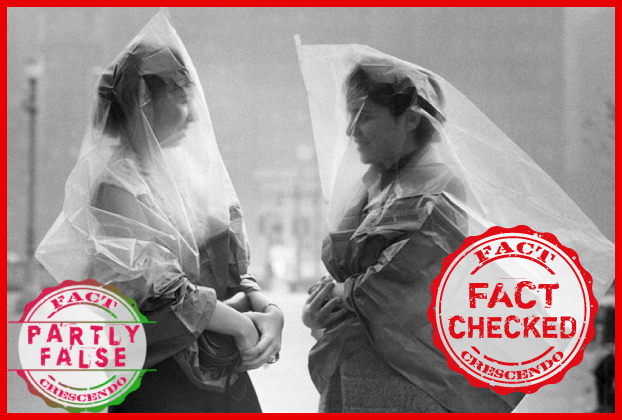
Claim: Various pictures being shared as the era of Spanish flu
Publisher’s rating: Partly False

FACT CHECK: කොරෝනා වැලඳී ඉන්දියාවේ රික්ශෝ පදවන පුද්ගලයෙකු අසරණ වී සිටින ඡායාරුපයක් ද?
Publisher’s rating: Misleading
The claim concerns a photograph circulated in Sri Lanka as showing a person in India left helpless by COVID-19, apparently slumped over a rickshaw. The review says the posts implied that the person was a current COVID-19 patient and that the image showed a recent incident. Its investigation instead found that the photograph predated the pandemic by about four years, so it could not depict the claimed recent COVID-19 scene. To check the image’s history, the review reports using Google reverse-image search. It says the search led to an earlier appearance on Steemit, where the image was posted with a description identifying the person as a drunk rickshaw driver. The review also notes a Kolkata traffic-police sign visible in the photograph. It says its Indian team could not obtain further details about the original image, so the review does not establish the person’s identity or the precise circumstances of the photograph. The review’s conclusion is that the photograph is old and does not show a rickshaw driver in India suffering from COVID-19 as the social-media posts suggested. This addresses the image’s claimed timing and COVID-19 context; the excerpt does not establish who the person was or why he was slumped over the rickshaw.
Volgens Pfizer kan een gevaccineerd persoon een ongevaccineerd persoon onvruchtbaar maken door huidcontact of inhalering.
Publisher’s rating: De conclusies die uit het protocol worden getrokken kloppen niet. Er is geen enkel bewijs dat een gevaccineerd persoon voor onvruchtbaarheid kan zorgen in ongevaccineerde personen. Op de betreffende pagina in het protocol staat dit ook niet. Er staat alleen dat het gemeld moet worden als een zwanger familielid in aanraking is geweest met het vaccin uit de studie, door inhalatie of huidcontact. Zwangere vrouwen waren namelijk uitgesloten uit de studie.

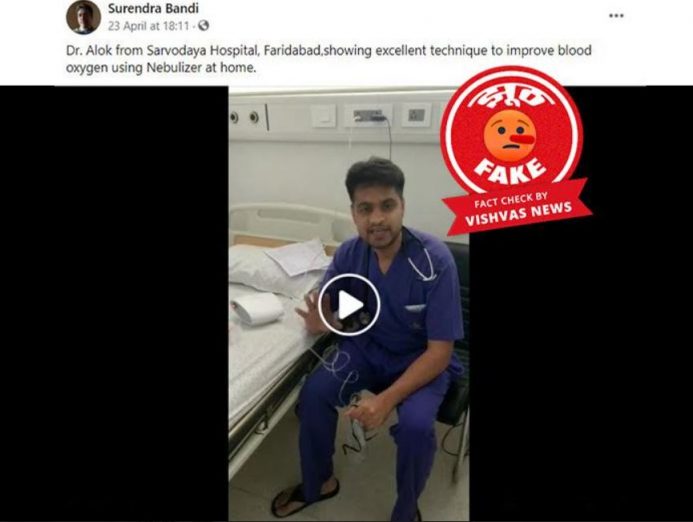
ଖାଲି ନେବୁଲାଇଜର ଅମ୍ଳଜାନ ସିଲିଣ୍ଡର ପରି କାମ କରିପାରିବ |
Publisher’s rating: FALSE