PeakMetrics / Fact Checks
Health & medicine fact checks
Explore claims publishers have checked about health & medicine. Read their original ratings and follow the evidence.
Search fact checks
Search by text or image13,672 published reviews in this topic
আপনারা এগিয়ে আসলে খলিলের ছেলেটির চিকিৎসা হবে। যে যা পারেন সমর্থ অনুযায়ী ১০০-২০০-৫০০-১০০০ সাহায্য করে যান
Publisher’s rating: Misleading
Mensen testen positief op HIV in Australië na mislukte uitrol van experimenteel MRNA vaccin.
Publisher’s rating: De conclusies die worden getrokken kloppen niet. De reportage die wordt gedeeld is al van december 2020 en gaat over een coronavaccin dat door de universiteit van Queensland werd ontwikkeld. Dit was geen mRNA-vaccin. De ontwikkeling van het vaccin werd eind 2020 gestopt toen proefpersonen een vals-positieve uitslag voor HIV kregen. Zij hadden niet daadwerkelijk HIV door de vaccinatie. In totaal kregen maar 216 vrijwilligers dit vaccin toegediend. Er was dus geen sprake van een 'uitrol' onder de algemene bevolking.
The claim is about a report shared in Dutch-language Facebook posts alleging that people in Australia tested HIV-positive after a failed rollout of an experimental mRNA vaccine. The review identifies the shared footage as a December 2020 report by Australian broadcaster 7NEWS about stopping development of a COVID-19 vaccine from the University of Queensland. It says that vaccine was not mRNA-based and was still being tested in people, not rolled out to the public. The Queensland vaccine used a “molecular clamp”: a protein from HIV was used to stabilize the coronavirus spike protein. The review explains that this did not mean the vaccine contained a live HIV virus or could cause HIV infection. In the first clinical study, 216 volunteers received the vaccine. Their HIV tests produced low-level false-positive results because the tests reacted to the protein used in the vaccine; the review says follow-up testing confirmed the volunteers did not have HIV. The review reports that the project was stopped after the first clinical-trial phase, partly because false-positive results could undermine public confidence if the vaccine were made available. Although the Australian government had ordered more than 50 million doses, the review distinguishes that procurement from a public rollout: only the 216 study participants received the vaccine. The claim therefore conflates false-positive test results in a limited trial with actual HIV infections and a population-wide vaccine rollout.
Een database van het Amerikaanse leger toont een stijging van 300% in miskramen, neurologische problemen en kankergevallen door de inentingen met de coronavaccins.
Publisher’s rating: De conclusies zijn gebaseerd op foute data. Er was een technisch probleem met de database in kwestie, waardoor de data van 2016-2020 veel lager was dan het moest zijn. Dat leidde dan tot een scherp verschil met de correcte cijfes van 2021.
The claim arose from a video featuring Oregon lawyer Thomas Renz, who said data from the U.S. military’s Defense Medical Epidemiology Database (DMED) showed that miscarriages, cancers and neurological problems had sharply increased after coronavirus vaccination. The review identifies the video as a clip from a panel organized by Wisconsin Republican Senator Ron Johnson on January 24. It reports that Renz’s figures—300% for miscarriages, 500% for cancers and 1,000% for neurological problems—were based on data supplied by three military doctors. The central problem was not a demonstrated increase in diagnoses, but a database error affecting the comparison. According to the review, DMED receives medical data from the Defense Medical Surveillance System (DMSS). A Defense Department spokesperson, Major Charlie Dietz, told dpa that a review found that not all data had transferred: DMED contained only a fraction of the actual diagnoses for 2016–2020. The total for 2021 had transferred correctly, so comparing that year with the undercounted earlier years created the appearance of a sharp rise. The review says the database was taken offline to correct the problem and returned online with corrected data in late January. It concludes that the figures do not establish the claimed increases in miscarriages, cancers or neurological problems. It also notes a qualification: Guillain-Barré syndrome is described as a very rare possible side effect of the Janssen vaccine, not evidence of the broad rise alleged in the video.

Proteína spike da vacina causa danos irreversíveis (como trombose) e, por isso, temos que fazer exame Dímero-D toda semana
Publisher’s rating: Falso

Feuerwehrmann unmittelbar nach Booster Impfung gestorben
Publisher’s rating: Lüge. Der Feuerwehrmann war bereits über einen Monat geboostert und verstarb an einem Herzinfarkt, der wohl erblich bedingt ist.
Aufnahmen zeigen riesige Menschenmassen bei verschiedenen Corona-Demos.
Publisher’s rating: Falsch. Es sind historische Bilder aus Woodstock (1969), Moskau (1991) und Washington D.C. (2021).
Die Impfung bringt kaum einen Nutzen.
Publisher’s rating: Eine hohe Anzahl Geimpfter in Spitälern ist kein Beleg dafür, dass die Corona-Impfung unzureichend wirkt. Die Impfung verhindert nicht alle Infektionen, aber in den allermeisten Fällen schwere Verläufe und Todesfälle. Je mehr Menschen in einer Bevölkerung geimpft sind, desto größer ist ihr Anteil an den Infizierten - auch an denen, die im Spital behandelt werden müssen.
Es befinden sich HIV Viren in den Spike Proteinen der Impfung und/oder werden dadurch produziert.
Publisher’s rating: Eine Impfung gegen Sars-CoV-2 führt nicht zu einer Infektion mit HIV. Die Behauptung, das Spike-Protein des Virus enthalte Sequenzen des Erbguts von HIV, ist irreführend. Lediglich einige wenige, sehr kurze Sequenzen des Erbguts der beiden Viren stimmen überein. Diese Sequenzen finden sich auch im Erbgut vieler anderer Lebewesen und sind nicht spezifisch für HIV.
The review addresses social-media claims that people vaccinated against COVID-19 should get tested for HIV because their bodies produce spike protein containing HIV sequences. It distinguishes brief sequence similarities from evidence that HIV is present in the vaccine, incorporated into spike protein, or caused by vaccination. It says that the short matching sequences are not specific to HIV, and that vaccination does not cause HIV infection. The review traces the sequence claim to a January 2020 preprint by researchers at the Indian Institute of Technology. That report identified four apparent similarities between parts of the coronavirus and HIV genomes, but the review says scientists pointed out that the sequences also occur in many other organisms. The preprint was withdrawn in early February 2020. The review describes a peer-reviewed study published on 14 February 2020 that checked the disputed genomic locations against a sequence database. The study found no evidence that the sequences were specific to HIV or that the coronavirus contained HIV insertions; the reported matches occurred across many kinds of viruses. The review applies this distinction to vaccine-produced spike proteins: it says the same reasoning applies to them as to spike proteins in the virus, and concludes that HIV infection from vaccination can be ruled out.
Er zit HIV in de spike-eiwitten, en dus ook in de coronavaccins.
Publisher’s rating: Er is geen hiv-virus aanwezig in de genetische sequentie van het SARS-CoV-2-virus. Die claim is zo oud als de pandemie en gaat terug op een ondertussen teruggetrokken pre-print van een studie en ook Luc Montagnier herhaalde die foute claim.
The claim was made by American speaker Richard Fleming in a video circulated on Facebook: that SARS-CoV-2’s spike protein, and therefore coronavirus vaccines, contain HIV. The review says the video was filmed in Dallas, Texas, during “Event 2021” in June 2021, but traces the underlying claim to February 2020. It distinguishes the original claim about the virus from the vaccine claim: the review explains that vaccines provide instructions for the body to make the spike protein, and argues that the claim does not follow for vaccines if it is false for the virus. The scientific basis cited for the claim was a preprint that was later withdrawn and had not undergone peer review. It reported four short insertions in SARS-CoV-2 that were identical or similar to structural proteins in HIV. The review explains that these short sequences also occur in many other organisms, including the malaria-causing parasite, so comparing them was not sufficient evidence of an HIV connection and could produce false positives. It concludes that the paper was not a sound scientific basis for the claim. The review also says Fleming attributed the claim directly to French virologist Luc Montagnier, but that Montagnier’s work was not the source behind it. It notes that Montagnier repeated the claim, while describing his later unsupported statements separately from the origin of the claim.

Stearynian magnezu to chemiczny związek, którego nasz organizm nie trawi. Może więc osadzać się na ścianach jelit tworząc nieprzepuszczalną powłokę, kumulować się w organizmie a przez to hamować wchłanianie substancji odżywczych.
Publisher’s rating: Nie ma w tej chwili wiarygodnych badań naukowych, które by to potwierdzały
The claim combines several assertions about magnesium stearate: that the body cannot digest it, that it accumulates, and that it forms a barrier on the intestinal walls which restricts nutrient absorption. The original review directly examines the proposed intestinal coating and reduced absorption. It describes that proposal as a theoretical assumption, rather than a demonstrated effect, and says it found no reliable scientific studies supporting it. The review contrasts the hypothetical scenario of putting large quantities of the substance into the intestines with the small amounts it says are present in tablets. It argues that those tablet amounts would not coat the intestines, citing their stated area of about 300 square metres and the milligram-scale doses. It also says the review found no studies showing that such doses could produce the alleged coating. These are the review’s reported findings and reasoning; the excerpt does not supply the underlying study details for independent assessment. The review adds that magnesium stearate can affect how quickly a tablet dissolves in the digestive tract, and says researchers point instead toward a potentially positive effect in relation to absorption. The supplied text does not directly establish whether the body digests magnesium stearate or whether it accumulates, so those parts of the claim cannot be resolved from this excerpt alone.

Es gäbe Korrelationen zwischen Corona-Impfungen und Übersterblichkeit, ein kausaler Zusammenhang läge nahe.
Publisher’s rating: Die Berechnungen sind mathematisch fehlerhaft laut Statistikern. Ihnen liege eine Scheinkorrelation zu Grunde, weil nicht-stationäre statt stationäre Daten verwendet wurden.

Teste de covid 19 foi patenteado em 2015 pela família Rothschield. Não seja tolo de acreditar nas bigpharmas e no sistema
Publisher’s rating: Falso

لقاح جديد عبر الأنف بدلًا من الحقن في الجسم
Publisher’s rating: صحيح
The claim concerns a nasal product described as a new vaccine that could be used instead of an injection. The review says the report circulating on social media described an Indian-made COVID-19 product sprayed into the nose rather than injected. But the evidence it presents is about Fabispray, a nitric-oxide nasal spray, and describes it as a treatment for people with COVID-19—not as a vaccine that replaces injected vaccination. The review reports that Glenmark Pharmaceuticals said Fabispray had shown results in phase III clinical trials: viral load was reduced by 94% within 24 hours and 99% within 48 hours. It also reports the company’s statement that no patient in the study experienced a moderate, severe or serious adverse effect, or died. These are findings about the spray’s reported treatment effects and safety during the study; they do not establish that it is a substitute vaccine. The review separately cites a University of Utah study reporting that the nitric-oxide spray killed 99.9% of SARS-CoV-2, including several named variants, within two minutes. It also discusses Gavi’s point that nasal vaccines may offer an advantage in immune response at the nose and throat. That discussion concerns the potential of nasal vaccines in general; it does not identify Fabispray as a vaccine. The review ultimately labels the circulating report صحيح, while its own account distinguishes the tested COVID-19 treatment spray from nasal vaccines and says the spray was still in phase III testing.
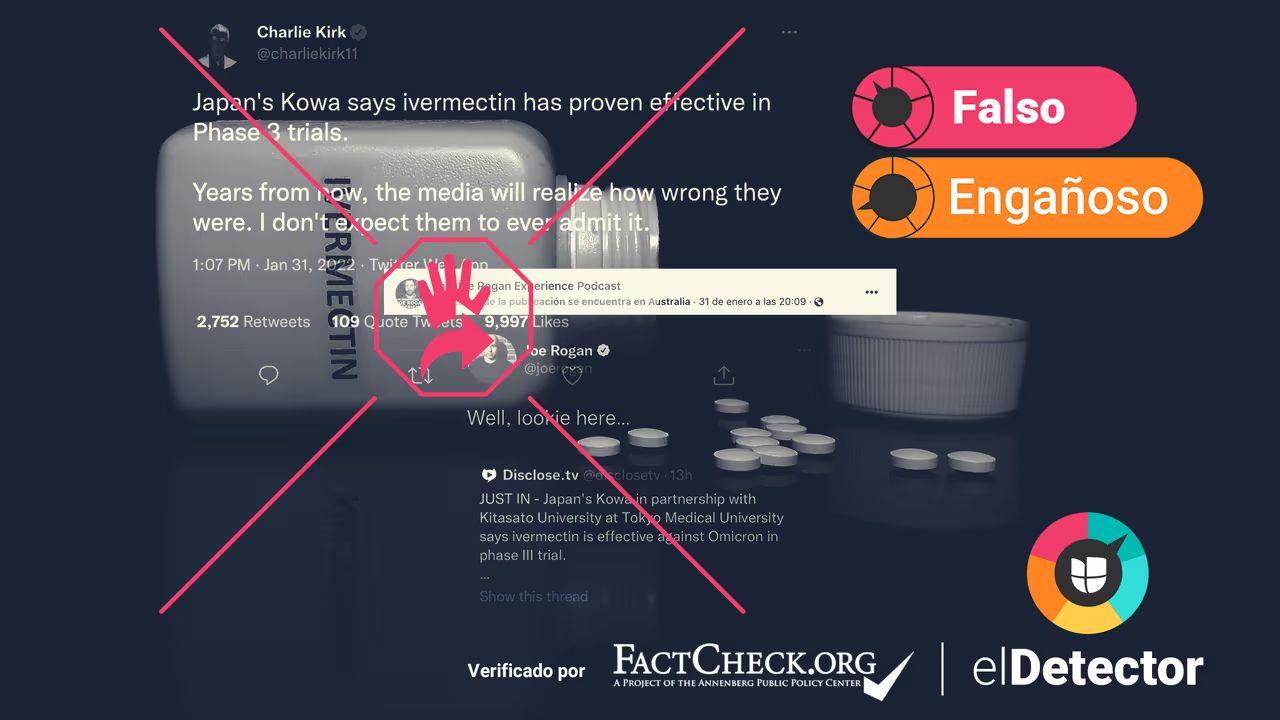
¿Se probó en humanos que la ivermectina tiene un "efecto antiviral" contra la variante ómicron?
Publisher’s rating: Falso/ Engañoso

Tschechische Pendler sind für die hohen Infektionszahlen in der bayerischen Grenzregion zu Tschechien verantwortlich.
Publisher’s rating: Es gibt keinen Hinweis darauf, dass tschechische Pendler häufiger positiv auf das Coronavirus getestet werden. Die Positivquote an Corona-Test-Stationen nahe der Grenze liegt im bayerischen Durchschnitt oder sogar darunter.

COVID-19 vaccines are the first to have "rewards, discounts, incentives to get vaccinated."
Publisher’s rating: False
COVID-19 vaccines does many things "except IMMUNIZATION."
Publisher’s rating: False
Until the COVID-19 vaccines, "I [had] never seen a vaccine that would allow a 12-year-old to override parental consent."
Publisher’s rating: Distorts the Facts
COVID-19 vaccines are the first to be required, threatening "livelihoods, work [and] school."
Publisher’s rating: False