PeakMetrics / Fact Checks
Health & medicine fact checks
Explore claims publishers have checked about health & medicine. Read their original ratings and follow the evidence.
Search fact checks
Search by text or image13,672 published reviews in this topic
La Reine d'Angleterre est traitée à l'Ivermectine pour la Covid-19
Publisher’s rating: Faux
Koningin Elizabeth krijgt ivermectine.
Publisher’s rating: Dit klopt niet. Het gerucht ontstond na een fout in een Australische reportage. Hierin werd onterecht een doosje met het medicijn Stromectol getoond, waar ook ivermectine in zit. De nieuwszender en de dokter uit de reportage bevestigen dat het hier gaat om een menselijke fout waar twee namen van medicatie door elkaar werden gehaald. In de reportage werd bovendien niet beweerd dat de koningin deze medicatie kreeg.

බූස්ටර් එන්නත ගත්තොත් මාස්ක් නැතිව යන්න අවසර ලැබෙනවාද?
Publisher’s rating: Misleading
The review investigated social-media posts claiming that masks were no longer compulsory after a booster dose in Sri Lanka. It also addressed reporting that the review said had distorted remarks by Director General of Health Services Dr. Asela Gunawardena. The review’s central finding was that booster recipients had not been given permission to go without masks; Gunawardena said his comments had been presented with a different meaning.

Women's Health macht Werbung für Abnehmpillen mit dem Namen "PLUS"
Publisher’s rating: «Women's Health» hat nie Werbung für die genannten Abnehmpillen gemacht. Auch Sängerin Adele hat nichts damit zu tun.
En Australie, 50 millions de doses de "vaccin" rappelées car elles ont déclenché des "faux positifs" dans les tests VIH.
Publisher’s rating: Le reportage en question date de décembre 2020 et concerne un candidat-vaccin contre le Covid-19 qui n’a finalement pas été distribué au grand public. Celui-ci faisait l’objet d’une étude clinique en Australie, abandonnée après des tests faussement positifs au VIH chez quelque 200 participants. Ceux-ci n’ont pas réellement contracté le VIH à cause de leur vaccination, et les 50 millions de doses évoquées n’ont pas été rappelées du marché, puisque ce vaccin n’a jamais été commercialisé.
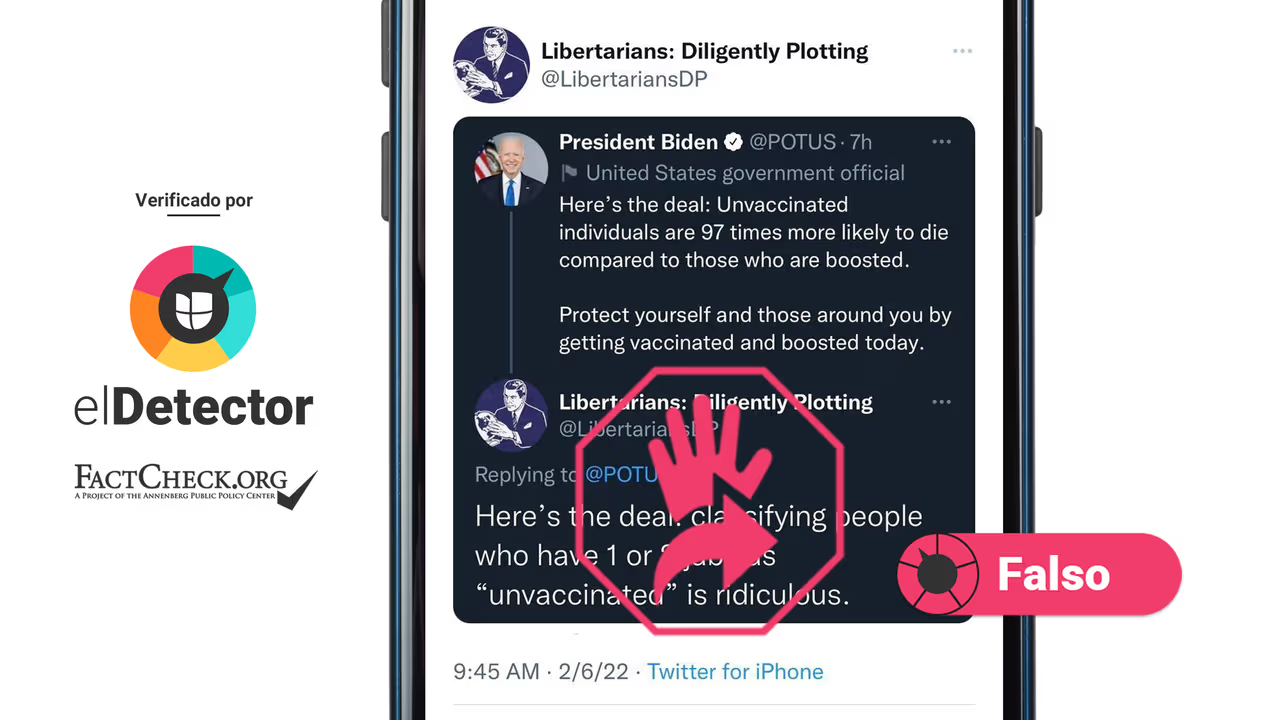
Los CDC cuentan como no vacunados a personas que han recibido 1 o 2 dosis de la inyección contra el covid-19
Publisher’s rating: Falso
Hay un "pico gigantesco" de casos de cáncer en EEUU desde que comenzó la vacunación con la Operación Warp Speed.
Publisher’s rating: Falso/ No hay evidencias
احتمال مرگ هر ایرانی در طول عمر خود به دلیل سرطان ۷ و در دنیا ۱۰ درصد است.
Publisher’s rating: نیمهدرست
Per juni 2022 moet in de EU de verplichting van het reizen met een QR code zijn ingevoerd+ mensen mogen niet meer weigeren zich te laten vaccineren.
Publisher’s rating: Het klopt niet dat vaccinatie door de EU verplicht wordt gesteld. Het gaat hier om een voorstel voor het verlengen van de verordening waarmee het Europese ‘Digital COVID certificate’ is geregeld. Dat is de internationale QR-code, waarmee je ook in andere EU-landen terecht kunt. Ook als deze verordening dit voorjaar wordt verlengd, blijft het mogelijk om een groen vinkje te krijgen met een test- of herstelbewijs. Bovendien zijn landen niet verplicht om reizigers naar een coronabewijs te vragen. Dat mag iedere lidstaat zelf beslissen.
The claim combined two assertions: that EU travel QR codes would become compulsory from June 2022 and that people would no longer be able to refuse vaccination. The review examined a European Commission proposal to extend the rules for the EU Digital COVID Certificate, which enabled a QR certificate usable across EU countries. It found that the proposal concerned extending the legal framework, not imposing vaccination or requiring every country to demand a certificate from travellers. The review states that the existing regulation applied from 1 July 2021 to 30 June 2022, and that the Commission proposed extending it for a year, to 30 June 2023. It reports that neither the proposal nor the regulation then in force contained a vaccination mandate or made refusing vaccination impossible. The certificate framework included vaccination, test and recovery certificates; the review notes that a test or recovery certificate could also provide the required certificate, although the Commission said these options could not be considered equivalent in terms of risk. The proposal also did not require countries to impose or maintain travel restrictions. It provided a legal basis for keeping a common EU QR certificate available, while leaving decisions about asking travellers for a certificate to individual member states. The review’s account therefore distinguishes maintaining a shared certificate system from making its use compulsory, and distinguishes that system from a vaccination obligation.

Les données médicales de l'armée américaines montrent que les maladies ont très fortement augmenté en 2021 par rapport aux années précédentes, preuve de la dangerosité des vaccins anti-Covid.
Publisher’s rating: Ces conclusions sont en fait basées sur des données erronées, dues à un problème technique qui a touché une base de données de l’armée américaine. Cette erreur a entraîné un recensement des chiffres qui ne reflète pas la réalité, conduisant à une différence anormale entre la moyenne annuelle de la période 2016-2020 et l’année 2021.
The claim rests on figures said to come from the US Defense Medical Epidemiology Database (DMED): alleged increases in military medical diagnoses during the first ten months of 2021 compared with the average for 2016–2020. Examples circulated online included cancers rising by 300–500% and neurological disorders by 1,000%, and the figures were presented as evidence that COVID-19 vaccines were dangerous. The review traces the claims to remarks by lawyer Thomas Renz at a panel organized by Senator Ron Johnson on January 24, 2022; Renz said three anonymous whistleblowers had supplied the data. The decisive issue was the comparison’s baseline. The review reports that Major Charlie Dietz, a Department of Defense spokesperson, said a technical error meant the DMED data for 2016–2020 did not reflect actual figures. The Defense Department compared DMED records with their source system, the Defense Medical Surveillance System (DMSS), and found that DMED contained only a small fraction of the medical diagnoses for those earlier years. The review says 2021 figures had transferred correctly, so comparing them with the undercounted earlier data produced an apparent rise across diagnoses. The database was taken offline for correction and was accessible again with corrected data by late January 2022. The review also notes that the figures do not establish vaccine-caused illness. It reports no evidence of a 300% increase in miscarriages after vaccination and no indication that COVID-19 vaccines cause cancers. It adds a qualification: Guillain-Barré syndrome is listed as a possible, very rare side effect of the AstraZeneca and Johnson & Johnson vaccines, while the US National Institute of Neurological Disorders and Stroke continued to recommend vaccination.
In den USA sterben mehr Kinder an der Corona-Impfung als am Virus.
Publisher’s rating: Falsch
The claim compared child deaths attributed to COVID-19 vaccination in the United States with deaths from COVID-19 itself. The review says the claim relied on US Vaccine Adverse Event Reporting System (VAERS) reports, but those reports record suspected events, not confirmed vaccine-caused deaths. It explains that patients or family members can submit reports and that a report establishes only that an event occurred sometime after vaccination—not that vaccination caused it. The review reports that, by mid-February 2022, about 547 million COVID-19 vaccine doses had been administered in the United States and 12,304 death reports had been received. Authorities investigated those reports; the review says a causal connection had been established in nine cases, all involving the Johnson & Johnson vaccine, which was authorized only for adults. It separately reports 970 deaths among people under 18 since the pandemic began for which COVID-19 infection was suspected or confirmed as the cause. These figures do not support the claim that more children died from vaccination than from the virus: the reported vaccine deaths were suspicions, and the nine causal cases were not in children. The review also examines British statistics cited alongside the claim. For England, it reports 20 COVID-19 deaths among unvaccinated 10-to-19-year-olds and three among vaccinated people in that age group between January 1 and October 31, 2021. But it cautions that these figures do not identify deaths caused by vaccination, and that vaccinated children were not a representative comparison group because younger children were initially vaccinated if they had pre-existing conditions. The British figures therefore do not establish the claim either.
In Deutschland starben 100 000 Menschen an/nach der Impfung; Masken bringen nichts.
Publisher’s rating: Falsch
Im US-Militär ist nach Corona-Impfungen eine signifikante Zunahme von Krankheitsfällen zu verzeichnen.
Publisher’s rating: missing context
Corona-Impfungen sorgen für mehr Todesfälle und Übersterblichkeit, wie Daten zeigen.
Publisher’s rating: Es gibt keine Hinweise auf einen kausalen Zusammenhang zwischen der Anzahl von Todesfällen und den Corona-Impfungen. Die Studien aus dem Video weisen eine Fehlinterpretation von Daten auf, die zu falschen und verzerrten Schlussfolgerungen führt.
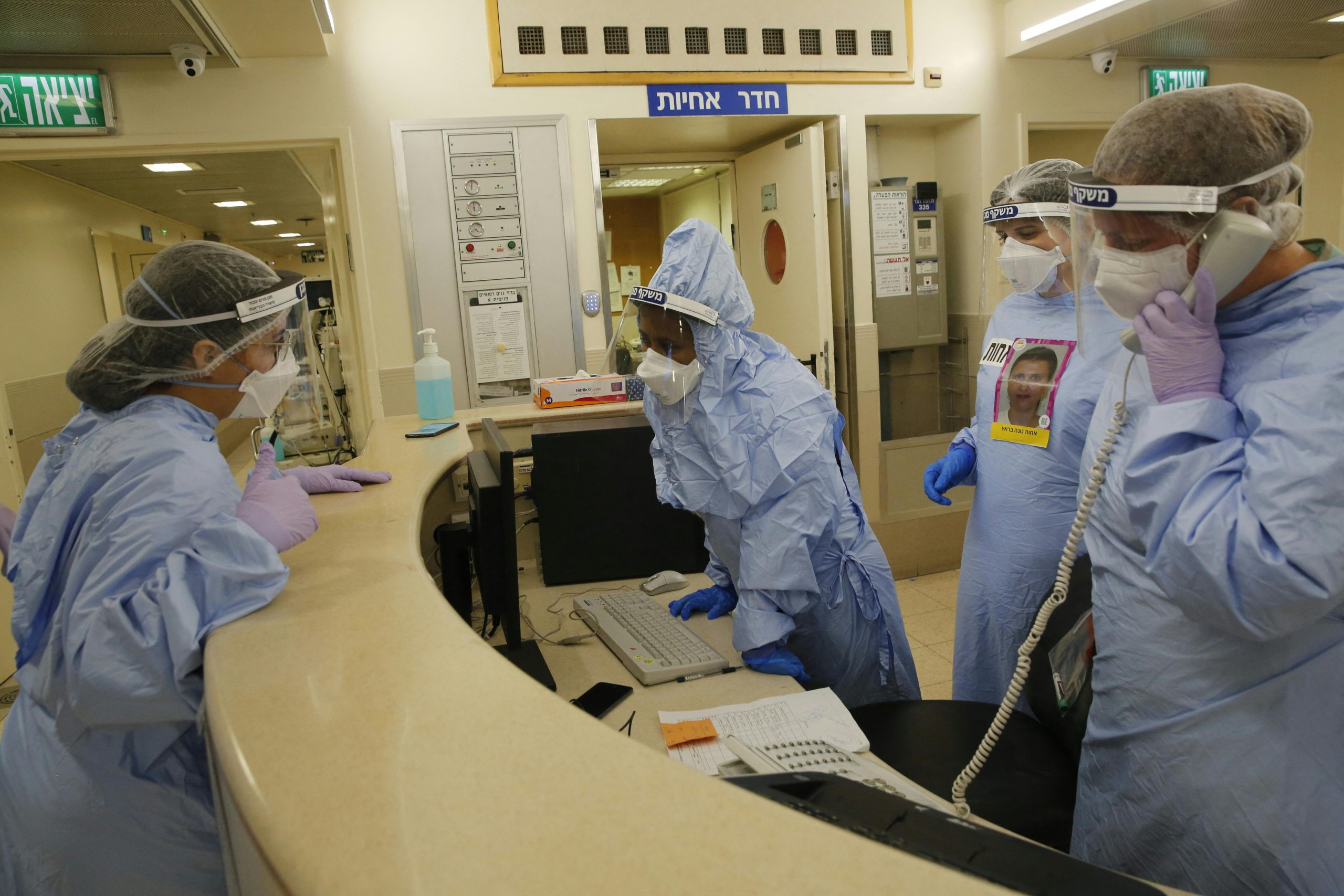
In einem Krankenhaus in Israel sind 80 Prozent der Hospitalisierten mit schweren Verläufen vollständig geimpft.
Publisher’s rating: Einige Angaben zur Quelle sind falsch, es handelt sich um eine Einschätzung eines Arztes im Tel Aviv Sourasky Medical Center. Im ganzen Land stellen Menschen mit vollständigem Immunschutz die Minderheit an Hospitalisierungen. Generell spricht ein großer Anteil geimpfter Patienten bei einer hohen Impfquote nicht gegen die Effektivität der Impfung. Diese ist durch Daten aus Israel klar belegbar.
The claim concerns a reported observation at a particular hospital, not a nationwide count: an Israeli doctor was quoted as saying that 80% of patients with severe COVID-19 were vaccinated. The review traced the statement to Jacob Giris, a physician at Tel Aviv Sourasky Medical Center in Tel Aviv. It found that describing him as head of the hospital was inaccurate: the review identifies him as head of one department of internal medicine. Giris told the agency that vaccinated people had become the majority of hospitalizations at his hospital during the Omicron wave, while the illness he was seeing was generally less severe than during Delta. [S1] The review compared that hospital-based account with Israeli national data. It reported that, as of the Thursday examined, roughly equal numbers of vaccinated and unvaccinated people had severe COVID-19. When people without valid immune protection were counted with the unvaccinated, the latter group had more severe cases. The review also examined rates per 100,000 residents, rather than relying only on raw patient counts, and reported substantially higher severe-disease risk among unvaccinated people and those without valid immune protection. [S1] These are different measures: the doctor’s statement described the share of patients at one hospital, whereas the national comparison addressed severe cases across groups. The review noted that a high vaccinated share among hospital patients can occur when a large share of the population is vaccinated; it also cited waning protection and the early vaccination of higher-risk groups as possible contributors. The supplied excerpt does not provide the underlying dashboard figures or a detailed breakdown of the hospital’s patients, so it supports the distinction between the local observation and nationwide rates, but not an independent reconstruction of the hospital’s 80% figure. [S1]