PeakMetrics / Fact Checks
Health & medicine fact checks
Explore claims publishers have checked about health & medicine. Read their original ratings and follow the evidence.
Search fact checks
Search by text or image13,672 published reviews in this topic
Fact Check: Does the recent Pfizer’s safety document confirm that the Covid vaccine is unsafe?
Publisher’s rating: False
Did CDC and Pfizer say Covid-19 vaccines cause blood clots in veins?
Publisher’s rating: Missing context
Fact Check: Can remaining silent for a few hours per day promote cell growth in the human brain?
Publisher’s rating: Mostly False

PFIZER ADMITE QUE NÃO É UMA VACINA A página 7 do registro de registro BioNTech da Pfizer é muito reveladora:
Publisher’s rating: Falso

నరేంద్ర మోదీ తల్లి హీరాబెన్ మోది ఇటీవల ఆరోగ్య సమస్యలతో ప్రభుత్వ ఆసుపత్రిలో చికిత్స పొందిన దృశ్యం
Publisher’s rating: MISLEADING
Vaccination is only artificial, it can only produce artificial immunity for three months. That’s why there is a booster...
Publisher’s rating: Needs context
Ang pagbabakuna ay artipisyal lamang, maaari lamang itong makagawa ng artificial immunity sa loob ng tatlong buwan. Kaya mayroon booster….
Publisher’s rating: Kailangan ng konteksto

Video showing arrival of oxygen from Saudi Arabia to India
Publisher’s rating: FALSE

Can you melt belly fat in a day using candle wax?
Publisher’s rating: False
Fact Check: Can Covid-19 vaccines give you syphilis?
Publisher’s rating: False
"But what we do know as well is that the Omicron variant is 75 per cent less severe than the Delta variant and previous variants."
Publisher’s rating: Oversimplified
Die Schadstoff-Werte in der Biolytix-Analyse eines Corona-Tests übertreffen die Grenzwerte von Ethylenoxid.
Publisher’s rating: Falsch. Die zulässigen Grenzwerte werden weit unterschritten. Die Teststäbchen enthalten geringe Rückstände der Stoffe, weil Ethylenoxid zur Sterilisation von Medizinprodukten eingesetzt wird.
The claim refers to a Biolytix laboratory analysis circulated online as proof that coronavirus rapid-test swabs contained dangerously high amounts of ethylene oxide and its breakdown product, 2-chloroethanol. The dpa review says the report listed 4.2 milligrams per kilogram of material for ethylene oxide and 0.53 milligrams per kilogram for 2-chloroethanol. Those are concentrations in the tested material, not the amount on a single swab: the review notes that a swab weighs only a few grams, so the amount it contains is much smaller than the amount in a kilogram. The review compared the reported findings with the applicable limits in DIN EN ISO 10993-7. For contact lasting up to 24 hours, it gives limits of 4 milligrams of ethylene oxide and 9 milligrams of 2-chloroethanol. It also reports that TÜV Süd converted the ethylene-oxide limit for a 70-kilogram person to about 1.7 milligrams for a 30-kilogram schoolchild. On that calculation, the review says, the measured concentration does not establish that a child would exceed the limit through use of a swab. The report itself did not establish how much residue could transfer to a person during a test. TÜV Süd criticized it for not meeting the standards for a proper report, including because it did not specify which parts of the test kit had been examined. The review also says the swab’s brief contact with the mouth and normally intact mucous membrane would make release of substances unlikely. Its evidence therefore distinguishes detection of small residues from proof that the permitted exposure limits are exceeded.
A homemade recipe using tomatoes and coffee turn grey hair into black permanently
Publisher’s rating: mostly false
Coconut oil and aloe vera make hair long, voluminous and lustrous
Publisher’s rating: Half True
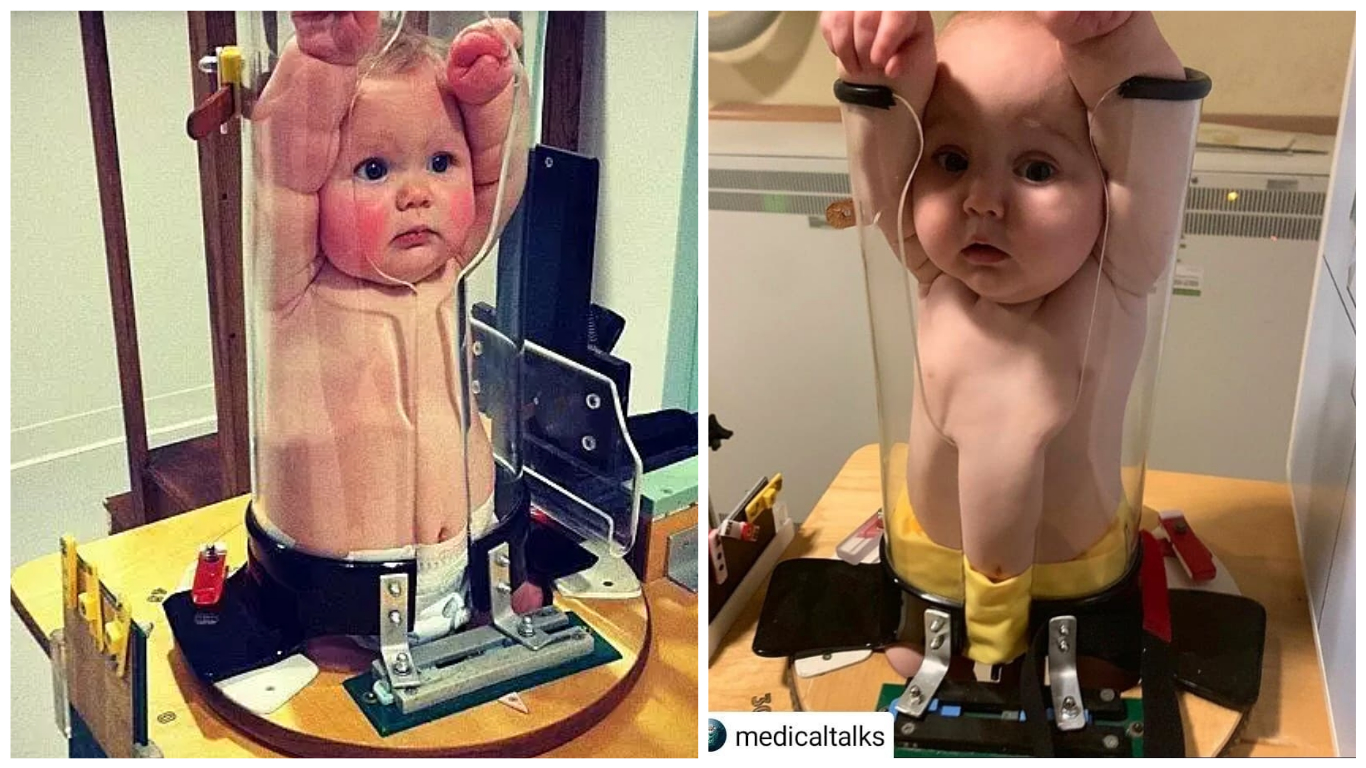
උත්පත්තියේදී ආබාධ ඇතිව ඉපදුණු දරුවෙකුගේ ඡායාරූපයක්ද?
Publisher’s rating: Misleading
The review investigated a social-media post that used a photograph to suggest that the child pictured had been born with a disability. It notes that the accompanying message urged people not to ignore the image and referred to bad karma manifesting from birth. The photograph’s presentation—including the child’s position in what appeared to be a device—helped convey that implication, and the review says many commenters were misled by the posts. To check what the photograph showed, the publisher says it conducted a reverse-image search. It reports that the image depicted a child being held still in a Pigg-O-Stat, a device used to prevent young children from moving while chest X-rays are taken. The review explains that obtaining chest X-rays of small children can be difficult because they move, and says the device is intended to make the imaging process easier. Thus, the image’s unusual appearance was explained by the positioning equipment used for an X-ray, not by evidence in the photograph that the child had a birth disability. The review also describes the device as having been developed in the United States and manufactured for medical use since the 1960s. It refers to the Pigg-O-Stat website for its description of the equipment and its use in positioning infants and young children for X-rays. Its conclusion is that the social-media interpretation was misleading: the photograph showed a child positioned for an X-ray, rather than establishing the claim made about the child’s condition at birth.