PeakMetrics / Fact Checks
Health & medicine fact checks
Explore claims publishers have checked about health & medicine. Read their original ratings and follow the evidence.
Search fact checks
Search by text or image13,672 published reviews in this topic

COVID-19 vaccine has a "reverse" effect and exposes people to infection.
Publisher’s rating: No basis
Ang bakuna sa COVID-19 ay may "kabaligtarang" epekto at inilalantad ang mga tao sa impeksyon.
Publisher’s rating: Walang basehan
নিরুপায় ব্লাড ক্যান্সারে আক্রান্ত শিশু তন্নী এর জীবন
Publisher’s rating: False
Oberster Gerichtshof hat allgemeine Impfung in den USA für ungültig erklärt - Sieg von Senator Kennedy über Gates, Fauci und Big Pharma.
Publisher’s rating: Es gibt weder die behauptete Klage noch ein entsprechendes Urteil. Die angebliche juristische Niederlage ist frei erfunden.
പൊതു സ്ഥലങ്ങളില് ഇനി മാസ്ക് ധരിച്ചില്ലെങ്കില് കേസില്ല
Publisher’s rating: FALSE
In het UZGent wordt momenteel voor het eerst een baby met congenitale leukemie behandeld. De moeder was gevaccineerd.
Publisher’s rating: Aangeboren leukemie is een zeer zeldzame vorm van kanker bij baby's. Toch is het niet de eerste keer dat de dienst neonatologie in Gent met zo'n patiëntje te maken kreeg. De beschikbare data duidt aan dat vaccinatie tegen COVID-19 niet schadelijk is tijdens de zwangerschap.
The claim came from a woman who said she was the baby’s grandmother. In a post shared as a screenshot, she alleged that UZGent was treating a baby born with leukemia for the first time and added that the baby’s mother had been vaccinated. The review distinguishes the reported case from the “first time” assertion: a UZGent spokesperson told dpa that the hospital had treated a patient with congenital leukemia before. The review describes congenital leukemia as leukemia present at birth, with the mutations developing in the womb. It notes that this cancer is exceptionally rare, but rarity does not establish that a case is the hospital’s first. As supporting context on rarity, it cites a retrospective Dutch study covering 1975–1999 that recorded 15 congenital leukemia cases nationwide; the review also says congenital cases account for less than 1% of pediatric leukemia. On the vaccination claim, the review says the genetic and other risk factors for congenital leukemia are not well understood and reports no indication that an mRNA COVID-19 vaccine is harmful to an unborn baby. The supplied article does not establish that vaccination caused this baby’s leukemia; the mother’s reported vaccination alone is not evidence of such a link.
৭ বছরের সুসমিতা জান্নাত নামের এই বাচ্ছা কঠিন দুরারোগ্য রোগে আক্রান্ত
Publisher’s rating: Misleading
Insbesondere bei älteren Personen soll es nach der Corona-Impfung häufiger zu Gürtelrose kommen
Publisher’s rating: Unklar

¿Es peligroso que los varones jóvenes se vacunen contra el covid-19 por riesgo de miocarditis?
Publisher’s rating: Falso / Falta contexto
Die WHO plant einen für alle Länder verbindlichen Pandemie-Vertrag, der die Demokratie in Deutschland aushebeln würde.
Publisher’s rating: Diese Behauptungen sind spekulativ, teilweise falsch und aus dem Zusammenhang gerissen.
The claim combined two assertions: that a WHO pandemic agreement would bind every country, and that it would let the organization issue orders that displace democratic decision-making in Germany. The dpa review reported that the agreement had not yet even been drafted, so its eventual powers—and whether it would bind all signatories—were not settled. The review also described a social-media post claiming the WHO could impose vaccination requirements or lockdowns that governments would have to carry out, and that national parliaments would thereby be disempowered. The review set out what had actually been agreed: on 1 December 2021, the WHO’s 194 members decided to begin work on negotiating an international instrument to strengthen pandemic prevention, preparedness and response, with a goal of adopting it in May 2024. A 29 November 2021 speech by WHO Director-General Tedros Adhanom Ghebreyesus had argued for a legally binding agreement, citing weaknesses in pandemic response and proposing work on governance, financing, systems and tools, and WHO financing. The review also noted that the EU and German government supported a legally binding agreement, while describing proposed benefits such as improved surveillance, warning systems, medical supplies and cooperation. Crucially, the review found no indication at that point that the WHO would gain authority to order national vaccination requirements or lockdowns. It distinguished the WHO’s existing role under the 2005 International Health Regulations: the organization could declare an international health emergency and issue recommendations, but not orders for restrictive measures. It further explained that the agreement’s legal status and powers remained unresolved, and that international agreements of this kind include safeguards requiring application within each signatory’s constitutional order. The review cited the WHO’s 2003 tobacco-control framework as an example of a binding agreement made under its constitution, noting that such a treaty could not override constitutional provisions.
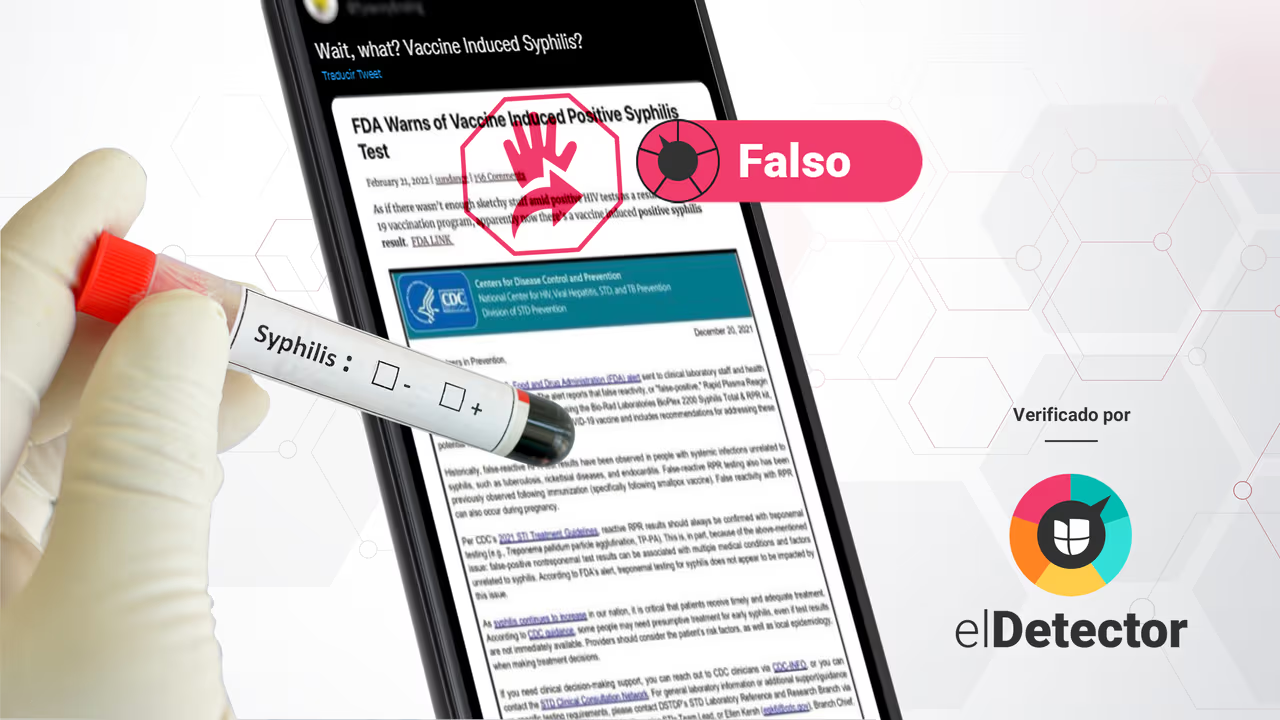
La FDA advirtió que la vacuna contra el covid-19 “inducía la sífilis”
Publisher’s rating: Falso

Cebola cura gripe, é um ímã de bactérias e não deve ser guardada na geladeira
Publisher’s rating: Falso
RIVM staat voor Rothschild Institute Virology Medicine.
Publisher’s rating: RIVM staat niet voor "Rothschild Institute Virology Medicine". De getoonde instituten hebben niets met de bankiersfamilie Rothschild te maken en de RIVM bedacht toekomstscenario's als voorbereidings voor bepaalde overheidsdiensten.

Vacinação contra gripe (Influenza): Avisem aos seu familiares ! Idosos vão de acordo com a letra do nome e dia .
Publisher’s rating: Falso

Los gérmenes de la lista que circula en las redes alteran el resultado de las PCR
Publisher’s rating: Falso

There are more COVID-19 cases now than before there was a vaccine
Publisher’s rating: Needs Context
The review examined a viral Facebook meme claiming that COVID-19 cases were much higher after a vaccine became available. It compared reported daily U.S. case counts for two dates: Jan. 19, 2022, when the meme was published, and Dec. 10, 2020, the day before the review says the Pfizer vaccine became available to people over 16. The review says it found 851,948 new cases on the first date and 225,225 on the second. On those figures, the meme’s numerical comparison was accurate. The review describes how it checked those numbers: it searched for U.S. COVID-19 cases in January 2022, consulted a New York Times tracker, and checked the Food and Drug Administration’s information about vaccine availability. It then used the same tracker to look up the Dec. 10, 2020 case count. This comparison establishes that the reported daily counts on those specific dates differed; it does not, by itself, establish why they differed. That distinction is central to the review’s conclusion. It says the comparison could suggest that vaccines caused the increase, but calls that inference unsupported: the review points to the omicron variant as the cause of the spike and notes that the vaccines do not contain live COVID-19 virus. It also cites the CDC’s statement that vaccines do not cause new variants. Thus, the comparison supports the meme’s limited numerical point, not a causal claim against vaccines.
Fact Check: Do Nurofen-ibuprofen tablets contain graphene oxide?
Publisher’s rating: False