PeakMetrics / Fact Checks
Health & medicine fact checks
Explore claims publishers have checked about health & medicine. Read their original ratings and follow the evidence.
Search fact checks
Search by text or image13,669 published reviews in this topic


There exist super foods and special juices that can detoxify a human liver
Publisher’s rating: No super foods or special juices can detoxify a human liver. As the body’s natural detoxifier, the liver does not require any additional supplements to carry on with its normal function.

Slim patches/ weight loss patches are effective in weight loss
Publisher’s rating: FALSE
FACTLY examined a social-media post claiming that slim or weight-loss patches work, which also provided a WhatsApp number for ordering. The review describes these products as transdermal: their ingredients are meant to pass through the skin and enter the bloodstream. It explains that this delivery route is used for some drugs, giving nicotine patches as an example, but that this does not establish that weight-loss ingredients work when delivered in a patch. The review quotes the FTC’s assessment that applying something to the skin cannot produce substantial weight loss and that such patch claims are false. It also says research into transdermal delivery systems for treating obesity was still at an early stage, and cites a study stating that transdermal drugs for treating human obesity had not been reported and needed further investigation. Taken together, the evidence presented does not establish that weight-loss patches are effective; the review concludes that their effectiveness in burning fat is unproven.
O case de vacinação [contra a Covid-19] do Brasil foi um grande sucesso
Publisher’s rating: Falso
Todas os hospitais citados, Brasilândia, Parelheiros, está tudo entregue e funcionando
Publisher’s rating: Verdadeiro, mas...

Image of AIIMS, Bilaspur
Publisher’s rating: FALSE
The claim concerns a viral image presented as showing the recently inaugurated All India Institute of Medical Sciences (AIIMS) in Bilaspur. FACTLY’s review says the image does not show that institution; it identifies the pictured site as Xiamen University Malaysia (XMUM). The review’s conclusion is that the image was falsely attributed to AIIMS Bilaspur. To investigate, the review notes that the acronym “XMUM” is visible in front of one of the buildings. It says the reviewers used that clue to search online and identified XMUM as the short name for Xiamen University Malaysia, a private university in Malaysia established by a Chinese public university in 2016. The review describes further comparisons: it reports that the university’s website brochures contain the same image, and says satellite images of the university and images of AIIMS Bilaspur are available for comparison. It concludes that the shared image depicts the Malaysian university, not AIIMS Bilaspur.

Alkol – suç ilişkisine dair oranların Dünya Sağlık Örgütü raporunda yer aldığı iddiası
Publisher’s rating: Yanlış

Coconut oil can efficient in preventing Alzheimer's
Publisher’s rating: FALSE
The review addresses a specific social-media claim: that taking a teaspoon of coconut oil every day prevents Alzheimer’s disease. It describes Alzheimer’s as a progressive neurological disorder and checks whether research supports coconut oil as a preventive measure. The evidence it cites does not establish that benefit: the review says Alzheimer’s Research UK found research inconclusive and noted that claims about coconut oil should be treated cautiously.
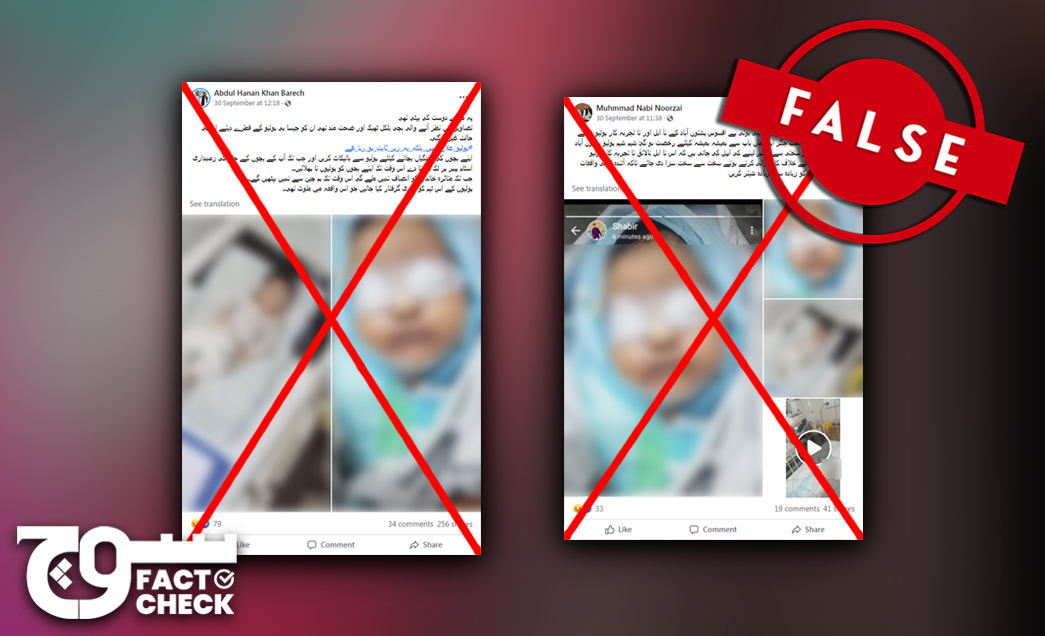

Aaj Tak news report on the Penirun capsule, a medicine made with 100% natural ingredients to treat Erectile DysfunctionFALSR
Publisher’s rating: FALSE
The claim concerns a social-media link presented as an Aaj Tak report about Penirun capsules, which were promoted as a treatment for erectile dysfunction. FACTLY’s review says the link was not an Aaj Tak article: it was a lookalike webpage used to promote the product. The review concludes that the claim that Aaj Tak published the report is false. To check the link’s identity, the review compared its web address with Aaj Tak’s official address. It reports that the purported report was hosted at candies.vintage-store.uk, not aajtak.in, and says that searches for relevant terms found no information indicating that Aaj Tak had published an article about Penirun. These findings address the key attribution in the claim: the page’s appearance did not establish that it came from Aaj Tak. The review also describes what happened when users interacted with the page: its home-page buttons led to a Penirun purchase box requesting a name and phone number. It reports that the domain was registered on 7 June 2022. The excerpt supports the conclusion that the link promoted a product under the guise of an Aaj Tak report; it does not provide independent evidence about the capsule’s ingredients or medical effectiveness.

De coronavaccins bevatten grafeenoxide en zijn een biowapen, blijkt uit 'gelekte documenten uit de Wuhan databases'.
Publisher’s rating: De video is ruim een jaar oud en fout. Er zit geen grafeenoxide in de momenteel goedgekeurde coronavaccins.
The claim concerns a video warning that leaked documents show graphene oxide in coronavirus vaccines. The review identifies the speaker as Fred Corbin and places the video at a public meeting about the pandemic and vaccines in Barbados. It says the video dates to August 2021 and was part of a livestream of that meeting; the claim was therefore not based on newly recorded footage. The review does not establish that the documents came from Wuhan or that the vaccines are a bioweapon. To assess whether approved vaccines contained graphene oxide, the review points to the ingredient lists for the vaccines it names, which it says are available through the European Medicines Agency. It reports that graphene oxide does not appear on those lists. It also describes the European review process: the agency’s Committee for Medicinal Products for Human Use examines and checks data, including ingredients, before a medicine can enter the European market. These are the checks and findings reported by the review, not independent tests described here. The review gives a second, visible comparison: graphene oxide would make even a small amount of liquid very dark, whereas the vaccine descriptions it cites range from colorless to light brown, with Pfizer described as a white to off-white dispersion. Taken together, the ingredient-list and appearance evidence support the review’s conclusion about currently approved vaccines. The excerpt does not provide the leaked documents themselves or evidence about a bioweapon allegation.
Chicken cooked with Nyquil syrup has a great taste.
Publisher’s rating: It is not safe to cook any food item with syrup. Syrups are made of chemicals that can be harmful if exposed to heat or sunlight.

Image Of A Patient On A Hospital Bed With The Lotus Tower Looming In The Background !!
Publisher’s rating: Misleading
The review investigates social media posts showing a patient lying in a hospital bed, holding a saline bottle, with the Lotus Tower visible through a window. Some posts said the scene was at Karapitiya Hospital, and users also drew attention to the patient holding the bottle rather than using a holder. The investigation concludes that the circulating image was edited, rather than an authentic view from the ward.
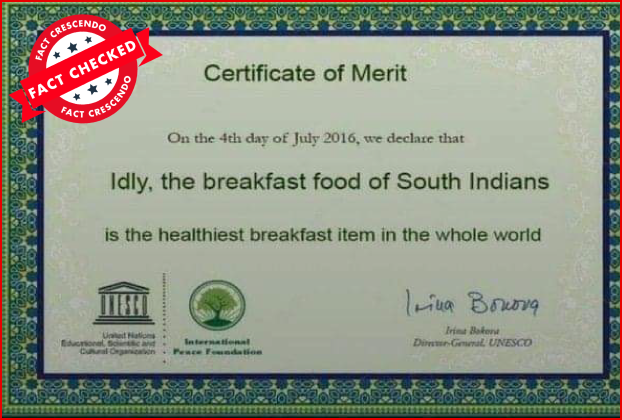
Claim: unesco not declared that idli as the world healthiest breakfast
Publisher’s rating: FALSE
The review investigates a social-media post claiming UNESCO had declared South Indian idli the world’s healthiest breakfast. The post relied on an image styled as a UNESCO certificate, which said the declaration was made on July 4, 2016. The review says a Facebook page called Oor Seithigal posted the image on September 26, 2022, and that others shared it. The investigators compared the certificate with earlier UNESCO statements and with images used in other rumors. They note that UNESCO had said it had no association with the International Peace Foundation, although that foundation’s name appeared on the purported certificate. They also report that the idli wording appeared as a distinct addition to the image, and that an image used in a prior rumor about Islam carried the same July 4, 2016 date. The review concludes that the certificate had been edited and that the claim about UNESCO’s idli declaration was false. As an additional check, the review says it searched Google using relevant keywords but found no information that UNESCO had made such a declaration. It also found an earlier Fact Crescendo Malayalam investigation of a similar rumor claiming UNESCO had declared Kerala’s pazhankanji the world’s best breakfast. The review’s conclusion rests on the certificate’s inconsistencies and reported editing, alongside its search for evidence of an actual UNESCO announcement.

Tooth decay canbe reversed by brushing teeth.
Publisher’s rating: MISLEADING

ABD Başkanı Joe Biden'ın Ian Kasırgası öncesinde Covid-19 aşısı olunması gerektiğini söylediği iddiası
Publisher’s rating: Yanlış
monkeypox is created in lab and has no vaccine yet
Publisher’s rating: Mostly False