PeakMetrics / Fact Checks
Health & medicine fact checks
Explore claims publishers have checked about health & medicine. Read their original ratings and follow the evidence.
Search fact checks
Search by text or image13,669 published reviews in this topic
ખાવાનો સોડા તમારી ત્વચાને ઉજળી કરી શકે છે
Publisher’s rating: Mostly False

Consuming guava leaves can cure cancer
Publisher’s rating: Guava leaves can cure cancer is a myth. There is not truth to it.
લીંબુ અને અદરક દ્વારા પેટની ચરબી ઓછી કરી શકાય છે
Publisher’s rating: Mostly False
Die Corona-Impfung hat in Italien zahlreiche Krankheits- und Todesfälle verursacht.
Publisher’s rating: Falsch
O Brasil tem 3% da população mundial, entretanto tem 11% das vítimas de Covid
Publisher’s rating: Verdadeiro
Ampliamos o teste do pezinho, que no seu governo era para cinco exames, botamos 50
Publisher’s rating: Verdadeiro
Drinking ice water, soda water or eating coconut during menstruation cause uterus cancer or tumour
Publisher’s rating: False
Incorporamos para o Farmácia Popular cinco novos medicamentos
Publisher’s rating: Verdadeiro
you can melt belly fat without exercise and diet in 15 days
Publisher’s rating: Mostly False
Eating cashew nut tree bark neutralize snake venom
Publisher’s rating: False
melhor vacina é pegar a doença
Publisher’s rating: É necessário desmentir declarações absurdas que envolvam vacinas, cientificamente comprovadas como fundamentais para salvar vidas

Der Corona-Impfstoff von Pfizer wurde nie auf den Fremdschutz getestet und das hat Pfizer jetzt zugegeben.
Publisher’s rating: Die Behauptung ist falsch. Schon bei der Zulassung war öffentlich bekannt, dass der Impfstoff nicht auf die Übertragungsrate getestet wurde - und das dies auch kein Teil der Zulassung war. Es ging vielmehr darum, Infizierte vor einer schweren Erkrankung zu schützen. Dennoch gab es Anfang 2021 bereits Erkenntnisse über den sogenannten Fremdschutz. Dieser Schutz vor Übertragung auf andere (Transmission) nahm später mit dem Aufkommen neuer Virus-Varianten ab.
The claim arose from a Servus.tv video and comments about Pfizer’s testimony at a European Parliament hearing. The video presented the lack of pre-authorization transmission testing as a newly revealed Pfizer failing. The dpa review says this testing gap had already been publicly documented in 2020; it also distinguishes not having tested transmission before authorization from proving that vaccination could not reduce spread. (“In dem Video wird auch auf den niederländischen EU-Abgeordneten Rob Roos verwiesen.” “Dabei ist die Tatsache, dass es vor der Marktzulassung keine Tests zum Übertragungsrisiko gegeben hat, wohlbekannt.”) The review points to the European Medicines Agency’s December 21, 2020 notice, which said the effect of vaccination on the virus’s spread was not yet known, and the U.S. Food and Drug Administration’s December 11, 2020 notice, which said there was no evidence at that time that the vaccine prevented person-to-person transmission. It explains that neither regulator required proof of reduced onward spread for authorization: the stated authorization criteria focused on safety and protection against disease. Thus the hearing did not establish that Pfizer had concealed a previously undisclosed test result or that the vaccine could not reduce transmission. (“So hat die Europäische Arzneimittel-Agentur EMA bereits in ihrer Mitteilung vom 21.Dezember 2020 ausdrücklich festgehalten: «Die Auswirkungen der Impfung mit Comirnaty auf die Verbreitung des SARS-CoV-2-Virus in der Bevölkerung sind noch nicht bekannt.” “Weder die EMA noch die FDA hatten den Nachweis einer verringerten Weiterverbreitung des Virus von den Impfstoff-Herstellern gefordert.”) The review adds that Pfizer CEO Albert Bourla said in January 2021 that evidence about preventing spread was not yet conclusive in humans. It also reports that studies published in 2021 found reduced transmission with the early vaccine type, while later findings indicated less protection against transmission with newer variants. Those later findings do not change what was known at authorization, but they qualify any broad claim that vaccination always prevented spread. (“Pfizer-Chef Albert Bourla sagte der irischen Webseite «The Journal» vom 13. Januar 2021 zufolge, es seien noch Forschungen hinsichtlich der Frage nötig, ob die Impfungen auch die Weiterverbreitung des Virus verhindern könnten: «Dies ist noch nicht schlüssig.” “Die Tatsache, dass die Frage der Weiterverbreitung von Mensch zu Mensch zunächst nicht untersucht wurde, bedeutet also nicht, dass die Impfung keinen Beitrag zur Verringerung der Übertragung leisten könnte.”)
A vacinação no Brasil [contra a Covid-19] foi considerada uma das mais eficientes do mundo
Publisher’s rating: Falso
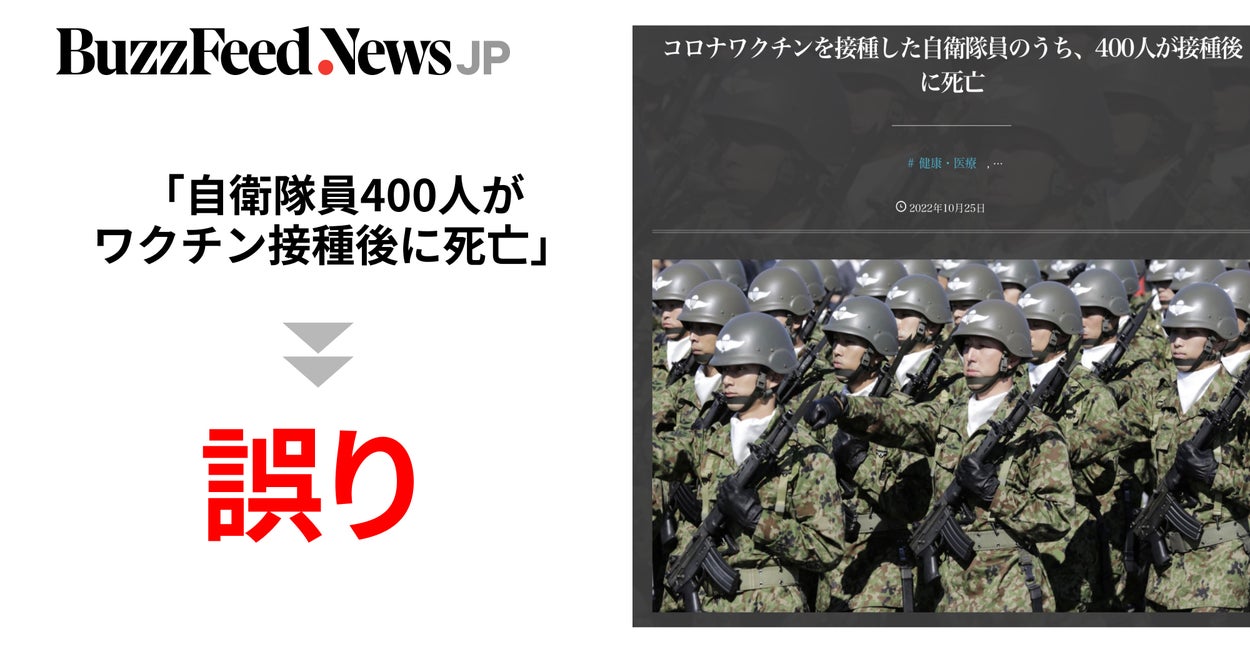
「自衛隊員400人がコロナワクチン接種後に死亡した」と拡散したツイートとブログ記事
Publisher’s rating: 誤り
The claim examined was that 400 members of Japan’s Self-Defense Forces died after receiving COVID-19 vaccines. BuzzFeed traced the assertion to a May 5 post that said the government had effectively compelled vaccination and that the writer had heard 400 people had died. The review also describes a screenshot-based post that spread on October 23 and a blog article that had appeared by October 25, both amplifying the figure. The review reports that the Ministry of Defense’s public-relations office explicitly denied that 400 service members had died after vaccination. The investigation did not rely only on the denial of the specific figure. BuzzFeed says it asked the ministry whether any service members had died in a way linked, or suspected to be linked, to vaccination. The office also said it had received no such reports. This is the central evidence the review offers against both the reported total and the broader suggestion that vaccine-related deaths among service members had been reported. The review also addresses the post’s claim that vaccination was effectively forced: it reports that vaccination for service members was voluntary, and that first-dose coverage was 95%. Those details do not by themselves establish what happened to every individual, but they contradict the post’s description of vaccination as nearly compulsory. The article’s stated evidence is the ministry’s response and the reported vaccination policy and coverage; it does not describe an independent review of individual medical records.
Karl Lauterbach hat angekündigt, zukünftig alle Herzinfarkt-Toten nach einer Infektion als Corona-Tote zu zählen.
Publisher’s rating: Das hat der Bundesgesundheitsminister so nicht gesagt. Er wies auf eine mögliche Untererfassung von Corona-Toten hin, weil Corona-Spätfolgen wie ein Herzinfarkt bei der Zählung nicht berücksichtigt würden. Das Ministerium plant nach Angaben einer Sprecherin keine Änderung der Kriterien für die Statistik.
The claim concerns what Health Minister Karl Lauterbach said about counting deaths after COVID-19 infection. The review reports that he spoke at a federal press conference on 14 October 2022 about possible undercounting of deaths due to COVID-19, but did not announce that all heart-attack deaths after infection would be counted as COVID-19 deaths. His remarks concerned the possibility that infection could raise cardiovascular-death risk for as long as a year.
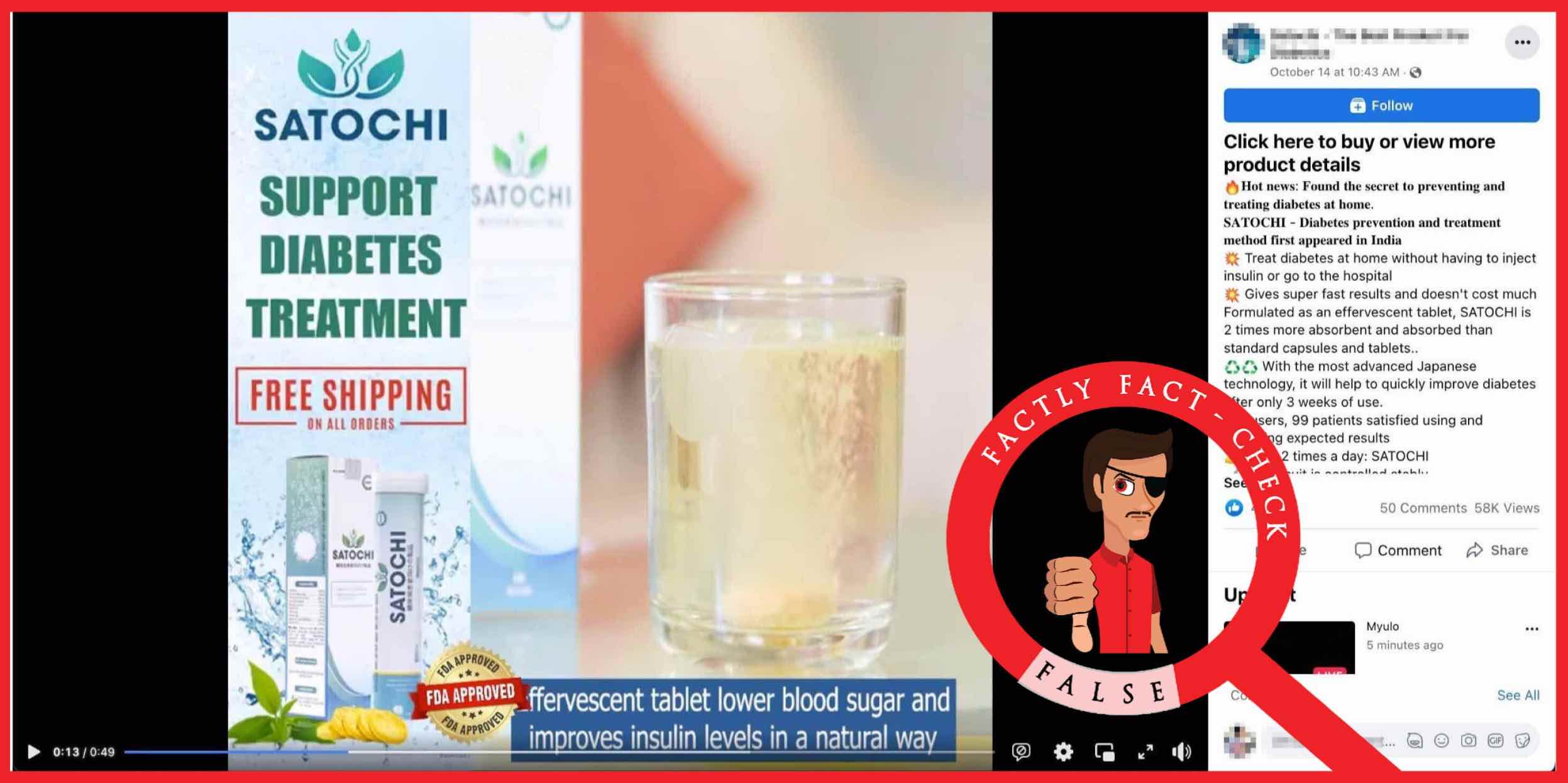
Satochi, a tablet advertised as a treatment for diabetes, is approved by the FDA (Food and Drug Administration)
Publisher’s rating: FALSE
The claim concerned an advertisement video for Satochi, described there as an effervescent tablet said to improve insulin levels naturally. The review checked whether this specific product was approved by the U.S. Food and Drug Administration, rather than whether the product’s marketing made health claims. It reports that Satochi was being sold online as a nutritional supplement to stabilize blood sugar, while the sales website described it as “licensed and FDA-certified.” To investigate the certification claim, the review followed the ordering link in the post and examined the website and the certificates displayed there. It reports that none of the three certificates mentioned the FDA. The review also checked the FDA’s database of approved drugs and says that Satochi was not listed. It concludes that the tablet promoted as a diabetes treatment was not FDA-approved. The review explains that FDA approval is not established simply by a seller describing a product as certified: it says the agency permits a manufacturer to use “FDA Approved” in labeling or advertising only after receiving an approval letter. It also notes a qualification relevant to interpreting the database check: not every product within the FDA’s regulatory remit undergoes premarket approval. That qualification does not establish approval for Satochi; the review’s stated finding is that it was absent from the approved-drug list and that the certificates offered by the seller did not mention the FDA.