PeakMetrics / Fact Checks
Health & medicine fact checks
Explore claims publishers have checked about health & medicine. Read their original ratings and follow the evidence.
Search fact checks
Search by text or image13,668 published reviews in this topic

Selon la fiche de sécurité des produits « Apeel », ceux-ci causent des lésions oculaires graves et des allergies.
Publisher’s rating: Non. « Apeel » est une société américaine qui a développé une technique à base de substances végétales pour enrober fruits et légumes, afin de ralentir le processus de maturation de ceux-ci. La technique « Apeel » n’est pas allergène. Les « informations de sécurité » partagées proviennent d’un tout autre produit portant le même nom : un agent de nettoyage.
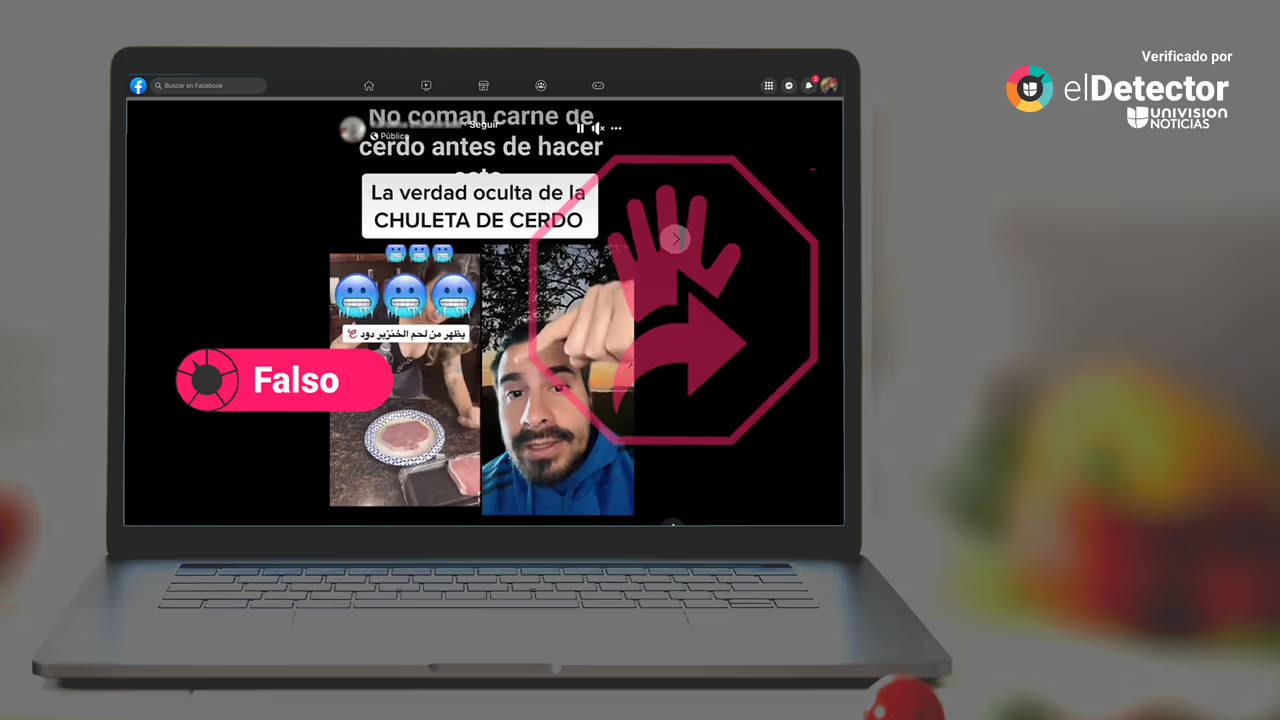
Al echarle refresco de cola a la carne de cerdo cruda saldrán gusanos o parásitos.
Publisher’s rating: Falso
The review examines a Facebook video in which a woman pours what appears to be cola on a pork chop. White specks later appear to move, and the people in the video present them as worms emerging from the meat. The review reports that three food and animal-science specialists consulted by elDetector questioned whether the footage showed pork, actual cola, or worms at all. One suggested the specks could be connective tissue such as fat or collagen; another said the footage was misleading. The experts rejected the idea that cola could reveal parasites in pork. Francisco Diez González, of the University of Georgia, said pork produced under U.S. Department of Agriculture standards does not have worms. Jonathan A. Campbell, of Pennsylvania State University, described the video as misleading and false, and the review notes that food-safety checks can include microscopic examination of bone tissue and immune-based tests of blood samples. Donald Schaffner, of Rutgers University, said it was very unlikely that pouring cola on pork would make worms appear. The review distinguishes visible worms from Trichinella, the parasite associated with trichinosis in undercooked pork. It reports that Trichinella is microscopic and that infection in pork takes the form of microscopic cysts, not visible worms. The specialists therefore said the video’s apparent moving material cannot establish that parasites emerged from pork. The review also notes that the footage does not establish what the meat or liquid actually was, limiting what can be concluded from the images alone.


Limão congelado cura câncer e é mais forte do que a quimioterapia
Publisher’s rating: Falso

Obst und Gemüse mit einem «Apeel»-Sticker sind mit einem chemischen Überzug behandelt, der Augenschäden und allergische Reaktionen hervorruft.
Publisher’s rating: Die geteilten Sicherheitsinformationen stammen von einem Reinigungsprodukt, das zufällig auch Apeel heißt. Die Schicht auf Lebensmitteln besteht hingegen aus pflanzlichen Materialien, bei denen der Deutsche Allergie- und Asthmabund das Risiko für allergische Reaktionen nur als «sehr gering» einstuft.
La FDA admet que les vaccins anti-Covid contiennent de l'oxyde de graphène.
Publisher’s rating: Non. Il s’agit d’une mauvaise interprétation qui a été dénoncée par la FDA elle-même. L’oxyde de graphène est un nanomatériau aux multiples usages, mais qui ne figure pas parmi les ingrédients des vaccins contre le Covid-19, a souligné l’agence américaine.
The claim concerned a Pfizer document made public after a US court case and circulated online as proof that graphene oxide was in Covid-19 vaccines. The review identifies the document as a report dated 27 December 2020, published on 1 February 2023, about the structural and biophysical characterization of the SARS-CoV-2 Spike protein. It says the report analyzed that protein, rather than documenting vaccine ingredients: “Le document en question s’intitule (traduction de l’anglais) « Caractérisation structurale et biophysique de la glycoprotéine Spike du SARS-CoV-2 (P2 S) en tant qu'antigène vaccinal ».” The review traced the disputed reference to a laboratory imaging procedure. It reports that graphene oxide appears once in the document, on page 7, in a passage about using a particular microscope to study the Spike protein. The FDA’s clarification, quoted by the review, was that graphene oxide was not an ingredient and was mentioned to describe part of that laboratory procedure: “L'oxyde de graphène n'est PAS un ingrédient du vaccin”, and it was mentioned “pour « décrire, en partie, la procédure de laboratoire relative à l'étude de la caractérisation structurelle de la protéine Spike du SARS-CoV-2 à l'aide d'un type spécifique de microscope ».” The review further explains that the material served as a support to help visualize the protein using cryo-electron microscopy, with the results described on page 11. It also checked the public ingredient lists for Pfizer and other manufacturers, reporting that graphene oxide is not listed. The review therefore distinguishes a laboratory material used in an imaging experiment from an ingredient in a vaccine; the document’s mention of the substance does not establish that it is contained in the vaccine.

コーヒー用の粉末状クリームには可燃性の有毒物質が含まれている
Publisher’s rating: 誤り
The review says powdered coffee creamer can ignite when dispersed as dust near an ignition source, but that this does not mean it contains toxic substances. It examined the ingredients of Coffee mate and noted that the product is not manufactured or sold in Japan; Nestlé Japan said its domestic creamer Bright does not contain sodium aluminosilicate.
Ang oral glutathione, partikular ang Nekothione, ay tumutulong sa pag-reverse ng fatty liver.
Publisher’s rating: Walang katunayan
Oral glutathione, specifically Nekothione, helps reverse fatty liver.
Publisher’s rating: Unproven

Guidelines issued by the Thane Municipal Corporation for people to protect themselves from heat-related illnesses
Publisher’s rating: MISLEADING
The review examined a social-media post presenting a leaflet about heat-related illnesses as guidance issued by the Thane Municipal Corporation (TMC). It concluded that the leaflet was not issued by TMC: the document was published by the U.S. Centers for Disease Control and Prevention (CDC). The review describes the leaflet as covering symptoms and precautionary measures, rather than as a TMC advisory. To identify the document, the reviewers say they inspected the image and saw a CDC watermark at its bottom left. They then searched the internet using relevant keywords and found the same leaflet on the CDC’s official website. The review quotes the CDC’s description of the leaflet as advice on preventing heat-related illnesses, recognizing symptoms, and knowing what to do if someone shows signs of illness. The review also checked whether TMC had issued a comparable advisory. It says it could find no such leaflet or press note on TMC’s official website. It distinguishes the viral document from separate heat-related guidance reportedly issued by the Brihanmumbai Municipal Corporation (BMC): the review says the leaflet was issued by neither TMC nor BMC. Thus, the evidence presented addresses the source of the specific leaflet, not whether heat-protection guidance existed elsewhere.

Eet geen voedsel met een Apeel-sticker erop, volgens het veiligheidsinformatieblad kan het o.a. ernstig oogletsel en allergische reacties veroorzaken.
Publisher’s rating: Nee. Apeel is een Amerikaans bedrijf dat aan de hand van plantaardige stoffen een techniek heeft ontwikkeld om een coating op groente en fruit aan te brengen, waardoor de producten minder snel bederven. De Apeel-techniek is bijzonder allergie-vrij. De veiligheidsinformatie die gedeeld wordt, komt van een ander product dat toevallig ook de naam Apeel draagt: een schoonmaakmiddel.
The warning says that people should not eat food bearing an Apeel sticker because a safety data sheet reportedly lists severe eye injuries and allergic reactions. The review investigated whether that sheet described the coating used on produce. It reports that Apeel Sciences developed Edipeel, a plant-based coating intended to keep fruit and vegetables fresh longer, and that the company’s product safety information does not list the hazards cited in the warning. The review also describes the coating as particularly free of allergic reactions because common allergens are not in it. [S1: “Uit een veiligheidsinformatieblad zou blijken dat het ernstige oogletsels en allergische reacties veroorzaakt.”; “Het staat niet in de 'product safety information' van het bedrijf, noch de Nederlandse vertaling van dit productinformatieblad. Integendeel, volgens de website is Apeel juist bijzonder vrij van allergische reacties, aangezien de meest voorkomende allergenen niet in het product zitten.”] The decisive distinction is that the matching hazard language belonged to another product also named Apeel, not to the food coating. The review says the investigators searched for wording from an English-language social-media post and found a product information sheet whose second page listed the cited hazards. But that document concerned a “Hard Surface Cleaner.” Searching the supplier Evans Vanodine’s website for Apeel revealed an orange-scented cleaner with the same name. The review reports that on April 18 Evans Vanodine explicitly clarified that its cleaner was unrelated to Apeel Sciences and should not be used to preserve fruit or vegetables. [S1: “Door te zoeken op de tekst uit een Engelstalige post over het 'safety data sheet', komt deze productinformatie naar boven. Op de tweede pagina van dit document worden precies dezelfde gevaren genoemd als in de Facebookposts. In het document is echter geen sprake van voedsel, maar het lijkt om een schoonmaakmiddel te gaan ('Hard Surface Cleaner').”; “Door op de website van de leverancier - Evans Vanodine - te zoeken naar Apeel, blijkt een schoonmaakmiddel met sinaasappelgeur dezelfde merknaam te hebben als de fruitcoating.”; “Sinds deze foute claims op sociale media circuleren, heeft Evans Vanodine op 18 april aan de productbeschrijving expliciet toegevoegd dat het schoonmaakmiddel niets met het bedrijf Apeel Sciences te maken heeft en dat het schoonmaakmiddel Apeel niet gebruikt moet worden om groente en fruit te conserveren.”]

root canal treatment is the no. 1 cause of heart attacks
Publisher’s rating: False
Por risco de trombose, Brasil abandona uso da AstraZeneca
Publisher’s rating: Falso
‘Super Meal Mix Nuts’ is a mixed cereal product that people are lining up to buy at a mall, and can provide a myriad of health benefits such as curing diabetes and reducing the chances of getting cancer and stroke. Dr. Willie Ong is endorsing the product.
Publisher’s rating: False