PeakMetrics / Fact Checks
Health & medicine fact checks
Explore claims publishers have checked about health & medicine. Read their original ratings and follow the evidence.
Search fact checks
Search by text or image13,668 published reviews in this topic

Las frutas y verduras que lleven un sticker con el nombre Apeel son peligrosas porque esa compañía "fundada por Bill Gates" usa “mono y diglicéridos tóxicos para enfermarte”.
Publisher’s rating: Falso
The review examined a viral Facebook video showing an avocado with an Apeel sticker. The video urged people not to buy produce with the label, alleging that Apeel was founded by Bill Gates and used toxic mono- and diglycerides to make people sick. The review checked those specific allegations against company information, FDA materials, and other cited records. The investigation found that Apeel does use mono- and diglycerides in its produce coating, but that this fact alone does not support the video’s claim of toxicity. The article describes these substances as food additives and reports that the FDA considers them generally safe for specified uses, including as emulsifiers and flavoring agents. It also distinguishes the FDA’s GRAS status from agency approval: a spokesperson said the FDA had “no questions” about the company’s safety conclusion, rather than having formally approved Apeel. The review also checked the claim about the company’s origins. It reports that the Bill & Melinda Gates Foundation provided funding, while company information and reporting identified James Rogers as Apeel’s founder and chief executive. Thus, the article’s evidence supports a narrower account than the video’s: the company received foundation funding, but the cited sources do not identify Bill Gates as its founder.

Postagem do site Jornal Tribuna Nacional com o título “O melhor patologista do mundo adverte que centenas de milhões de vacinados estão contraindo câncer e se tornando inférteis”, sobre falas do médico norte-americano Ryan Cole acerca dos supostos efeitos das vacinas de RNA mensageiros (mRNA) contra covid-19. O texto é uma reprodução do site The Exposè.
Publisher’s rating: Falso
The investigation examined a viral Tribuna Nacional post that repeated statements by US pathologist Ryan Cole. The post alleged that mRNA COVID-19 vaccines were causing increases in cancer and infertility, and its headline asserted that hundreds of millions of vaccinated people were affected. The review reports that the Brazilian site translated material from The Exposè, an English-language site that had been banned from Twitter for publishing COVID-19 misinformation. The headline’s figure was unsupported: the review says the text gave no source for it. To check the medical claims, the investigators sought information from Brazil’s Ministry of Health, the National Cancer Institute (Inca), and health regulator Anvisa, and asked the Brazilian Society of Pathology about Cole’s claims and his purported status as the “best pathologist in the world.” The review reports that the Society found no published research by Cole on the vaccine topic in the databases it consulted, and said there is no worldwide ranking of pathologists. The evidence described in the review does not support the alleged vaccine effects. It cites a study of vaccinated US men aged 18–50 that found no change in sperm count, and reports that the Ministry of Health said University of Miami research refuted a link between mRNA COVID-19 vaccines and infertility. Inca said there was no evidence that vaccines cause cancer; Anvisa said claims linking COVID-19 vaccination to cancer or infertility had no scientific basis. The review also distinguishes infection from vaccination: it says research found reproductive-system effects in men who had contracted and died of COVID-19. Thus, the material presented by the post did not establish that vaccination caused either cancer or infertility.
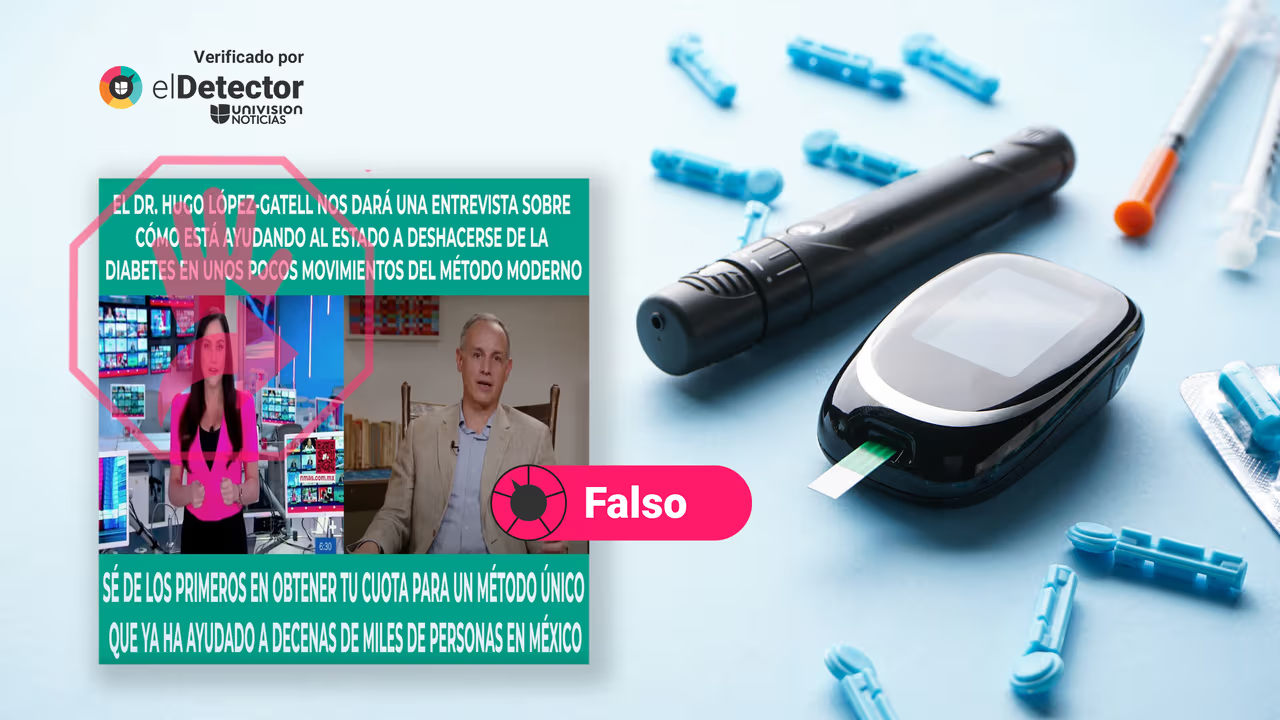
El doctor Hugo López-Gatell habló en una entrevista sobre un método moderno que puede curar la diabetes.
Publisher’s rating: Falso
The claim concerns a Facebook video that attributed to Mexican health official Hugo López-Gatell an interview with television presenter Danielle Dithurbide, in which he supposedly revealed a modern, natural method for curing diabetes. The review describes the video as a 29-second clip posted on April 18, 2023, and says it had been played 5,500 times by May 4. Its voice-over says López-Gatell discussed a cure and exposed pharmaceutical campaigns. The investigation compared that portrayal with López-Gatell’s actual remarks in an interview published in October 2022 on the official YouTube account of public broadcaster Canal Catorce. The review reports that he said people were using his photo in Facebook ads to promote products that supposedly cure diseases, and that he neither sold anything nor promoted private or commercial products. It also searched for interviews between López-Gatell and Dithurbide: the two located interviews concerned COVID-19, not diabetes medication. Although the presenter’s face matched the clip, the review found that the voice-over voice was different from hers. The review further reports that the U.S. Centers for Disease Control and Prevention and the National Institute of Diabetes and Digestive and Kidney Diseases say there is no cure for either type 1 or type 2 diabetes. Taken together, the reported interview, the mismatch between the clip’s audio and the presenter, and the health agencies’ statements contradict the video’s claim that López-Gatell announced or promoted a diabetes cure.

IKEA Klagenfurt setzt noch immer auf Registrierungspflicht und 2G-Regel
Publisher’s rating: Auch bei IKEA Klagenfurt ist weder die Registrierungspflicht für Gäste noch die 2G-Regel in Kraft.
The claim concerned a photo of a notice said to be at IKEA Klagenfurt, which told guests they could sit down only if vaccinated or recovered and asked them to register. The review distinguishes whether the notice might have been photographed there from whether the rules were still in force: it says the photo’s creator confirmed taking it, but IKEA Austria said it must be old. An APA reporter also visited the store on 26 April and did not find the notice.
ফ্রিজে রাখা দুধ পান করে সাপের বিষক্রিয়ায় দুই শিশুর মৃত্যু
Publisher’s rating: False

Usar mascarillas causa covid persistente.
Publisher’s rating: Falso

De coronavaccins van Pfizer en Moderna zijn niet langer geautoriseerd in de VS, zo meldt de FDA via Twitter.
Publisher’s rating: De FDA veranderde hun aanbevelingen om de nieuwere, bivalente vaccins voorrang te geven. Die bieden betere bescherming tegen nieuwe virusvarianten. De eerste generatie monovalente vaccins zijn nog steeds goedgekeurd, maar hebben niet langer een noodvergunning.

Vacina contra gripe e contra Covid-19 vem com o vírus do câncer
Publisher’s rating: Falso

BBCがコロナワクチンが超過死亡を引き起したと認めた
Publisher’s rating: 誤り
The review says the claim was based on a People’s Voice article, but found no evidence in the cited material that BBC admitted vaccines caused excess deaths. It reports that BBC instead said statistical data showed no causal relationship between COVID-19 vaccines and excess deaths. [S1]

Zonnecrème, niet de zon zelf, veroorzaakt huidkanker.
Publisher’s rating: Zonnebrandcrème is veilig en beschermt de huid tegen zonneschade en huidkanker, zeker in combinatie met andere vormen van bescherming. Hoewel zonnestralen zorgen dat we vitamine D aanmaken, hebben we geen uren aan onbeschermde tijd in de zon nodig om daarvan genoeg te krijgen.
The review addresses a video claiming that sunscreen is harmful to skin and causes cancer instead of the sun. It identifies the man in the video as Andreas Moritz, a German writer on alternative medicine who died in 2012. The review’s account distinguishes the video’s allegation from the evidence it presents about ultraviolet (UV) exposure and sunscreen ingredients. [S1] The review explains that both UVA and UVB rays reach the skin and can cause damage. It notes that sunburn is the skin’s response to UV rays and that getting sunburned increases the chance of skin cancer. Sunscreen can reduce UV damage, but the review also qualifies the evidence: the effectiveness of sunscreen specifically in preventing melanoma is less clear, citing a 2019 review study. It therefore presents sunscreen as one part of sun protection, not as a substitute for limiting time in strong sun or wearing protective clothing. [S1] On the allegation that sunscreen itself causes cancer, the review says sunscreen ingredients are subject to European regulation and strict checks, and states that they are not carcinogenic. It notes a qualification: there is still uncertainty about the long-term safety of some nano-ingredients as used in products, and more research is needed. It also distinguishes concerns about certain UV filters’ effects on marine ecosystems from claims about human cancer. The review further says there is no evidence that sunscreen use substantially worsens vitamin D production, or that vitamin D deficiency is linked to skin cancer. [S1]

Eating Fruits On An Empty Stomach Cures Cancer!
Publisher’s rating: Misleading