PeakMetrics / Fact Checks
Elections & voting fact checks
Explore claims publishers have checked about elections & voting. Read their original ratings and follow the evidence.
Search fact checks
Search by text or image5,415 published reviews in this topic

Hijo de Trump dijo en un video que su padre era el ser humano menos ético y que él votará por Biden
Publisher’s rating: Falso

190,000 watched Trump's town hall while 20,000 watched Biden's
Publisher’s rating: False

“Thousands of ballots dumped in a garbage can, and they happen to have my name on it.”
Publisher’s rating: False
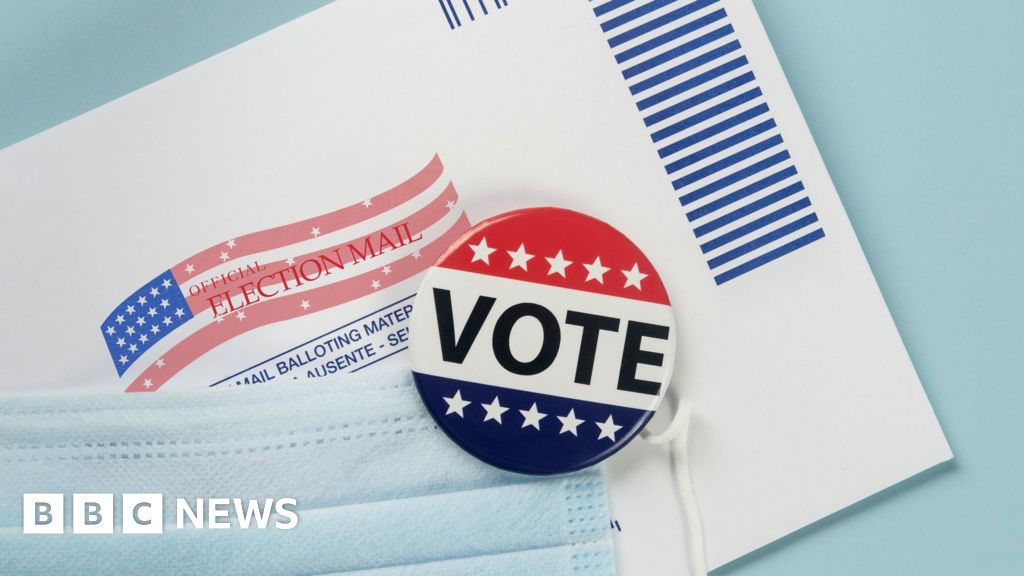
Photos show "dumped" ballots in California
Publisher’s rating: This is misleading. The official County of Sonoma Facebook page published a statement addressing the claims. "The pictures are of old empty envelopes from the November 2018 election that were disposed of as allowed by law," they said.

బీహార్ రాష్ట్రంలో బీజేపీ నిర్వహించిన ఎలక్షన్ ర్యాలీ కి సంబంధించిన ఫోటో
Publisher’s rating: FALSE
50,000 people in Ohio getting erroneous absentee ballots was evidence of a "rigged election".
Publisher’s rating: There is no evidence to support the "rigged" claim. The elections board in Franklin County, Ohio, said the ballot error was a "serious mistake" but in its response to the president's tweet, it added: "Our board is bipartisan and our elections are fair. And every vote will be counted."

Project Veritas discovered a voter fraud scheme connected to Rep. Ilhan Omar in Minneapolis
Publisher’s rating: False

Kentucky election results show Kanye West, Jo Jorgensen with major vote totals
Publisher’s rating: False
Nur die Demokraten profitieren von der Briefwahl
Publisher’s rating: Falsch. Verschiedenste Studien haben untersucht, wie sich das Wählerverhalten nach der Umstellung auf eine Briefwahl in den USA verändert hat. Sie sind zum Schluss gekommen, dass die Art des Wählens kaum relevant ist. Zwar nehmen manche Gruppen ihr Wahlrecht häufiger wahr, wenn sie dies per Post tun können – diesen Effekt hat man beispielsweise bei Afroamerikanern und bei Personen ohne Highschool-Abschluss festgestellt. Auf das Ergebnis hat dies allerdings keinen signifikanten Einfluss.

Pennsylvania ballots will be rejected without outer and inner envelopes
Publisher’s rating: True
The review evaluated a Facebook post about Pennsylvania mail-in ballots, which said that ballots without both an outer and an inner envelope would not be counted. It reports that the Pennsylvania Supreme Court ruled in September 2020 that election officials could reject “naked ballots”—ballots missing the secrecy envelope. The review also notes that, before the ruling, state election officials had advised counties to count such ballots. (S1: “The Pennsylvania Supreme Court ruled that officials can reject ‘naked ballots,’ which are those that are missing the secrecy envelope. Prior to the ruling, state election officials had given guidance telling counties to count naked ballots.”) The review then points to an online voting guide created by Pennsylvania Secretary of State Kathy Boockvar after the ruling. The guide instructed voters to put the ballot in the white inner secrecy envelope, seal that inside the pre-addressed outer return envelope, and sign the declaration on the outside. It expressly said a ballot not enclosed in both envelopes would not be counted. (S1: “Every voter should first seal the ballot in the white inner secrecy envelope, then ‘seal the inner secrecy envelope in the pre-addressed outer return envelope where the voter must sign.’” S1: “If the ballot is not enclosed in both envelopes, it will not be counted.”) These details support the post’s central warning about using both envelopes. The review’s account distinguishes the court ruling, which it describes as allowing rejection of ballots missing the secrecy envelope, from the secretary of state’s guide, which explicitly addresses ballots missing either envelope. It rated the claim True. (S1: “The Pennsylvania Supreme Court did rule that officials can reject ballots that aren't properly enclosed in the required envelopes. Pennsylvania's secretary of state further confirmed this in an online voter guide.”)
Die Briefwahl ist unsicher
Publisher’s rating: Falsch. Faktisch ist das systematische Manipulieren einer Briefwahl sehr schwierig. So werden beispielsweise die Barcodes jedes Stimmzettels getrackt und als gestohlen gemeldete Wahlzettel werden für ungültig erklärt. Ausserdem sind sie mit einem eindeutigen Code versehen, der nur für eine einzige Stimme eingesetzt werden kann – Kopien davon sind also wertlos. Auch Unterschriften zu fälschen, ist schwierig, da sie maschinell oder von Experten mit dem Wählerregister verglichen werden.
Sogar tote Tiere können in den USA per Brief wählen
Publisher’s rating: Durch einen etwas kuriosen Fehler erhielt eine seit 12 Jahren verstorbene Katze im Bundesstaat Georgia einen Aufruf, sich als Wähler zu registrieren. Selbst wenn sie noch am Leben wäre, wäre sie wohl spätestens bei der Ausweiskontrolle im Wahllokal gestoppt worden. Nichtsdestotrotz goss der Vorfall Öl ins Feuer der republikanischen Kampagne gegen die Briefwahl. «Das ist das Wahlchaos und der Unfug, den die Demokraten wollen», kommentierte Trumps Kampagnenteam im Juli, nachdem der Vorfall publik wurde.
Biden and Harris had a rally in Arizona and no one came
Publisher’s rating: Missing context

President Donald Trump has left former Vice President Joe Biden 'in the dust' in the swing state of Ohio, according to recent polling data
Publisher’s rating: Missing context
The claim originated in a Red State Observer post about the 2020 presidential race in Ohio. USA TODAY’s review examined the Trafalgar Group poll cited by that post, rather than treating the poll’s headline numbers as conclusive evidence that Trump had decisively overtaken Biden. The poll found Trump at 48% and Biden at 44%, with a 3% margin of error and about 4% of voters undecided. That amounted to a four-point Trump lead, but the margin was within the stated error range: the review noted that shifting each candidate’s result by three points in the direction least favorable to Trump would put Biden two points ahead. The review also placed the result alongside other polling evidence. It reported that three other recent Ohio polls—sponsored by Fox News, the New York Times and another source—showed Biden ahead, though within their respective error margins, while a CBS poll had the candidates tied. FiveThirtyEight’s model then categorized Ohio as a tossup. Those comparisons do not prove how Ohio would ultimately vote, but they show why one poll’s lead did not by itself establish that Biden was being left “in the dust.” The review further described the poll’s timing and qualifications. Trafalgar fielded it October 1–3, 2020, shortly after Trump’s COVID-19 diagnosis and hospitalization and the debate with Biden. The review quoted Trafalgar CEO Robert Cahaly saying those events probably softened Trump’s numbers, while also noting that Trafalgar used a distinctive approach to weighting “secret supporters.” USA TODAY’s central point was that the poll offered a snapshot with a lead, not a decisive or guaranteed outcome; the four-point difference was smaller than the poll’s stated margin of error.

Charlotta Bass was the first Black woman to run for vice president
Publisher’s rating: True
USA TODAY examined whether Charlotta Bass was the first Black woman to run for vice president. Its account places her candidacy in 1952, when she was nominated by the Progressive Party to run alongside Vincent Hallinan. The review also distinguishes Bass’s historical first from Kamala Harris’s later milestone: it says Bass ran for vice president, while Harris became the first Black woman to be a major-party candidate for the office in 2020. The review describes Bass as a journalist and activist who had sold the California Eagle before taking over its publication in 1910. It says she later ran the paper alone, became active in civil-rights organizations, and devoted herself to activism full time in 1951. These details situate her candidacy within a longer career, but the decisive evidence for the claim is the review’s account of her party nomination and the historical distinction it draws between her run and Harris’s major-party candidacy. The review reports that Bass, in her nomination-acceptance speech, called the moment historic and said that for the first time a political party had chosen a Black woman for the nation’s second-highest office. It also says the Hallinan-Bass ticket placed third in the November 1952 election, with roughly 140,000 votes. The evidence therefore concerns an actual vice-presidential candidacy, not a later recognition or a claim that Bass won the election.
