PeakMetrics / Fact Checks
Economy & business fact checks
Explore claims publishers have checked about economy & business. Read their original ratings and follow the evidence.
Search fact checks
Search by text or image7,091 published reviews in this topic
Kit 7 Produtos - Natal Especial Cacau Show QUEIMA DE ESTOQUE BLACK FRIDAY
Publisher’s rating: Falso

A New Special Commodity Levy Imposed On Various Food Items In Sri Lanka !!
Publisher’s rating: Misleading
The claim concerned social-media posts saying Sri Lanka had imposed a new, substantially higher special levy on foods such as fruit and fish from December 1. Factcrescendo says the posts were based on a Finance Ministry Gazette issued on November 30, 2023, and that Daily Mirror had also reported the news without additional context. The review investigated whether this notice introduced new taxes or instead continued an existing levy.

Videos promoting the ‘Laila Rao’ investment project
Publisher’s rating: FALSE
The review examined social-media videos presenting “Laila Rao” as an investment project for women. In the videos described, a woman claimed that modest investments had generated large profits and directed viewers to Telegram; other clips purported to show celebrities endorsing the scheme. The review’s stated finding is that the project was a financial scam, not a legitimate investment opportunity. To investigate, the review says it searched for information about the project and found reporting about the fraud and a police advisory. It also examined complaints posted on the Consumer Complaints Court forum. Those complainants said they had invested based on the videos and were subsequently asked to make repeated payments, described as a 15% commission, to recover their money. The review reports that Cyberabad crime police warned that complaints had been filed in multiple states and that the scammers operated from different states. The video endorsements did not establish that the named celebrities backed the scheme. The review identified the woman presented as Laila Rao in one video as television actress Smriti Khanna, and says edited audio-visual material falsely portrayed her as promoting the investment. It also reports that Isha Foundation warned that the scheme used Jaggi Vasudev’s material without authorization, including voice cloning, and said he was not involved in investment schemes. These findings support the review’s conclusion that the videos were deceptive promotions for a fraudulent scheme.


Florida "taxes low-income workers more than we tax millionaires and billionaires in the state of California."
Publisher’s rating: This is accurate
സംസ്ഥാനത്ത് വീടുകളിലെ കിണറുകള്ക്ക് കരം ഈടാക്കാന് സംസ്ഥാന സര്ക്കാര് തീരുമാനിച്ചു
Publisher’s rating: FALSE

وزير التموين: تكلفة الدعم للخبز ارتفعت إلى 91 مليار جنيه
Publisher’s rating: معلومات خاطئة
NAIA is clearing out its warehouse and is having a luggage sale where it will sell unclaimed luggages
Publisher’s rating: Fake

Um vídeo no TikTok exibe uma captura de tela de uma aparente reportagem com a foto do ministro da Fazenda, Fernando Haddad (PT), acompanhada do título “Haddad diz que pode bloquear até R$ 23 bilhões para cumprir déficit zero”. O autor da postagem acrescenta abaixo comentários que associam o anúncio deste ano ao extinto Plano Collor, de 1990, que confiscou cadernetas de poupança: “Não parece familiar??”.
Publisher’s rating: Enganoso
The review examines a post that linked a proposed budget measure to the savings confiscation under former president Fernando Collor de Mello in 1990. It says the post’s screenshot appeared to show a Jovem Pan item using the same headline and photo of Finance Minister Fernando Haddad, but that item concerned limiting authorized federal spending in 2024 to pursue a zero fiscal-deficit target—not confiscating savings. The review also says other outlets reported the proposed contingency and that it had no connection to savings confiscation. (S1: “Um print na postagem verificada pelo Comprova remete, aparentemente, a uma publicação do site da Jovem Pan que utiliza o mesmo título e foto do ministro Fernando Haddad.”; “A reportagem do portal trata, na verdade, de um anúncio de Haddad sobre limitar, no ano que vem, recursos da União com uso autorizado na Lei de Diretrizes Orçamentárias para atingir a meta de déficit fiscal zero, quando os gastos públicos se equiparam à arrecadação.”; “A previsão de contingenciamento do dinheiro público feita pelo ministro também foi noticiada por outros veículos (como a Folha), que reforçam que não há qualquer relação com confisco de poupanças.”)

Publicações afirmam: “de acordo com um decreto do Governo Federal, as empresas estão agora obrigadas a divulgar os salários de seus colaboradores”. Nas postagens, não fica claro se os nomes das pessoas também serão divulgados junto com os valores nem qual é o motivo da política governamental.
Publisher’s rating: Contextualizando

Uma sequência de postagens diz que o governo de Luiz Inácio Lula da Silva (PT) irá taxar influenciadores digitais em 4% do faturamento bruto, por meio do Projeto de Lei 8889/2017, de autoria do Paulo Teixeira. De acordo com as postagens, o PL “expande o pagamento de uma taxa chamada de Codecine [sic], de 4%, para plataformas online. Como Youtube, Twitch e, em tese, até Onlyfans também”. O autor do conteúdo ainda diz que o PL estaria “para votação em plenário em regime de urgência”.
Publisher’s rating: Enganoso

Israël a changé son code-barres pour éviter le boycott de ses produits. Le nouveau est 871.
Publisher’s rating: Non, les trois premiers chiffres des codes-barres ne sont pas des indicateurs fiables pour déterminer le lieu d'origine ou de fabrication d'un produit. Ils font référence au pays dans lequel une entreprise a enregistré une demande de code-barres.

O governo deu início a um plano de retirada de valores retidos batizado pelo presidente como "Resgate da Prosperidade". Para darmos prosseguimento ao seu atendimento, precisamos confirmar que é você mesmo e para isso é necessário que você informe seu CPF.
Publisher’s rating: Falso


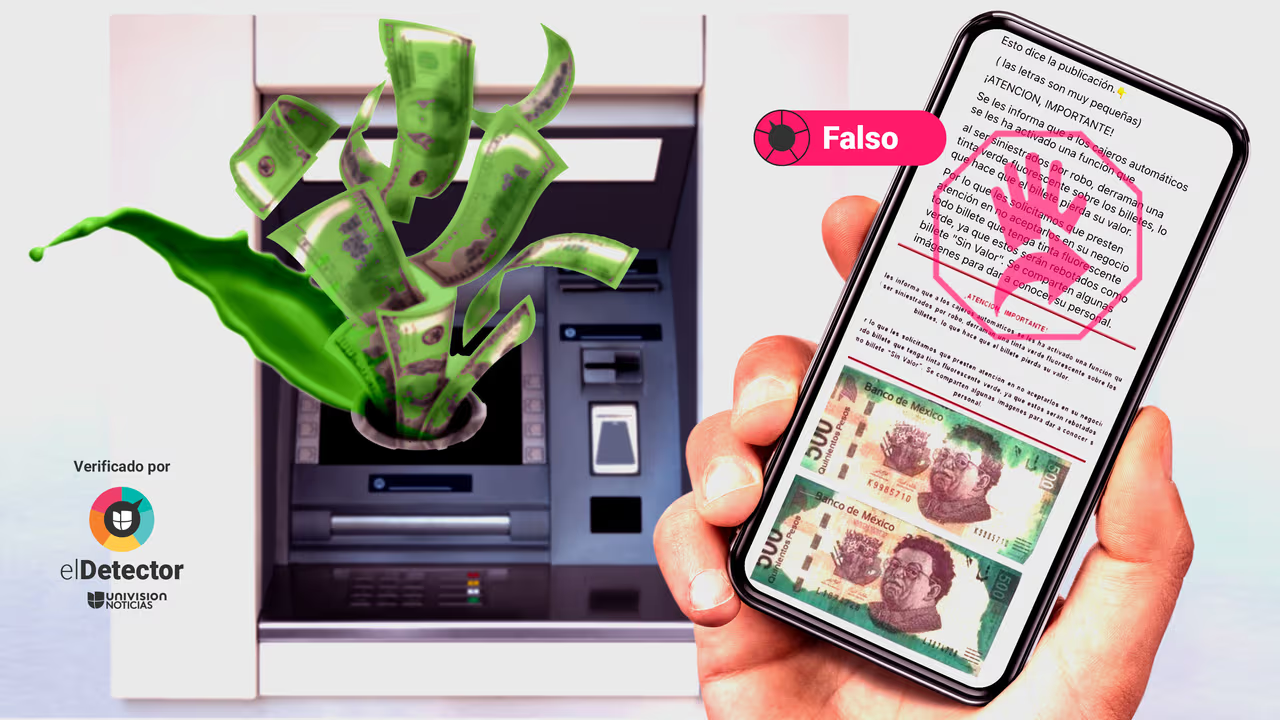
Los cajeros automáticos en México manchan los billetes de tinta verde fluorescente en el caso de robo y esto hace que pierdan su valor.
Publisher’s rating: Falso
The investigation examined a message claiming that Mexican ATMs release fluorescent green ink onto banknotes during a robbery, rendering the notes worthless. The review says the claim had circulated for at least six years and that the message urged people not to accept such notes because they would be rejected as having no value. It also describes the accompanying images as showing green-stained edges on 500-peso notes. To check the alleged ATM function, the outlet contacted the press team of the Asociación de Bancos de México (ABM) by email. The ABM said that ATMs do not stain banknotes and characterized the post as false. The review also consulted a Banco de México document, “Preguntas frecuentes sobre la validez de los billetes maltratados,” dated May 2023. That document says banknotes stained with substances including paint or ink retain their value, subject to a qualification: the stain must not have been applied to conceal a religious, political, or commercial message. The review further reports that a Google search using terms about green-stained Mexican banknotes found no results indicating that ATMs have this function, while turning up earlier debunks from 2017 and 2019. Its conclusion rests on the ABM’s direct response and the Banco de México guidance: the claimed ATM staining function was denied, and staining of the kind described does not by itself make a note invalid.

400 دولار سعر طن القمح وفقا للسعر العالمي
Publisher’s rating: معلومات خاطئة
نیمی از چاپ پول بانک مرکزی در شش ماهه اول سال ۱۴۰۲ صرف نجات بانک آینده شده است.
Publisher’s rating: نیمهدرست