PeakMetrics / Fact Checks
Economy & business fact checks
Explore claims publishers have checked about economy & business. Read their original ratings and follow the evidence.
Search fact checks
Search by text or image7,104 published reviews in this topic
Premier Gladys Berejiklian claims her government has created “hundreds of thousands of new jobs” and that she’s delivered the “lowest unemployment in NSW - ever”.
Publisher’s rating: True - The checkable claims are true.
“Vergi Məcəlləsinə dəyişikliklər özəl sektor işçilərinin vergi yükünü əhəmiyyətli dərəcədə azaldacaq”
Publisher’s rating: yarı doğru
بر اساس مطالعات انجام شده ۳۰درصد مشکلات ناشی از تحریم است و ۷۰درصد آن مربوط به مشکلات درونی است.
Publisher’s rating: نادرست



A claim that Nigeria has leapfrogged Egypt as Africa’s number one producer of rice, implying that this was because Nigeria had increased exports.
Publisher’s rating: This claim is misleading.

Est-il vrai que l'Europe importe de la viande canadienne bourrée d'hormones à cause du CETA ?
Publisher’s rating: FAUX
The claim concerns Nicolas Dupont-Aignan’s March 2019 assertion that CETA would bring Canadian beef into France that was “30 % moins chère parce que bourrée d’hormones.” In the reviewed television exchange, Patrick Cohen answered that hormone-treated meat was prohibited by the European Union; Dupont-Aignan disputed him. The investigation examined this specific dispute about Canadian beef and the agreement, rather than treating all concerns about CETA as equivalent. The article reports that the EU’s negotiators had treated hormone-treated products as a red line and refused them. It also quotes Guy Hermouet, president of Interbev’s cattle section, stating: « Il n’est pas possible d’importer des viandes aux hormones du Canada, c’est interdit. » The review explains that this restriction meant Canadian producers had to establish specific supply chains to meet European rules, which it identifies as a reason that only a small volume of beef had so far been imported under CETA. The article does not say that French farmers had no grounds for concern. It distinguishes the hormone allegation from their other complaints: among them, price differences for premium beef cuts and concerns about less stringent standards, particularly on antibiotic use and animal feed. It also reports that European farmers sought equivalent controls. The evidence therefore supports rejecting the claim that CETA brings hormone-treated Canadian beef into France, while preserving the article’s qualification that other disputes about standards and competition remain.
“Azərbaycanda işsizlik 5 faiz səviyyəsindədir”
Publisher’s rating: yanlış
“Son 10 il ərzində Azərbaycanda minimal əməkhaqqı 5 dəfədən çox artıb”
Publisher’s rating: əsasən yanlış

Con Rajoy recuperamos todo el empleo femenino destruido en los Gobiernos de Zapatero
Publisher’s rating: Verdadero
"It was only 10 years ago, under Labor, the unemployment rate was 5.7 per cent. Today, 3.9 per cent."
Publisher’s rating: Cherrypicking

Bankitalia ha 7.000 dipendenti con uno stipendio medio di 85 mila euro all’anno
Publisher’s rating: C'eri quasi
The claim concerned remarks by Matteo Salvini on 19 February 2019, when he said the Bank of Italy had 7,000 employees who earned an average annual salary of €85,000. The review checked the headcount against figures published by the Bank and compared the pay claim with the latest available accounts, which covered 2017. The Bank’s figures showed 6,689 employees at 31 December 2018, close to 7,000. For 2017, the review reported 6,799 employees and €652 million in salary costs, plus €166 million in employer pension and insurance contributions. Dividing the combined cost by the workforce gives about €120,000 per employee. The review also calculated that salaries alone averaged €95,900; therefore, €85,000 understated even that figure, while the €120,000 measure additionally includes employer contributions. The review tested whether senior management drove the average upward. After excluding the listed senior roles’ pay from the total, it estimated an average annual cost of €119,000 for the remaining 6,709 employees. It also reported that the Bank described a separate €40 million in “other expenses,” mainly travel allowances, as separate from remuneration. Including those expenses would bring the overall per-employee figure to about €126,000, but they are not salary. The review’s verdict was that Salvini was close on headcount but understated pay.
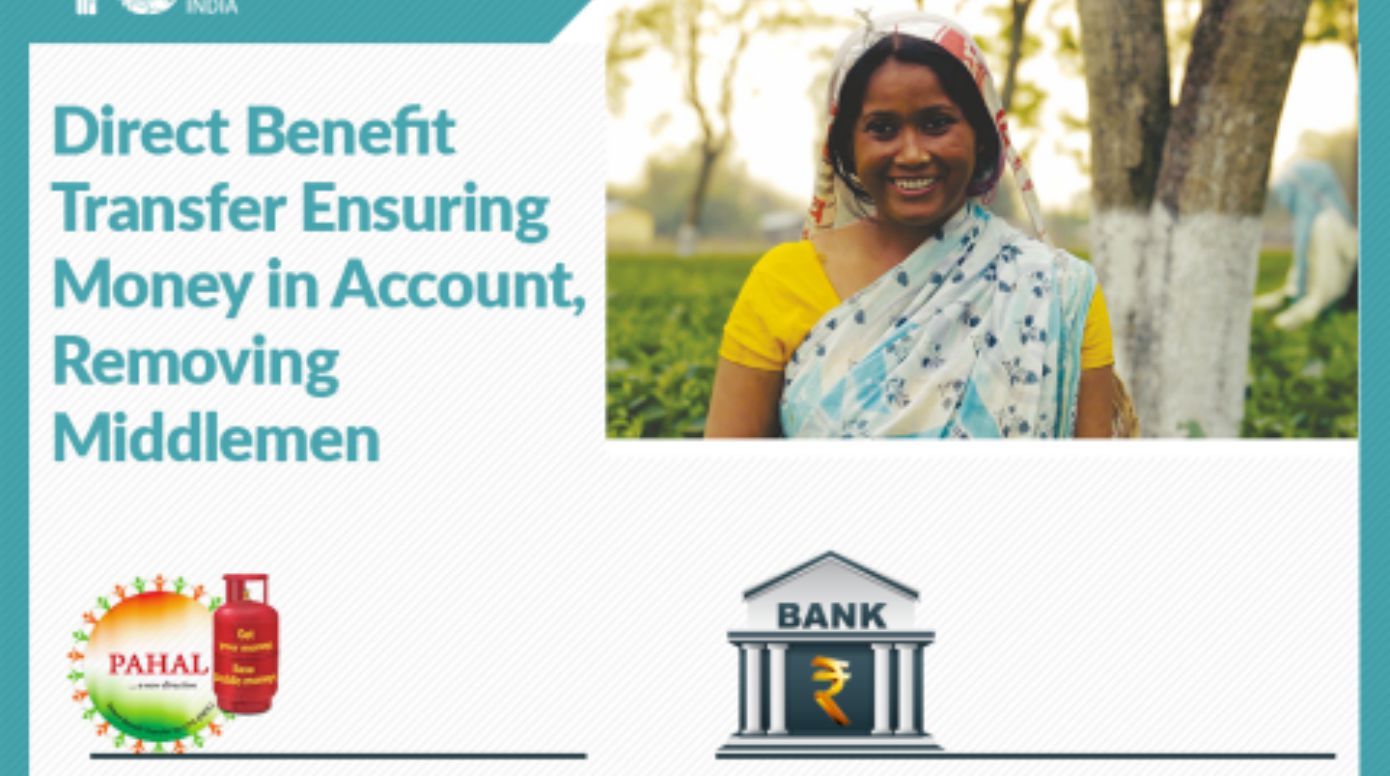
3,65,996 crore rupees directly transferred into bank account of beneficiaries of 431 schemes.
Publisher’s rating: TRUE
The claim concerns the total amount said to have been transferred directly to beneficiaries through 431 schemes. To check it, FACTLY compared the claim with parliamentary information about schemes on the Direct Benefit Transfer (DBT) portal and the amounts transferred. The review reports that a Lok Sabha response put 434 schemes from 56 ministries and departments on the portal as of 26 December 2018—three more than the claim’s stated 431 schemes. That same response reported ₹5,63,896.8 crore transferred to beneficiaries. Of this, ₹4,88,680.2 crore was transferred in cash, with the remaining amount transferred in kind. The cash figure alone exceeds the claim’s ₹3,65,996 crore, while the total including in-kind transfers is higher still. FACTLY therefore concluded that the claim’s figures were supported by the reported totals, while noting that the parliamentary response came after the claim was made and that the number of schemes could have increased in the meantime. The review also cites the DBT portal’s figure of ₹6,30,689 crore transferred as of 1 March 2019. This later figure is not the basis for the earlier comparison: the review uses the 26 December 2018 parliamentary response to assess the claim and presents the portal figure as a subsequent update.
PAHAL is the world’s largest cash transfer program with over 20.14 crore beneficiaries receiving 69,815 crore rupees.
Publisher’s rating: TRUE
The review checks an infographic’s claim that PAHAL was the world’s largest cash transfer program, with over 20.14 crore beneficiaries receiving ₹69,815 crore. It describes PAHAL as the LPG subsidy scheme under which enrolled consumers buy cylinders at the unsubsidised price and receive their subsidy entitlement directly in registered bank accounts. The review’s central evidence is that PAHAL was recorded by Guinness World Records as the largest Direct Benefit Transfer scheme. It also cites government figures that put participation and transfers above the claim’s stated numbers by the time of later reporting. The review refers to a December 2018 Lok Sabha answer reporting 23.11 crore consumers enrolled, and a Ministry of Petroleum and Natural Gas annual report stating that more than ₹62,630 crore had been transferred by December 2017. It then cites a February 2019 Lok Sabha answer reporting ₹1.03 lakh crore transferred to 23.81 crore registered LPG consumers. These figures document the scheme’s scale, though “registered LPG consumers” is the measure given in the later answer; the excerpt does not establish that every registered consumer received a transfer. The review concludes that the claim is supported, while adding historical context: the current form of PAHAL was launched in 2014, but LPG subsidy predates it, and the review says the DBT pilot for LPG consumers was conceived during the UPA-2. It also distinguishes the scheme’s world-record description—largest Direct Benefit Transfer scheme—from the claim’s broader wording, “cash transfer program.”

According to the World Bank Findex Report, India accounts for 55% of new bank accounts opened globally between 2014-17.
Publisher’s rating: UNVERIFIED
Indian Postal Payment Bank to take the banking system to the doorstep of the poor and the unbanked.
Publisher’s rating: UNVERIFIED
The claim concerns whether India Post Payments Bank (IPPB) would take banking services to poor and unbanked people at their doorstep. The review distinguishes this stated aim from evidence that the system had already achieved that result: it reports that IPPB was launched with the aim of providing doorstep banking, but says the system had only recently become fully functional and no assessments of it had been conducted. The evidence described in the review establishes the intended delivery model and the rollout status, not measured outcomes for poor or unbanked customers. It says a Lok Sabha response described payment services for rural residents through “Door Step (Assisted) Banking” by postmen and Gramin Dak Sewaks, alongside regular counter services. A later parliamentary response, in January 2019, said 650 branches had been rolled out on 1 September 2018 at district-headquarters post offices, with other post offices in each district to be linked as access points. Those details support that IPPB was designed to extend banking access through the postal network and that a rollout had taken place. They do not, on the evidence presented, show how many poor or unbanked people actually received doorstep service, how widely it was available, or what its effects were. The review’s conclusion reflects that gap between the announced aim and assessed results.
Nearly half of American families do not have enough cash to afford a $400 unexpected expense
Publisher’s rating: Mostly True

Atal Pension Yojana, for unorganised sector workers, has more than 1 crore subscribers.
Publisher’s rating: TRUE