PeakMetrics / Fact Checks
Economy & business fact checks
Explore claims publishers have checked about economy & business. Read their original ratings and follow the evidence.
Search fact checks
Search by text or image7,100 published reviews in this topic

Ganar 13.300 euros al año tras la subida del SMI obliga a hacer declaración de IRPF
Publisher’s rating: Falso

Campaign ad says: "Unemployment for African Americans fell to a new low. Unemployment for Hispanics hit an all-time record low," under President Trump.
Publisher’s rating: Lacks Context

[En Cataluña] tenemos la tasa de pobreza más alta de los últimos quince años
Publisher’s rating: Engañoso

El desempleo [en la Comunidad de Madrid] se sitúa en el 9,99, que es la cifra más baja de España
Publisher’s rating: Engañoso
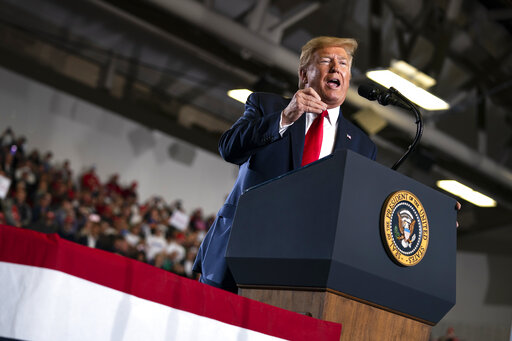
"Earnings for the bottom 10% are rising faster than earnings for the top 10%."
Publisher’s rating: That's accurate
Die Handelskette Edeka hat mit dem Spruch "Essen hat einen Preis verdient: den niedrigsten" auf einem Plakat geworben und damit eine Demonstration von Bauern provoziert. Auch im Netz wurde protestiert: "Unsere Lebensmittel haben einen Wert und dieser Wert hat einen Preis", twitterte etwa der Thüringer Bauernverband mit einem Foto des Plakats
Publisher’s rating: Edeka hat mit "Essen" keine Nahrungsmittel, sondern den gleichnamigen Ort nahe Cloppenburg gemeint. Ähnliche Plakate gab es auch in anderen Städten - dann immer mit dem angepassten Spruch.
The claim describes a real Edeka poster and the reaction it prompted, but leaves out the central point of the dispute: “Essen” was intended as the name of a town, not as a reference to food. The review reports that farmers blocked an Edeka distribution warehouse near Oldenburg on the night of January 27, 2020. The poster, featuring Otto Waalkes for the 100th anniversary of Edeka Minden-Hannover, said that “Essen” deserved the lowest price. Farmers objected that the slogan conflicted with Edeka’s message that it loved food. The review says Edeka explained that the campaign referred to the town of Essen near Cloppenburg, and was intended to address towns individually. It also cites posters adapted for other places, including Minden and Bremen, and reports Edeka’s statement that it had not meant to anger farmers or producers. The company removed the posters despite that explanation. The review describes how a photo of the poster circulated online alongside calls to value food more highly. It specifically names the Thüringer Bauernverband’s post, and reports that the Federal Environment Ministry also shared the image and criticized the pricing message. To check where the pictured poster was photographed, the review says it consulted the advertising-site provider’s listings and compared the location with the building at Lange Straße 41 in Essen. It reports that these checks placed the photograph in Essen, supporting Edeka’s explanation that the word referred to the town.


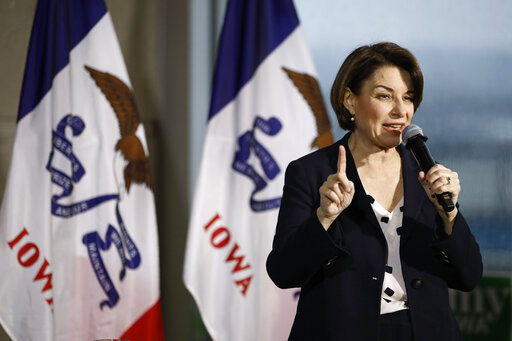
A biodiesel plant in Crawfordsville, Iowa, closed, "partly due to the trade war but mostly due to the waivers that Trump secretly gave to the oil companies."
Publisher’s rating: Largely correct
"We are seeing in the nation a 50% increase in homeowners insurance."
Publisher’s rating: Up, not that much

The Warren wealth tax would fall on "the top 1/10 of 1%."
Publisher’s rating: Largely correct
In the 2000s, mortgages had become so complex, "they had a one in five chance of costing a family their home."
Publisher’s rating: Correct
The wealth tax is like a property tax, except it covers not just "the real estate, but also the stock portfolio, the diamonds, the Rembrandt and the yacht."
Publisher’s rating: Selective examples

Says the United States is the "No. 1 energy producer in the world"
Publisher’s rating: Not a new feat
Says his administration enacted the "largest tax cuts and reforms in history."
Publisher’s rating: False
Says that under his administration there was the "largest military pay raise in a decade."
Publisher’s rating: True
Im Vorfeld der "Grünen Woche" (17. bis 26. Januar 2020), der internationalen Messe für Ernährung, Landwirtschaft und Gartenbau in Berlin, hat Agrarministerin Julia Klöckner in Interviews über die Preise von Lebensmitteln in Deutschland gesprochen. In sozialen Netzwerken kursieren Worte, die ihr in den Mund gelegt werden. Die 47-Jährige soll gesagt haben: "Arme Leute geben viel zuwenig Geld für Lebensmittel aus."
Publisher’s rating: Julia Klöckner hat im Zusammenhang mit Lebensmittelpreisen in Deutschland nicht von armen Leuten gesprochen, die zu wenig Geld für Lebensmittel ausgeben würden. Das bestätigte auch ein Sprecher des Bundesministeriums für Ernährung und Landwirtschaft auf Nachfrage der Deutschen Presse-Agentur (dpa).

Snapdeal is giving away Tata Strome car
Publisher’s rating: FALSE
The review examined messages sent to people after shopping on Snapdeal. The messages claimed that recipients had been selected in a lucky draw for a Tata Safari Storme and asked them to call a number. The review quoted one such message, which also listed a registration fee, and reported that recipients described callers saying they had won the car at random. The review describes several checks: it noted spelling errors in the message, searched the phone number in Truecaller, and used reverse image search on screenshots. It reported that Truecaller identified the number as “Snapdeal Company (Loknath Sanju)” and that similar messages had circulated for years. It also cited Snapdeal’s warning against responding to unsolicited prize calls, emails, or texts, and said the company’s blog explained that such calls were fake. The review’s conclusion was that fraudsters were using Snapdeal’s name, with message details such as phone numbers, prizes, and amounts changing over time. It advised recipients not to answer the calls, pay money, or provide sensitive information. The evidence described concerns the circulating prize messages—not a legitimate Snapdeal promotion for the car.