PeakMetrics / Fact Checks
Economy & business fact checks
Explore claims publishers have checked about economy & business. Read their original ratings and follow the evidence.
Search fact checks
Search by text or image7,100 published reviews in this topic

There are hundreds of thousands - I think 400,000 - fewer families living in poverty now than there were in 2010.
Publisher’s rating: We have not found any evidence that it is true or where the number has actually come from.
The claim concerns Boris Johnson’s statement that hundreds of thousands—approximately 400,000—fewer families were living in poverty than in 2010. The BBC examined it as one of several poverty claims, and reports that it had been a recurring claim, particularly during the previous year’s election. The review says it could not identify evidence supporting the figure or establish how it had been derived. To check whether a comparable count supported the statement, the review considered analysis by the Office of the Children’s Commissioner for England. That analysis used different possible combinations of households that might be defined as families. It did not show a fall of 400,000: instead, its findings followed the broader pattern described in the review, with relative poverty increasing and absolute poverty decreasing. The review also says it asked Downing Street for the figure’s source, but did not receive one. The article provides figures for people and children, not a verified 400,000 reduction in families. It reports that, from 2009–10 to 2018–19, absolute poverty fell by 100,000 people, while relative poverty rose from 13.6 million to 14.5 million. Those figures concern different measures and populations from the specific family count, so they do not establish the claimed reduction. The review’s account of the available analysis and its unsuccessful request for a source leaves the claimed figure unsupported in the evidence presented.
There are 500,000 fewer children falling below low-income and material deprivation.
Publisher’s rating: The number of children in deprivation has decreased, but by less than he claims.
The review examines Boris Johnson’s specific claim that 500,000 fewer children were below the low-income and material-deprivation measure. This measure is not the same as the review’s absolute- or relative-poverty measures: it is based on a survey asking what parents cannot afford for themselves or their children. Examples include a school trip each term, daily fresh fruit and vegetables, and keeping the home warm. The survey uses a score across 21 questions to determine whether a household counts as materially deprived. [S1: “It asks what items or services parents can't afford either for themselves or for their children.”; “Anyone who scores above a certain point from the 21 questions is deemed to be in material deprivation.”] A key limitation is that the survey questions changed in 2010–11, so the figures cannot be compared with earlier years on a like-for-like basis. Using the comparable period from 2010–11 to 2018–19, the review reports a fall of 200,000 children in material deprivation—not 500,000. That is less than half the reduction Johnson claimed. [S1: “In 2010-11, new questions were introduced to the survey, meaning we are not able to compare before then.”; “There has been a decrease between 2010-11 and 2018-19 of 200,000 children in material deprivation.”] The review also records the government’s explanation for the larger figure: Downing Street said it came from comparing numbers measured under the old survey questions with numbers measured under the new ones. Because the questions changed, that comparison does not establish a reduction of 500,000 on a consistent measure. The review’s stated comparable-period figure therefore supports a smaller decrease than the claim. [S1: “Downing Street says the Prime Minister's figure came from comparing numbers under the old set of questions and those under the new ones.”]

«Il Mes (...) ora è uno strumento finanziario totalmente diverso da quello del passato»
Publisher’s rating: Nì
Nicola Zingaretti, then secretary of Italy’s Democratic Party, wrote on June 29 that the European Stability Mechanism (ESM) was now “a totally different financial instrument” from before. Pagella Politica found the wording imprecise because the ESM is an institution with several lending tools, not just the new Pandemic Crisis Support facility introduced during the coronavirus emergency. The review assessed whether that particular facility differed substantially from the ESM’s earlier instruments.
Absolute poverty and relative poverty have both declined under this government.
Publisher’s rating: Relative poverty has increased since 2009-10 while absolute poverty has declined. But Boris Johnson has only been PM since July 2019 and we do not have figures to compare since his government began.
There are 100,000 fewer children in absolute poverty.
Publisher’s rating: This is true if you're comparing with figures from 2009-10, before the coalition government came to power.
LPG Cylinder has expiry date.
Publisher’s rating: As per the IOCL's Statement, there is no expiry date for LPG cylinders, only test due date.

చైనా వస్తువుల పై 200% టాక్స్ వేసిన మోదీ ప్రభుత్వం
Publisher’s rating: MISLEADING

ప్రస్తుతం పెరుగుతోన్న పెట్రోల్ మరియు డీజిల్ ధరలను ఖండిస్తూ ప్రజలు పెట్రోల్ పంప్ పై దాడి చేసిన వీడియో
Publisher’s rating: FALSE

හොන්ඩා ආයතනය මගින් DIO BIKE 100ක් නොමිලේ පිරිනැමීමට තීරනය කර ඇති බව පැවසෙන ව්යාජ පුවතක්! | 100 Dio Bikes are not given by Honda Sri Lanka for sharing and commenting for social media posts
Publisher’s rating: FALSE
The review investigated a Facebook post from the page BIKER BOYZ claiming Honda would give away 100 Dio motorcycles. The post instructed users to like the page, comment “HONDA DIO,” and share it to ten groups; the review says more than 13,000 people had shared the message. The investigation focused on whether this was an actual Honda Sri Lanka promotion, rather than on a general question about motorcycle giveaways. The fact-checker says it looked for an announcement on Honda Sri Lanka’s website and Facebook page and found none. It then contacted a senior sales official at Stafford Motor Co. (Pvt) Ltd, identified in the review as the authorised importer and distributor of Honda vehicles in Sri Lanka. According to the review, the official said the claimed giveaway was entirely false and confirmed there was no promotion to give away Honda motorcycles at that time. The review also reports that Honda’s official Facebook page was used to announce company activities and promotions, and that the official’s explanation for not publicly addressing the false post was to avoid giving it unnecessary publicity. It distinguishes the viral offer from a real promotion it found: a prize draw for selected people who had bought a Honda motorcycle, with a cash prize of 100,000 rupees. The review concludes that the BIKER BOYZ post claiming 100 free Dio bikes and a helmet was false and misleading.


網傳:明天開始電費分三段式,上午7~13點是平常五倍計費,下午13~15點是平常10倍計費,下午15點至隔天上午7點是平常計費
Publisher’s rating: 不實

Imagen de personas con carritos de la compra haciendo cola para solicitar el Ingreso Mínimo Vital
Publisher’s rating: Falso
The claim attached a photograph of people with shopping carts to queues for applying for Spain’s Ingreso Mínimo Vital. Newtral says the photograph is genuine, but identifies the queue as people waiting for food at the food bank run by the Aluche neighborhood association in Madrid—not applicants for the benefit. The review also quotes a social-media post presenting the image as a benefit-application queue, illustrating the misleading identification it checked. To trace the image, the review reports using a reverse-image search on Google. It identifies the photographer as Javier Soriano of Agence France-Presse and says the image appeared in Getty Images with a description identifying the scene as people queuing for a free food ration from the Aluche association. That description dates the photograph to May 16, 2020, and places it in the context of food assistance during the pandemic. The chronology further contradicts the image’s claimed connection to applications: according to the review, the Ingreso Mínimo Vital was approved by the Council of Ministers on May 29 and published in Spain’s official gazette on June 1. The photograph was taken before both of those dates. The evidence therefore supports the review’s conclusion that the image shows a food-bank queue, not a queue to apply for the benefit.
Si no tienes CBU, el sistema creará uno y te lo comunicará por mail o SMS.
Publisher’s rating: Verdadero
Foto uang pecahan 100 bergambar Presiden Sukarno dan bertuliskan Arab yang diklaim sebagai foto uang resmi Indonesia
Publisher’s rating: Keliru
Georgia and World published an article headlined “The West abandoned Italy in hardship and do you imagine, how they will behave in respect of Georgia?!” According to the article, Georgian honey will never gain access to European market, because the European Union adopted special regulations which Georgia will fail to fulfill. The author claims that there should be no pit latrines in an eight-kilometer radius from beehives that is unimaginable in Georgian reality and requires the installation of sewerage systems throughout the country. The author brings an example of honey to illustrate that Georgian products will never gain foothold on European and American markets, because no such opportunities have been opened up.
Publisher’s rating: Since 2016, Georgian honey enjoys quota-free access to the EU market. Georgian honey should meet general EU directives and regulations on food safety. Actually, there are no special regulations for Georgia or any restrictions on pit latrines. Exports of Georgian honey to the EU market have already been launched and the European Union helps Georgian bee keepers meet all necessary standards.

«Un terzo della spesa sanitaria lo paghiamo con l’Irap» (min. 1:42:48)
Publisher’s rating: Nì

Hoy tenemos el número de empresas en su nivel más bajo de todo el siglo
Publisher’s rating: Falso

Image indicating that hardships faced by the poor in India has not changed from 1947 to 2020.
Publisher’s rating: MISLEADING
The post compared two images to suggest that the hardships faced by poor people in India had not changed between Independence and 2020. The review investigated the provenance of both images and concluded that the comparison misrepresented the earlier image: it was not a photograph of hardship in India in 1947. For the image labeled “1947,” the review describes reverse-image searching and says it found the photograph in Raghu Rai’s Magnum Photos collection and in a Daily Star interview with the photographer. It identifies the image as showing a refugee camp in Bangladesh during the country’s 1971 Liberation War. Thus, the photo’s date and location do not support presenting it as a depiction of India in 1947. The review identifies the other image as a photograph of migrant workers facing hardship during India’s COVID-19 lockdown. It says reverse-image searching connected it to a Reuters photographer in Lucknow on 22 April 2020, and that other publications carried it with Reuters photo credit. The images therefore concern different places and periods; the comparison does not establish that conditions for poor people in India remained unchanged from 1947 to 2020.
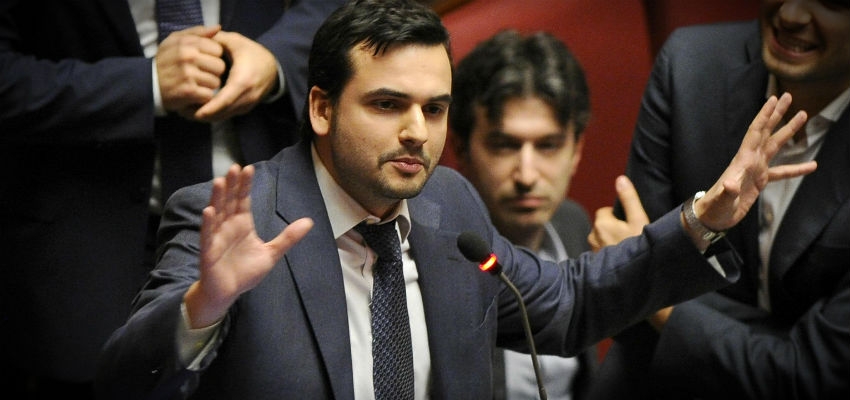
«Grazie al reddito di cittadinanza sono uscite dalla povertà assoluta un milione 700 mila famiglie»
Publisher’s rating: Pinocchio andante
The claim came from Carlo Sibilia, an undersecretary at the Interior Ministry, who said that 1.7 million families had escaped absolute poverty thanks to Italy’s citizenship income. The review tested that assertion against the reported number of families in absolute poverty before and after the benefit’s introduction, and against the number of families receiving it. The review reports 1.822 million families in absolute poverty in 2018, the last year before the benefit took effect, and 1.674 million in 2019. That is a decrease of about 150,000 families—not a reduction close to 1.7 million. The review also cites INPS data, updated to June 8, 2020, showing 1.24 million households receiving the citizenship income or citizenship pension. That total is itself below the number Sibilia claimed had left poverty. These figures do not establish that every recipient was poor or that the benefit caused every observed change. The review notes that the groups of recipients and people in absolute poverty did not fully overlap, and that some recipients may have remained poor. Its comparison therefore contradicts the scale of Sibilia’s claim; it does not show that the benefit had no effect on poverty.